Ancient City of Sigiriya
The ruins of the capital built by the parricidal King Kassapa I (477–95) lie on the steep slopes and at the summit of a granite peak standing some 370 m high (the 'Lion's Rock', which dominates the jungle from all sides). A series of galleries and staircases emerging from the mouth of a gig...
The ruins of the capital built by the parricidal King Kassapa I (477–95) lie on the steep slopes and at the summit of a granite peak standing some 370 m high (the 'Lion's Rock', which dominates the jungle from all sides). A series of galleries and staircases emerging from the mouth of a gigantic lion constructed of bricks and plaster provide access to the site.
Sri Lankan architectural tradition is well displayed at Sigiriya, the best preserved city centre in Asia from the first millennium, with its combination of buildings and gardens with their trees, pathways, water gardens, the fusion of symmetrical and asymmetrical elements, use of varying levels and of axial and radial planning. The Complex consists of the central rock, rising 200 meters above the surrounding plain, and the two rectangular precincts on the east (90 hectares) and the west (40 hectares), surrounded by two moats and three ramparts. The plan of the city is based on a precise square module. The layout extends outwards from co-ordinates at the centre of the palace complex at the summit, with the eastern and western axis directly aligned to it. The water garden moats and ramparts are based on an 'echo plan' duplicating the layout and design on either side. This city still displays its skeletal layout and its significant features. 3 km from east to west and 1 km from north to south it displays the grandeur and complexity of urban-planning in 5th century Sri Lanka. Other Sri Lanka highlights: visitors with extra time on their hands might want to spend a few days on the beaches of Bentota, Unawatuna, Negombo or Alankudah beach, Kalpitiya.
Sigiriya Lions Rock
Sigiriya or Sinhagiri is an ancient rock fortresslocated in the central Matale District near the town of Dambulla in the Central Province, Sri Lanka. The name refers to a site of historical and archaeological significance that is dominated by a massive colu...
Sigiriya or Sinhagiri is an ancient rock fortresslocated in the central Matale District near the town of Dambulla in the Central Province, Sri Lanka. The name refers to a site of historical and archaeological significance that is dominated by a massive column of rock nearly 200 metres (660 ft) high. According to the ancient Sri Lankan chronicle the Culavamsa, this site was selected by King Kasyapa (477 – 495 CE) for his new capital. He built his palace on the top of this rock and decorated its sides with colourful frescoes. On a small plateau about halfway up the side of this rock he built a gateway in the form of an enormous lion. The name of this place is derived from this structure —Sīhāgiri, the Lion Rock. The capital and the royal palace was abandoned after the king's death. It was used as a Buddhist monastery until the 14th century.
Sigiriya today is a UNESCO listed World Heritage Site. It is one of the best preserved examples of ancient urban planning.
When you go to Sigiriya in Sri Lanka you can view the rock from any where.
Pinnawala Elephant Orphanage
Welcome to Pinnawala Elephant Orphanage
Pinnawala Elephant Orphanage (PEO) ; just as the name suggests holds a unique disposition in the ex-situ animal care. It’s success and fame has travelled not just within the country but throughout the world to an extent where Pinnawala synonymous with...
Welcome to Pinnawala Elephant Orphanage
Pinnawala Elephant Orphanage (PEO) ; just as the name suggests holds a unique disposition in the ex-situ animal care. It’s success and fame has travelled not just within the country but throughout the world to an extent where Pinnawala synonymous with the Sri Lankan Elephant.
Currently being a home to 93 elephants the concept was actualized by the late Hon. Minister Kalugalle on the 16th of February 1975. Pinnawala at the time was a very remote area with lush coconut plantations and most importantly an area where the availability of mahouts was not lacking. Also the immense amount of water required by the elephants is supplemented with the availability of “Ma oya” running close by.
History
With the cultural background of treating human and animal alike in their distress Pinnawala Elephant Orphanage started off with the introduction of five abandoned baby elephants to the premises. They were namely Vijaya, Neela, Kadira , Mathlee and Kumari. The tragedy with these misplaced or abandoned babies is that they cannot survive in the wild on their own as they suckle form their mother until they are almost five years old. They hence need to be hand raised for their survival.
This institution caters not only for the abandoned babies but also for those injured and maimed within the jungle. We employ the expertise of both modern veterinary and traditional indigenous medical treatment to cater to these elephants needs.
Currently PEO has become one of the largest tourist attractions in the country due to its distinctive population of elephants.
Yala national park
Ruhuna National Park at Yala is Sri Lanka's most popular wild life safari destination. Situated about 300kM from Colombo the 1250 sq kM park is home to leopards, crocodile, elephant, deer, sambar, bear, wild bore, wild buffalo and peacock and may varieties of birds including migratory birds...
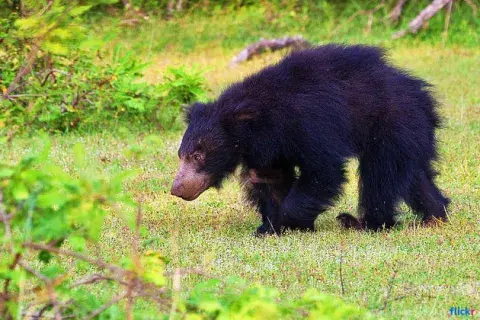
Ruhuna National Park at Yala is Sri Lanka's most popular wild life safari destination. Situated about 300kM from Colombo the 1250 sq kM park is home to leopards, crocodile, elephant, deer, sambar, bear, wild bore, wild buffalo and peacock and may varieties of birds including migratory birds such as flamingos. The uniqueness of the park is it's many different habitat diversities such as dense jungles, lagoons and open park areas, a beautiful sea front and rocky outcrops. Months of January and May are peak month for best of the vegetation and the dry season is from June to October. Hiring of four wheel drive jeep a must for those who want to wonder in to its many trails to explore the national park.
There are many archaeological sites within the park and the ancient monastery of Sithulpahuwa situated at a beautiful rocky platform is among it's most visited sites.
Salt pans at Palatupana is a popular location for bird watching.
The leopards is the largest member of the wild cats found in Sri Lanka and Yala is probably the best location to view these beast in their natural habitat.
Sacred City of Kandy
This sacred Buddhist site, popularly known as the city of Senkadagalapura, was the last capital of the Sinhala kings whose patronage enabled the Dinahala culture to flourish for more than 2,500 years until the occupation of Sri Lanka by the British in 1815. It is also the site of the Temple...
This sacred Buddhist site, popularly known as the city of Senkadagalapura, was the last capital of the Sinhala kings whose patronage enabled the Dinahala culture to flourish for more than 2,500 years until the occupation of Sri Lanka by the British in 1815. It is also the site of the Temple of the Tooth Relic (the sacred tooth of the Buddha), which is a famous pilgrimage site.This sacred Buddhist site, popularly known as the city of Senkadagalapura, was the last capital of the Sinhala kings whose patronage enabled the Dinahala culture to flourish for more than 2,500 years until the occupation of Sri Lanka by the British in 1815. It is also the site of the Temple of the Tooth Relic (the sacred tooth of the Buddha), which is a famous pilgrimage site.
Anuradhapura
This was the country's first capital and was the island's ruling city for over a thousand years from 380 BC onwards. The remains of this ancient city are considered to be one of the county's greatest attractions and its magnificent palaces, temples and stupas are indicative of the civilised natur...
This was the country's first capital and was the island's ruling city for over a thousand years from 380 BC onwards. The remains of this ancient city are considered to be one of the county's greatest attractions and its magnificent palaces, temples and stupas are indicative of the civilised nature of the Sinhalese people who built them. The complex is home to several key attractions, including the Jetavanarama Dagoba building and the Bodhi tree under which the Buddha is alleged to have gained enlightenment. At a little over 125 miles from Colombo, Anuradhapura can be visited on a long day trip but an overnight excursion is a better option.