Hu's Villa
Hu Xueyan's (1823-1885) Villa is situated on the Yuanbao Street, a narrow alley nearby the Hefang Street, a famous old commercial street of Hangzhou. It's a typical southeast-China-style complex with houses and gardens of distinct Anhui architecture features. Hu's Villa was built in 1...
Hu Xueyan's (1823-1885) Villa is situated on the Yuanbao Street, a narrow alley nearby the Hefang Street, a famous old commercial street of Hangzhou. It's a typical southeast-China-style complex with houses and gardens of distinct Anhui architecture features. Hu's Villa was built in 1875 at the zenith of his prosperity and was officially open to public since 2001 after the renovation.
The villa has roughly three sections: The middle section is for reception and consultations; the eastern section is for pleasure and relaxation; and the western section is for living. In the villa, gardens, pavilions, terraces, bridges, houses, rockeries, ponds and corridors are ingeniously designed and harmoniously landscaped. Some parts of the villa have western elements as Mr. Hu lived in a time when China was opened up to outside world for trade and cultural exchange.
Hu Xueyan was born in Anhui Province, started off as a counterjumper in a money shop in Hangzhou and eventually passed away in poverty and sorrow. Following the success of his business in running money shops and pawns, he expanded the field to salt, medicine, silk, tea, cloth and arms trade, etc. It's said that in the prime time his overall wealth was half as much as the national treasury of Qing government. Although he cracked up in latter years of his life as he fell victim of political game, Hu Xueyan, who also assumed high position in government as a result of his tremendous impact in business, has been widely recognized as the stereotype of "Red-Top Merchant" (high-ranking government officials wore hat with red top in Qing Dynasty when going to imperial court), a title people use to refer to merchants who are influential in politics as well.
What else noteworthy is the Huqing Yutang Traditional Chinese Medicine Store founded by Hu Xueyan also. It's located on the Hefang Street, some ten minutes walk from the Hu's Villa. A drop-in-on to it would add more content if you intend to visit Hu's Villa.

City Wall
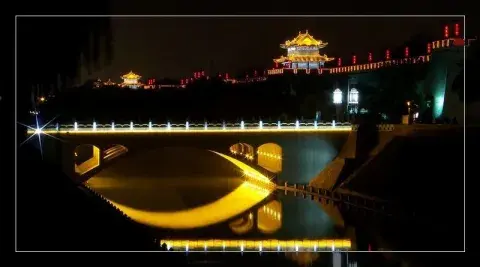
It is the most complete, the best preserved and the ancient city wall in the world, about 14 km in length. A wide and deep moat encircles the wall and drawbridges which can be risen or lowered freely are set up against the city gates. Over 600 years old of the city wall, it provide...
It is the most complete, the best preserved and the ancient city wall in the world, about 14 km in length. A wide and deep moat encircles the wall and drawbridges which can be risen or lowered freely are set up against the city gates. Over 600 years old of the city wall, it provides invaluable material for the study of history, military science, and architecture of the Ming Dynasty.

Jade Water Village
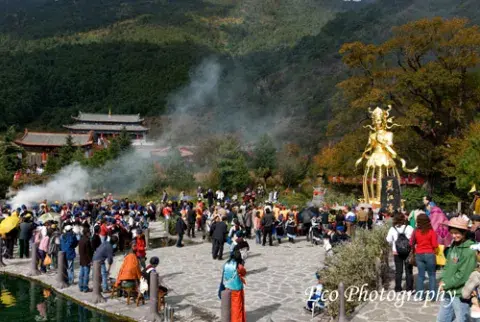
Naxi is the major minority in Lijiang. The Jade Water Village can demonstrate their living. During the Naxi New Year, there is big celebration. The old DongBa carry out traditional celebration and the place is open&nb...
Naxi is the major minority in Lijiang. The Jade Water Village can demonstrate their living. During the Naxi New Year, there is big celebration. The old DongBa carry out traditional celebration and the place is open to public free of charge.

Brief introduction of Leshan
Leshan, literally means happy mountain, is a prefecture-level city located in the middle of Sichuan Basin,and 120 km away south to Chengdu.
Leshan is listed as the National Historical and Cultural City. It’s one of the 4 places in China Buddhists must visit,due to its 2000 years old...
Leshan, literally means happy mountain, is a prefecture-level city located in the middle of Sichuan Basin,and 120 km away south to Chengdu.
Leshan is listed as the National Historical and Cultural City. It’s one of the 4 places in China Buddhists must visit,due to its 2000 years old Buddhism Culture.
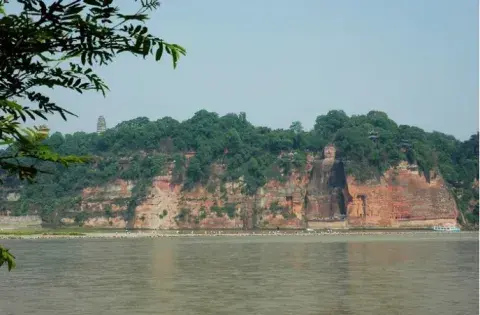
The world known Leshan Giant Buddha is by the west bank of the Dadu River, the 97 meters tall Buddha is considered as the Biggest sitting Buddha in the world. And was declared as the World Cultural and Natural Heritage by UNESCO in 1996.
25 km away east to Leshan City, lies the sacred Buddist Mountain Emei, which is also a World Cultural and Natural site by UNESCO. At the Golden Summit of the Emei with an altitude of 3099 meters, it’s amazing place to enjoy the sunrise from the clouds sea. The mountain is dotted with hunderds of Buddhism Monasteries all the way from the mountain base to the summit.
The food in Leshan is definitely something you should not miss, Tianpiya(sweet skin duck), Doufunao(sofe tofu drink), street barbecue,spicy hot pot can not be more delicious.

Shanghai Museum of Glass
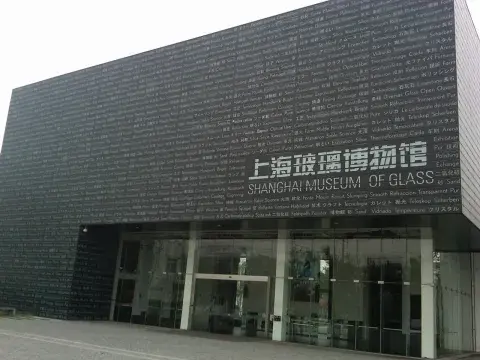
Shanghai Museum of Glass was initiated and funded by Shanghai Glass Co. Ltd, which had witnessed the development of the glass industry in Shanghai and attentively preserved the inherited a century-old history and its product culture.
The design of the Museum integrates both new and existi...
Shanghai Museum of Glass was initiated and funded by Shanghai Glass Co. Ltd, which had witnessed the development of the glass industry in Shanghai and attentively preserved the inherited a century-old history and its product culture.
The design of the Museum integrates both new and existing structures, which keeps and highlights the features of the old workshop, and also gives the architecture new functionality and iconic status.
The Museum covers a building area of about 5,000 square meters of which 3,750 sqms is the main hall. And it also has a reception hall, permanent and temporary exhibition halls, collection rooms, an office area, museum shops, a library, a café, a hot glass demonstration hall and DIY shop. The demonstration of hot glass making is at 14:30 daily.

Qibao Old Street
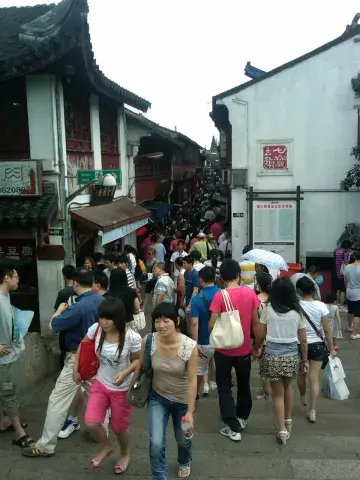
Qibao is a town in the Minhang District, southwest of Shanghai proper. Pronounced Qi'bao, it is literally translated as Seven Treasures.
Its formation can be traced back to the Northern Song, some a thousand years ago. The name comes from the local temple, "Qibao Temple," wh...
Qibao is a town in the Minhang District, southwest of Shanghai proper. Pronounced Qi'bao, it is literally translated as Seven Treasures.
Its formation can be traced back to the Northern Song, some a thousand years ago. The name comes from the local temple, "Qibao Temple," which is no longer in existence.
Qibao Old Street is actually made up of a number of streets criss-crossing two blocks and bisected by a canal. Traditional Ming and Qing Dynasty buildings have been refurbished and offer museums, gardens, shops, restaurants and tea houses.
Visitors can take boat rides from the tiny wharf along the canal. Boats run daily from 8:30am to 4:00pm and lovely ride takes around 20 minutes (RMB 10 per person).
Notably, Qibao town is known for cricket, it’s a local specialty. It is said that the Qibao production of the cricket's bravery and aggressiveness, are of top grade.
Qibao Station of Metro Line 9
BaoShan Stone Village
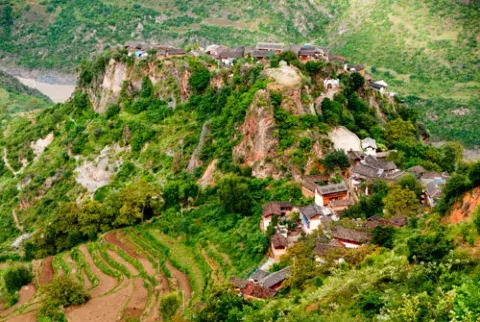
BaoShan Stone Village was found in early 12th centure by Naxi people. Village is build on a huge rock of half square KM on west bank of Yangtze River. 49 families live inside the stone wall and 116 families outside. Life is simple.
BaoShan Stone Village is 110KM no...
BaoShan Stone Village was found in early 12th centure by Naxi people. Village is build on a huge rock of half square KM on west bank of Yangtze River. 49 families live inside the stone wall and 116 families outside. Life is simple.
BaoShan Stone Village is 110KM north east from Lijiang, 4 hours by bus. You can take local bus from Lijiang city to get there.

The Gongge'er Grassland
Gongge'er Grassland is the nearest natural Mongolian Grassland to Beijing.
The grassland is located in Hexigten Banner, it's about 2 hours by driving from Chifeng City.
If it is possible, you should live on the grassland for one night to watch the beauti...
Gongge'er Grassland is the nearest natural Mongolian Grassland to Beijing.
The grassland is located in Hexigten Banner, it's about 2 hours by driving from Chifeng City.
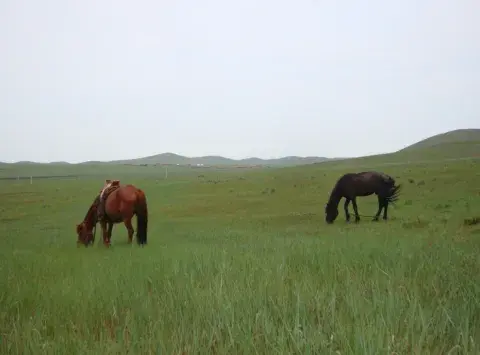
If it is possible, you should live on the grassland for one night to watch the beautiful sunrise. The weather is good and the natural landscape is fascinating. The green of the grassland reaches out as far as your eyes can see. Sheeps , horses and cows are everywhere. For the accommodation, you can choose the unique yurts, villas, wooden cottages to experience the true nomadic nightlife.
Take train or flight to Chifeng City first, and hire a car in Chifeng.