Helan Mountain
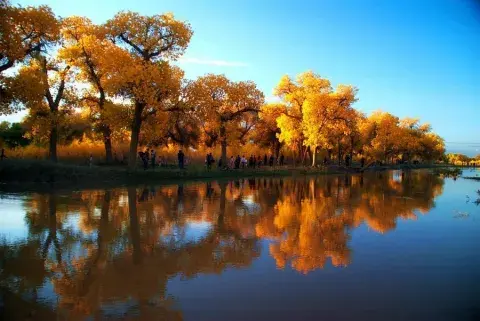
It is the largest north-to-south mountain range in northwestern China. It neighbors the Loess Plateau in northwest and the Qinghai-Tibet Plateau in northeast. The unique location blesses it with distinct natural scenery, human landscapes and ecosystems.
Lying in Alashan Zuoqi in Inner Mon...
It is the largest north-to-south mountain range in northwestern China. It neighbors the Loess Plateau in northwest and the Qinghai-Tibet Plateau in northeast. The unique location blesses it with distinct natural scenery, human landscapes and ecosystems.
Lying in Alashan Zuoqi in Inner Mongolia, Helan Mountain National Reserve covers a large area, 261 square miles, with the highest peak measuring 11,700 feet. It lies in the transitional zone between grassland and desert. The main feature it protects is the forest ecosystem in arid and semiarid regions which contains rare plants and animals. Walk into the virgin forest of Helan Mountain, and you will feel you are entering a natural "zoo" which is home to hundreds of wild animals such as musk deer, berghaan, foxes and dzeren. Standing on top of the mountain and having a vertical view, you will be dazzled by the vast green sea of trees and, at the same time, be astonished by this marvelous creation of nature.

Badain Jaran Desert
Lies to the north of Alashan Youqi in Inner Mongolia. It covers an area of 18,146 square miles and is the third largest desert in China and fourth in the world.
Endowed with beautiful and colorful views, Badain Jaran desert has cragged peaks, beautiful lakes, springs and temples. In the m...
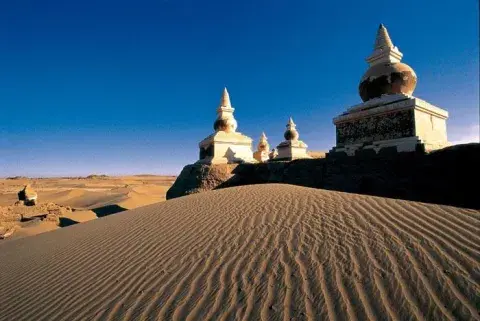
Lies to the north of Alashan Youqi in Inner Mongolia. It covers an area of 18,146 square miles and is the third largest desert in China and fourth in the world.
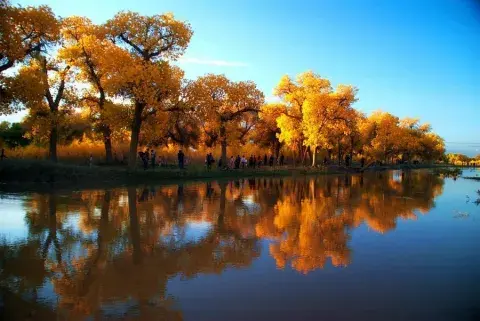
Endowed with beautiful and colorful views, Badain Jaran desert has cragged peaks, beautiful lakes, springs and temples. In the middle area of the desert are countless sand-echoing hills. The roaring and gliding sands reverberate through the whole desert like the noise of an airplane. Unlike other dry deserts, Badain Jaran Desert is dotted with over 140 crystal lakes. Most of these are saltwater lakes, but there are also many pure springs.
Badain Jaran Desert is not a barren land. Instead, many desert plants and animals flourish here. Around the lakes, there are thick reeds, white poplars and narrow-leaved obleaster trees. Countless plants, such as camel thorns and Jiji Grass, serve as wind breakers and help anchor the sand. Many of these plants have medicinal values.
The mountains of Badain Jaran Desert have harder surfaces than those in other deserts. This provides an opportunity to explore the desert on wheels. An unforgettable experience is to drive an off-road vehicle at high speed on the wave-like sand mountains.
Tips: The best months to visit Badain Jaran Desert are August, September and October. Because of the extreme weather, bring an overcoat and warm clothing. Bring plenty of water for hydration. The ultraviolet radiation in the desert is very strong, so sunglasses and sunscreens are essential.

Wudangzhao Temple
Wudangzhao Temple (Mongolia language saying: badageer called, meaning Willow) is located in baotou city, Inner Mongolia, 54 km north of the yinshan mountains five when Gou Ji Hulun tushan.
Wudangzhao was initially for the former centre-left banner in Ordos (, jungar banner) Princes in was...
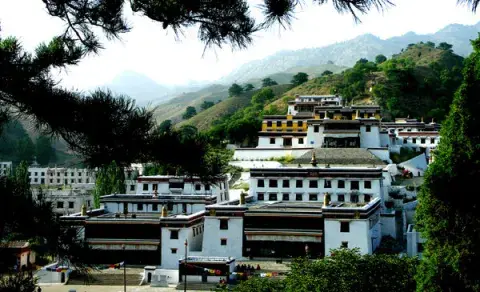
Wudangzhao Temple (Mongolia language saying: badageer called, meaning Willow) is located in baotou city, Inner Mongolia, 54 km north of the yinshan mountains five when Gou Ji Hulun tushan.
Wudangzhao was initially for the former centre-left banner in Ordos (, jungar banner) Princes in was built in the period of Kangxi (1662-1722).14 years of Qianlong (1749) had huge expansion and ruobiduoji by Zhang Jiaguo Division (1717-1786) referred to the Qing Court of Colonial Affairs given temple names, 21 years of Qianlong (ad 1756) emperor Qianlong named Manchu, Han, Mongolian, Tibetan and four-body text "wide-Temple" horizontal inscribed board."Sleep Temple", Manchu: amubawuleheisu put ~ Kurt (Amba ulhisu juktehen), Mongolia and language: Hui Jech Ao Nulei Sumus (Aqui Yeke Onultu Sume), Tibetan: zhaqin road gedanling (rgya Chen rtogs ldan gliG).Temple which has been one of Mongolian Buddhist pilgrimage to Buddhist holy sites.
I can arrange the tour of Wuangzhao pls feel free to contact me if need ! My email is [email protected] .
Yanmenguan Pass of Great Wall
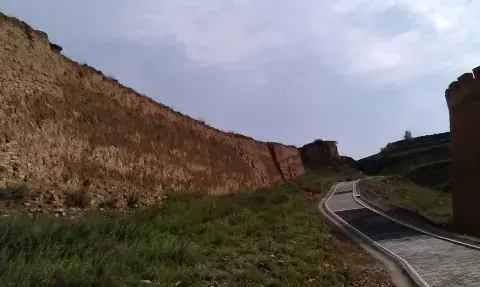
Yanmenguan Pass of Great Wall is located in the Gouzhu Mountain ranges, within the Hengshan Mountain range, 12 miles to the north of Dai County, in Shanxi Province. Along with Ningwuguan Pass and Pianguan Pass, Yanmenguan Pass is one of three important passes through the inner line of the Great W...
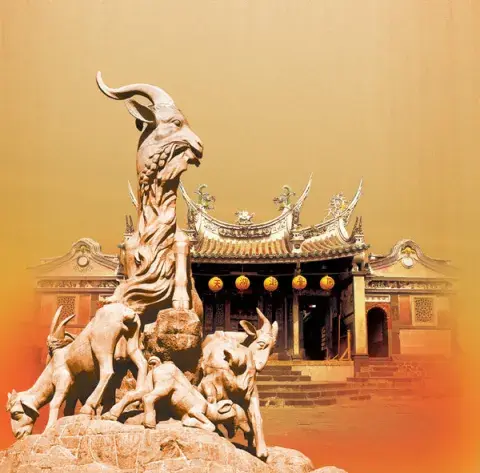
Yanmenguan Pass of Great Wall is located in the Gouzhu Mountain ranges, within the Hengshan Mountain range, 12 miles to the north of Dai County, in Shanxi Province. Along with Ningwuguan Pass and Pianguan Pass, Yanmenguan Pass is one of three important passes through the inner line of the Great Wall in the Shanxi section. It is also known by other names, namely Yanmensai and Xilongguan. Located at a place of strategic importance and difficult to get through, it was regarded as the principal one of the nine passes under heaven in ancient times. Many famous historical battles have been fought in the area.
Yan means 'wild goose' in English, and was so-named because wild geese are seen flying around the pass every year. Early in the Spring and Autumn Period (770 BC - 476 BC), King Wuling of Zhao established Yanmen County in this region. The Tang Dynasty (618 - 907) built a pass called Xiting Pass by Yanmen Mountain, west of the present l ocation. In the year 1374 during the Ming Dynasty (1368 - 1644),
Yanmenguan Pass Gatethe pass was rebuilt and moved to today's location.
This Great Wall pass is 0.6 miles wide. There are three gates: the small north gate, west gate and east gate. The small north gate is inscribed with the three characters, 'Yan Men Guan'; the west gate is labelled 'Di Li', meaning the favorable geographical location; the east gate is labelled 'Tian Xian', translated as the unbreakable stronghold. Adjacent to the pass, lies Jingbian Temple.
The Yanmenguan Pass of Great Wall is being well preserved at present. It is a precious ancient military relic, attracting more and more people who visit here to recall past times.
How to get there :
By Car: exit from 'Xinguangwu’ Exit/ Entrance of Dayun Freeway and then travel southward about 7-8 kilometers to ge there;
By Bus: take a bus running from Daixian County to Datong, get off at Yanmenguan and then walk about 2 kilometers to get there;
By Taxi: about CNY 100 from Daixian County to get there by taxi.