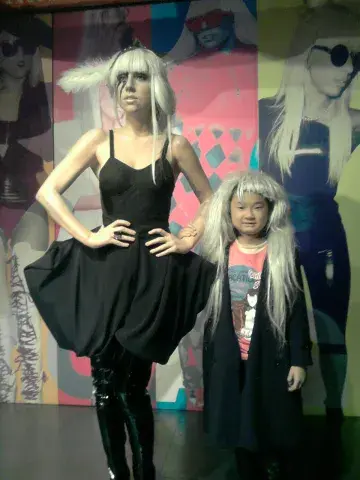
Open since 2006, the Madame Tussauds Shanghai is the sixth Madame Tussauds Wax Museum following its predecessors in London, Amsterdam, Las Vegas, New York, and Hongkong.
Madame Tussaud is a French artist who fabricated life-sized statues lively for favorite celebrities. She established&nb...
Open since 2006, the Madame Tussauds Shanghai is the sixth Madame Tussauds Wax Museum following its predecessors in London, Amsterdam, Las Vegas, New York, and Hongkong.
Madame Tussaud is a French artist who fabricated life-sized statues lively for favorite celebrities. She established her first permanent exhibition on Baker Street in London in 1835.
Madame Tussauds Shanghai has been divided into seven motive sections: "Behind the Scene", "Charming Shanghai", "Celebrities in History", "Film", "Music", "Sports" and "Speed". More than 70 lifelike celebrity was sculptures are displayed in the museum and all of them were meticulously fabricated in the workroom, which has a history over 200 years in making wax statues, in London.
Not only Chinese superstars like NBA player Yao Ming and famous hurdler Liu Xiang, but also overseas celebrities like Michael Jackson, David Beckham, Michael Jordan, Tom Cruise, Marilyn Monroe, Einstein, Princess Diana, Bill Gates, Bill Clinton, etc. are all under one roof. They, standing or sitting, with a smile or with a posture, seemed chatting merrily with inmate friends. I am sure you'd lose discrimination in the musuem. Believe or not?





 Established in 1923, St. Paul’s Church is the first official Christian church in Nanjing. The church’s design is meant to imitate the style of European churches in rural areas. It is gothic architecture with