Shanghai Attractions
Shanghai Articles
Important information of China
China Postcode: 200000
Dialing Code: 0086-21
International long-distance telephone: Please dial 00 + country code + city code + telephone number
Telephone: Phone booth is easily found in the street. CNY 0.5 every three minutes and CNY 1 every five minutes at coin call....
China Postcode: 200000
Dialing Code: 0086-21
International long-distance telephone: Please dial 00 + country code + city code + telephone number
Telephone: Phone booth is easily found in the street. CNY 0.5 every three minutes and CNY 1 every five minutes at coin call.
Time Zone: GMT + 8
Voltage:220 V, 50Hz alternating current
Tip:0 - 15% in restaurants and hotels
Dining:Reservation is necessary.Make a reservation 24 hours beforehand when planning to dine in a well known restaurant.KFC,McDonald's,Yonghe Soybean Milk and Xinya Da Bao provide food delivery.
Toilet facilities: big shopping malls, fast food restaurants, subway station and main scenic spots have clean and sanitary toilets. Some have to be paid. The price is no more than CNY 1.

cool massage in shanghai
After a few days of touring around Shanghai with a heavy backpack, I stumbled upon Green Massage It looked so nice that I was worried about the price being too high....
After a few days of touring around Shanghai with a heavy backpack, I stumbled upon Green Massage It looked so nice that I was worried about the price being too high. However, I got a package that was pricier than my normal massages, but not too bad: around 220RMB for 2 hours and 15 minutes of traditional Chinese massage (head, back, feet, 4 limbs.) Danny, my masseuse, was OK with feet, but absolutely incredible at back and legs. He was excellent at figuring out the sore spots and realigning my spine, and I felt like I was walking on air that day AND the next! The atmosphere was so clean, relaxing and aesthetically pleasing. Overall the aromatherapy massages seem to be over-priced, but if you stick with traditional packages it's a reasonable deal for an incredible massage. I had to leave an extra tip I felt so good.
10 Things Travel Guidebooks Won't Say
1. We’re already out of date.
...1. We’re already out of date.
After more than a week in $5-a-night hostels in Peru, Caitlin Childs was looking forward to a hot shower and a comfortable bed. But when she got to the Hotel Paracas, there was no hot shower, no bed – and no hotel. “It had been leveled in an earthquake the year before,” says Childs, a graphic designer and frequent traveler. It turned out her Footprint Peru Handbook – the latest edition – had been published a year and a half before her July 2008 trip.
Even without earthquakes, much of the information covered by guidebooks changes too fast for book publishers to keep up. Restaurants close, quaint markets lose their cachet, and trains change their schedules. If it’s essential to your trip, make a phone call before you go, says Peggy Goldman, the president of Friendly Planet Travel, a tour operator. Never rely on a guidebook for key information like whether you’ll need a visa to enter a country and how much it will cost, or what vaccinations you might need, Goldman says, because those facts can change rapidly. Although the guidebook’s web site may have more up-to-date information, travelers should still check with the consulate and look for CDC alerts for the latest information.
2. No news is bad news.
There’s simply not space in most guidebooks to include negative reviews – so a hotel or restaurant that isn’t in the book might not have made the cut for a reason, says Thomas Kohnstamm, a former Lonely Planet guidebook writer and the author of the memoir, “Do Travel Writers Go to Hell?” Guidebooks are also trying not just to inform but to sell potential travelers on the idea of a particular destination, he says. The end result: Every beach is beautiful, and the people of every country are “some of the nicest people in the world.” “It’s supposed to be an unvarnished take on places but you have to be pretty PC about everything,” Kohnstamm says.
It’s true that space is limited, so if something isn’t in the book, “there may be a reason,” says Ensley Eikenburg, the associate publisher of Frommer’s travel guides. The exception: “There are certain iconic places that can be overrated, and that’s something we encourage our writers to say,” she says.
3. We haven’t actually been there.
It’s called a “desk update": Writers use the phone, the Internet, stories from other travelers and even old-fashioned books to research a destination, but they never actually go there. The practice is common throughout the travel industry, Kohnstamm says. And with tight budgets, some publishers simply never ask how writers are getting their information.
Eikenburg, of Frommer’s, admits that the company does desk updates, but only on a few titles that cover multiple countries, while Lonely Planet’s Americas publisher, Brice Gosnell, says that the company’s contracts with writers always require travel to the location they’re covering.
4. We’re relying on you to catch our mistakes.
There’s essentially no fact-checking process for most guidebooks, Kohnstamm says. “They might do a random check, but mainly they’re trying to rely on the writer” to get things right, he says. (Lonely Planet and Frommer’s say fact-checking is the writer’s responsibility.) In practice, and with the prevalence of the “desk update” (see No. 2), that may mean waiting for readers to point out errors or out-of-date information. Jeffrey Ward, the founder of Savvy Navigator Tours, says he once wrote to Fodor’s to let them know that the index to their South Africa guide was from a previous edition, making it very difficult to quickly look up restaurants or sites while out walking around. Ward says the company sent him a free copy of a corrected book within a couple of months.
5. That “easy” hike is only easy for experts.
In 2007, a 32-year old hiker died taking what a guidebook had described as the “easy way” up Tryfan, a 3,000-foot mountain in Wales. “The definition of ‘easy’ is relative depending upon your experience, your physical ability, your footwear, clothing and kit, and your party,” explains Chris Lloyd, a spokesman for the local Ogwen Valley Mountain Rescue Organization. Death by hiking is fortunately uncommon, but Brian King, the publisher of guidebooks for the Appalachian Trail Conservancy, says his organization frequently hears complaints from less-experienced hikers who feel the books make scrambling over boulders sound like an easy day’s stroll. “We could probably do a better job of accommodating the day hiker,” King says.
6. We ruined that secluded spot we mentioned.
Brian Ghidinelli thought he and his wife were the only tourists in Old Hanoi’s winding streets – until they walked into a Lonely-Planet-recommended restaurant, which was packed with other travelers, some with their own Lonely Planet Vietnam guides on their tables. “While we ate, several more pairs walked in with guidebook in hand,” Ghidinelli, an entrepreneur and experienced traveler, says. Accidentally walking into a tourist trap can have financial consequences, too. In Ghidinelli’s experience, hotels and restaurants recommended by the guidebook tended to cost 25% or 30% more than those that didn’t cater to tourists.
7. We’re terrified of your smartphone.
Ten years ago, guidebooks to popular destinations like Walt Disney World or Paris were common on the New York Times best-sellers list, says Michael Norris, a senior analyst for Simba Information, a market research firm that covers publishing and media. These days, the physical books just don’t sell as well as they used to, in part because so much information is now available for free online – TripAdvisor, anyone? – and can be accessed on the spot with a GPS-equipped phone.
8. Going to Estonia? We don’t really care.
Guidebook writers sent to less well-traveled destinations are often hindered by tiny budgets, Kohnstamm says, explaining that books about popular destinations command the majority of the companies' resources. “The rest get sort of short shrift,” he says. Other publishers see it differently. Frommer’s doesn’t spend more on the more popular guides either, Eikenburg says. “If one of our customers buys our guide to Panama and it’s not accurate, then we’ve lost that customer to the competition when they go out and buy an Italy guide or an Alaska guide,” she says.
9. We’re tourists too.
Guidebooks can’t always be trusted for “insider” tips on what the locals eat, how they behave or what the cultural norms are in a country, says Bryan Schmidt, who has traveled to six countries on four continents over the last ten years. Guidebooks for Brazil, for example, will recommend places to get “authentic” feijoada, a traditional meat and bean stew – but Schmidt, whose wife is Brazilian, says even those meals are designed for tourists. Of course, some may see that as a blessing: The truly authentic dish involves “a lot of pig ears and pig snouts,” Schmidt says.
“It’s possible to overcome the challenge of not being from a place, but it just takes a lot of time,” says James Kaiser, the author of several independent guidebooks to national parks. Kaiser says he likes to spend about two years doing research so he can get to know locals and see how a place changes over time. Of course, even locals can make mistakes. Kaiser grew up near Acadia National Park in Maine, but his first guide to the area included a recommendation of a picnic spot for families that he came to regret. “Nude bathing was not uncommon,” Kaiser says. “I learned the hard way to triple-check my information.”
10. Don’t take all of our advice.
Some travelers feel guidebooks encourage a frenzied, see-it-all approach to tourism. “I have a really good friend who’s a lawyer, and she prepares for a trip the same way she prepares for a murder trial,” says Friendly Planet Travel’s Goldman. Relying on a guidebook for minute-by-minute planning robs a trip of spontaneity, she says. “The true reason for travel is the absolute thrill of discovering something all by yourself.”
Top Shanghai Tours
$238 Per Day
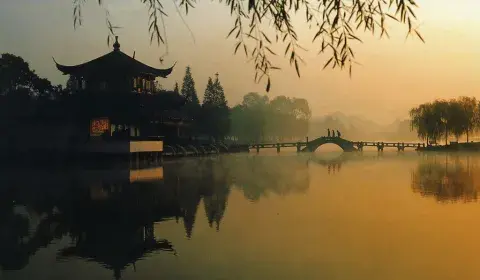
Private Hangzhou Day Trip from Shanghai by Bullet Train
Take in the highlights of beautiful Hangzhou on a private full-day tour from Shanghai. After hotel pickup and transfer by high-speed train to Hangzhou, your private guide takes you to see some city attractions, such as Faxi temple. Moreover, enjoy a tasty lunch at a local restaurant before heading to Longjing village. There, learn about the process of farming and producing dragonwell tea, the region’s most famous product. Finally, enjoy a scenic boat cruise on UNESCO World Heritage-listed West Lake before returning to Shanghai.
...Read more
Take in the highlights of beautiful Hangzhou on a private full-day tour from Shanghai. After hotel pickup and transfer by high-speed train to Hangzhou, your private guide takes you to see some city attractions, such as Faxi temple. Moreover, enjoy a tasty lunch at a local restaurant before heading to Longjing village. There, learn about the process of farming and producing dragonwell tea, the region’s most famous product. Finally, enjoy a scenic boat cruise on UNESCO World Heritage-listed West Lake before returning to Shanghai.
This is a private, full-day trip from Shanghai to Hangzhou. After you are picked up in your hotel lobby in the early morning, you will take a bullet train to Hangzhou. This is the fastest way to Hangzhou and you can experience train speeds of up to 300 kilometers per hour. Your tour begins at one of Hangzhou's signature sites, the West Lake. Enjoy a lake cruise to see the top ten West Lake scenic views. You will then be taken to experience the wonderful cuisine of Hangzhou at a local restaurant. After lunch, you will visit Faxi temple, a well-known Temple dating back to the Jin Dynasty. See its famous wooden Buddha. Here, you will see fewer tourists and more locals. Finally, enjoy a cup of green tea when you visit the famous Longjing village to see wild fields of Longjing tea bushes where the locals produce the world famous green tea- Longjing Tea. In the village, all locals are tea farmers and you will see the entire procedure of making the famous tea and will get the chance to taste the best quality emperor tea. Afterwards, you will take the bullet train back to Shanghai and you will be returned to your hotel.
$70 Per Day
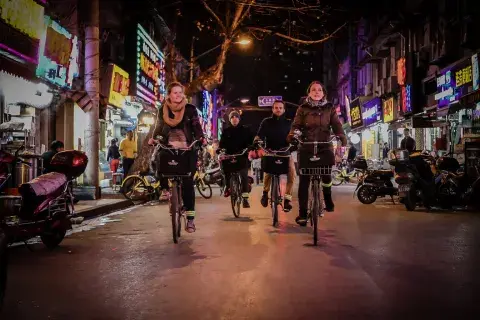
Bike Tour - "Shanghai by Night"
What would be a better way to experience the “City That Never Sleeps” than hopping on one of our vintage Forever bicycles and explore a whole New World after dark?...Read more
What would be a better way to experience the “City That Never Sleeps” than hopping on one of our vintage Forever bicycles and explore a whole New World after dark? Follow our foreign expert Tour Leader on a multi-themed route from the narrow streets of the Old Town all the way to the dazzling lights of the Bund. Meanwhile, cycle around the famous landmark Yu Garden, learn about Ghost Wedding rituals, visit a Traditional Chinese Medicine outlet and get to learn more about the "Paris of the East". Finally, tickle your taste buds with some delicious street food in order to immerse yourself deeper into local life. In just one evening, we'll explore the many faces of Shanghai that make this city so unique. Easy and accessible ride for all!
USEFUL INFORMATION
- English-speaking (for other languages, please contact us)
- About 9 km ride, easy ride for all.
- From 18:15pm to 21:30pm
- Up to 6 participants
- Departure and arrival at our Culture Shock Office in Xintiandi district.
- Minimum height is 1.50m. Tandem bikes are available for kids below 12
- Prices are all inclusive (Snack food, a bottle of water, a foreign experienced guide, a helmet and single-gear vintage bike rental with all lights)
- Join-in Group every Tuesday/Friday/Saturday (USD 70 per person)
- Private Tour possible every day (USD 210 in total for 2 participants)