Shanghai Attractions
Shanghai Articles
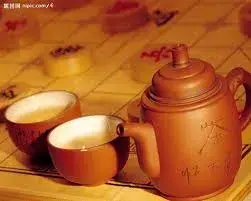
Tea Drinking Customs In China
In China, there are several special circumstances in which tea is prepared and consumed.
In China, there are several special circumstances in which tea is prepared and consumed.
- as a sign of respect
In Chinese society, the younger generation always shows its respect to the older generation by offering a cup of tea. Inviting and paying for their elders to go to restaurants for tea is a traditional activity on holidays. In the past, people of lower rank served tea to higher ranking people. Today, as Chinese society becomes more liberal, sometimes at home parents may pour a cup of tea for their children, or a boss may even pour tea for subordinates at restaurants. The lower ranking person should not expect the higher rank person to serve him or her tea in formal occasions, however.
- For a family gathering
When sons and daughters leave home to work and get married, they may seldom visit their parents. As a result, parents may seldom meet their grandchildren. Going to restaurants and drinking tea, therefore, becomes an important activity for family gatherings. Every Sunday, Chinese restaurants are crowded, especially when people celebrate festivals. This phenomenon reflects Chinese family values.
- To apologize
In Chinese culture, people make serious apologies to others by pouring tea for them. For example, children serving tea to their parents is a sign of regret and submission.
- To express thanks to your elders on one's wedding day
In the traditional Chinese marriage ceremony, both the bride and groom kneel in front of their parents and serve them tea. That is a way to express their gratitude. In front of their parents, it is a practice for the married couple to say, "Thank you for bringing us up. Now we are getting married. We owe it all to you." The parents will usually drink a small portion of the tea and then give them a red envelope, which symbolizes good luck. Another variant is for the to-be daughter-in-law to serve tea to her to-be parents-in-law, symbolizing that she is to become a part of the latter's family.
- To connect large families on wedding days
The tea ceremony during weddings also serves as a means for both parties in the wedding to meet with members of the other family. As Chinese families can be rather extended, one or two hundred people, it is entirely possible during a courtship to not have been introduced to someone. This was particularly true in older generations where the patriarch may have had more than one wife and not all family members were always on good terms. As such, during the tea ceremony, the couple would serve tea to all family members and call them by their official title. Drinking the tea symbolized acceptance into the family. Refusal to drink would symbolize opposition to the wedding and is quite unheard of since it would result in a loss of "face". Older relations so introduced would give a red envelope to the matrimonial couple while the couple would be expected to give a red envelope to younger, unmarried relations.
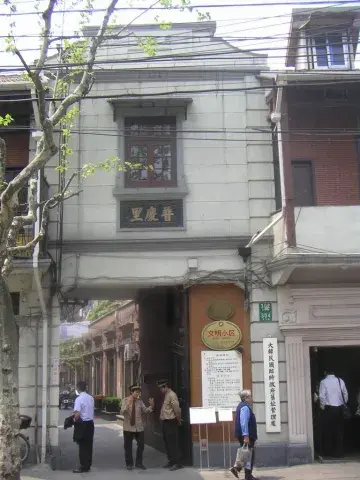
Shikumen
Shikumen, literally "stone gate", is an architectural style for residential buildings in Shanghai, China combining Western and Chinese elements that first...
Shikumen, literally "stone gate", is an architectural style for residential buildings in Shanghai, China combining Western and Chinese elements that first appeared in the 1860s. Shikumen houses are two or three-story townhouses, with the front yard protected by a high brick wall. Each residence is connected and arranged in straight alleys, known as a lòng-tang (弄堂), pronounced longdang in Shanghainese. The entrance to each alley is usually surmounted by a stylistic stone arch. The whole resembles terrace houses or townhouses commonly seen in Anglo-American countries, but distinguished by the tall, heavy brick wall in front of each house. The literal meaning "stone gate" refers to the strong gateway to each house.

Obama Be A Weather Man
Mr. Obama is more than a president, he shows up so often in a variety of non-political scenes, sometimes as an weather man like this:
Top Shanghai Tours
$238 Per Day
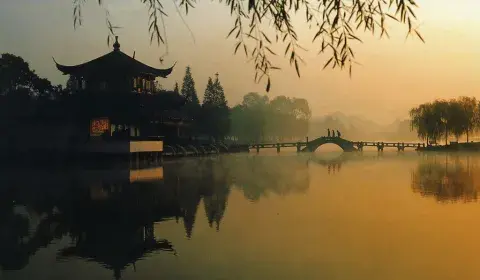
Private Hangzhou Day Trip from Shanghai by Bullet Train
Take in the highlights of beautiful Hangzhou on a private full-day tour from Shanghai. After hotel pickup and transfer by high-speed train to Hangzhou, your private guide takes you to see some city attractions, such as Faxi temple. Moreover, enjoy a tasty lunch at a local restaurant before heading to Longjing village. There, learn about the process of farming and producing dragonwell tea, the region’s most famous product. Finally, enjoy a scenic boat cruise on UNESCO World Heritage-listed West Lake before returning to Shanghai.
...Read more
Take in the highlights of beautiful Hangzhou on a private full-day tour from Shanghai. After hotel pickup and transfer by high-speed train to Hangzhou, your private guide takes you to see some city attractions, such as Faxi temple. Moreover, enjoy a tasty lunch at a local restaurant before heading to Longjing village. There, learn about the process of farming and producing dragonwell tea, the region’s most famous product. Finally, enjoy a scenic boat cruise on UNESCO World Heritage-listed West Lake before returning to Shanghai.
This is a private, full-day trip from Shanghai to Hangzhou. After you are picked up in your hotel lobby in the early morning, you will take a bullet train to Hangzhou. This is the fastest way to Hangzhou and you can experience train speeds of up to 300 kilometers per hour. Your tour begins at one of Hangzhou's signature sites, the West Lake. Enjoy a lake cruise to see the top ten West Lake scenic views. You will then be taken to experience the wonderful cuisine of Hangzhou at a local restaurant. After lunch, you will visit Faxi temple, a well-known Temple dating back to the Jin Dynasty. See its famous wooden Buddha. Here, you will see fewer tourists and more locals. Finally, enjoy a cup of green tea when you visit the famous Longjing village to see wild fields of Longjing tea bushes where the locals produce the world famous green tea- Longjing Tea. In the village, all locals are tea farmers and you will see the entire procedure of making the famous tea and will get the chance to taste the best quality emperor tea. Afterwards, you will take the bullet train back to Shanghai and you will be returned to your hotel.
$70 Per Day
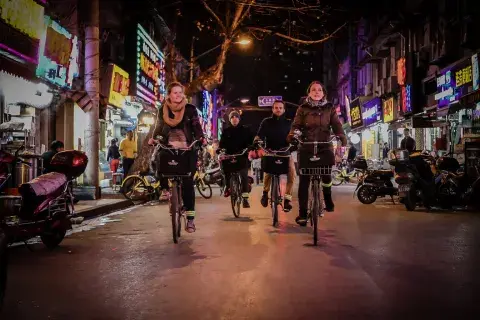
Bike Tour - "Shanghai by Night"
What would be a better way to experience the “City That Never Sleeps” than hopping on one of our vintage Forever bicycles and explore a whole New World after dark?...Read more
What would be a better way to experience the “City That Never Sleeps” than hopping on one of our vintage Forever bicycles and explore a whole New World after dark? Follow our foreign expert Tour Leader on a multi-themed route from the narrow streets of the Old Town all the way to the dazzling lights of the Bund. Meanwhile, cycle around the famous landmark Yu Garden, learn about Ghost Wedding rituals, visit a Traditional Chinese Medicine outlet and get to learn more about the "Paris of the East". Finally, tickle your taste buds with some delicious street food in order to immerse yourself deeper into local life. In just one evening, we'll explore the many faces of Shanghai that make this city so unique. Easy and accessible ride for all!
USEFUL INFORMATION
- English-speaking (for other languages, please contact us)
- About 9 km ride, easy ride for all.
- From 18:15pm to 21:30pm
- Up to 6 participants
- Departure and arrival at our Culture Shock Office in Xintiandi district.
- Minimum height is 1.50m. Tandem bikes are available for kids below 12
- Prices are all inclusive (Snack food, a bottle of water, a foreign experienced guide, a helmet and single-gear vintage bike rental with all lights)
- Join-in Group every Tuesday/Friday/Saturday (USD 70 per person)
- Private Tour possible every day (USD 210 in total for 2 participants)