Changsha Attractions
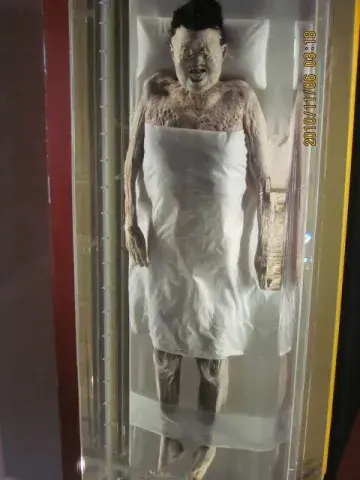
Mawangdui Han tomb mummy
In 1971, a group of construction workers began digging on the slopes of a hill named Mawangdui, near the Chinese city of Changsha. Since the workers were about to construct a spacious air raid shelter for a nearby hospital, they were digging deep into the hill. Before 1971, the Mawangdui hill was...
In 1971, a group of construction workers began digging on the slopes of a hill named Mawangdui, near the Chinese city of Changsha. Since the workers were about to construct a spacious air raid shelter for a nearby hospital, they were digging deep into the hill. Before 1971, the Mawangdui hill was never considered a place worth the attention of archaeologists.
However, this changed when the workers stumbled upon what appeared to be a tomb hidden beneath many layers of soil and stone. The construction of the air-raid shelter was canceled and, several months after the workers’ accidental discovery, a group of international archaeologists began excavating the site.
The tomb turned out to be so massive that the excavation process lasted for nearly a year, and the archaeologists needed help from as many as 1,500 volunteers, mostly local high-school students. Their painstaking work paid off because they discovered the majestic ancient tomb of Li Chang, the Marquis of Dai, who governed the province approximately 2,200 years ago, during the rule of the Han dynasty.
The tomb contained as many as 1,000 precious artifacts, including golden and silver figurines of musicians, mourners, and animals, intricately crafted household items, meticulously designed jewelry, and a whole collection of clothes made from fine ancient silk.

Orange isle in Changsha
Orange Isle was first mentioned in 305, during the Yongxing era of the reign of Emperor Hui of Jinduring the Jin Dynasty (265-420).[5]
During the Tang dynasty, poet Du Fu wrote a poemVisitin...
Orange Isle was first mentioned in 305, during the Yongxing era of the reign of Emperor Hui of Jinduring the Jin Dynasty (265-420).[5]
During the Tang dynasty, poet Du Fu wrote a poemVisiting Daolin Temple and Yuelushan Temple(simplified Chinese: 岳麓山道林二寺行; traditional Chinese: 嶽麓山道林二寺行; pinyin: yuè lù shān dào lín èr sì xíng), which mentioned Orange Isle. It had been on the list of The Eight Views of Xiaoxiang - River and Sky: Sunset Snow.
Orange Isle was opened in 1904, during the late Qing dynasty.[5]
From 1911 to 1949, many foreign embassies and consulates were built on the isle.[5]
During Mao Zedong's early years, he lived in Changsha. He and his friends He Shuheng, Xiao Zisheng, Cai Hesen, Xiao San and Xiang Jingyuwould swim in the Xiang River.[6]
Since the 2010s, the Orange Isle Music Festival has been hosted on the isle.[7][8][9][10]
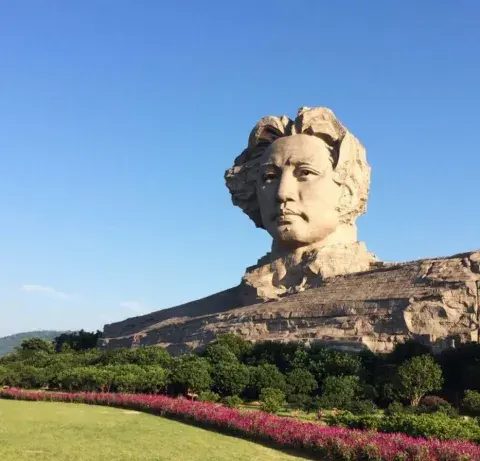
On December 20, 2009, the Youth Mao Zedong Statue was built on the isle.[11][12]
Attractions

Changsha Bamboo Scripts Museum
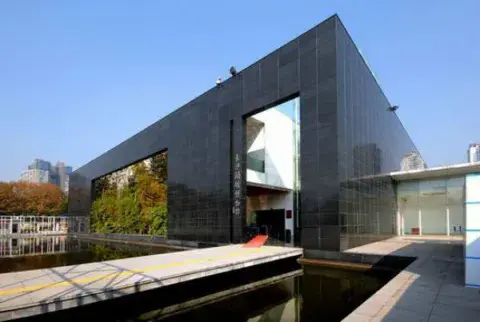
Hunan Bamboo Scripts Museum is located in the middle of Tianxin Pavilion and Baisha Ancient Well. Its design is Han dynasty style and take examples by high-platform building prevailed in three kingdoms period.
Changsha comes up out of the ground the most quantity of bamboo slips in China....
Hunan Bamboo Scripts Museum is located in the middle of Tianxin Pavilion and Baisha Ancient Well. Its design is Han dynasty style and take examples by high-platform building prevailed in three kingdoms period.
Changsha comes up out of the ground the most quantity of bamboo slips in China. In 1996, more than 1700 Sunwu annals’ (Three kingdoms period) bamboo slips were come up in Zouma tower of Changsha City. That amount exceeded the overall amounts of bamboo scripts came up in China over the years. Due to the deficient historical materials in three kingdoms period, this batch of bamboo scripts were considered as “Great archaeological discovery”. In 2003, more than ten thousand Xihan bamboo scripts were discovered in Zouma Tower.
Changsha Bamboo Scripts Museum has been the only modernize theme museum at home and abroad up to now, which combines collect, protection, settlement, research with display. It is also an important cultural scenic spot and an open window. This museum covers an area of about 5,000 square meters.

Mountain Yuelu
The name Mount Yuelu is related to a famous line from the book" Story of Nanyue" written by Liu Song of the Southern and Northern Dynasties (420AD-589AD). The line reads eight hundred square meters around Nanyue, the head is Huiyan and the foot is Yuelu. And the mountain was ever since called Mou...
The name Mount Yuelu is related to a famous line from the book" Story of Nanyue" written by Liu Song of the Southern and Northern Dynasties (420AD-589AD). The line reads eight hundred square meters around Nanyue, the head is Huiyan and the foot is Yuelu. And the mountain was ever since called Mount Yuelu.
As an extended part of the mysterious Mount Hengshan range, Mount Yuelu covers a total area of 8 square kilometers with its highest peak 297 meters above sea level. There are also many peaks with exuberant trees and reclusive and precipitous mountain streams.
Except for the beautiful natural sceneries, Mount Yuelu is also dotted with lots of famous places and ancient relics since Western Han Dynasty(206BC-25AD), such as Aiwan Pavilion, Lushan Temple, Wangxiang Pavilion, Lushan Temple Stele of Liyong (678AD-747AD) in Tang Dynasty, and the Monument to Emperor Yu carved in Song Dynasty, etc. Among the evergreen pines and cypresses also lie Huangxing's Tomb which is under state protection, and the Tombs of Cai E and Chen Tianhua, who were both outstanding revolutionists.
Aiwan Pavilion
As one of the four well-known pavilions in China, Aiwan pavilion is a pavilion of ancient style built in the Qing Dynasty. It is square in form with gilt columns and painted red inside. There are four external beams made with complete stripes of granite. It is constructed with double eaves on top with four slopes. And a spiking treasure bottle is fitted atop. Its four corners stretch away upward, covered with greenish glazed tiles.
The original name of Aiwan Pavilion was Hongye Pavilion and the present name is derived from the poem Strolling in the Mountain written by Du Mu (a poet of Tang Dynasty).
Aiwan Pavilion is not only a famous scenic spot, but also an important site of treasured memories of the revolutionaries like Mao Zedong, Cai Hesen, and Luo Xuezan.
Lushan Temple
The Lushan Temple, also known as Luyuan or Huiguang Temple, built by the monk master Fachong of Zan religion during the Jin Dynasty (265AD-420AD), has a long history of more than 1700 years. The temple was first built in the second year of Renshou during the reign of Emperor Wen of the Sui Dynasty (581AD-618AD) as he gave an imperial edict that a pagoda for Buddhist relics be built. During the 18th year of Kaiyuan under the reign of Emperor Tang Xuanzong, the well-known writer and calligrapher Li Yong wrote "Lushan Temple" for the stele, known as San Jue Bei, a stele perfect in such three aspects as literary talent, calligraphy and engraving.
Originally, it had a main hall and a rear hall, however, nowadays only the rear hall remains there. The arch gate of the temple is built in the local architectural style and upon it there is a sign bearing the legend "Ancient Lushan Temple".It is roofed with yellowish tiles and supported by red columns.
The Lushan Temple Stele, a black stone with a round top, is a well-known stele of ancient China. Four Chinese characters of "Lu Shan Si Bei"(Lushan Temple Stele) were inscribed on it and the inscription on it contains 1419 Chinese characters which recorded the origins and the development of Buddhist doctrine preaching activities through the period between the establishment of the temple in the Jin Dynasty (265AD-420AD) and the setup of the stele in the Tang Dynasty (618AD-907AD).
Pagination
Top Changsha Tours

airport layover tour in Changsha
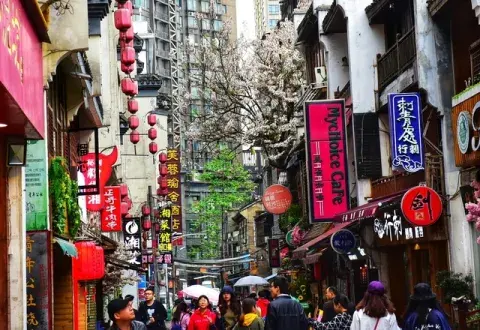
Taiping street is the most well-preserved folklore street which represented the local culture of food, art and people, here you will explore the most local life of changsha citizens...
The old street is the root of a city which carries forward the city's culture and history. Taiping Street fabulously displays Changsha's thousand-year-old tradition. Today's Taiping Street is fast becoming the new landmark and a new name card of Changsha, which fully demonstrates the glamour of Huxiang Culture and embodies Changsha's ancient flavor.
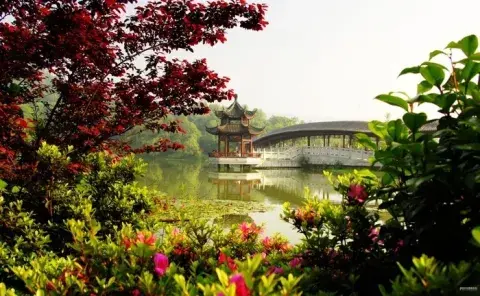
Yuelu mountain, Yuelu academy, and Xinmin history meeting site one day trip
Yuelu Mountain is located in the western suburbs of Changsha and is one of seventy-two mountains in the Heng Mountain area. The Monument to King Yu on the east side of Yunlu Peak was carved in the Song Dynasty and is now a symbol of ancient culture on Yuelu Mountain. Yuelu Mountain is home to 977 plant species, including several thousand-year-old yew podocarpus, ginkgo and lisong trees. The renowned Yuelu Academy is also located at the foot of the mountain. When autumn comes, the maples turn red and tangerine trees bear fruit, making the mountain very picturesque....Read more
Yuelu Mountain is located in the western suburbs of Changsha and is one of seventy-two mountains in the Heng Mountain area. The Monument to King Yu on the east side of Yunlu Peak was carved in the Song Dynasty and is now a symbol of ancient culture on Yuelu Mountain. Yuelu Mountain is home to 977 plant species, including several thousand-year-old yew podocarpus, ginkgo and lisong trees. The renowned Yuelu Academy is also located at the foot of the mountain. When autumn comes, the maples turn red and tangerine trees bear fruit, making the mountain very picturesque.
The Academy was founded in 976, the 9th year of the Song Dynasty under the reign of Emperor Kaibao, and was one of four most renowned shuyuan (academies of higher learning). The renowned Confucian scholars Zhu Xiand Zhang Shi lectured at the academy.
During the Qing dynasty, the Academy inculcated an ascetic philosophy of self-examination and dedication to rescuing the world from the decadence of recent times. The Academy remained loyal to the Neo-Confucianschool of the Song dynasty which emphasized moral self-cultivation, community solidarity, and social hierarchy. Among the prominent alumni were the early Qing scholar, Wang Fuzhi. But by the early 19th century, Academy scholars saw no contradiction in devoting serious study also to practical subjects such as martial engineering, political economy, waterworks, and management of bureaucracy. They called these studies jingshi (statecraft), made up of the character jing (manage) and shi (things, or "the world"). Early 19th century graduates formed what one historian called a "network of messianic alumni." These included Tao Zhu, who reformed the grain transportation system and salt monopoly; Wei Yuan, compiler of works on western geography, the exploits of the Qing expansionist campaigns, and the basic collection of statecraft essays; Bao Shichen; and most prominent, Zeng Guofan, architect of the Tongzhi Restoration. [1] Later 19th century alumni include Zuo Zongtang, a reformer official; Hu Linyi; Guo Songtao, China’s first ambassador to a foreign country; Cai E, a major leader in defending the Republic of China.

Changsha One Day City Tour
Morning:
I'll meet you at the lobby of your hotel at 9:00am (the time could be changed at your request).
Then we will head to Mount Yuelu, the most popular attraction in Changsha. You will have choices to take a cable car, a tourist car or just hike to the top of the mountain. Strolling on the mountaintop and breathing the natural healthy air leisurely.
...Read moreMorning:
I'll meet you at the lobby of your hotel at 9:00am (the time could be changed at your request).
Then we will head to Mount Yuelu, the most popular attraction in Changsha. You will have choices to take a cable car, a tourist car or just hike to the top of the mountain. Strolling on the mountaintop and breathing the natural healthy air leisurely.
The second attraction we will visit is Yuelu Academy. It located at the foot of Mount Yuelu. It was built 1,000 years ago. It was one of best schools in China. We will find out how meaningful and great this Academy was after we are soaked into the academic atmosphere there. You could enjoy chime live music at the academy (the musicians play Chinese ancient music instruments).
Afternoon:
After lunch at a local Chinese restaurant, we will check out Orange Island Park. There is a huge Maozhedong's head stone statue on the isle.
At the end of this day tour. We will explore Tianxin Pavilion. You will see the original relic wall of ancient Changsha city, it was built in 202 BC. You will read and learn the historic stories of Three Kingdoms Period from mural paintings on the wall of the pavilions there.
(Options: recommended things to do for night time:
Window shopping at Peaceful Street. Having special local snacks at Pozi Street or having delicious dinner at Fiery Palace Restaurant. Taking a massage service for relaxation. Enjoying the night life in the night club in Changsha.)
Tour Cost: 550 CNY for One Person; 780 CNY for Two Person totally.
Including: English guide tour service, public transportation fees (buses and cabs fees only), picking up and dropping off service, first entrance tickets for all the attractions mentioned above.
Excluding:
Traffic fees spend at attractions (cable car and tourist car fees), foods and admission fees for the unmentioned attractions above.