Beijing Attractions
Beijing Articles
Royalty concubine
Basically, all the emperors throughout the history of China would marry uncountable wives throughout his life. Except one of them can be crowned as the Empress, the rest of them were normally named as imperial concubines....
Basically, all the emperors throughout the history of China would marry uncountable wives throughout his life. Except one of them can be crowned as the Empress, the rest of them were normally named as imperial concubines. Anyway, concubine grading system would be different for each dynasty throughout the history of China. There was a common description regarding the concubines of ancient Emperor which sound this way, “Three Palace, Six Courtyard and 72 Concubines”.
Generally, the grading system was almost ranked in such hierarchy by the numbers of concubines might be a little bit different anyway. In Han Dynasty, the Three Palace referred to the Emperor, Empress Dowager and Empress; however in Tang Dynasty, Three Palace signified two Empress Dowager and an Empress.
 On other hand, the Six Courtyard which referred to the residences of imperial concubines on the first place were signified the Imperial Concubines after Tang Dynasty. The 72 Concubines did not mean the amount of general concubines but to describe the huge amount of concubines in the palace. In fact, concubine is just a general title for them as there were many grading level for the concubines and the name might be changed in different dynasties. As a whole, all the concubines were the wives of the emperor and they need to serve or ready to serve the emperor for their whole life.
Beijing Forbidden City----Emperor's life
According to the studies on Qing Dynasty archives, the emperors’ routine life was very clocklike. Except significant national ceremonies, the general scenario is as follows:
1. 5:00——7:00, A.M. get up, make a curtsey, and read books. ...
According to the studies on Qing Dynasty archives, the emperors’ routine life was very clocklike. Except significant national ceremonies, the general scenario is as follows:
1. 5:00——7:00, A.M. get up, make a curtsey, and read books.
2. 7:00——9:30, A.M. have breakfast.
3. 9:30——11:00 A.M. hold court, and tackle with nationwide affairs.
4. 11:00 A.M.——2:30 P.M. take a noon break, and have lunch
5. 2:30——5:00 P.M. read books, write poems, paint pictures, or see operas or enjoy music, accompanied by concubines.
6. 5:00—9:00 P.M. have supper, hold a Buddhist service, then go to bed.
Each emperor leads a prodigal life. For one meal, there would be 100 or so dishes for the emperor himself, which would be packed full in six tables. Qing Dynasty was the most frugal dynasty in China’s feudal history. However it ruled that the emperor’s quota of food materials consumed every day was 660 pounds.
To produce costumes for the royal family, Qing Dynasty set up huge factories in three cities. There’re special inventory house for storing the emperor’s clothes. Several dozens of people were up to the management of these clothes. The emperor himself did not know how many pieces of clothes he had. He only knew what he wore every day were simply new.
The National Art Museum of China is open free of charge since March 2, 2011
As a national key art museum, the National Art Museum of China is open to the public with free admission since Mar. 2, 2011. The age of free admission marks another new progress in the history of the museum.
...As a national key art museum, the National Art Museum of China is open to the public with free admission since Mar. 2, 2011. The age of free admission marks another new progress in the history of the museum.
In recent years, the National Art Museum of China was free to the visitors during major holidays for important exhibitions, such as “Donations from the National Art Museum of China in the past five decades” during the Chinese New Year of 2011. The number of the visitors reaches more than 10, 000 daily. Such facts prove that the implementation of free admission is popular with the public.
Based on the rules of free tickets targeted at elementary and secondary students and senior citizens, the National Art Museum of China has taken a series of measures to facilitate comprehensive free admission.
Visitors are able to ask for free tickets through online and from the museum. Visitors are required to book the tickets on www.namoc.org one week in advance and get the free tickets at the museum with valid identity cards. The website and the museum at the spot provide 2000 tickets and 4000 tickets respectively every day.
A number of hi-tech facilities equipped at the museum are expected to help the implementation of free admission and digital service.
Top Beijing Tours
$200 Per Day
Private Beijing Antique Shopping Tour with Lunch
Start your private tour with pickup from your central Beijing hotel, and meet your private guide.
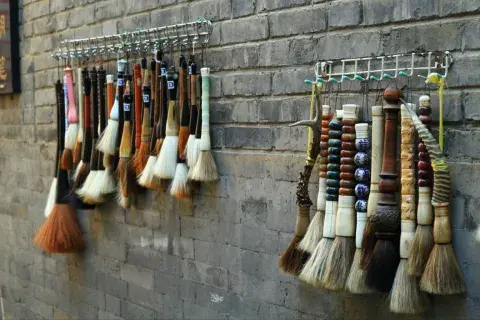
Hop inside your private, climate-controlled vehicle and travel to your first stop: Liulichang Antique Street. Situated in old Beijing, this history-steeped street is lined with stone shop-houses selling antique books, handicrafts, paintings, rubbings, glazed pottery, and other treasures.
Hear about Liulichang’s history, and get advice from your guide as to the best shopping opportunities....Read more
Start your private tour with pickup from your central Beijing hotel, and meet your private guide.
Hop inside your private, climate-controlled vehicle and travel to your first stop: Liulichang Antique Street. Situated in old Beijing, this history-steeped street is lined with stone shop-houses selling antique books, handicrafts, paintings, rubbings, glazed pottery, and other treasures.
Hear about Liulichang’s history, and get advice from your guide as to the best shopping opportunities. Sift through the traditional shops and stands, and explore the side lanes (hutongs), where the shops still bear original Ming and Qing architectural features like ornately carved doors and upswept roofs.
Next, drive to Panjiayuan Market, a so-called ‘weekend market’ that’s open daily. Weave through the throng of stands, perusing the huge array of antiques, curios, ceramics, Tibetan rugs, calligraphy, and other finds.
After shopping here, refuel with lunch at a Chinese restaurant, and continue to Baoguosi Cultural Market, set around an old temple. Scour the courtyards of vendors hawking stamps, books, coins and jade, and get tips on scouting out and clinching the best deals from your guide.
If time allows, squeeze in a visit to Hongqiao Market, a mall known for its pearl traders, and electronics, art, clothes, and accessories shops. Trawl for bargains, and haggle over pearls and other precious gems as perfect keepsakes of your time in Beijing.
After seven hours, your tour concludes with a hotel drop-off.

$50 Per Day
One day tirp to Bajiao Zhai, a noticeable Danxia Landform.
This is a tailor-made trip for nature-lovers and fans of photography. Danxia rock formation in the inland basin is a red rock debris, and later uplift due to the movement of the earth-crust, erosion of rocks by the water and weathering, which was dominant in the hillside to collapse back, kept down the rocks to form the red mountain block. This area was listed in the Natural Heritage of the world in 2009 by UNESCO. Bajiao Zhai Village is a combination of strategic place, steepy mountian, elegant scenery and secluded remote....Read more
This is a tailor-made trip for nature-lovers and fans of photography. Danxia rock formation in the inland basin is a red rock debris, and later uplift due to the movement of the earth-crust, erosion of rocks by the water and weathering, which was dominant in the hillside to collapse back, kept down the rocks to form the red mountain block. This area was listed in the Natural Heritage of the world in 2009 by UNESCO. Bajiao Zhai Village is a combination of strategic place, steepy mountian, elegant scenery and secluded remote. It is reputed as the "Soul of Danxia Landform". Here you can enjoy the sunrise or sunset and the sea-cloud. 1. I'll pick you up at 8:00 am in your hotel, and transfer to Bajiao Zhai Village by our private van. On the way, you can enjoy some terraced fields, bamboo groves and the wooden residences of the natives.(3.5 hours by ride) 2. First, we'll visit the village and have lunch in the village, and then we'll hike the mountains, the scenery including the group of snails looking up the sky, the ancient trail, Eye-stone, Joss stick of dragon's head and the Treasured sword Peak.(4 hours by hike) 3. After appreciating the sunset, after dinner in Ziyuan county, we'll take the bus back to your hotel around 10:00 pm.