Yunnan Province Attractions




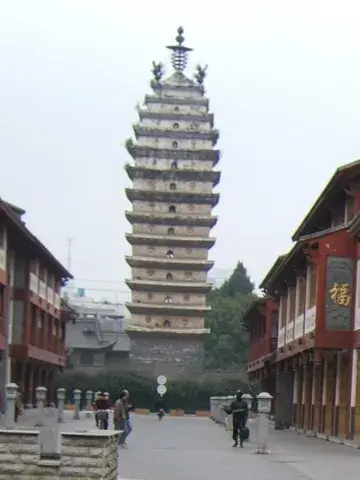
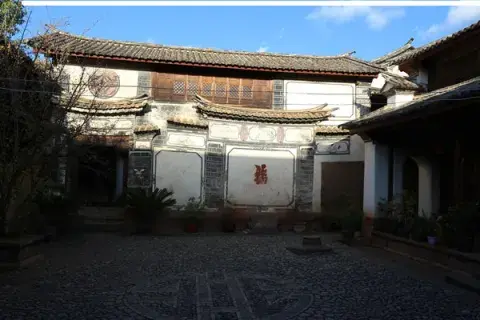
Yunnan Province Articles
Lijiang Murals
Lijiang Murals
...Lijiang Murals
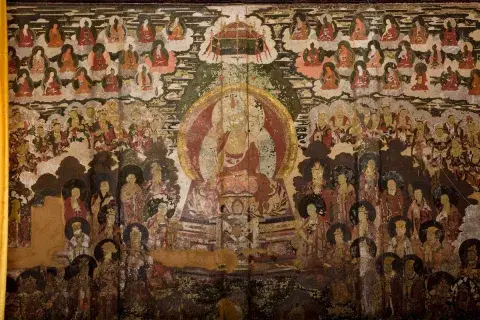
Lijiang's murals are works of the Ming Dynasty,chiefly created from the Hongwu to the Wanli eras.They were originally distributed among the Juexiansi Temple and twelve others,nine of which fell to ruins.The remaining four temples have altogether 55 murals,with a total area of 139.22 sq.m.The biggest of them is in Dabaoji Palace.the figures depicted in it amount to 100,all disposed naturally and reasonably,with life-like miens expressing a variety of postures the whole gamut of emotions.The murals contained in the glazed chamber of the Dabaoji Palace are provincial cultural relic under enhanced preservation.
The murals in Dabaoji Palace are anonymous.According to the research of Lijiang's artists for many years,they might be regarded as the collective creation of the Ming painters during several hundred years,and is a crystal of are which mergres the painting style of the Naxi,Tibetan,bai and Han people.One of the distinctive features is the mixing together,in one mural,of the classic stories of Buddhism that came from Tibet(Lamaism) and the local people's own Buddhism adopted from India as well as Taoism. The paining technique is characterized by delicate and exquisite strokes containing the elements of condensation and compactness of the inland and Tibetan paining as well as the elements of boldness and dynamism of the Dongba painting and the Tibetan Lamaist painting.They are marked by strong contract of colours,vividness and truthfulness of features,plumpness of figures and elaborateness of production.
Dongba Culture
Dongba Culture
...Dongba Culture
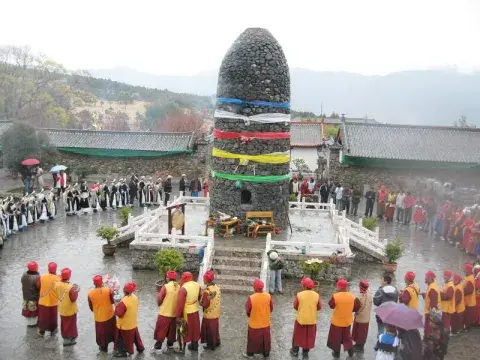
The Dongba hieroglyphs,the Dongba scriptures,and the Dongba painting,music and dance compose in the aggregate the Dongba culture.The Naxi people are and ancient civilized people.As early as over one thousand years ago,it brought into being a polytheist it primitive religion called the Dongba,which created the hieroglyphs and a whole system of Dongba culture.The latter has been handed down to the present time and has become a precious cultural legacy of Chinese people.
The hieroglyphs,or the Dongba script,consists of more than 3,000 words in addition to some 700 simplified hieroglyphs.The Dongba Scriptures are a voluminous and substantial Naxi encyclopedia.The more than 20,000 volumes of the book series contain ancient legends and tales,narrative epics,folk poem,proverbs and description of the Naxi populace's life in olden times and its relationship with other people.It is therefore a precious source material for the study of Naxi people's religion,history,social development,life customs and language.Related to Dongba primitive religion much influenced by the Bon Sect of the Tibetan Lamaism are the Dongba painting,Dongba music and dance.It is reported that a volume of dance notation called"Cuo Tang",which records the Dongba dance,is the only hieroglyphic choreography hitherto discovered in the world,and is held in high regard by the scholars of the world.
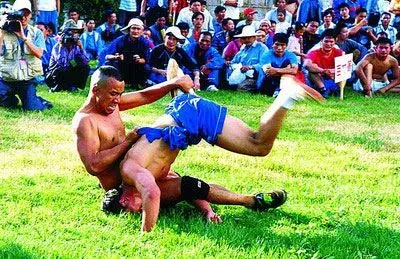
The Torch Festival Of Yi People
The Torch Festival Of Yi People
...The Torch Festival Of Yi People
On the 24th of the sixth month of the lunar year,the yi people hold their annual Torchlight festival.At the time of festival,in the vast area extending from Guishan Mountain Ranges to the bank of the lancanngjiang River,the Yi people and other local people dresses in their best ,playing "lusheng'(reed-pipe) and plucking the three-stringed lutes,gather on the the meadows of the mountainsides,assemble in the villagers on the shores.The festival is noted for its multifarious activities such as playing dragons,wrestling,bull fighting,horse race,archery contest,seizing for fire crackers,climbing oiled poles.tug-of-war-play,etc.At nightfall,they make various torches by putting together on pine twigs and hemp stalks they have collected.then they race over the fields and through the orchards,holding high the torches and letting off fire crackers,in an attempt to drive away pests and eliminate ermines as well as invoking bumper harvests ans assure of the tranquility of men and stock animals.
the Torch Festival of Yi people might have originated from the fire worship.the forms of celebrating it in different localities are manifold and the folk legends in this regard are numerous,Apart from the above-cited programmers,the festival as held in the Chuxiong yi Autonomous Prefecture has the following additional activities.
Top Yunnan Province Tours
$1100 Per Day
The Ethnic Discovery of Yunnan
Duration: 8 days/ 7 nights
Destinations: Kunming, Dali, Lijiang, Shangri-La
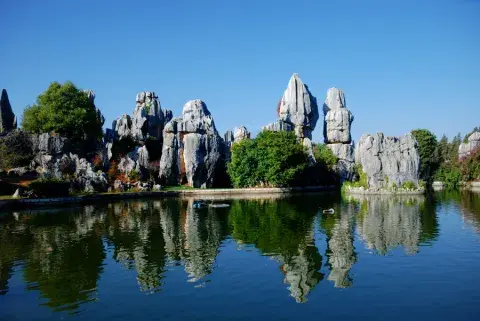
Highlights: There are so many extraordinary places waiting for you to discover in Yunnan. In 8 days, you can feast your eyes on the wonderful natural beauty as well as the historic and cultural heritages in Kunming, Dali, Lijiang and Shangri-La. The Stone Forest, Three Pagodas, Lijiang Old Town, Tiger Leaping Gorge, Ganden Songzanlin Monastery and Nixi Village of Tibetan will highlight your trip.
• Day 1 Kunming
Arrival in Kunming, meet your guide at airport and transfer to hotel.
The capital of Yunnan Province, Kunming is one of China’s noted historical and cultural cities. The city is located in central Yunnan at the elevation of 1894 meters above sea level and is praised as the city of eternal spring.
Rest of the day at leisure
Accommodation:
Kunming Grand Park Hotel
• Day 2 Kunming
Drive along the new express way to the Stone Forest. Stone Forest is 75 kilometers from Kunming and is accessible by a bus ride of 70 minutes. The Stone forest belongs to the typical Karst geomorphology, it consists of innumerable bizarre-shaped ancient limestone cliffs and peaks created by wind and water erosion some 200 million years ago, and this area is praised as the “First Wonder Under Heaven”. It’s inscribed as Nature Heritage by UNESCO.
Drive back to Kunming by the old road, visit a village en route.
Visit the Green Lake Park in the afternoon. Attractions in the neighborhood of Green Lake Park include the former Yunnan Army Academy, believed to be the biggest quadrangle building of China, and people in Kunming enjoying their leisure life in the afternoon.
• Day 3 Kunming - Dali (by public express bus)
Overland drive with seat in public bus from Kunming to Dali, 360 kilometers, or about 4.5 hours.
Standing against the Cangshan Mountains in the west and adjoining the Erhai Lake in the east, embraced by undulating hills around, Dali was the capital of Nanzhao and Dali Kingdom as early as 1,300 years ago. It is home to Bai minority.
Upon arrival in Dali, proceed to visit the Three Pagodas, followed by a guided stroll in Dali old town.
Standing in a way of a tripod on the outskirts of old town, the Three Pagodas were constructed in about 850 and 1050 following the model of the Small Wild Goose Pagoda in Xi’an. For centuries, they are considered landmark of the region.
The Dali Old Town of weathered gray granite stands at 2,100 meters on a long, narrow rice plain between the Cangshan Mountains and the Erhai Lake, a natural configuration that seems specially designed for a good, bountiful life. Format of the old town is like a chessboard with four gates guarding in the directions of east, south, west and north, a design that was adopted by most towns in ancient China.
Accommodation:
Dali Landscape Hotel
• Day 4 Dali - Lijiang (by automobile)
In the morning, overland drive of 180 kilometers, or 3.5 hours, along the new road on private vehicles to Lijiang.
Visit the Bai minority village Xizhou on the way.
23 kilometers north of Dali, Xizhou village has a more mixed population and cosmopolitan background. It grew and flourished in the Ming Dynasty (1368-1644) along with the fortunes of Dali’s renowned tea merchants that traded to Tibet. Family Yan’s courtyard is a good example of traditional Bai houses. And each morning, villagers in Bai dresses gather in a small market to buy and sell their produce and daily wares.
Then continue driving to Shaping. Shaping Market is a local market on every Monday. The local people come to the market from surrounding villages to exchange their daily wares, farming products, traditional clothes, or simply foods and vegetables.
Upon arrival in Lijiang, check in at hotel. Afternoon will be free for your first visit of the old town.
A gathering place of rugged mountain people with the Naxi forming the majority, Lijiang is a small mountain town of stone and tile, laced with swift canals, which was enlisted as an UNESCO World Cultural Heritage in 1999.
Old town of Lijiang is a big area with its center, or Si Fang Jie (Square Street) in the form of an official ink stone, hence its name Dayan (ink stone) Town. It enjoys a long history of over 800 years and unlike most of the old towns in China, there is no city walls due to a superstitious belief of the local ruler whose family name is Mu (tree), when encircled by walls, would be Kun (besieged). Wooden structures, mountains, small rivers and lanes integrate harmoniously in this mountain town.
Accommodation:
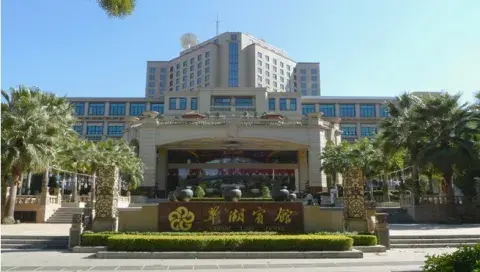
Hexi Hotel Lijiang (or similar)
• Day 5 Lijiang
In the morning visit the Black Dragon Pond with Dongba Museum. The Pond provides you opportunity of taking great pictures of the crystal clear pond with backdrop of snow mountains in a distance.
Then, drive out to the Naxi minority villages at the foot of Jade Dragon Snow Mountains.
Visit the Yuhu Village, a simple village of Naxi minority with the Former Residence of Dr. Joseph Rock. Dr. Rock, an Austro-American botanist and explorer who lived here off and on from 1922-1949, is best remembered for the introduction of innumerable plant species to the West and his rigorous works on Naxi ethnology.
Transfer back to your hotel after lunch. Rest of the day for your own discorvery in the Old Town.
Lunch at local Chinese restaurant, dinner at leisure.
• Day 6 Lijiang - Shangri-La (by automobile)
We drive to Shangri-La with stops and visits to the First Bend of the Yangzi River and the Tiger Leaping Gorge on the way.
The village of Stone Drum stands at the First Bend of the Yangzi River, some 70 kilometers west of Lijiang. Approaching to Stone Drum offers a dramatic view of the Yangzi's near-180-degree turn, where the wide, swift waters perform a miraculous about-face. For nearly 20 kilometers the river, first flowing south, then north, runs parallel to itself. Locals say if it were not for their village standing guard at the bend, China would lose the water of the Yangzi to Southeast Asia, like that of the adjacent Mekong and Salween Rivers.
The Tiger Leaping Gorge, or Hutiaoxia in Chinese, is the Yangzi's best-known gorge after the Three Gorges in Sichuan and Hubei. Wedged tightly between titanic cliffs, the river is so narrow here, as legend tells us, that a hunted tiger made his escape to the other side in a single bound. Here, the Jade Dragon Snow Mountains and the Haba Snow Mountains lean close to each other and a large volume of torrent moving between them cutting deeper and deeper into the bottom of the gorge. In some places there is a drop of 3,000 meters to the water.
Arrive Shangri-La in the late afternoon, check in at hotel.
Shangri-La lies in a landscape of rolling hills, snow-capped peaks, virgin forests of spruce, pine and meadow dotted with wild flowers and tranquil lakes. The old town, still entirely in local Tibetan style, is to the south of Shangri-La.
Accommodation:
Shangri-La Moonlight City Hotel (or similar)
• Day 7 Shangri-La
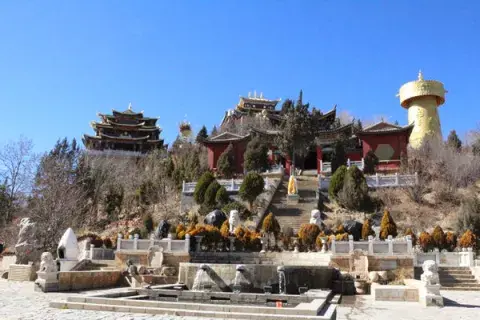
Visit Ganden Songzanlin Monastery in the morning.The Ganden Songzanlin Monastery was founded in the 17th century during the reign of the Great Fifth Dalai Lama only 2 kilometers to the north of county proper. Being one of the thirteen Tibetan monasteries in the Kangba Region, where Tibet, Yunnan and Sichuan join, Ganden Songzanglin Monastery is nicknamed by local the Lesser Potala Palace. Holding about 700 monks and one living Buddha, the monastery is a must-go in the region.
Then make an excursion to Tukawa Village to visit a Tibetan family where the Tibetan builds their houses by wood with big sitting room and Buddhism hall.
Late afternoon at leisure for your own visit of the old town and local market in Shangri-La.
• Day 8 Shangri-La
Free at leisure and departure transfer to airport for next flight.
Service ends.
Tour excludes:
-- Arrival flight to Kunming and airport tax;
-- Departure flight from Shangri-La and airport tax;
-- All dinners, other meals, drinks and personal expenses;
-- Tips to the guide and driver;
-- Any program other than mentioned in our program.
$70 Per Day
Lashihai-migratory birds'heaven
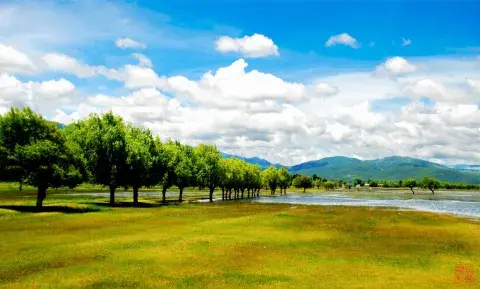
Today we have a funny vocation in Lashihai lake. Lashihai is in the center of the Lashi Dam and it is the first natural reserve area of Yunnan province named “wetland”. The avifauna in Lashi wetland can be divided into 4 communities: water surface area, swamp, agricultural farmland and forest vegetation. We can choose different areas to have a visit. Also, because of its special geography location, unique climate and distinctively ecological environment, Lashihai Lake is an ideal hibernating ground for migratory birds. If you like this kind of birds, you can come here in winter....Read more
Today we have a funny vocation in Lashihai lake. Lashihai is in the center of the Lashi Dam and it is the first natural reserve area of Yunnan province named “wetland”. The avifauna in Lashi wetland can be divided into 4 communities: water surface area, swamp, agricultural farmland and forest vegetation. We can choose different areas to have a visit. Also, because of its special geography location, unique climate and distinctively ecological environment, Lashihai Lake is an ideal hibernating ground for migratory birds. If you like this kind of birds, you can come here in winter.
Then, let’s talk about our vocation. In the morning, we ride a horse along the Tea-horse road. What is the Tea-horse road? In the ancient times, because the representative commodities trade on this road were tea and horses after Tang and Song Dynasty, it was called Tea-horse Road. The ancient “Tea-horse” road was a major old route for trading tea and horse between the inland agricultural region and the remote nomadic region. So, when we walk along the road ,we can have a feeling with deeply historic and cultural. Lashi Lake is a beautiful place for us to go.actually,we have a lot of fun there.Also,if we want,we can have a barbecue there.After the lunch,wo go boating by ouselves.it also makes many fun.

$300 Per Day
4-day Lijiang Scenery and Ancient Culture Tour
Day 1
In the morning visit the Black Dragon Pool park, and visit the Dongba Culture Museum inside the park. Next transfer to visit Yuhu Village and the Former Residence of Joesph Rock....Read more
Day 1
In the morning visit the Black Dragon Pool park, and visit the Dongba Culture Museum inside the park. Next transfer to visit Yuhu Village and the Former Residence of Joesph Rock.
--The Black Dragon Pool is a charming and tranquil park and pool system in the north east of Lijinag on the northern edge of Lijiang’s famous Old Town. The Black Dragon Pool is the head waters of the Yushui River that provides water for the Old Town. If you are visiting Lijiang’s Old Town, the Black Dragon Pool is a must see and a great way to relax and enjoy beautiful natural scenery after the hustle and bustle of the Old Town.
Charming autumn scenery of Black Dragon Pool
--Yuhu Village is the last village in the Lijiang Basin at the foot of Jade Dragon Snow Mountain. The houses were made of a unique stone called "monkey head" by Naxi people.There is a Yuhe Lake beside the village. Water in this lake comes from he melted snow in the mountains. The holy water from this holy mountain of the Naxi makes this small village very mysterious.
After lunch visit Baisha Village and Baisha Naxi Embroidery Institute, then drive to visit Yufeng Monastery.
--Baisha Village is a small village near Dayan town. It is also one of the first settlements of Naxi ancestors. The ancestors of the Naxi people crossed the Jinshajiang River, came down from Jade Dragon Snow Mountain and finally entered Lijiang Basin. The first place Naxi tribes arrived in Lijiang was Baisha. Here, Naxi Ethnic groups set up the first settlement and created their Dongba culture.
Mysterious Naxi fresco in Baisha village
In the evening you can choose to wander around the old town of Lijiang, which is much more charming when night falls.
Day 2
A whole day tour of holy Jade Dragon Snow Mountain begins
In the morning visit Ganhaizi Meadow, take the sightseeing bus to visit Baishui(White Water) River, which is a green water river because water from the Glacier Park of Yulong Snow Mountain; After that, take the chairlift to visit the Yak Meadow(3700M) in the Yulong Snow Mountain. You will enjoy Impression Lijiang Ethnic Show in the outdoors theater infront of Jade Dragon Snow Mountain. Impression Lijiang is directed by Zhang Yimou who is one of the most famous director in the world.Then return to Lijiang city.
You can take a cable to visit the Jade Dragon Snow Mountain if you car not good at climbing
--Jade Dragon Snow Mountain stretches a length of 35 kilometers (22 miles) and a width of 20 kilometers (13 miles). Looking from Lijiang Old Town in the south which is 15 kilometers (nine miles) away, the snow-covered and fog-enlaced mountain resembles a jade dragon lying in the clouds, hence, the name Jade Dragon Snow Mountain. The highest peak named Fan Peak (Shanzidou in Chinese) which is about 5596 meters above sea level. There are three cable cars in the mountain, the fist to the Glacier Park(4500M),the second to Spruce Meadow(3200M),the third to Yak Meadow(3700M).
Day 3
In the morning, dive 6 hrs on the spectacle mountain road to visit the mysterious Lugu Lake. On the way, enjoy the beautiful view among the huge mountains and rivers. You can start your walking halfway from Jin’anqiao Bridge to Shudi along the road at the bank of Yangtze River for you will see the beautiful canon and Yi ethnic people’s villages in the steep mountains. After 1 hour walking in the canon, you can continue the driving and stop in many Yi villages.
Late afternoon, take the canoes to visit Liwubi Island and Snake Islet in Lugu Lake.
Breathtaking scenery of Lugu Lake
In the evening, take part in Mosuo Bonfire Party with ethnic dance and singing performance.You will dance and sing with Mosuo boys and girls around a big bonfire in the outdoors theatre.
Day 4
A full day Luguhu Lake tour.Enjoy the sunset wonder of Luguhu Lake in Luoshui Village. Then drive back to Lijiang.