Xinjiang Region Attractions
Xinjiang Region Articles
Drive the Karakoram Highway
One of the most scenic drives you’re ever likely to encounter, the Karakoram Highway connects the historic Silk Road city of Kashgar with the Sino-Pakistani border high in the mountains.
...One of the most scenic drives you’re ever likely to encounter, the Karakoram Highway connects the historic Silk Road city of Kashgar with the Sino-Pakistani border high in the mountains.
A day long drive that takes you through sun-blasted desert, swaying grasslands, high mountain passes, and past churning glacial rivers – this is a drive that’s all about the journey and not the destination.
Notable stops along the way include the fiery Red Mountain, the icy beauty of Karakul Lake, the historic Stone Fort in Tashkurgan, the snow-capped Sand Mountain, the serene Golden Grasslands, and the snowy silence of Kunjerab Pass.
If you need our guide/assistant/sourcing/interpreter, welcome to contact us.:)
We can custom your trip and guide you.
Please click my photo and add my contact. Let's talk details.
Thanks for reading.
Jessica In China (86-13570345653)
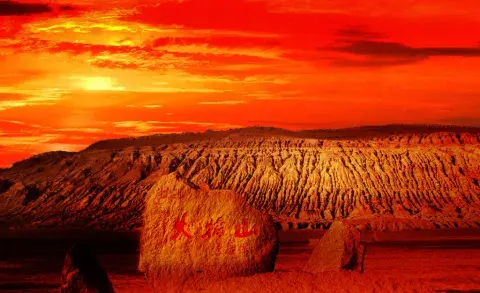
Flaming mountain
Flaming mountain, also called “Red Mountain”, is located in the north of Turpan in China’s northwest Xinjiang Region....
Flaming mountain, also called “Red Mountain”, is located in the north of Turpan in China’s northwest Xinjiang Region. It lies 6.2 miles (10 km) to the east of Turpan city, stretching about 62 miles (100 km) from the east Shanshan County to the west Turpan with a width of 5.6 miles (9 km). The average height is 1,640 feet (500 meters), while the highest peak is around 2,726 feet (831 meters). It is the hottest place in China with the highest temperature around 47.8 °C (118 °F) and surface temperature over 70 °C (158 °F) in summer. Because of the high temperature, eggs can even be roasted at that time and no vegetation exists there.
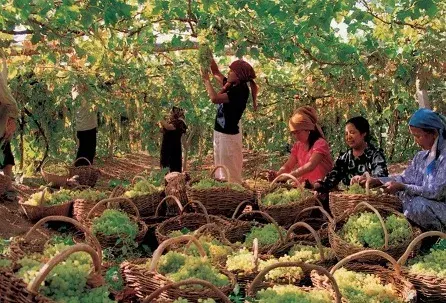
the Grape Valley
Located 7 miles (11 km) to the northeast of Turpan, the Grape Valley stretches 5 miles (8 km) from north to south with a width of 1.2 miles (2 km). Being one of the valleys on the west side of the Flaming Mountain, it has totally different scenery from the Flaming Mountain....
Located 7 miles (11 km) to the northeast of Turpan, the Grape Valley stretches 5 miles (8 km) from north to south with a width of 1.2 miles (2 km). Being one of the valleys on the west side of the Flaming Mountain, it has totally different scenery from the Flaming Mountain. It is burning hot at Flaming Mountain, but pleasantly cool in this green Grape Valley. This paradise of 543 acres (220 hectares) is covered with layer upon layer of grapes.
About 13 varieties of grapes such as Manaizi (mare nipple grape), Wuhebai (white seedless grape) and so on are cultivated. Every year over 300 tons of raisins are made here. Every single grape is crystal and juicy - some are as green as emerald; some as red as agate, some as small as pearls while others are like olives. Among all these grapes, Wuhebai is reputed as a ‘bright pearl’ with the sugar content as much as 20% to 24%. Containing sugar about 60%, the raisin made of the Wuhebai, is tasty and the treasure of Turpan.
Top Xinjiang Region Tours
$0 Per Day
Chinese Silk Road Tours
Day 1 Dunhuang
On arriving at Dunhuang, met and transferred to the hotel. Enjoy the rest of the day to explore the city on your own.
Day 2 Dunhuang
Meals: Breakfast, Lunch
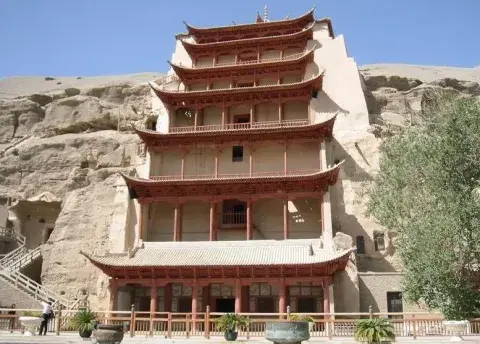
This morning is primarily devoted to tour the Mogao Grottoes (UNESCO). It is the world's most important site of ancient Buddhist Culture. The treasure house contains hundreds of sandstone caves holding more than 2,000 statues and 45,000 brilliantly bright paintings of Buddha and Chinese mythological figures....Read more
Day 1 Dunhuang
On arriving at Dunhuang, met and transferred to the hotel. Enjoy the rest of the day to explore the city on your own.
Day 2 Dunhuang
Meals: Breakfast, Lunch
This morning is primarily devoted to tour the Mogao Grottoes (UNESCO). It is the world's most important site of ancient Buddhist Culture. The treasure house contains hundreds of sandstone caves holding more than 2,000 statues and 45,000 brilliantly bright paintings of Buddha and Chinese mythological figures.
In the afternoon there will be an excursion to the Gobi Desert, the largest desert in Asia and the fourth largest in the world.
Then you can have the opportinuty to take a camel ride through towering yellow sand dunes. The picture-look desert scenery is unique over the entire length of the Silk Road.
After that visit the small and mysterious Crescent Lake.
Day 3 Dunhuang - Urumqi (by air)
Meals: Breakfast
After a morning at leisure in Dunhuang, you will fly to Urumqi, the capital of Xinjiang Uygur Autonomous Region, and transfer to the hotel. There you will experience the Islamic culture of Uygur people and many other ethnic groups.
Day 4 Urumqi - Turpan (by automobile, 200km)
Meals: Breakfast, Lunch
After breakfast visit Xinjiang Autonomous Region Museum. The museum is worth a visit as the place holds interesting and rare visual exhibits highlighting the lifestyle of the minority groups of Xinjiang.
Before leaving for Turpan, there will be a lunch at the typical Uygur Korgan Restaurant, where authentic and tasty Uygur food is served. After lunch you will take a scenic drive across the Heavenly Mount to Turpan, known as Oasis in the Gobi Desert. On the way you could see a village located at the valley of Heavenly Mount, which was a very prosperous caravan city called “Daban Cheng” in the history of Silk Road.
Upon arrival at Turpan, met and transferred to the hotel.
Day 5 Turpan
Meals: Breakfast, Lunch
The entire day will be dedicated to exploring the marvelous city of Turpan, where Eastern and Western culture blend perfectly.
First take a visit to the Gaochang Ancient Ruins. This area is the capital of ancient kingdom Gaochang and its ruins is the biggest one in Xinjiang.
Then approach the Astana Tombs which are known as “The Underground Museum” and highly regarded by Chinese and foreign archaeologists and historians. More than 400 tombs have been excavated from there since 1950.
Afterwards pass by the Flaming Mountain, made famous in the Chinese classic literature of “Journey to the West”.
And then visit the Bazelik Thousand Buddha Caves. There are 77 caves and inside each cave is a rural of the Buddha painted on the ceiling along with hundreds of Buddhist sculptures and figures.
The afternoon program begins with the visit to the mysterious ruins of Jiaohe city (UNESCO), which reveals traces of a prosperous ancient trading center and military base 600 years ago.
Day 6 Trupan - Urumqi (by automobile) - Kashgar (by air)
Meals: Breakfast, Lunch
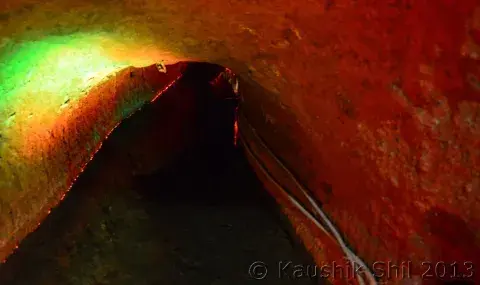
Today take a visit to the Karez System (UNESCO) — an underground irrigation system and is considered to be one of the three great ancient projects of China. Its main function is to deliver water from nearby snow-capped mountains to Turpan and its agricultural fields.
After that visit Sugong Pagoda — an exquisite Islamic tower. It's the biggest pagoda in Xinjiang and boosts a history of 200 years.
And then you drive back to Urumqi and after lunch take a flight to Kashgar. Upon arrival, met and transferred to the hotel. The rest of the day is free to explore on your own.
Day 7 Kashgar
Meals: Breakfast, Lunch
Today you take excursion to Karakol Lake. Drive through the Karakurum Highway to have a good sight of the beautiful snow-capped mountain and the lake. Many Kirgiz People reside here — yurts, cattle and friendly people are waiting for you.
A Kirghiz family will host a picnic lunch for the group.
Day 8 Kashgar
Meals: Breakfast, Lunch
Take a visit to the Tomb of the Fragrant Concubine. The concubine, who was born with fragrance, was the concubine of Chinese Emperor Qianlong and the granddaughter of the famous Abakh Hoja. The buildings there demonstrate the grandness of the royal family of ancient Uygur.
Then visit the Old Town of Kashgar in the afternoon. The 2000-year-old city is full of historical buildings of ethnical characters and its every street can tell the story of the past.
After lunch there will be a visit of the Idkah Mosque, the largest mosque in China and the religious center of Kashgar. The large prayer hall of the mosque is supported by 140 carved wooden pillars. The call to prayer booming from the mosque can be heard throughout the city center.
At the end of the day you will explore the Handicraft Street of the city.
Day 9 Kashgar - Khotan (by automobile, about 520 km)
Meals: Breakfast, Lunch
Today you take a senic drive from Kashgar to Khotan which has long been an important strategic and trading center between China and Central Asia. On the way, the main stop wil be Yarkant, an important trade center that Marco Polo visited twice. The stop in Yarkant will include a lunch, as well as a visit to the Yarkant King Mausoleum. You will arrive in Khotan at approximately 7pm.
Day 10 Khotan
Meals: Breakfast, Lunch
In the morning, visit jade, silk and carpets factories. Khotan is presently one of very few places where one can find black and white jade, as well as the green nephritic quality jade.
In the afternoon, we'll visit the Khotan Sunday Bazaar. Thousands of people of many ethnicities converge on this market every Sunday to sell produce, spices, nuts, Kashgari (nan) bread, rock sugar, melons, tea, dried fruits, colorful rugs, silk and cotton textiles, jade and precious stones, Uygur-style hats, knitted sweaters, hand made embroideries etc. The market is photographers' paradise. Most locals do not mind having their pictures taken.
Day 11 Khotan
Meals: Breakfast, Lunch
Take a half-day tour of Khotan and some of the tourist attractions nearby. The rest of the day will be at leisure or dedicated to shopping souvenirs.
Day 12 Khotan - Aksu (by automobile)
Meals: Breakfast, Lunch
On this day you will cross, south to north, the entire Taklamakan Desert, the “Desert of No Return” in the Uygur language. Fortunately there is a brand new, excellent road between Khotan and Aksu, which was completed in July 2007. Thus, the long ride in the desert is smooth and quite comfortable. This stretch of road offers the amazing views of the desert and cotton fields, worthing several stops for taking great pictures. Alongside the road the Chinese have fastened strong reed stalks into the dunes, in checkerboard fashion, to prevent the road from being buried by sand during the sand-storms.
Upon arrival at Aksu, met and transferred to the hotel.
Day 13 Aksu - Kuche (by automobile)
Meals: Breakfast, Lunch
During the bus drive from Aksu to Kuche, you will stop to visit the Kizil Thousand Buddha Caves, the earliest major Buddhist cave complex in China, dating from the 3rd to the 8th century AD.
Upon arrival at Kuche, met and transferred to the hotel.
Day 14 Kuche
Meals: Breakfast, Lunch
This morning begins with the visit to the extensive ruin of the Ancient City of Subashi where you can indentify the street layout many years ago and see some of the 20-feet hight walls standing still.
Next visit the Kezikalahan War-Signaling Station, the best preserved signaling station dating back to the Han Dynasty. A short stroll in the market will follow.
In the afternoon visit the imposing Kucha Mosque, a grand buiding with a green-titled dome, presenting a clear ethnical character.
At last you will pay a visit to the home of a local Uygur woman.
Day 15 Kuche
Meals: Breakfast, Lunch
This morning will be spent on the Kuche Friday Bazaar, where over 30,000 people crowd on the alleys and streets of both old and new towns to do business. All kinds of goods, from wares to herbal medicines, dried fish, embroidered caps, jewelry, wool carpets, silk garments and sheep are available. The afternoon will be at leisure.
Day 16 Kuche - Urumqi (by air)
Meals: Breakfast, Lunch
On this day you will fly directly to Urumqi. Upon arriving, go for a visit to a local Kazak family and the Erdaoqiao Bazaar, which is believed to be the largest outdoor market in Xinjiang.
Day 17 Urumqi
Meals: Breakfast, Lunch
Drive to Heavenly Lake. You will start by visiting the surreal Heavenly Lake, which is surrounded by the vastness of mountain peaks and alpine meadows with an elevation of 2000 meters above sea level.
In this mountainous area Kazakh families pitch their yurts and graze their herds of horses, sheep and cattle. Among these surroundings you will enjoy a picnic lunch with a Kazak family.
Day 18 Urumqi
Meals: Breakfast
You will be transferred to the airport for homeward flight.
Service ends.
$50 Per Day
Turpan private tour
1. Jiaohe Ruins - The Jiaohe Ruins is the place of ancient Chinese ruins found in the Yarnaz Valley, 10 km west of the city of Turpan. The city of Jiaohe was the capital of the Anterior Jushi Kingdom, concurrent with the Han Dynasty, Jin Dynasty and Southern and Northern Dynasties in China. It was finally abandoned after its destruction during an invasion by the Mongols led by Genghis Khan in the 13th century.
1. Jiaohe Ruins - The Jiaohe Ruins is the place of ancient Chinese ruins found in the Yarnaz Valley, 10 km west of the city of Turpan. The city of Jiaohe was the capital of the Anterior Jushi Kingdom, concurrent with the Han Dynasty, Jin Dynasty and Southern and Northern Dynasties in China. It was finally abandoned after its destruction during an invasion by the Mongols led by Genghis Khan in the 13th century.
2. Karez Well - It is a loacal Turfan water system, called karez well in Turfan. It is a qanat system that has been regarded as one of the three greatest water projects of ancient China together with the Du Jiang Yan Irrigation System, and the Grand Canal.
3. Flaming Mountains - The Flaming Mountains are barren, eroded, red sandstone hills in the east of the city of Turfan. The mountain climate is harsh and the temperature is extremely hot in the summer, the hottest site in China.
4. Grape Valley - Situated in the Flaming Mountain 13 km east of Turpan, the Grape Valley is 8km long from north to south and 0.5km wide. This green paradise of 400 hektares is covered with layer upon layer of grapes.
5.Bezeklik Thousand Buddha Caves - Situated at the foot of Flaming Mountains lying 13km east of Turpan city, they are a group of Buddhist cave grottos dating from the 5th to the 9th centuries. There are 77 rock-cut caves at the site. Most have rectangular spaces with rounded arch ceilings often divided into four sections, each with a mural of Buddha.
6. Imin Minaret - The Sugong Pagoda lies in the southeast suburb, six kilometers away from Turpan City. The cylindrical Sugong Pagoda is 37 meters high and 10 meters in diameter from the bottom. The pagoda was built in 1181 by the ruler of the Turpan Prefecture, to honor his father.
7. Toyuk old uyghur Village
$300 Per Day
Tour to Top 5 Most Beautiful Deserts in China
1. Badain Jaran Desert in Inner Mongolia
Covering an area of 49,000 square kilometers, Badain Jaran Desert is the third largest desert in China and the forth largest in the world. It located in Araxan League of north China's Inner Mongolia autonomous region.With an area of 47,000 square kilometers, the desert has the tallest sand hill at over 500 meters, so it is also called the "Qomolangma of Deserts".
2. Taklimakan Desert in Xinjiang
...Read more1. Badain Jaran Desert in Inner Mongolia
Covering an area of 49,000 square kilometers, Badain Jaran Desert is the third largest desert in China and the forth largest in the world. It located in Araxan League of north China's Inner Mongolia autonomous region.With an area of 47,000 square kilometers, the desert has the tallest sand hill at over 500 meters, so it is also called the "Qomolangma of Deserts".
2. Taklimakan Desert in Xinjiang
The Taklamakan Desert, also known as Taklimakan, is a desert in Central Asia, in the Xinjiang Uyghur autonomous region of China. As one of the largest sand deserts in the world, the Taklimakan Desert covers an area of 330,000 square kilometers.
3. Gurbantunggut Desert in Xinjiang
The Gurbantunggut Desert, located in the center of Junggar Basin, to the east of the Manas River and south of the Ulungur River. With an area of 48,800 square meters, the desert is the second largest desert in China. Its climate is temperate. Its eco-environment is very fragile, and the impact of human activities on the eco-environment, including the building of a trans-desert highway, has been increasingly significant.The sand hills in the desert are 300 to 600 meters above sea level.
4. Singing Sand Dunes & Crescent Moon Spring in Gansu
Singing sand, is sand that produces sounds of either high or low frequency under pressure. The sound emission is usually triggered by wind passing over dunes or by walking on the sand. The sound is generated by shear stress.The Crescent Moon Spring locates at 5km south of Dunhuang city in Gansu. Since time immemorial, the scenic spot is famous across the whole world for its “Coexistence of mountain and spring, sand and water”. It is appraised as “Unique Scenery in the north of Great Wall”, and listed as National Key Tourist Attractions of the People's Republic of China in 1994. About over 300 meters long and 50 meters wide, the Crescent Moon Spring is surrounded by Singing sand Dunes. The poplars stand elegantly beside the spring and fishes swim happily and leisurely. The spring water tastes fresh and sweet and water in the color of light blue.
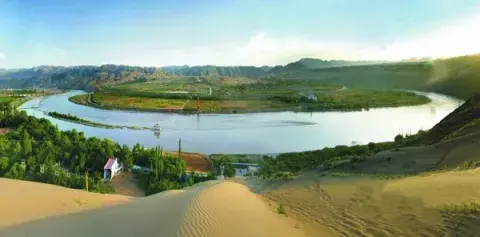
5. Shapotou in Ningxia
Shapotou Desert is located on the southern edge of the Tengger Desert. It is the site of the world-renowned Shapotou Desert Experimental Research Station. There is also singing sand in Shapotou. Thousands of domestic tourists descend upon Shapotou each year to enjoy the natural scenery and partake in various activities on and around the 100-metre high dunes.It has a width of 2,000 meters and a height of 100 meters with an inclination of 60 degrees. When standing at the foot of the sand hills, you can see what looks like a waterfall, but is actually sand.