Xinjiang Region Attractions
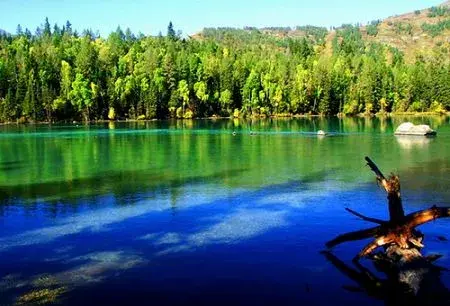
DESTINATION | Kanas Lake, Altai, Xinjiang
Surface area44.78 km²Max. depth184 mSurface elevation1,340 m
Kanas Lake (Chinese: 喀纳斯湖; pinyin: Kānàsī Hú) is a lake in...
Surface area44.78 km²Max. depth184 mSurface elevation1,340 m
Kanas Lake (Chinese: 喀纳斯湖; pinyin: Kānàsī Hú) is a lake in Altay Prefecture, Xinjiang, China. The lake is located in a valley in the Altai Mountains, near the very northern tip of Xinjiang, and the province's borders with Kazakhstan, Mongolia, and Russia. It is China's deepest freshwater lake.
The Kanas River, flowing out of the lake, later merges with other stream to form the Burqin River, which in its turn falls into the Irtysh in Burqin County.
There is a large population of Tuvans in the area.
About 117 different kinds of birds live along the lake.
There have been sightings of large lake creatures in the waters. A video was taken and shown in the local Chinese media where numerous unidentifiable creatures can be seen. According to CCTV10, the creatures living in the lake are speculated by Chinese scholar as giant Hucho taimen.
private car; bus; flight
See the Caucasian mummies in Urumqi
Creating mummies is not the sole domain of ancient Egypt, although Xinjiang’s controversial ‘Tamin Mummies’ were created by the province’s heat and dry rather than religious ritual.
Why controversial? The near 4,000-year-old Loulan Beauty is distinctly Caucasian in her features, which is at...
Creating mummies is not the sole domain of ancient Egypt, although Xinjiang’s controversial ‘Tamin Mummies’ were created by the province’s heat and dry rather than religious ritual.
Why controversial? The near 4,000-year-old Loulan Beauty is distinctly Caucasian in her features, which is at odds with modern China’s assertions that Xinjiang has always been a part of China.
The Xinjiang Museum in which the mummies reside is worth a visit while in the provincial capital, with exhibits on the province’s melting pot of ethnicities as well as its vital role in the ancient Silk Road.
If you need our guide/assistant/sourcing/interpreter, welcome to contact us.:)
We can custom your trip and guide you.
Please click my photo and add my contact. Let's talk details.
Thanks for reading.
Jessica In China (86-13570345653)
Xinjiang Region Articles
Urumqi in Xinjiang province.
In January 2020 I visited Urumqi the capital of the Xinjiang province. It is the Uygur Autonomous Region in the far northwest of the People's Republic of China and on the border with Russia and Kazakhstan....
In January 2020 I visited Urumqi the capital of the Xinjiang province. It is the Uygur Autonomous Region in the far northwest of the People's Republic of China and on the border with Russia and Kazakhstan. With 640.000 square meters Xinjiang is the largest province of China. It is the area where Uyghur people live. The Uyghurs are one of China's 55 officially recognized ethnic minorities. They are recognized by the Chinese government as a regional minority within a multicultural nation. In the street you can easily recognize the Uyghur people as they have different looks with other groups in China.
Urumqi itself is a big city with more than 3.5 million people and lot of industries. It is a very dry area. The nearest sea is at 2500 kilometers from the city. Urumqi is one of the driest places in the world.
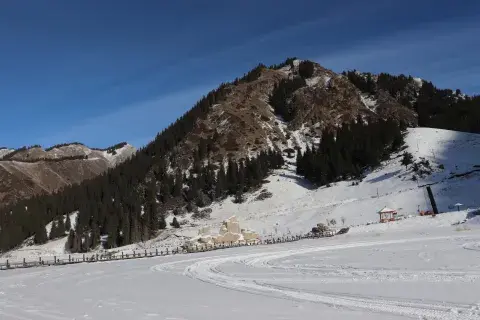
I visited in wintertime and then it is very cold with a lot of snow spread all over the area. In wintertime, you must bring warm clothes. In summer it can be very hot.
I spend several days in Urumqi. One of the most interesting places I visited was the International Bazar. You can find a number of local specialities. Delicious traditional Xinjiang gourmet food, minority costumes and seeing the performance of national dancers. It is a very vibrant atmosphere.
I also visited the Tianshan grand canyon. This about 50 kilometres east of Urumqi. It is an extraordinary place with high mountain, huge forests. For a city girl like me a wonderful place to be. Although it was very cold we made long walks and enjoy the beautiful views. As I said before everything was covered with snow and the water of the stream that will turn into a river was now turned into ice.
Another impressive place I was the Xinjiang historic relics exhibition. Here I saw several desiccated corpses in that are thousands of years old. Because the climate in Xinjiang is very dry all the time corpse will be preserved forever. I had never seen before and was very impressed.
Xinjiang is fare away from Shanghai. But it is an ancient and mysterious city. Very interesting to visit and waiting for lots of people to explore and discover.
Xu Jin
April 2020
Tianshan Grand Canyon
Tianshan Grand Canyon (天山大峡谷) also called Keziliya valley, located in the Aksu region in northern Kuqa, from east to west in depth is about 5.5 kilometers long....
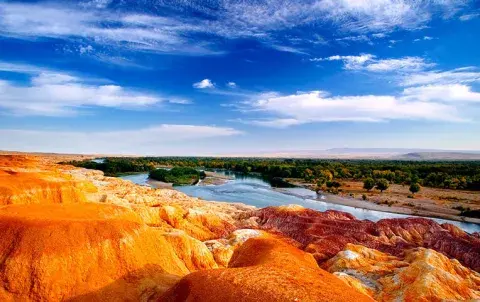
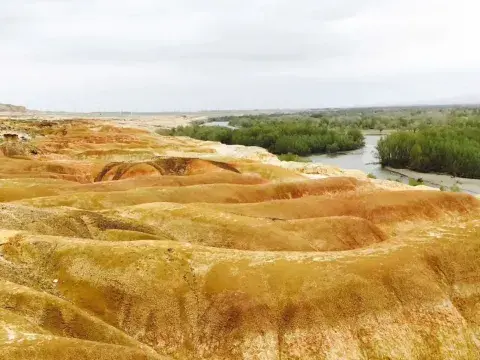
Tianshan Grand Canyon (天山大峡谷) also called Keziliya valley, located in the Aksu region in northern Kuqa, from east to west in depth is about 5.5 kilometers long. A reddish-brown rock carving by wind and rain, canyon winding path leading to a secluded spot, where can see a new world, the mountain body is various, the open sky, overlapping ditch with the valley. Nantian valley, ghost valley, crescent gorge, tiger tooth bridge and Motian cave such landscape modeling is vivid.1.4 km away from the cliff, there is a Tang dynasty grottoes. On the south and north, west of grottoes wall remaining murals and Chinese characters, and is 700 meters from canyon accompany by the mysterious valley.
If you need our guide/assistant/sourcing/interpreter, welcome to contact us.:)
We can custom your trip and guide you.
Please click my photo and add my contact. Let's talk details.
Thanks for reading.
Jessica In China (86-13570345653)
Koktokay Scenic Spot
Koktokay Scenic Spot (可可托海景区) is an ideal place for sightseeing, vacationing, hiking, photographing and scientific expedition. It is the origin of the Irtysh River, which is the only river in China flowing into the Arctic Ocean....
Koktokay Scenic Spot (可可托海景区) is an ideal place for sightseeing, vacationing, hiking, photographing and scientific expedition. It is the origin of the Irtysh River, which is the only river in China flowing into the Arctic Ocean. The geopark consists of four major parts: the Irtysh Grand Canyon, Cocoa Sullivan Lake, Ilaymu Lake and Kalaxianger Earthquake Fault Zone. Koktokay means “green forest” in Kazakh language and “blue river bend” in Mongolian, implying that it has been a beautiful place since ancient times.
If you need our guide/assistant/sourcing/interpreter, welcome to contact us.:)
We can custom your trip and guide you.
Please click my photo and add my contact. Let's talk details.
Thanks for reading.
Jessica In China (86-13570345653)
Top Xinjiang Region Tours
$0 Per Day
Chinese Silk Road Tours
Day 1 Dunhuang
On arriving at Dunhuang, met and transferred to the hotel. Enjoy the rest of the day to explore the city on your own.
Day 2 Dunhuang
Meals: Breakfast, Lunch
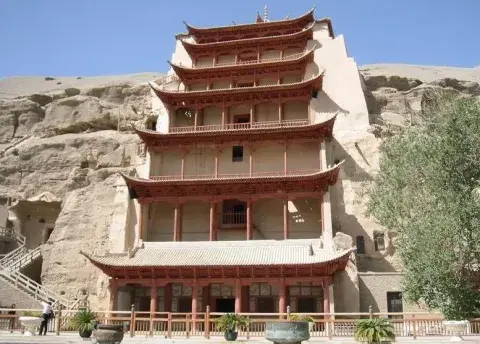
This morning is primarily devoted to tour the Mogao Grottoes (UNESCO). It is the world's most important site of ancient Buddhist Culture. The treasure house contains hundreds of sandstone caves holding more than 2,000 statues and 45,000 brilliantly bright paintings of Buddha and Chinese mythological figures....Read more
Day 1 Dunhuang
On arriving at Dunhuang, met and transferred to the hotel. Enjoy the rest of the day to explore the city on your own.
Day 2 Dunhuang
Meals: Breakfast, Lunch
This morning is primarily devoted to tour the Mogao Grottoes (UNESCO). It is the world's most important site of ancient Buddhist Culture. The treasure house contains hundreds of sandstone caves holding more than 2,000 statues and 45,000 brilliantly bright paintings of Buddha and Chinese mythological figures.
In the afternoon there will be an excursion to the Gobi Desert, the largest desert in Asia and the fourth largest in the world.
Then you can have the opportinuty to take a camel ride through towering yellow sand dunes. The picture-look desert scenery is unique over the entire length of the Silk Road.
After that visit the small and mysterious Crescent Lake.
Day 3 Dunhuang - Urumqi (by air)
Meals: Breakfast
After a morning at leisure in Dunhuang, you will fly to Urumqi, the capital of Xinjiang Uygur Autonomous Region, and transfer to the hotel. There you will experience the Islamic culture of Uygur people and many other ethnic groups.
Day 4 Urumqi - Turpan (by automobile, 200km)
Meals: Breakfast, Lunch
After breakfast visit Xinjiang Autonomous Region Museum. The museum is worth a visit as the place holds interesting and rare visual exhibits highlighting the lifestyle of the minority groups of Xinjiang.
Before leaving for Turpan, there will be a lunch at the typical Uygur Korgan Restaurant, where authentic and tasty Uygur food is served. After lunch you will take a scenic drive across the Heavenly Mount to Turpan, known as Oasis in the Gobi Desert. On the way you could see a village located at the valley of Heavenly Mount, which was a very prosperous caravan city called “Daban Cheng” in the history of Silk Road.
Upon arrival at Turpan, met and transferred to the hotel.
Day 5 Turpan
Meals: Breakfast, Lunch
The entire day will be dedicated to exploring the marvelous city of Turpan, where Eastern and Western culture blend perfectly.
First take a visit to the Gaochang Ancient Ruins. This area is the capital of ancient kingdom Gaochang and its ruins is the biggest one in Xinjiang.
Then approach the Astana Tombs which are known as “The Underground Museum” and highly regarded by Chinese and foreign archaeologists and historians. More than 400 tombs have been excavated from there since 1950.
Afterwards pass by the Flaming Mountain, made famous in the Chinese classic literature of “Journey to the West”.
And then visit the Bazelik Thousand Buddha Caves. There are 77 caves and inside each cave is a rural of the Buddha painted on the ceiling along with hundreds of Buddhist sculptures and figures.
The afternoon program begins with the visit to the mysterious ruins of Jiaohe city (UNESCO), which reveals traces of a prosperous ancient trading center and military base 600 years ago.
Day 6 Trupan - Urumqi (by automobile) - Kashgar (by air)
Meals: Breakfast, Lunch
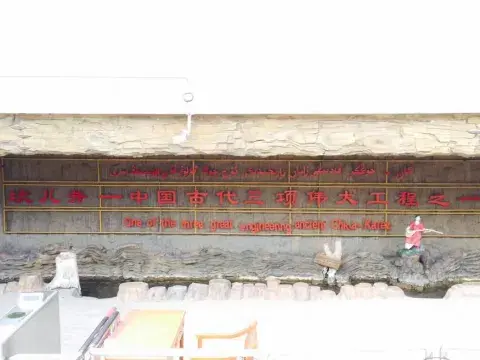
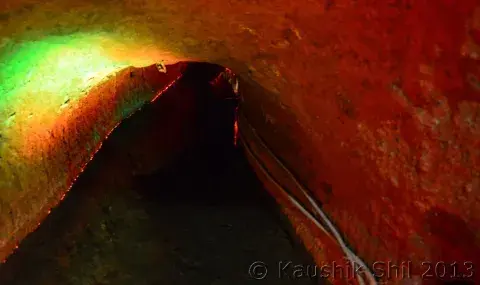
Today take a visit to the Karez System (UNESCO) — an underground irrigation system and is considered to be one of the three great ancient projects of China. Its main function is to deliver water from nearby snow-capped mountains to Turpan and its agricultural fields.
After that visit Sugong Pagoda — an exquisite Islamic tower. It's the biggest pagoda in Xinjiang and boosts a history of 200 years.
And then you drive back to Urumqi and after lunch take a flight to Kashgar. Upon arrival, met and transferred to the hotel. The rest of the day is free to explore on your own.
Day 7 Kashgar
Meals: Breakfast, Lunch
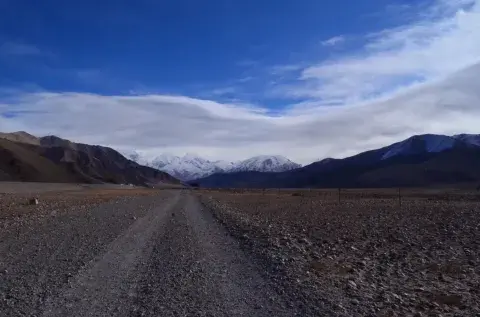
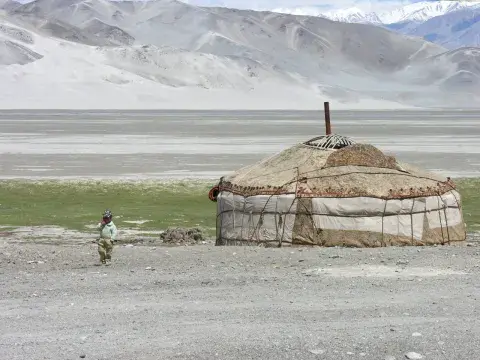
Today you take excursion to Karakol Lake. Drive through the Karakurum Highway to have a good sight of the beautiful snow-capped mountain and the lake. Many Kirgiz People reside here — yurts, cattle and friendly people are waiting for you.
A Kirghiz family will host a picnic lunch for the group.
Day 8 Kashgar
Meals: Breakfast, Lunch
Take a visit to the Tomb of the Fragrant Concubine. The concubine, who was born with fragrance, was the concubine of Chinese Emperor Qianlong and the granddaughter of the famous Abakh Hoja. The buildings there demonstrate the grandness of the royal family of ancient Uygur.
Then visit the Old Town of Kashgar in the afternoon. The 2000-year-old city is full of historical buildings of ethnical characters and its every street can tell the story of the past.
After lunch there will be a visit of the Idkah Mosque, the largest mosque in China and the religious center of Kashgar. The large prayer hall of the mosque is supported by 140 carved wooden pillars. The call to prayer booming from the mosque can be heard throughout the city center.
At the end of the day you will explore the Handicraft Street of the city.
Day 9 Kashgar - Khotan (by automobile, about 520 km)
Meals: Breakfast, Lunch
Today you take a senic drive from Kashgar to Khotan which has long been an important strategic and trading center between China and Central Asia. On the way, the main stop wil be Yarkant, an important trade center that Marco Polo visited twice. The stop in Yarkant will include a lunch, as well as a visit to the Yarkant King Mausoleum. You will arrive in Khotan at approximately 7pm.
Day 10 Khotan
Meals: Breakfast, Lunch
In the morning, visit jade, silk and carpets factories. Khotan is presently one of very few places where one can find black and white jade, as well as the green nephritic quality jade.
In the afternoon, we'll visit the Khotan Sunday Bazaar. Thousands of people of many ethnicities converge on this market every Sunday to sell produce, spices, nuts, Kashgari (nan) bread, rock sugar, melons, tea, dried fruits, colorful rugs, silk and cotton textiles, jade and precious stones, Uygur-style hats, knitted sweaters, hand made embroideries etc. The market is photographers' paradise. Most locals do not mind having their pictures taken.
Day 11 Khotan
Meals: Breakfast, Lunch
Take a half-day tour of Khotan and some of the tourist attractions nearby. The rest of the day will be at leisure or dedicated to shopping souvenirs.
Day 12 Khotan - Aksu (by automobile)
Meals: Breakfast, Lunch
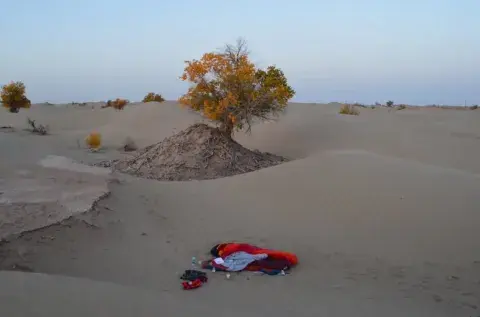
On this day you will cross, south to north, the entire Taklamakan Desert, the “Desert of No Return” in the Uygur language. Fortunately there is a brand new, excellent road between Khotan and Aksu, which was completed in July 2007. Thus, the long ride in the desert is smooth and quite comfortable. This stretch of road offers the amazing views of the desert and cotton fields, worthing several stops for taking great pictures. Alongside the road the Chinese have fastened strong reed stalks into the dunes, in checkerboard fashion, to prevent the road from being buried by sand during the sand-storms.
Upon arrival at Aksu, met and transferred to the hotel.
Day 13 Aksu - Kuche (by automobile)
Meals: Breakfast, Lunch
During the bus drive from Aksu to Kuche, you will stop to visit the Kizil Thousand Buddha Caves, the earliest major Buddhist cave complex in China, dating from the 3rd to the 8th century AD.
Upon arrival at Kuche, met and transferred to the hotel.
Day 14 Kuche
Meals: Breakfast, Lunch
This morning begins with the visit to the extensive ruin of the Ancient City of Subashi where you can indentify the street layout many years ago and see some of the 20-feet hight walls standing still.
Next visit the Kezikalahan War-Signaling Station, the best preserved signaling station dating back to the Han Dynasty. A short stroll in the market will follow.
In the afternoon visit the imposing Kucha Mosque, a grand buiding with a green-titled dome, presenting a clear ethnical character.
At last you will pay a visit to the home of a local Uygur woman.
Day 15 Kuche
Meals: Breakfast, Lunch
This morning will be spent on the Kuche Friday Bazaar, where over 30,000 people crowd on the alleys and streets of both old and new towns to do business. All kinds of goods, from wares to herbal medicines, dried fish, embroidered caps, jewelry, wool carpets, silk garments and sheep are available. The afternoon will be at leisure.
Day 16 Kuche - Urumqi (by air)
Meals: Breakfast, Lunch
On this day you will fly directly to Urumqi. Upon arriving, go for a visit to a local Kazak family and the Erdaoqiao Bazaar, which is believed to be the largest outdoor market in Xinjiang.
Day 17 Urumqi
Meals: Breakfast, Lunch
Drive to Heavenly Lake. You will start by visiting the surreal Heavenly Lake, which is surrounded by the vastness of mountain peaks and alpine meadows with an elevation of 2000 meters above sea level.
In this mountainous area Kazakh families pitch their yurts and graze their herds of horses, sheep and cattle. Among these surroundings you will enjoy a picnic lunch with a Kazak family.
Day 18 Urumqi
Meals: Breakfast
You will be transferred to the airport for homeward flight.
Service ends.
$150 Per Day
4days culturale trip around of Kashgar
kDay 1
Arrive in kashgar airport then city tour
We pick up you from Kashgar airport and transfer to the hotel. After short rest . In the morning, Visit the largest bazaar in Central Asia at the Kashgar famous Sunday market (livestock market and main bazaar); in the afternoon walk around old city area and Spend time by the Id Kah mosque, the largest mosque in China and marvel at the intricate architecture of Kashgar!ˉs historic Apak hojatomb. some very interesting streets, then have dinner at a local restaurant with local music and dance.
Stay in Kashgar...Read more
kDay 1
Arrive in kashgar airport then city tour
We pick up you from Kashgar airport and transfer to the hotel. After short rest . In the morning, Visit the largest bazaar in Central Asia at the Kashgar famous Sunday market (livestock market and main bazaar); in the afternoon walk around old city area and Spend time by the Id Kah mosque, the largest mosque in China and marvel at the intricate architecture of Kashgar!ˉs historic Apak hojatomb. some very interesting streets, then have dinner at a local restaurant with local music and dance.
Stay in Kashgar
Day 2,
Kashgar to Karakul Lake
We set out along the Sino - Pakistan Karakorum Highway , on the Pamir plateau (the roof of the world) for your visit to Karakul Lake ( 3600m above sea level). The lake sits at the feet of the notorious, Muztagh Ata ( 7546m ) and Gongur ( 7719m ) mountains. 'Muztagh Ata' means Father of the Ice Mountain and is one the most beautiful and mysterious mountains in the world.
People travel to experience the lives of another culture, which is why we spend the night in the yurt of a local Kyrgyz family and really experience another way of life.
200km, 3.5 hours driving
Day 3,
Karakul Lake to Tashkorgan-Kunjirap pass (the China-Pakistan Border)
Tashkurgan Tajik autonomous county was once an important hub on the old Silk Road . The area borders Pakistan and Afghanistan and is connected to them via the Kunjerab Pass. After arriving at Tashkurgan, you'll have an opportunity to see the town's ancient stone fort - still standing after 1800 years! 'Tashkurgan' is a translation of 'Stone Fort.' Walking around Tajik neighborhoods, and pay a visit to Local Tajik families live around this historic town.
Stay in hotel at Tashkorgan
Karakul lake to Tashkorgan: 100km , 2 hours driving
Tashkorgan to Kunjirap pass: 260km for round trip. About 4 hours
$50 Per Day
Turpan private tour
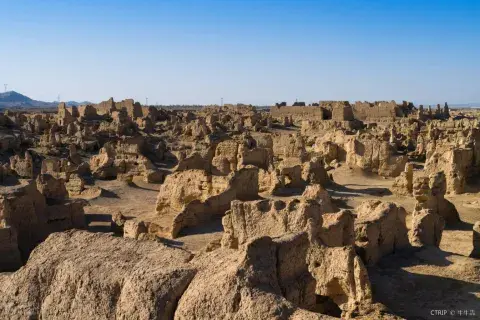
1. Jiaohe Ruins - The Jiaohe Ruins is the place of ancient Chinese ruins found in the Yarnaz Valley, 10 km west of the city of Turpan. The city of Jiaohe was the capital of the Anterior Jushi Kingdom, concurrent with the Han Dynasty, Jin Dynasty and Southern and Northern Dynasties in China. It was finally abandoned after its destruction during an invasion by the Mongols led by Genghis Khan in the 13th century.
1. Jiaohe Ruins - The Jiaohe Ruins is the place of ancient Chinese ruins found in the Yarnaz Valley, 10 km west of the city of Turpan. The city of Jiaohe was the capital of the Anterior Jushi Kingdom, concurrent with the Han Dynasty, Jin Dynasty and Southern and Northern Dynasties in China. It was finally abandoned after its destruction during an invasion by the Mongols led by Genghis Khan in the 13th century.
2. Karez Well - It is a loacal Turfan water system, called karez well in Turfan. It is a qanat system that has been regarded as one of the three greatest water projects of ancient China together with the Du Jiang Yan Irrigation System, and the Grand Canal.
3. Flaming Mountains - The Flaming Mountains are barren, eroded, red sandstone hills in the east of the city of Turfan. The mountain climate is harsh and the temperature is extremely hot in the summer, the hottest site in China.
4. Grape Valley - Situated in the Flaming Mountain 13 km east of Turpan, the Grape Valley is 8km long from north to south and 0.5km wide. This green paradise of 400 hektares is covered with layer upon layer of grapes.
5.Bezeklik Thousand Buddha Caves - Situated at the foot of Flaming Mountains lying 13km east of Turpan city, they are a group of Buddhist cave grottos dating from the 5th to the 9th centuries. There are 77 rock-cut caves at the site. Most have rectangular spaces with rounded arch ceilings often divided into four sections, each with a mural of Buddha.
6. Imin Minaret - The Sugong Pagoda lies in the southeast suburb, six kilometers away from Turpan City. The cylindrical Sugong Pagoda is 37 meters high and 10 meters in diameter from the bottom. The pagoda was built in 1181 by the ruler of the Turpan Prefecture, to honor his father.
7. Toyuk old uyghur Village