Mian shan or Mountain Mian
Mianshan is the quite high mountain in Shanxi province. It is not far from Pingyao to the mountain. It is only one hour driving.
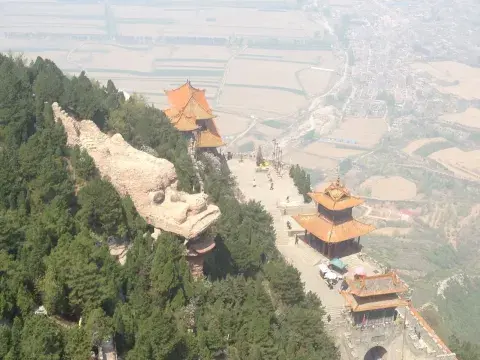
It is famous for the ancient building,temple,and consits about 6 big sights as Qixian Canyon, dragon head temple, Daluo palace, Sky bridge e...
Mianshan is the quite high mountain in Shanxi province. It is not far from Pingyao to the mountain. It is only one hour driving.
It is famous for the ancient building,temple,and consits about 6 big sights as Qixian Canyon, dragon head temple, Daluo palace, Sky bridge etc
More information, please visit their web.
We have a day trip to Mianshan, if you would like to visit, you can contact with us .

countryard of family qiao
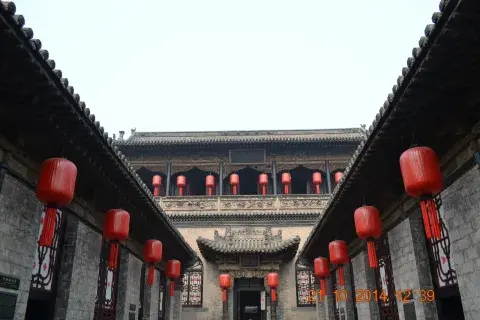
Courtyard of Family Qiao located in Qixian County in Shanxi Province , 54 km south of Taiyuan.this is a kind of civil house ,it is the most complete civil house which is preserved in china.it occupying area of 8725 square meters,while the floorage occupies 3870 square meters.it has 6 compou...
Courtyard of Family Qiao located in Qixian County in Shanxi Province , 54 km south of Taiyuan.this is a kind of civil house ,it is the most complete civil house which is preserved in china.it occupying area of 8725 square meters,while the floorage occupies 3870 square meters.it has 6 compounds, 20 small courtyards, 313 housings.

Mosque
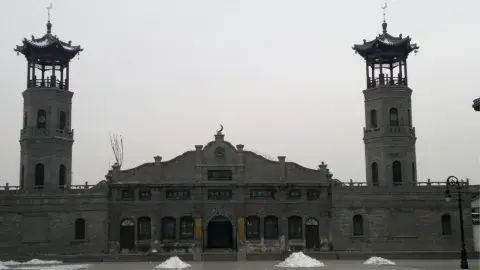
Islam probably first reached China in the mid-7th century. The Yuan Dynasty (1271-1368) witnessed the zenith of prosperity of Islam. Datong Mosque is located in the heart of old Datong City. It is one of the most well known Mosques in Shanxi Province. According to a stone stele in the Mosque, thi...
Islam probably first reached China in the mid-7th century. The Yuan Dynasty (1271-1368) witnessed the zenith of prosperity of Islam. Datong Mosque is located in the heart of old Datong City. It is one of the most well known Mosques in Shanxi Province. According to a stone stele in the Mosque, this ancient mosque was first build in the Yongle Period of the Ming Dynasty (1368-1644). It was built in the early period shortly after the introduction of Islam to China. Facing to the west, the mosque has three courtyards with main buildings located on the central axis, namely entrance gate of the temple, second gate of the temple, Pavilion for Introspection, Best Scholar Bridge, Praying Hall, stone carving screen and back door. The layout of the temple is rectangular in shape covering an area of around 20 Mu (13,333 square meters). In 1981, the mosque was put on the list of cultural relics under the protection of the city government. In 2008, an overall project of Preservation and Rejuvenation of Historical and Cultural City undertaken by Datong local government started. As one of part of this overall city construction project, Datong Mosque was restored to its magnificent original appearance.

Datong City Museum
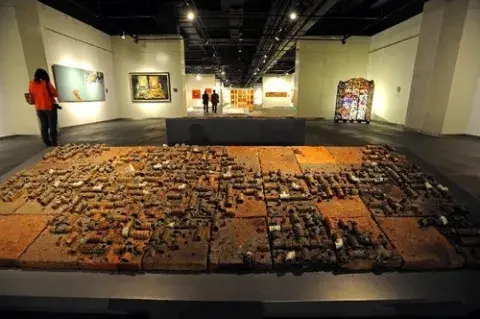
The Datong City Museum is a local comprehensive museum of China. It was opened to the public in 1959 and after more than 50 years it has been developed into the second largest museum in Shanxi Province. The Museum has collected 13,000 relics, of which 132 items are first grade cultural relics. Mo...
The Datong City Museum is a local comprehensive museum of China. It was opened to the public in 1959 and after more than 50 years it has been developed into the second largest museum in Shanxi Province. The Museum has collected 13,000 relics, of which 132 items are first grade cultural relics. Most of the relics were unearthed in Datong, an ink stone, excavated from the site of former buildings of the Northern Wei Dynasty outside the South Gate of Datong City, is a rare relic of stone carving art. The gold-plated copper goblet, another invaluable relic, was from Persia (now Iran). The carved stone coffin, the column stand and the lacquer painting unearthed from the tomb of the Sima Jinlong (Minister of War) in the Northern Wei Dynasty provide valuable information for studying the calligraphy, painting, carving and lacquer ware of ancient China. Among the porcelain wares of China the porcelain pillow from the Yuan Dynasty (1271-1368) is a rare art treasure from the Jingdezhen Kiln.

Datong City Museum
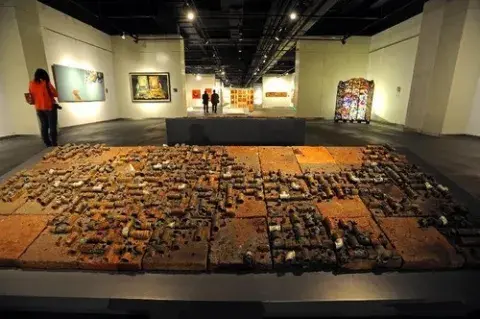
The Datong City Museum is a local comprehensive museum of China. It was opened to the public in 1959 and after more than 50 years it has been developed into the second largest museum in Shanxi Province. The Museum has collected 13,000 relics, of which 132 items are first grade cultural relics. Mo...
The Datong City Museum is a local comprehensive museum of China. It was opened to the public in 1959 and after more than 50 years it has been developed into the second largest museum in Shanxi Province. The Museum has collected 13,000 relics, of which 132 items are first grade cultural relics. Most of the relics were unearthed in Datong, an ink stone, excavated from the site of former buildings of the Northern Wei Dynasty outside the South Gate of Datong City, is a rare relic of stone carving art. The gold-plated copper goblet, another invaluable relic, was from Persia (now Iran). The carved stone coffin, the column stand and the lacquer painting unearthed from the tomb of the Sima Jinlong (Minister of War) in the Northern Wei Dynasty provide valuable information for studying the calligraphy, painting, carving and lacquer ware of ancient China. Among the porcelain wares of China the porcelain pillow from the Yuan Dynasty (1271-1368) is a rare art treasure from the Jingdezhen Kiln.

Eastern city wall Belt Park
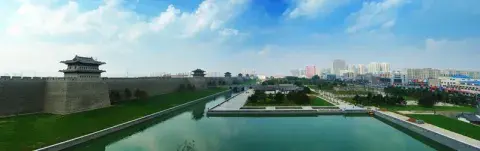
A collection of fine sculptural art from different dynasties can be found in Datong. The golden time for ancient Datong was the Northern Wei Dynasty when Datong was taken as the capital city for nearly one hundred years and in the Liao Dynasty when the city was taken as the second capital city fo...
A collection of fine sculptural art from different dynasties can be found in Datong. The golden time for ancient Datong was the Northern Wei Dynasty when Datong was taken as the capital city for nearly one hundred years and in the Liao Dynasty when the city was taken as the second capital city for nearly two hundreds years. The sculpture art demonstrated in Yungang Grottoes, Huayan Temple and Shanhua Temple opened a new era in the sculpture history of China. As the home of nearly 100,000 pieces of ancient sculpture, Datong is reputed as ‘Sculpture Capital City of China’. As a model of the combination of sculpture and city planning the Eastern City Wall Belt Park is constituted with the city moat, a sink-style courtyard, green belt, sculpture squares etc. which creates a magnificent view together with eastern city wall. The Eastern City Wall Belt Park is 2 kilometers long and 210 meters wide covering an area of 450,000 square meters. There are altogether six sculpture squares with an area of 2,500 square meters each one with six individual sculptures as its theme. These give every visitor a taste of the human environment and the profound history of the city.

Yanmenguan Pass of Great Wall
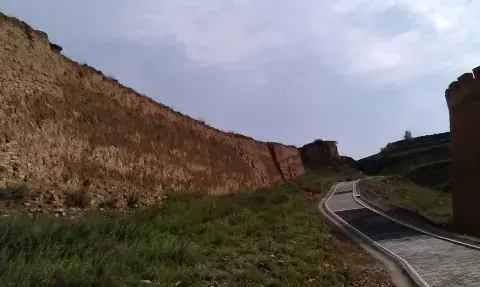
Yanmenguan Pass of Great Wall is located in the Gouzhu Mountain ranges, within the Hengshan Mountain range, 12 miles to the north of Dai County, in Shanxi Province. Along with Ningwuguan Pass and Pianguan Pass, Yanmenguan Pass is one of three important passes through the inner line of the Great W...
Yanmenguan Pass of Great Wall is located in the Gouzhu Mountain ranges, within the Hengshan Mountain range, 12 miles to the north of Dai County, in Shanxi Province. Along with Ningwuguan Pass and Pianguan Pass, Yanmenguan Pass is one of three important passes through the inner line of the Great Wall in the Shanxi section. It is also known by other names, namely Yanmensai and Xilongguan. Located at a place of strategic importance and difficult to get through, it was regarded as the principal one of the nine passes under heaven in ancient times. Many famous historical battles have been fought in the area.
Yan means 'wild goose' in English, and was so-named because wild geese are seen flying around the pass every year. Early in the Spring and Autumn Period (770 BC - 476 BC), King Wuling of Zhao established Yanmen County in this region. The Tang Dynasty (618 - 907) built a pass called Xiting Pass by Yanmen Mountain, west of the present l ocation. In the year 1374 during the Ming Dynasty (1368 - 1644),
Yanmenguan Pass Gatethe pass was rebuilt and moved to today's location.
This Great Wall pass is 0.6 miles wide. There are three gates: the small north gate, west gate and east gate. The small north gate is inscribed with the three characters, 'Yan Men Guan'; the west gate is labelled 'Di Li', meaning the favorable geographical location; the east gate is labelled 'Tian Xian', translated as the unbreakable stronghold. Adjacent to the pass, lies Jingbian Temple.
The Yanmenguan Pass of Great Wall is being well preserved at present. It is a precious ancient military relic, attracting more and more people who visit here to recall past times.
How to get there :
By Car: exit from 'Xinguangwu’ Exit/ Entrance of Dayun Freeway and then travel southward about 7-8 kilometers to ge there;
By Bus: take a bus running from Daixian County to Datong, get off at Yanmenguan and then walk about 2 kilometers to get there;
By Taxi: about CNY 100 from Daixian County to get there by taxi.

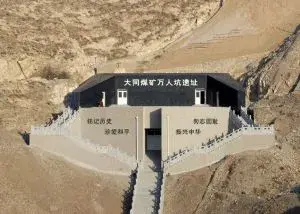
The Thousands Dead Pit in Datong
There are piled up bones of the dead who were killed or persecuted to death by Japanese aggressors after they occupied Datong in the Second World War. In their 8 years aggression against Datong, they killed over 60 thousands coal workers.In Datong there are over 20 "thousands dead pits "...
There are piled up bones of the dead who were killed or persecuted to death by Japanese aggressors after they occupied Datong in the Second World War. In their 8 years aggression against Datong, they killed over 60 thousands coal workers.In Datong there are over 20 "thousands dead pits " like this, and here is one of them. It is the ironclad that Japanese aggressors cruelly killed Chinese coal mine workers and Japan aggressed against China. Nowadays here is the base for national defense and patriotic education that always remind people not to forget the national humiliation.

Under Pit Tour in Datong
It is located 300 meters deep underground in Jinhugagong Coal Mine where there present thousands years mining history.As the biggest in the world , only one in Asia,and number one in China.It is a real coal pit that people can experience directly and have a real touch. There are 6 different faces...
It is located 300 meters deep underground in Jinhugagong Coal Mine where there present thousands years mining history.As the biggest in the world , only one in Asia,and number one in China.It is a real coal pit that people can experience directly and have a real touch. There are 6 different faces in the pit which are the primitive mining , the blasting mining, the general mining ,the high level general mining, the comprehensive mining and the comprehensive tunneling mining. In each face coal mine workers demonstrate on -the -spot with real instruments and facilities, which reappears really the different mining processes. Visitors could experience coal mine life after putting on workers' suits.