Nanjing Museum


Located at the southern foot of Purple Mountain (Zijin Shan, 紫金山), Nanjing Museum is a highly-regarded, comprehensive collection of history and art. The museum was established in 1933 as the National Central Museu...


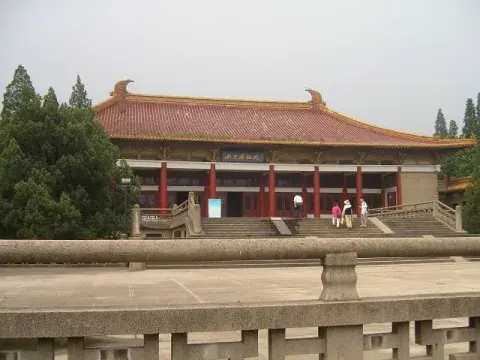
Located at the southern foot of Purple Mountain (Zijin Shan, 紫金山), Nanjing Museum is a highly-regarded, comprehensive collection of history and art. The museum was established in 1933 as the National Central Museum, on the suggestion of Mr. Cai, Yuanpei. Mr. Cai, Yuanpei was a famous scholar at that time, and was once the president of Peking University

The museum covers an area of 13 hectares and consists of two main buildings, one of which is for history, and the other for art.  The museum features exhibits displaying bronze ware, porcelain ware, jade, embroidery, pottery, lacquer ware, folklore, modern art, and calligraphy & painting.


The Nanjing Museum boasts a collection of more than 420,000 pieces, including 2,000 rare and valuable ones. The valuable calligraphy and painting works date back to the Song and Yuan dynasties.  The bronze wares represent both the Western Zhou dynasty period (11th century-711 BC) and Spring and Autumn Period (770-476 BC).  All of these are treasures are well worth study and appreciation.

Estimated Duration of a Trip: 5 hours for a thorough visit


Take bus 5, 9, or 27.
Be sure not to confuse Nanjing Museum with Nanjing City Museum which is in Chaotian Palace.

Han Dynasty Tombs

Dong Quan Men Alley

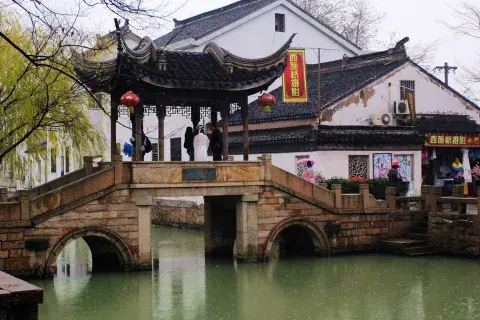
Running parallel to the busy Wenchang Road is a quiet ancient back alley that contains a host of sites well worth visiting. The alley's main gate/entrance dates back to the Qing Dynasty. Small restaurants and craft shopss line the alley, yet it thankfully lacks any sense of commercialization. Oth...

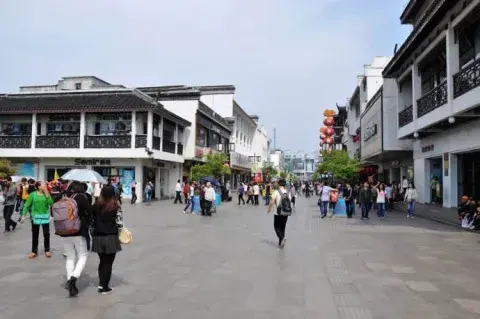
Running parallel to the busy Wenchang Road is a quiet ancient back alley that contains a host of sites well worth visiting. The alley's main gate/entrance dates back to the Qing Dynasty. Small restaurants and craft shopss line the alley, yet it thankfully lacks any sense of commercialization. Other small alleys jet off to the sides, and wooden doors representing multiple eras of China's lengthy history serve as a backdrop to residents sitting on stools, smiling at passersby. Former Chinese president, and Yangzhou native, Jiang Zemin even has a residence in this alley.


Further down the alley lies one of the best preserved ancient residences in Yangzhou, that of the salt merchant Wang Shi (汪氏小苑). This residence and its nearby offshooting alleys allow for a unique opportunity to look into China's past and observe what has already been demolished in most other Chinese cities. The maze-like residence is a bit dusty and less renovated than other sights, which likely assist in making it feel as if you are walking on a piece of history.


Just east of this area is the Qiong Hua Temple (琼花观) and garden. The former temple, fronted by two 300 year old Gingko trees, is now an art gallery featuring rotating exhibitions of calligraphy and paintings by local artists. Behind the gallery is the quiet Qiong Hua garden which contains an abundance of Yangzhou’s city flower, the qiong hua. This flower was actually part of what drew emperors to Yangzhou for their spring tours.


Yipu Garden

The garden area is about 5 mu, and the old appearance of the late Ming and qing dynasties are still in general. In the north of the garden, the main courtyard is the courtyard, which consists of the main hall, the boya hall and the water tree. The center of the park is the center of the garden. S...

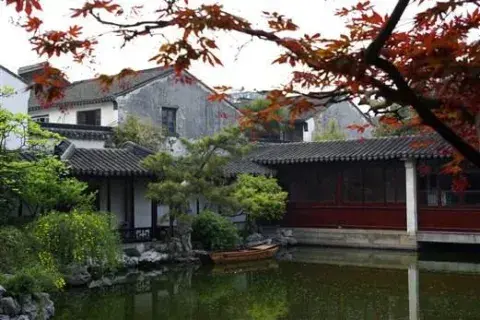
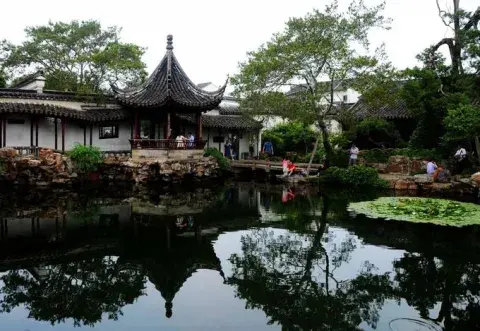
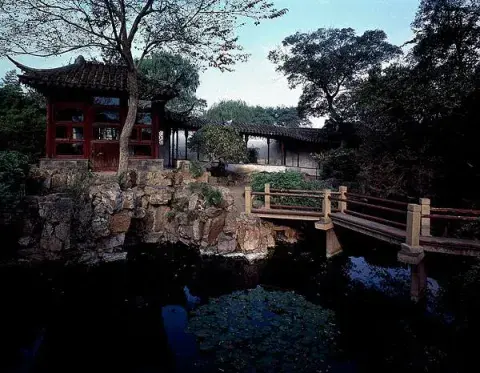
The garden area is about 5 mu, and the old appearance of the late Ming and qing dynasties are still in general. In the north of the garden, the main courtyard is the courtyard, which consists of the main hall, the boya hall and the water tree. The center of the park is the center of the garden. Southeast, southwest each of the water bay, the upper plate stone bridge. Apart from the north waterside, the rest of the pond has natural twists and turns. Take the garden of the net teacher garden to build the art, the near shore is the low building, such as the hut of the hut, make the water surface appear open. In the south of the pond, there is a rockery, with a bridge pavilion. In the southwest of the pond there is a small courtyard, the water curving people courtyard, elegant and elegant. The north waterside of the pond is 5, flanked by pavilions and other ancillary buildings. These buildings occupy all the north facades and are only seen in suzhou gardens.

The small courtyard has two sides of the hall, the margin pool is the lake stone, and the plant has the mountain tea, xin yi and other flowers and trees. There is a Ming dynasty architecture in the southeast of the pond, a famous milk fish pavilion, which is an ancient and elegant structure, which is a precious cultural relic. The garden more preserved Ming dynasty garden style, layout and gardening technique, winning by plain simple, natural, and celebrities such as Wen Zhenmeng former residence is located, it is of high historical value and artistic value.