Yangzhou Museum
The Yangzhou Museum is big. Any visitor to Yangzhou quickly finds out the city is proud of its history, but you don’t really get a feel for its age until you visit this newly constructed museum. There are extensive displays here of artifacts, crafts, models...
The Yangzhou Museum is big. Any visitor to Yangzhou quickly finds out the city is proud of its history, but you don’t really get a feel for its age until you visit this newly constructed museum. There are extensive displays here of artifacts, crafts, models and so on from Yangzhou’s pre-history to the Qing Dynasty, with plenty about the future as well.
Nearly every exhibit includes informative, intelligible English captions.
Starting at the top, the 3rd floor is a vast history section that sprawls through thousands of years along with a multi-floor block printing exhibit with live demonstrations and a huge library of printing blocks.
The 2nd floor exhibits Yangzhou's love for the skill of carving various materials into art. Intricately carved jade, bamboo, stone, porcelain, peach pits (incredible!), and wood objects are on display, spanning around two thousand years. The 2nd floor also features a painting and calligraphy exhibit of the famous Yangzhou “Eight Eccentric” artists, and a huge Tang Dynasty dragon boat.
The 1st floor is a 'model lovers' dream. There is an enormous model of a somewhat unrealistic, albeit futuristic city plan and a statistical frenzy of graphs and data hanging on the walls.
Strangely enough, visitors emerge from displays of Yangzhou's beautiful and proud culture back outside into the modern day China of construction and homogenous housing blocks.
Allow about an hour and a half to visit the museum, which is certainly worthwhile for appreciating one of China’s most legendary cities.
Bus numbers 26 (running the length of Wenchang Road), 308, and 22 all stop at the museum. A cab ride from the center of town should cost around 15 Yuan.
Nanjing Museum of Paleontology
The Nanjing Museum of Paleontology contains a collection of prehistoric fossils from around China. One of their most prized possessions is the world’s oldest fossil flower while their most awe-inspiring item is a fossilized Mamenchisaurus skeleton. Mamenchisaurus is reported to have t...
The Nanjing Museum of Paleontology contains a collection of prehistoric fossils from around China. One of their most prized possessions is the world’s oldest fossil flower while their most awe-inspiring item is a fossilized Mamenchisaurus skeleton. Mamenchisaurus is reported to have the longest neck of any land animal that has ever lived.
A downside for foreigners is that almost all signs are only written in Chinese.

Stegosaurus
How to Get There:
The Museum is right in front of Jiming Temple ( 鸡鸣寺 ) and just off of Beijing Dong Lu (北京东路).
To get there by bus take route 2, 3, 11, 15, 20, 24, 31, 44, 48, 52, 70, 304 or travel 1 to one of the Jiming Temple bus stops. Note that the museum is not right on Beijing Dong Lu, but you actually have to walk about 15 meters north to get there.
Links:
Museum Victoria - Mamenchisaurus
People’s Daily - Oldest Flower
Nanjing Botanical Garden Mem. Sun Yat-sen
The 186 hectare Nanjing Botanical Garden is a fine place to escape the crowds of Nanjing city. Inside the garden are 100s of Bonsai trees, roses, a greenhouse with cacti, succulents and foliage plants, 10 meter tall Magnolia trees and many other types of plants.
The 186 hectare Nanjing Botanical Garden is a fine place to escape the crowds of Nanjing city. Inside the garden are 100s of Bonsai trees, roses, a greenhouse with cacti, succulents and foliage plants, 10 meter tall Magnolia trees and many other types of plants.
 |
 |
Bridge World
Totally unrelated to the theme of the rest of the park, included inside the gardens is a place called 桥世界 (Qiao Shijie) which translates into "Bridge World". It includes a series of obstacle bridges. During weekdays it receives very few visitors, but it is still staffed and well-maintained. There is no additional fee to enter Bridge World, but for an extra 5 yuan you can ride a bamboo raft in the pond.
How to Get There:
Tourist bus #3 (游3) as well as bus numbers 20w and 315w stop at the entrance. Taxis pass by occasionally but are not nearly as plentiful as they are in the city.
Jiuhua Hill and Xuanzang Temple
The dimunitive Jiuhua Hill (Jiuhua Shan) lies alongside the Ming City Wall and the south side of Xuanwu Lake. What draws most visitors to Jiuhu...
The dimunitive Jiuhua Hill (Jiuhua Shan) lies alongside the Ming City Wall and the south side of Xuanwu Lake. What draws most visitors to Jiuhua Hill is the Xuanzang Temple.
The monk Xuanzang journeyed to India to bring Sanskrit Buddhist texts back to China. He then spent much of the remainder of his life translating these texts. Xuanzang’s quest was the basis for the ultra-famous fictional story “Journey to The West”, a novel originally written during the Ming Dynasty. Journey to The West has since been the basis for a popular television show in China as well as the inspiration for the cartoon show and video game serious Dragon Ball Z.
 Tunnel under Jiuhuashan |
 Bell on Jiuhuashan |
Links Within Synotrip
Links Outside of Synotrip
Comparison of Journey to The West and Dragonball Z. He is referred to as “Sanzang” and “Tang Seng” in this article.
To reach the main entrance by bus, stop at the Beijing Dong Lu (北京东路) bus stop and walk 3 blocks north down Jiuhuashan Lu (九华山路).
The rear entrance is along the city wall near Taiping Men (太平门).
Jiming Temple is only 15 minutes walk along Beijing Dong Lu or a 20 minute walk along the top of the city wall.
Nanjing Botanic Garden
The Nanjing Botanic Garden was opened on September 26th, 2005.
Nanjing Botanic Garden is located in the new city zone in Hexi. The garden covers an area of 0.77 square kilometers. The scale of the garden and volume of visitors it receives are...
The Nanjing Botanic Garden was opened on September 26th, 2005.
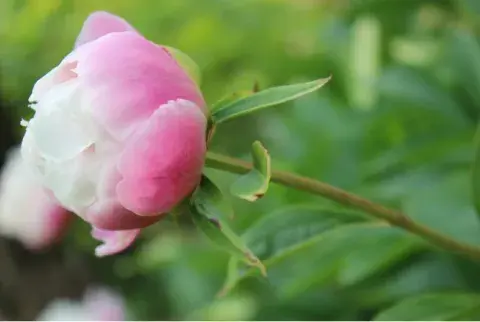
Nanjing Botanic Garden is located in the new city zone in Hexi. The garden covers an area of 0.77 square kilometers. The scale of the garden and volume of visitors it receives are impressive. Several large exhibition halls feature a variety of distinctive plants which represent every province in China as well as other nations, including Korea, Singapore, and Mexico.
How to get there
-Take No. 152 bus from Qing Liangshan Garden or take No. 109 bus from Wu Taishan.
-Take the subway to Olympic Sports Centre. From here several buses go to the garden which is actually only one bus stop distance away.
-Taking a taxi from Xinjiekou to the garden will cost around 25-30 yuan.
Estimated duration of a trip
A whole day. There are vendors that serve food and water in the garden.
The Movie Sets
Now here we have a tourist attraction that is a little unusual. While it's a notable change from temples, rock-cut stairs, and gardens, it remains so very Chinese. You will probably witness a movie being made, take a ride on a boat, horse, or even a camel, and definitel...
Now here we have a tourist attraction that is a little unusual. While it's a notable change from temples, rock-cut stairs, and gardens, it remains so very Chinese. You will probably witness a movie being made, take a ride on a boat, horse, or even a camel, and definitely learn something about China’s incomparable history and culture.
There are three movie sets:
“The Three Kingdoms” (三国城), “The Water Margin City” (水浒城), and “The Tang City” (唐城).
You could easily spend a couple of hours at each.
Getting there:
The K 82 bus goes to the movie sets from the Railway Station, or you can pick it up along the route. The bus costs 2 yuan, like all ‘K’ buses, but on this bus there is a conductor selling tickets. The trip takes about half an hour and the Three Kingdoms set is its final stop. You can get off earlier if you wish to visit one of the other sets first.
Entrance Fees:
To see just the Three Kingdoms – 55 yuan
To see just the Water Margin City – 50 yuan
To see both of these – 90 yuan
To see all three sets – 120 yuan
Obviously the package deal will save you money, but make sure to allow yourself enough time and that your legs are up to a fair bit of walking. You could also hire an electric cart to transport you around, but you may not be able to see as much close up that way.
Here are some of the things you can see at the Three Kingdoms:
Battleships in life-size and mini-size. You can take a ride here too!


Movies being made along with the tired actors who spend their days making them.


And as always there are ample explanations for everything you see.
