Sacred City of Kandy
This sacred Buddhist site, popularly known as the city of Senkadagalapura, was the last capital of the Sinhala kings whose patronage enabled the Dinahala culture to flourish for more than 2,500 years until the occupation of Sri Lanka by the British in 1815. It is also the site of the Temple...
This sacred Buddhist site, popularly known as the city of Senkadagalapura, was the last capital of the Sinhala kings whose patronage enabled the Dinahala culture to flourish for more than 2,500 years until the occupation of Sri Lanka by the British in 1815. It is also the site of the Temple of the Tooth Relic (the sacred tooth of the Buddha), which is a famous pilgrimage site.This sacred Buddhist site, popularly known as the city of Senkadagalapura, was the last capital of the Sinhala kings whose patronage enabled the Dinahala culture to flourish for more than 2,500 years until the occupation of Sri Lanka by the British in 1815. It is also the site of the Temple of the Tooth Relic (the sacred tooth of the Buddha), which is a famous pilgrimage site.
Adam's peak
Hill climb of a different type to witness a spectacular sun rise or just for the thrill of the panoramic views of Sri Lanka or for pleasure . Not just a trail but a prilgimage to a summit secred to all of the world's major releigions. The most popular hill trail in Sri Lanka to 2200m above ...
Hill climb of a different type to witness a spectacular sun rise or just for the thrill of the panoramic views of Sri Lanka or for pleasure . Not just a trail but a prilgimage to a summit secred to all of the world's major releigions. The most popular hill trail in Sri Lanka to 2200m above sea level. The season is between December and April when the summit is not misty and relatively dry. There are two popular starting points from the directions of Hatton or Ratnapura.
Easily recognisable from many areas of the western / southern parts of the country because of it's triangle shape summit as well as from the sea to the west. Secret to Christians Muslims as well as Hindus while to Buddhist it is one of the places where Buddha has visited and left a footprint. Today it has been covered by a boulder. The first climbs dates back to 1000AD by then king Vijayabahu I who had built resting places for travellers. Travellers like Ibn Batuta a Arab pilgrim (1304-1377), and Marco Polo (1254-1324) have recorded visiting the summit.
There are few routes to Sri Pada the most used routes are from Ratnapura side or from Hatton/Maskeliya. Public bus services are available from both towns as well as from Colombo and other major towns during the season.
From Ratnapura Side. The difficult path start from about 30km from via Kuruwita, Gilimale, Ratnapura. The climb is about 4-6 hours.
Busses are From Hatton, Special Bus service to Sri Pada is available from various destinations. Alternatively visitors by bus from Colombo (or else where) may first go to Maskeliya and then to Delhousie where vehicular approaches end. The trail is around 8 kM. And the climb would take 2-3 hours minimum depending on how fit you are.
The forest around the area is a wild life sanctuary famous for its butterflies but also and contains a wealth of flora and fauna.
Safe, Memorable and Affordable with Driver in Sri Lanka
Safe, Memorable and Affordable with Driver in Sri Lanka The founder of Driver in Sri Lanka is Mr. R.A.L.Fernando a well known tour guide who at his initial stages worked for leading tour agencies in Sri Lanka for over 12 years and began his own small scale family run tour business in 2000. His mo...
Safe, Memorable and Affordable with Driver in Sri Lanka The founder of Driver in Sri Lanka is Mr. R.A.L.Fernando a well known tour guide who at his initial stages worked for leading tour agencies in Sri Lanka for over 12 years and began his own small scale family run tour business in 2000. His motto is to provide you a safe, memorable and affordable tours for all his clients. His son Mr. Shiran J.M .Fernando who is too a Tour Guide is playing a major role in assisting him.There motto is to provide you a safe, memorable and affordable tours for all there clients. The web site provides a direct interface between the client and the driver and there is no third party involved (as it is the case with large tour operators). The tour cost would be one third of the quotation you get from a large scale tour operator but the quality and the standard of the service would be extraordinary.
Ancient City of Polonnaruva
Polonnaruwa was the second capital of Sri Lanka after the destruction of Anuradhapura in 993. It comprises, besides the Brahmanic monuments built by the Cholas, the monumental ruins of the fabulous garden-city created by Parakramabahu I in the 12th century. We are the best Sri lankan tour operato...
Polonnaruwa was the second capital of Sri Lanka after the destruction of Anuradhapura in 993. It comprises, besides the Brahmanic monuments built by the Cholas, the monumental ruins of the fabulous garden-city created by Parakramabahu I in the 12th century. We are the best Sri lankan tour operators here in colombo. If you are looking for an amazing travel experience in Sri Lanka. We can make sure This is your one stop online travel shop. find and book your perfect holiday.In the same vein as Anuradhapura, Polonnaruwa is an ancient city occupying a pretty lakeside location offering visitors views of temple and palace remains dating back to the Indian Chola dynasty of the 11th century. The remains are remarkably well preserved and as the city is somewhat smaller than Anuradhapura, its attractions can be experienced on an overnight trip. Polonnaruwa is 135 miles from Colombo.
Sacred City of Anuradhapura
This sacred city was established around a cutting from the 'tree of enlightenment', the Buddha's fig tree, brought there in the 3rd century B.C. by Sanghamitta, the founder of an order of Buddhist nuns. Anuradhapura, a Ceylonese political and religious capital that flourished for 1,300 year...
This sacred city was established around a cutting from the 'tree of enlightenment', the Buddha's fig tree, brought there in the 3rd century B.C. by Sanghamitta, the founder of an order of Buddhist nuns. Anuradhapura, a Ceylonese political and religious capital that flourished for 1,300 years, was abandoned after an invasion in 993. Hidden away in dense jungle for many years, the splendid site, with its palaces, monasteries and monuments, is now accessible once again.
We are the best Sri lankan tour operators here in colombo. If you are looking for an amazing travel experience in Sri Lanka. We can make sure This is your one stop online travel shop. find and book your perfect holiday.
Colombo
The nation's capital city is not generally considered one of its chief tourist destinations; however, many visitors stop there for a couple of days prior to or following a holiday at a Sri Lankan beach resort. The city is fairly chaotic by all accounts and its madness can challenge even sea...
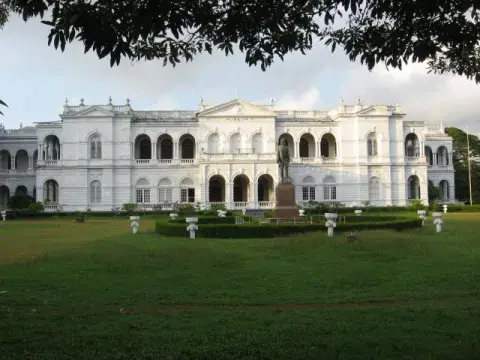
The nation's capital city is not generally considered one of its chief tourist destinations; however, many visitors stop there for a couple of days prior to or following a holiday at a Sri Lankan beach resort. The city is fairly chaotic by all accounts and its madness can challenge even seasoned travellers but those who persevere will find a colourful metropolis with a range of attractions. The National Museum, established in 1877, is considered one of the city's must-sees, while Pettah, the bazaar district, is perhaps the best place to experience local life at its most raw and traditional. For family visitors, the Zoological Gardens with its extensive collection of animals, birds, reptiles and fish is a popular option. With an extensive selection of eateries on hand, dining in the city is considered a highlight of any visit.
Heritage Sri Lanka
Heritage Sri Lanka
Sri Lanka with its nearly 3000 years of history holds some of world’s ancient cities including Anuradhapura, Polonnaruwa and Digamadulla. Remnants of these once glorious cities, their palaces, temples, monasteries, hospitals and theaters intricately carved and mo...
Heritage Sri Lanka
Sri Lanka with its nearly 3000 years of history holds some of world’s ancient cities including Anuradhapura, Polonnaruwa and Digamadulla. Remnants of these once glorious cities, their palaces, temples, monasteries, hospitals and theaters intricately carved and modeled out of stone lay abandoned amidst the soaring mountains.
Of all the ancient sites the most famed and most exquisite is the Kingdom of Anuradhapura. Sri Lanka’s third and the longest serving capital and one of the oldest continuously inhabited cities in the world is also one of the most sacred cities of World Buddhists. It was the capital of Sri Lanka from the Fourth Century BC up to the turn of the eleventh Century and was one of the most stable and durable centers of political power and urban life in South Asia. However the city itself is much older than the Kingdom of Anuradhapura and according to archeological evidence could have originated as far as tenth century BC. Anuradhapura was abandoned due to the due to repeated South Indian Invasions and was eventually forgotten with time until it was rediscovered in the early 19 th century.
Polonnaruwa, the second most ancient kingdom of the country was first made the political center of the country in the ninth century BC. Irrigation systems that are far superior to those of the Anuradhapura Age were constructed in Polonnaruwa kingdom, and still provide irrigation water to the farmers in and around Polonnaruwa. Yet the kingdom’s glory was short-lived and a South Indian invasion pushed the political centre towards the centre of the country by the eleventh century. Today the ancient city of Polonnaruwa remains one of the best planned archaeological relic sites in the country, a testimony to the discipline and greatness of the Kingdom's first rulers.
Digamadulla, the Eastern kingdom of Sri Lanka was the agricultural and spiritual capital of the country during the Anuradhapura kingdom. Ruled by a viceroy of the Anuradhapura king Digamadulla was a prosperous province with grand palace, monasteries and temples at every juncture. Having received lesser attention of archaeologists compared to Anuradhapura and Polonnaruwa many a great creations of ancient Digamadulla had been lost to time, war and plunder while many more silently awaits in the midst of the forests covering the lands of Eastern Sri Lanka.
Negombo / Airport
A photographer’s paradise – from gaudy, chaotic festivals erupting on the streets, to the bleached, beached and beautiful Oruva outrigger canoe catamarans. It’s hard to believe these driftwood sculptures have been braving the breakers for centuries but, if you’re up early, you’ll spot them ...
A photographer’s paradise – from gaudy, chaotic festivals erupting on the streets, to the bleached, beached and beautiful Oruva outrigger canoe catamarans. It’s hard to believe these driftwood sculptures have been braving the breakers for centuries but, if you’re up early, you’ll spot them delivering their catch. And this is really what keeps Negombo’s heart beating, the exchange of fish at dawn markets such as Lellama, with its pipe-smoking fisherwomen. Just north of the airport, Negombo is equally cursed and blessed. The proliferation of hotels along the beach strip behind Lewis Place are often only used as an overnight stopping point with complaints that both beach and town are seedier than other parts of this ideal island.
But you don’t have to cast far to reel in delight after sumptuous delight on Sri Lanka’s largely uncharted northwest coast. A cruise inland, through Andalankawa – “moon of Sri Lanka”, takes you through the idyllic rice paddy and coconut plantation landscape chosen by locals as a wedding backdrop. Another handy bit of tackle is a hired bike which allows you to dissolve into the tiny warren of streets along the extensive network of canals. Built by the Dutch to transport spices and gems from the luscious interior, they can lead you back to old-world life and unexpected treasures.
If you were seriously energetic, you could follow the canals 130 kilometers north, past Puttalam, and go kite-surfing to cool off. An old Portuguese port on a long spit of a peninsula, Kalapitiya is fast becoming a destination. Here you can watch dolphins and whales an hour from the coast. Past the prawn farms, the clever kids of Colombo play on perfect, pink sandy beaches, swimming in water, warm as tea, clear as gin. No need to fish here – the compliments come easy.