Hunan Provincial Museum

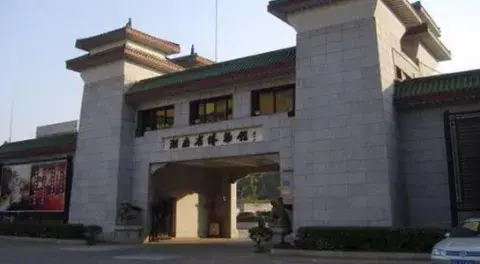
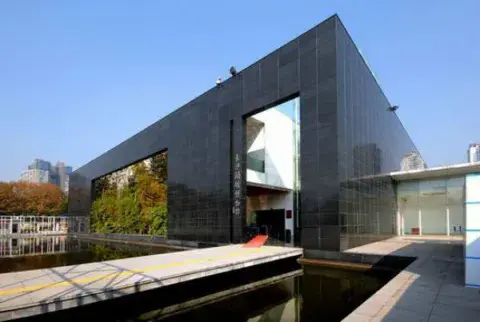
This is hunan province's largest comprehensive history art museum, the museum collection of cultural relics of the rich, especially in the writing of cultural relics, chow tai bronze ware, chu cultural relics, all previous dynasties and modern cultural relics such as pottery and porcelain, painti...

This is hunan province's largest comprehensive history art museum, the museum collection of cultural relics of the rich, especially in the writing of cultural relics, chow tai bronze ware, chu cultural relics, all previous dynasties and modern cultural relics such as pottery and porcelain, painting and calligraphy and the most characteristic.

There are more than 3,000 unearthed relics unearthed in three han tombs, and the vast majority of them are well preserved. There is a piece of plain cloth, thin as cicadas, 1.28 meters long, and has long sleeves, only 49g weight, weaving technique is very high. More than 100, 000 words of silk and lost books have been unearthed from tomb 3. The map rendering technique of the second tomb unearthed in han dynasty is roughly similar to that of the modern map, and the evaluation is extremely high.

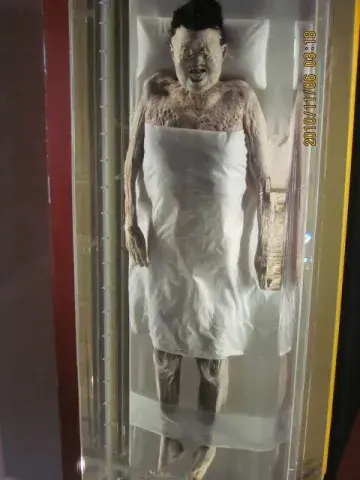
However, the body of the female body found in the tomb of mawangdui no. 1 is complete, full of body moist, some joints can be active, soft tissue has elasticity, is a miracle of anticorrosive science.

I came to changsha to visit the splendid civilization of the past two thousand years ago.

Mawangdui Han tomb mummy

In 1971, a group of construction workers began digging on the slopes of a hill named Mawangdui, near the Chinese city of Changsha. Since the workers were about to construct a spacious air raid shelter for a nearby hospital, they were digging deep into the hill. Before 1971, the Mawangdui hill was...

In 1971, a group of construction workers began digging on the slopes of a hill named Mawangdui, near the Chinese city of Changsha. Since the workers were about to construct a spacious air raid shelter for a nearby hospital, they were digging deep into the hill. Before 1971, the Mawangdui hill was never considered a place worth the attention of archaeologists.

However, this changed when the workers stumbled upon what appeared to be a tomb hidden beneath many layers of soil and stone. The construction of the air-raid shelter was canceled and, several months after the workers’ accidental discovery, a group of international archaeologists began excavating the site.

The tomb turned out to be so massive that the excavation process lasted for nearly a year, and the archaeologists needed help from as many as 1,500 volunteers, mostly local high-school students. Their painstaking work paid off because they discovered the majestic ancient tomb of Li Chang, the Marquis of Dai, who governed the province approximately 2,200 years ago, during the rule of the Han dynasty.

The tomb contained as many as 1,000 precious artifacts, including golden and silver figurines of musicians, mourners, and animals, intricately crafted household items, meticulously designed jewelry, and a whole collection of clothes made from fine ancient silk.