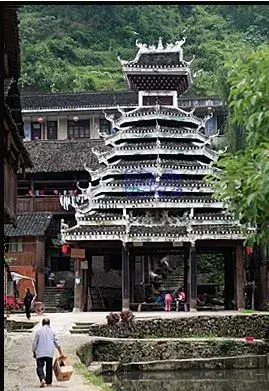
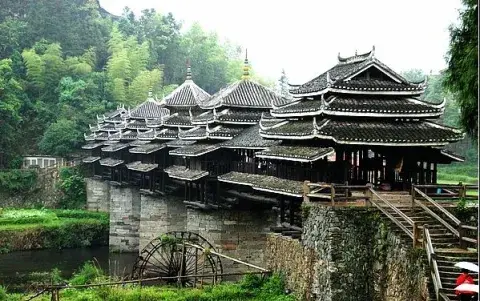
Chengyang Bridge and Dong people in Sanjiang autonomous county

Top Chinese Hoilday Destination--Sanya
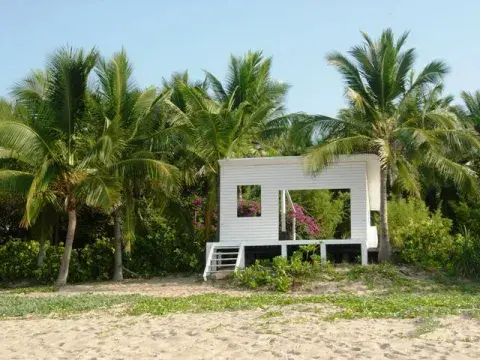
Sunshine, beach, blue sea, palm tree, lots of fruits, swiming, playing golf... Sanya is a top hoilday destination for people in China who want to skip the cold winter in north. Following are pictures from my hoilday at 2009, early spring.

Zhaozhou Bridge, an ancient Chinese Miracle
Zhaozhou Bridge which is located in the famous historical and cultural county of Zhao, Hebei Province, it is the world’s oldest single-arch stone bridge still in use today, it has a history of over 1400 years and won...
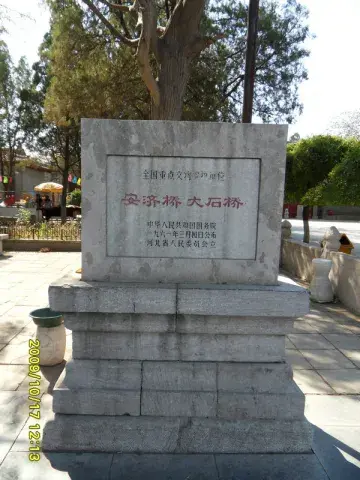
Zhaozhou Bridge which is located in the famous historical and cultural county of Zhao, Hebei Province, it is the world’s oldest single-arch stone bridge still in use today, it has a history of over 1400 years and won the reputation of “ One of the Four Treasures in northern China”. It’s the oldest and best preserved ancient stone arch bridge in the world. It was included as the first batch of national key cultural relics protection units by the State Council in 1964. In 1991, it was elected by the American society of civil engineers as “the 12th international civil engineering historical monuments ", and give it a memorial brand. It was designated by the state as provincial education base for patriotism in 1999.
It was designed and built by Li Chun in the Sui Dynasty (581-618), has stood the tests of earthquake, floods, and traffic for nearly 1400 years, to protect this monument, a parallel bridge was constructed in 1980’s.
For thousands of years, it was linked with a traditional Chinese legendary story of the Eight Immortals, whenever you setting your feet on the bridge you could find out some trails of the immortals. After the founding of new

The beauty of Yangshuo in spring
The winter is gone,The spring is coming! Everythings of the nature begin to turns green and full of vigour! Look the rape flowers,the trees,the rivers,the green grass and so on are so charming and pretty! Let's go to the amazing countryside of Yangshuo!...
The winter is gone,The spring is coming! Everythings of the nature begin to turns green and full of vigour! Look the rape flowers,the trees,the rivers,the green grass and so on are so charming and pretty! Let's go to the amazing countryside of Yangshuo! Let yourself back to the nature!

Expo Furore
I believe that visitors to the Expo 2010 will simply take the waiting line much easier in their future life. With an daily average of 400,000 masses and a single day seeing 1.03 million throngs, the total visitors during the session amounted to 73 millions....
I believe that visitors to the Expo 2010 will simply take the waiting line much easier in their future life. With an daily average of 400,000 masses and a single day seeing 1.03 million throngs, the total visitors during the session amounted to 73 millions. What do you wanna say?
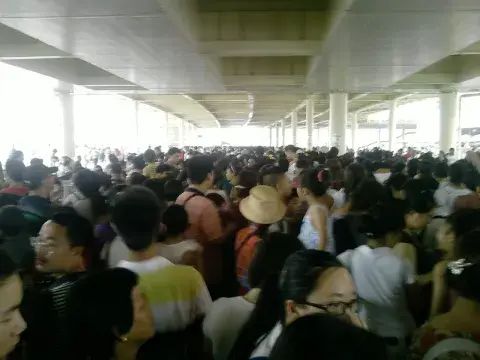
Here are the pictures taken when throngs were queuing up for 9 hours to the Saudi Arabia Pavilion. Phenomenal !
The National Art Museum of China is open free of charge since March 2, 2011
As a national key art museum, the National Art Museum of China is open to the public with free admission since Mar. 2, 2011. The age of free admission marks another new progress in the history of the museum.
...As a national key art museum, the National Art Museum of China is open to the public with free admission since Mar. 2, 2011. The age of free admission marks another new progress in the history of the museum.
In recent years, the National Art Museum of China was free to the visitors during major holidays for important exhibitions, such as “Donations from the National Art Museum of China in the past five decades” during the Chinese New Year of 2011. The number of the visitors reaches more than 10, 000 daily. Such facts prove that the implementation of free admission is popular with the public.
Based on the rules of free tickets targeted at elementary and secondary students and senior citizens, the National Art Museum of China has taken a series of measures to facilitate comprehensive free admission.
Visitors are able to ask for free tickets through online and from the museum. Visitors are required to book the tickets on www.namoc.org one week in advance and get the free tickets at the museum with valid identity cards. The website and the museum at the spot provide 2000 tickets and 4000 tickets respectively every day.
A number of hi-tech facilities equipped at the museum are expected to help the implementation of free admission and digital service.

Shanghai Museum
Established in 1952, the Shanghai Museum is a world-famous museum of ancient Chinese art....
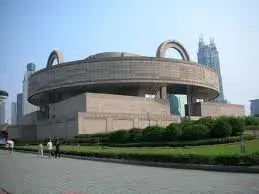
Established in 1952, the Shanghai Museum is a world-famous museum of ancient Chinese art. Its present building, completed in 1996, is shaped with a square base and a round top attached with arches like a bronze Ding, indicating the ancient Chinese philosophy of the universe that the earth is square while the sky is round. In front of the building stand eight imposing white marble statues of guardian lions.
Among the one million pieces of her collection, there are nearly 130,000 pieces of national treasures. They cover twenty-one categories, such as bronzes, ceramics, calligraphy, paintings, jade and ivory works, bamboo and lacquer wares, oracle bones, seals, coins, and artifacts of the ethnic minorities, the first four of which are among the best collections in the world.
The Shanghai Museum presents to you these exceptional treasures which epitomize the wisdom and virtuosity of Chinese ancestors: dignified bronzes incarnating the splendor of ancient civilization, beautiful ceramics showing the art of molding, paintings and calligraphy works executed by the brush of culture, exquisite jades conveying a nation’s character, stately sculptures embodying the glory of history, classical furniture, delicate ethnic artifacts… This is a place to experience the brilliant history and enjoy the fabulous artistic creation of China.
1st Floor
Ø Ancient Chinese Bronze Gallery
Over 400 bronzes of unique shapes, delicate décor and superb techniques tell you the 1,500-year history of the great Chinese Bronze Age from 18th century B.C till 3rd century B.C.
Ø Anceint Chinese Sculpture Gallery
About 120 statues in the gallery cover the development of Chinese sculpture art from the Warring States to the Ming dynasty. The Buddhist sculptures show how Buddhism confronted and harmonized with Chinese traditional culture over the history.
2nd Floor
Ø Ancient Chinese Ceramics Gallery
This gallery traces the 8,000 years of Chinese ceramics history from the Neolithic Age to the late Qing dynasty, presenting over 500 pieces from famous kilns to present you a legend of clay and fire in the world art history.
3rd Floor
Ø Chinese Painting Gallery
Scrolls by masters from Tang, Song, Yuan, Ming and Qing dynasties are displayed in the showcases by the long corridor flanked with flying-eaved roofs and low balustrade, unfolding the glorious history of Chinese painting.
Ø Chinese Calligraphy Gallery
Beginning with the inscriptions on oracle bones and bronzes, to the age of bamboo slips and stone steles, about 70 masterpieces, including those by Wang Xizhi and Wang Xianzhi, render the infinite interpretations of seal, official, running, cursive and regular scripts.
Ø Chinese Seal Gallery
From the Western Zhou dynasty till the late Qing dynasty, Chinese art of seal carving underwent great changes in form and the message that it carried. This gallery houses nearly 500 seals which are among the best of their time.
4th Floor
Ø Chinese Minority Nationalities’ Art Gallery
More than 600 exhibits, including costumes, embroideries, batiks, metal wares, bamboo and wooden works and masks, disply the technical virtuosity and artistic creativity of China’s ethnic groups.
Ø Ancient Chinese Jade Gallery
Over 300 pieces of jade, including the mysterious pieces of the Neolithic Age and the sophisticated ones of the Ming and Qing dynasties, are displayed in this gallery, showing the significance of jade in Chinese culture.
Ø Chinese Ming and Qing Furniture Gallery
About 100 pieces of furniture exemplify the elegant simplicity of Ming style and the delicate resplendence of Qing style. A Ming-style reception hall and a study, together with a set of furniture models unearthed from a Ming tomb, represent the household life of centuries back.
Ø Chinese Curreny Gallery
A constellation of over 3,000 pieces covers the history of the birth and development of Chinese currency. The ancient silk road coins record the economic history of those ancient nations along the silk road.
How to Get There:
People's Square stop of Metro Line 1, 2, 8
Chinese Pagoda
After historical vicissitude over the past thousand years, the Chinese Buddhist pagoda worshipped by Buddhists had developed its own forms through long-term practice. ...
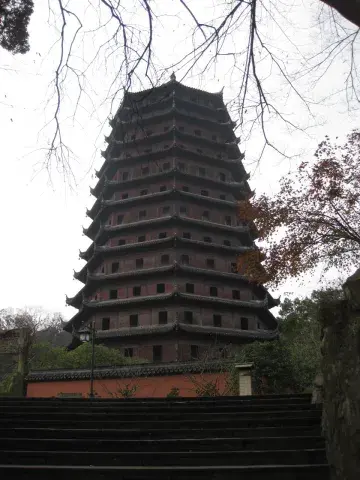
After historical vicissitude over the past thousand years, the Chinese Buddhist pagoda worshipped by Buddhists had developed its own forms through long-term practice. According to classification, pagodas can be roughly divided into pavilion-typed pagoda of Mahayana, dense-eave pagoda, single-floor pagoda, Lama pagoda, Vajra-based pagoda and Buddhist Pagoda of Hinayana, etc.
Originating from ancient India, as stupa in Sanskrit, pagoda is used originally as a place for enshrining or burying Buddhist relics or remains of eminent monks. Building pagoda is to enshrine and worship Buddha and other religious services. In early Han Dynasty, Indian Buddhist pagoda spread into China together with Buddhism. In combination with Chinese national and local culture, pagoda had gradually developed into various forms and styles. In the periods from the Eastern Han Dynasty to the Wei, Jin and the Southern and Northern dynasties, pagoda is the principal part of Buddhist temples. There must be a temple where a pagoda stands. By the Sui and Tang dynasties, pagoda gradually went down to the second place. Liuhe Pagoda is a typical example as one with front pagoda and rear hall.

Shikumen
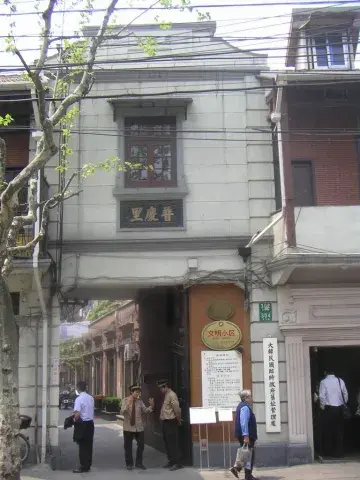
Shikumen, literally "stone gate", is an architectural style for residential buildings in Shanghai, China combining Western and Chinese elements that first...
Shikumen, literally "stone gate", is an architectural style for residential buildings in Shanghai, China combining Western and Chinese elements that first appeared in the 1860s. Shikumen houses are two or three-story townhouses, with the front yard protected by a high brick wall. Each residence is connected and arranged in straight alleys, known as a lòng-tang (弄堂), pronounced longdang in Shanghainese. The entrance to each alley is usually surmounted by a stylistic stone arch. The whole resembles terrace houses or townhouses commonly seen in Anglo-American countries, but distinguished by the tall, heavy brick wall in front of each house. The literal meaning "stone gate" refers to the strong gateway to each house.