Guangzhou interpreter china
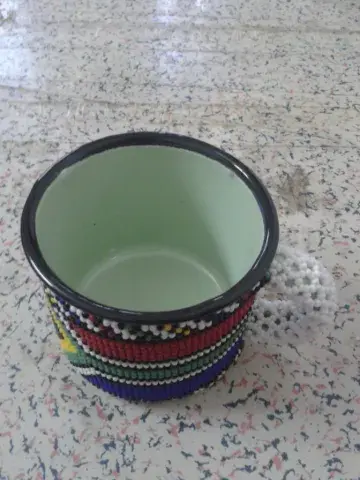
Very happy to get present from my South africa customer. It is so lovely cup and I appreciate!
With their support,I would work harder!
Very happy to get present from my South africa customer. It is so lovely cup and I appreciate!
With their support,I would work harder!
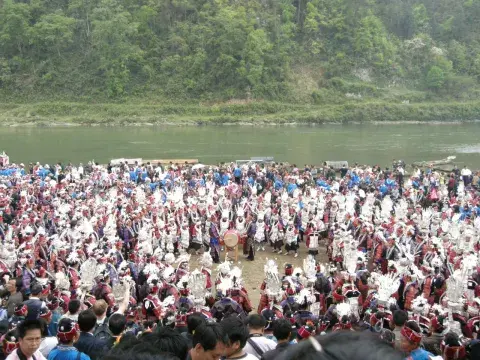
Sisters' Meal Festival is regarded as the Valentine's Day of the Miao in Taijiang of Guizhou Province.. It was an important occasion for young boys and girls to socialize and date with each other....
Sisters' Meal Festival is regarded as the Valentine's Day of the Miao in Taijiang of Guizhou Province.. It was an important occasion for young boys and girls to socialize and date with each other. The festival happens in the spring when villagers are not busy with their farming works. For taking part in this festival, parents prepare embroidered costumes and silver ornaments as much as possible and girls prepare special colorful sticky rice cake stuffed with different things inside. The things inside the sticky rice cake symblize the feeling from the girl to the boys. Nowadays, this festival provide visitors an big occasion to enjoy the most beautiful Miao costumes and silver ornaments, as the villager sing and dance on the river side for the whole daytime.
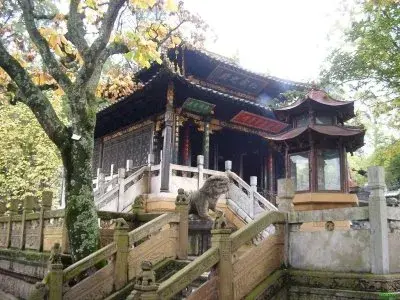
Dahuting Han Dynasty Tombs are located at Xinmi, Henan Province, and Xinmi is affiliated at the southeastern part of Zhengzhou Area. The tourist can go to Xinmi City by taxi or public bus from Zhengzhou City Area within approximately 40 mimutes.
...Dahuting Han Dynasty Tombs are located at Xinmi, Henan Province, and Xinmi is affiliated at the southeastern part of Zhengzhou Area. The tourist can go to Xinmi City by taxi or public bus from Zhengzhou City Area within approximately 40 mimutes.
Dhuting Han Dynasty is one of the largest Han Tombs around China and meanwhile the national key cultural protection unit. It has a long history of more than 1800 years,
The most shining part of Dahuting Han Tombs is the tomb room underneath the ground and the wall painting on the wall of the underground rooms.
The underground rooms are mainly built with the grave stones and some very great bricks, which has a very magnificent and stately styly and structure, the tourists will of course be thrilled about the state of these underground rooms.
Dahuting Han Tombs mainly has two big tombs, the eastern and the western part, and almost all of these rooms are built according to the life of the master of these tombs, there are kitchen, yard, bedroom, dining room, horse room and so on, and these rooms are far deep to 60 or 70 meters in the ground. The tourist will surely experience the feeling which you can have in the movie Indiana Jones, because I personally think the process of visiting Dahuting Han Tombs is so much alike going through some adventure novels. The tourist will surely like it.
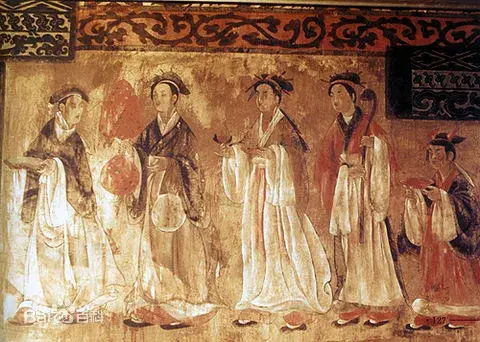
As for the wall paintings, there are Yanyinbaixi Painting, Xiangpu Painting, Xiche Painting and so forth.
Yanyinbaixi Painting depicts: Artists are performing while a banquet is happening, tourist can see some people are having a big banquet and some artists are performing, there are many programs.
Xiangpu Painting describes: The wrestling sports which is very popular in Japan in nowadays, and this proves there are Xiangpu in China more than 1800 years ago.
Xiche Painting depicts: A horse car match in the ancient times and it is the highest class painting in Dahuting Han Tombs.
Dahuting Han Tombs was discovered accidentally so the reason why people named it as Dahuting is still a secret. Some people thought the name Dahuting is because these tombs are within a small village, and this village is called as Dahuting, and some other people thought the name of Dahuting is originated from a legend or a story.
This story generally said: there is a people called Changshi, this Changshi had help the first king of Eastern Han to found his kingdom, and the king wanted to thank Changshi, so he gave this Dahuting Village to Changshi as Changshi and his family clan as their tomb place.
Whatsoever, all of these guesses are all and still guesses, as for the real thing, you can maybe get it when you go to Dahuting.
Dahuting Han Dynasty Tombs is taken as the No.1 Eastern Han Dynasty Tombs, it is the best preserved, it has the precious cultural value.
Dahuting Han Dynasty Tombs warmly welcomes friends from all over the world.
Yinqueshan Tomb, one of the top ten archaeological discovery since the founding of PRC,famous military book "The Art of War"win reputation worldwide was unearthed ,Sunbin Art of War indicate the relationship between Sunzi and Sunbin.
Jinan is known as the City of Springs The majority of the springs, many of which have been historically listed under the "72 Famous Springs" are concentrated in the downtown district and flow to converge in Daming Lake....
Jinan is known as the City of Springs The majority of the springs, many of which have been historically listed under the "72 Famous Springs" are concentrated in the downtown district and flow to converge in Daming Lake. The Baotu Spring Park is the most popular spring in ChinaBesides the Baotu Spring, Baotu means jumping and leaping in Chinese. The water in the spring pool looking like a pot of boiling water. The spring was visited by the Emperor Qian Long (1711–1799) of the Qing Dynasty who declared it "the first spring under the heaven"
Baotu spring is often regarded as one of the "Three Greatest Attractions in Jinan". .
Daming Lake, is often regarded as the one of"Three Greatest Attractions in Jinan"
Thousand-Buddha Mountain is often regarded as the one of "Three Greatest Attractions in Jinan
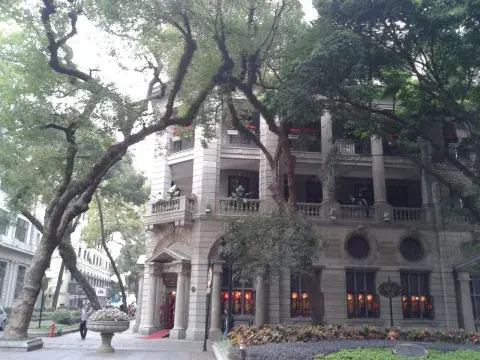
The heart of Guangzhou's former European concession—France and England both set up shop on this sandy river island in 1859 toward the end of the Opium Wars—Shamian Island is home to a number of colonial-era buildings, including a restored French Catholic church, Our Lady of Lourdes; its British...
The heart of Guangzhou's former European concession—France and England both set up shop on this sandy river island in 1859 toward the end of the Opium Wars—Shamian Island is home to a number of colonial-era buildings, including a restored French Catholic church, Our Lady of Lourdes; its British Protestant complement, the Christ Church Shamian; and many former hotels, embassies, trading houses and residences.
The island (actually a permanent sand bank in the Pearl River) makes for pleasant strolling and sightseeing, with its gardens and tree-lined streets, restaurants, cafes and tea houses. You can stay on Shamian Island, if you wish; there is a youth hostel for backpackers and several hotels provide a higher degree of accommodations, with the five-star White Swan Hotel being a particularly popular hotel among travelers, a number of whom are in Guangzhou to adopt (the US Consulate is next door, making legwork and paperwork easier).
History
Shamian Island was a very important port for Guangzhou’s foreign trade during the rule of the Song and Qing Dynasties, and for several centuries this tiny patch of land was the only place in China that any foreigner was permitted to live. As such, you will find a great deal of 18th century European and American-style architecture. The island also became a strategic point, and the location of some conflict, during the Opium Wars. During this time the territory was divided into two parts, the French concession and the British concession. The differences in architecture and cultural legacy remain to this day.
Sites
Although it is not exactly laden down with landmarks, Shamian Island is a great place to stroll around and unwind. The gardens that stretch down the main boulevard are a great place to wander and take in the sites of the island, and they’re especially popular for wedding photos. But the architecture is unique and really quite beautiful, and there are at least a couple sites worth hunting down. One of the first that you are likely to find is the French Catholic church, (露德圣母堂) located at Shamian da jie.
...
Street Janitor? Calligrapher!
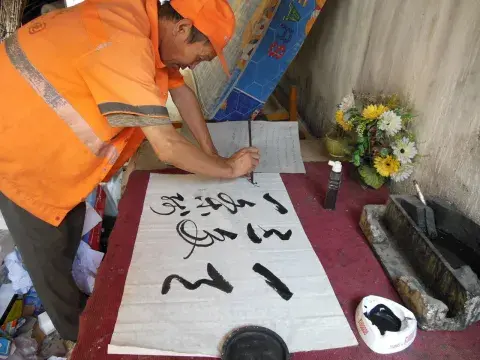
A street janitor is practicing calligraphy by the road he cleans every day. Believe it or not, his home is full of calligraphy elements. The front and back of the door, the ceiling, walls, desk, etc,. Visiting him was the best part of my Xi’an trip. I have to share his story with you.
When I was on my way to the Shan-xi History Museum, I noticed a man in his orange working uniform, sitting on an abandoned sofa by the road, writing something carefully, with a broom and a dust pan next to him. I walked pass him very slowly wanting to see what he was writing. What I found next truly amazed me. He was writing Kiang Jin Jiu(a poem by the famous poet Libai from the Tang Dynasty) with excellent handwriting. I couldn’t help looking back, wanting to see more. Then he shared his wonderful life story related to his calligraphy dream.
At the age of 55 Mr. Li was working (cleaning the road) in front of a park. He saw a man writing Xingshu on the floor with a mop surrounded by a group of people. He went over in his orange coat and stopped his work. He had never seen such a beautiful way of writing. Practicing calligraphy became part of his life from that day on.
Mr. Li went to visit that master every day by helping clean the floor, bringing water to the master, etc., because he wanted to learn calligraphy. He stands out in the crowd very easily with his orange coat. The master was moved by him. He gave Mr. Li a broom, pointed at the floor. Mr. Li did accordingly. Then the master said seven words(see the picture I posted), gave him three books, and disappeared after that day. Mr. Li figured out the seven words six years later. He never found that master ever since that day. Mr. Li doesn’t even know the master’s name.
Mr. Li is a Great person with a very interesting life story. He lives in a community alley near Xi’an train station. His wife said the neighbors call him Sha Laotou. He started to know that he could send his work to the press at the fourth year of calligraphy practicing. He even won a prize of 5,000 RMB. That number equals to almost 5 months of his salary. He could rent a home with real walls with the money but he did not. He used the money to buy brushes, ink, papers, and desks to teach the neighbors’ kids calligraphy for free. The children did not continue for a long time. On the journey of calligraphy, he was misunderstood by many, laughed at lots of times, but he never gives up his dream.
He told me that there was a day when he was cleaning the street, watching the cars, houses, birds, trees, and people; everything is related to calligraphy in some way. He still cleans the Xi Qi road every day and practices calligraphy every day when he is done with work.
When you go to Xi’an, and want to visit him. Please say hi to him for me.