Botanical Gardens and Wofosi Temple

The Wofosi Temple, also known as the Temple of the Sleeping or Reclining Buddha, is one of the more peaceful temples in Beijing. Nestled at the top end of the Botanical Gardens, the temple is quite similar to the Lama Temple, another of Beijing’s well-known Buddhist Temples. The Wofosi Temple contains 4 pavilions connected by interleading courtyards, culminating in a 54 ton bronze statue of the Buddha lying on his side, reclining and/or sleeping. A large number of benches scattered about the Temple’s grounds are perfect for enjoying some peace and quiet while marvelling at cypress trees and the hills in the background.  
 
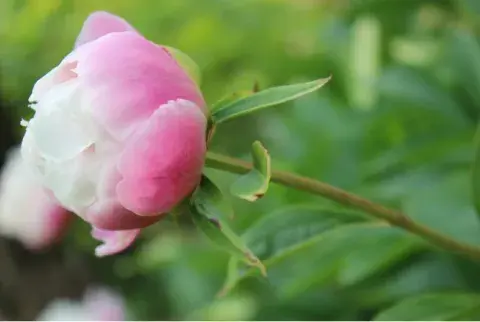
Plan to make this a day trip as you’ll also want to spend some time exploring and enjoying the tranquility of the Botanical Gardens. The entrance fee for the Botanical Gardens is 5 Yuan, however once inside you’ll pay an additional fee to visit some of the other attractions. The Wofosi Temple costs 5 Yuan and the huge indoor tropical garden will set you back 50 Yuan, so it makes more sense to get an all-inclusive ticket for 50 yuan. The grounds of the Botanical Gardens are big, 400 hectares, and whilst you may not have the time or energy to explore the entire area, some of the outdoor gardens well worth visiting include the peony tree garden, the rose garden, the ornamental peach garden, and the Japanese garden which has an impressive collection of bonsais.  
 
The Botanical Gardens/Wofosi Temple is situated in the northwestern outskirts of the city near the Fragrant Hills. The area is about an hour drive from the city center. There are a number of other attractions in the area for nature lovers seeking to escape the hustle and bustle of the city, namely Fragrant Hills Park (Xiangshan) and the Temple of the Azure Clouds. 
 
How to get there:
 
Getting there by taxi will take close to an hour and cost anything between 60 and 90 Yuan.
 
The buses that stop at the Gardens are: 331, 904, 737, 714, 833, 733, 318, 360.       


ake 331、904、737 or Yuntong 112 to Beijing Botanical Garden or Wofosi temple. Take 360、318、714、733 and 66 to Beijing Botanical Garden and walk toward north for 200 meters.

River Viewing Pavillion Park

River Viewing Pavillion Park is much more peaceful and interesting than its bland name suggests. The park features a four-story Qing dynasty pagoda built between 1886 and 1889. It provides a fantastic unobstructed view of a large portion of the Brocade river as well as the Chengdu skyli...

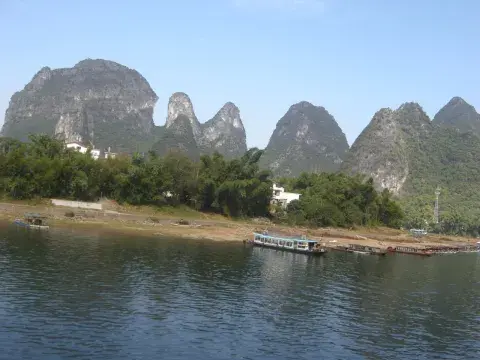
River Viewing Pavillion Park is much more peaceful and interesting than its bland name suggests. The park features a four-story Qing dynasty pagoda built between 1886 and 1889. It provides a fantastic unobstructed view of a large portion of the Brocade river as well as the Chengdu skyline. Entrance to the park itself is free. Like everywhere else in Chengdu, tea drinking, card slamming, and Mahjong foursomes leave you wondering, "When do these people actually work?"

The river-viewing pagoda is known as the Tower of Magnificence. It is included in a confined section of the park that is also dedicated to the Tang Dynasty poetess Xue Tao. Entrance to this area is Y20, but the fee is worth it. If you speak Chinese, but do not have student ID, tell them you are a student. If they ask for your ID, just say, "If I am not a student, then how am I speaking Chinese?" (At least this worked for me!) The student price is only Y10.

Very few travellers have the time to come here, and since the park isn’t very centrally located, even many expats aren’t familiar with it. Obviously locals aren’t interested in paying Y20 either. By putting up the entrance fee, you have the opportunity to relax in one of the quietest hideouts in urban Chengdu. The gardens in this section are extremely diverse, serene, and well-kept and finding a shady spot is not a problem. Climb the pagoda and bring a book. The opportunity to enjoy a moment as quiet as this one in a Chinese urban setting is very rare.

Xue Tao was born in Shaanxi province, and wrote her first poem at age 6. She came to Chengdu with no money after her parents died when she was 16 years old. She was quickly able to make a living for herself as a poet. She apparently loved bamboo, so this section of the park includes a bamboo garden featuring over 200 species of bamboo from all over Asia (according to one Chengdu resident). The Xue Tao commemorative hall includes beautiful murals with vibrant neon colors not often seen in China. 

The park is open everyday from 6:00 am until 9:00 pm. The Xue Tao Shrine and Tower of Magnificence are open from 8:00 am until 6:00 pm everyday.

Directions: The park is located southeast of the city center adjacent to Sichuan University. You can catch the no. 35 bus which runs on the north side of the river along Binjiang Lu by walking south on Renmin Lu from Tianfu Square. When you see the park, get off the bus, and walk along the river to the next bridge that allows you to reach the park’s southwest gate. A taxi from downtown should not cost more than Y10-12.

Take bus No. 19, 335, 35, 3 to get there.

The Movie Sets

Now here we have a tourist attraction that is a little unusual. While it's a notable change from temples, rock-cut stairs, and gardens, it remains so very Chinese. You will probably witness a movie being made, take a ride on a boat, horse, or even a camel, and definitel...
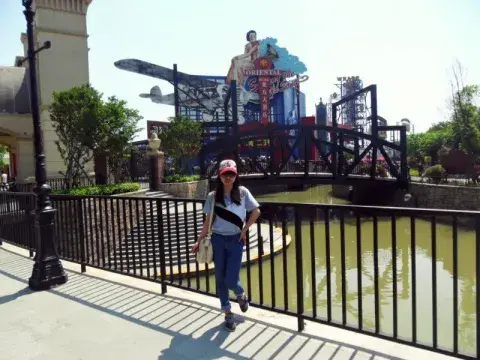
Now here we have a tourist attraction that is a little unusual. While it's a notable change from temples, rock-cut stairs, and gardens, it remains so very Chinese. You will probably witness a movie being made, take a ride on a boat, horse, or even a camel, and definitely learn something about China’s incomparable history and culture.
 
There are three movie sets:
The Three Kingdoms” (三国城), “The Water Margin City” (水浒城), and “The Tang City” (唐城).
You could easily spend a couple of hours at each.
 
Getting there:
The K 82 bus goes to the movie sets from the Railway Station, or you can pick it up along the route. The bus costs 2 yuan, like all ‘K’ buses, but on this bus there is a conductor selling tickets. The trip takes about half an hour and the Three Kingdoms set is its final stop. You can get off earlier if you wish to visit one of the other sets first.
 
Entrance Fees:
To see just the Three Kingdoms – 55 yuan
To see just the Water Margin City – 50 yuan
To see both of these – 90 yuan
To see all three sets – 120 yuan
 
Obviously the package deal will save you money, but make sure to allow yourself enough time and that your legs are up to a fair bit of walking. You could also hire an electric cart to transport you around, but you may not be able to see as much close up that way.
 
Here are some of the things you can see at the Three Kingdoms:
 
Battleships in life-size and mini-size. You can take a ride here too!
 
battleship     mini-ships
 
 
Movies being made along with the tired actors who spend their days making them.
 
movie set     tired little soldier
 
 
And as always there are ample explanations for everything you see.
 
explanations

Meisha Beach Parks

The tourist brochure for the Meisha Beach Parks needlessly states that this area “is a good land where people lived, procreated and done diving into the sea” since ancient times. You might not want to live or procreate here but it is not a bad spot to feel some sand between your toe...
The tourist brochure for the Meisha Beach Parks needlessly states that this area “is a good land where people lived, procreated and done diving into the sea” since ancient times. You might not want to live or procreate here but it is not a bad spot to feel some sand between your toes and gaze at fishing boats at work.
 
Da Meisha and Xiao Meisha are the two beaches that make up this coastal scenic area. Both of them have been shaped into parks, with restaurants and shops serving day-trippers from the city centre. There is an aquarium zoo, jet skiing, boating, bungee jumping, and other resort-type activities. Da Meisha is a public area, while Xiao Meisha has a RMB20 entry fee. The only real difference is that the ticket price ensures no hassle from beggars.
 
At one end of Da Meisha there is a rocky little cove next to a public garden called Lunar Square (Moonlight Square would be a better translation). This is a popular spot for wedding photos and there seems to be a few wedding parties there almost everyday. It’ s quite a spectacle to behold as photographers have the newly-wed couples precariously perch themselves on rocks while frantic bridesmaids try to keep wedding gowns out of the surf. There is a bar and “western food” restaurant next to Lunar Square. The food is sub-standard but the beer garden is a nice setting for a drink.
 
Xiao Meisha --  the smaller of the two -- tends to be a bit less crowded but has more restaurants and shops near it. It also offers the bizzare spectacle of local tourists all wearing identical 1950s-style swimsuits, which are rented out nearby.
 
While the Meisha Beach Parks are too built-up and busy to inspire castaway fantasies, they are decent places to have some seaside fun and are easy to get to from the city.

Lotus Hill Park

Lotus Hill Park -- also referred to as Lianhua Mountain Park and Lianhuashan Park --  is an oasis of open green spaces, winding scenic paths, leaf-sheltered picnic spots and heady floral fragrances, bang-smack in the heart of the city’s new business district. The park has a lake and ...
Lotus Hill Park -- also referred to as Lianhua Mountain Park and Lianhuashan Park --  is an oasis of open green spaces, winding scenic paths, leaf-sheltered picnic spots and heady floral fragrances, bang-smack in the heart of the city’s new business district. The park has a lake and two hills as well as 166 hectares of grass, plants, flowers and trees.
 
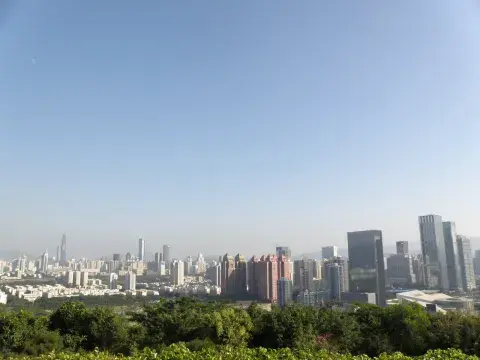
The focal point of the park is Mountain-Top Square. This large viewing area is at the top of the southern hill and commands excellent vistas of Shenzhen. There is a large statue of a confident Deng Xiaoping striding forward and looking benevolently over the city whose creation he inspired. This statue was erected on the Chinese National Day in 2000, which is recorded in an inscription on the base in the handwriting of Deng’s successor Jiang Zemin.
 
The Urban Planning Show is housed in a small building and records the history of the park in the form of a photograph exhibition. In one of the shots, Deng’s statue appears to be smirking down on a large group of Miss World contestants. The exhibit also includes a scale model of Shenzhen.
 
Lotus Hill Park is one of the best public parks in China; it allows a real sense of escape from the city. The best time to visit is in the late afternoon and early evening when the views of Shenzhen are bathed in a soft light and the park becomes illuminated by the glow of lanterns.
 
Suggested Route
Enter the park at the southeast entrance and follow the path to Kite-Flying Square. From here proceed uphill to Mountain-Top Square. Follow the main road (from behind Deng’s statue) passing the Urban Planning Show until a junction appears. Take the path on the right up the northern hill to a viewing pavilion. Follow the path downhill to the next junction and turn left in the direction of the lake. This path is interrupted by the main road but can be picked up again on the other side. This will eventually lead to the southern edge of the lake and alongside Palm Meadow. There is a teahouse here in a traditional style building set amongst bamboo trees. After passing the teahouse you will arrive back at Kite-Flying Square.
 
At a leisurely pace this route will easily fill up three hours. The park’s features are well signposted and there are large maps at key areas.
 
The easiest way to get to Lotus Hill Park is by metro. Exit B2 at Shao Nian Gong station, on Line 4 will bring you across the road from the park’s south-eastern gate. Bus nos. 25, 60, 235 and 236 stop at its main entrance.

Guiyuan Temple (Guiyuan Si)

Guiyuan Temple is located on Cuiwei Street in Hanyang district. It is one of the four biggest Buddhist temples in Hubei Province. It boasts a unique and immense collection of Buddhist doctrine among Buddhist temples. The temple features fine architecture, excellent scul...
Guiyuan Temple is located on Cuiwei Street in Hanyang district. It is one of the four biggest Buddhist temples in Hubei Province. It boasts a unique and immense collection of Buddhist doctrine among Buddhist temples. The temple features fine architecture, excellent sculptures and rich collections of Buddhist sutras and treasures. The temple was originally built in 1658 by two monks named Baiguang and Zhufeng.
 
The temple is divided into five courtyards, covering an area of 20,000 sq meters (4.94 acres). It consists of three halls: Mahavira Hall, Arhat Hall, and the Sutra Collection Pavilion.
Mahavira Hall is the main hall of the temple. The sculptures of Sakyamuni and his disciples are enshrined in this hall. A group of Guan-yin and Buddhist sculptures are situated behind Sakyamuni.
 
Arhat Hall is even more awe-inspiring due to its 500 sculptures. Some of the sculptures are sitting, some are standing, others are reading or contemplating, while still more are simply just happy or sad. Each of the 500 sculptures features a uinque pose and appearance which make the hall truly a mine of art.
 
Sutra Collection Pavilion was originally built in 1669, but was destroyed during the war with the Japanese. In 1997 a new pavilion was built on the same site, replicating the original style and dimensions.
 

Tourist bus No. 401 will take you down to Guiyuan Temple.