China Ethnic Museum

China Ethnic Museum (the Chinese thnic Culture Park) is an anthropological museum as well as a complex to reconstruct, collect, display and study theethnic cultures,histories and social life of the 56 nationalities in China. The opening of the museum presented us a unique anth...

China Ethnic Museum (the Chinese thnic Culture Park) is an anthropological museum as well as a complex to reconstruct, collect, display and study theethnic cultures,histories and social life of the 56 nationalities in China. The opening of the museum presented us a unique anthropological museum in China. It is a milestone of the museum and civilization development in Beijing city. It also provides a facility and base for the protection, presentation and exchange of ethnic culture heritage. It is the window of ethnic policy of the government, harmony and progress of 56 nationalities in China.

The museum is located at the west of Beijing National Olympic Park. The total area of 50 hectare hosted the exhibits and villages of 56 nationalities. Over 40 villages, over 100 sceneries, 200 ethnic houses and 2 main exhibition halls have been constructed in the park. The total investment for the park is over 800 million Yuan. The construction for remaining sites will be completed before 2008. The construction of the museum had been listed as the key project for eighth five-year plan and the site to celebrate the 50th National Days. The municipal government, the government of ethnic areas, peoples from all areas and oversea Chinese are supportive and participative for this project. Many of them made their contribution for the project.

The construction of the Chinese Nationalities Museum was started in October 1992. The North Section was accomplished and opened to tourists on June 18, 1994. The South Section was opened in September 2001.

The goals and principles for the Chinese Nationalities Museum is to demonstrate ethical architecture, to preserve ethical relics, to spread ethical knowledge, to study ethical heritage, to enhance ethical culture and to promote unity of all Chinese nationalities.

The Chinese Nationalities Museum presents various kinds of theme exhibitions and festival ceremonies to the public. The presentation includes environment settings, architecture, singing, dancing, farming activities, diet, and traditional handicraft, etc.

With exhibition halls and villages for various nationalities, the fifty-six nationalities in China have had their own culture activity center. The Chinese Nationalities Museum is a home for all nationalities in China; an encyclopedia for understanding the Chinese ethical cultures; a kaleidoscope for the Chinese people. Tens of thousands of Chinese and foreign guests have come here to experience the ethical customs and cultures. It is a place for both international friends and Chinese nationalities to celebrate their festivals. Over 100 thousand ethical relics have been well preserved and tourists can enjoy over rich ethical food and handicraft.

With ten years' effort, Beijing Museum of Chinese Nationalities has won the recognition and awards for the contribution to the community.

The Temple of Xiannong

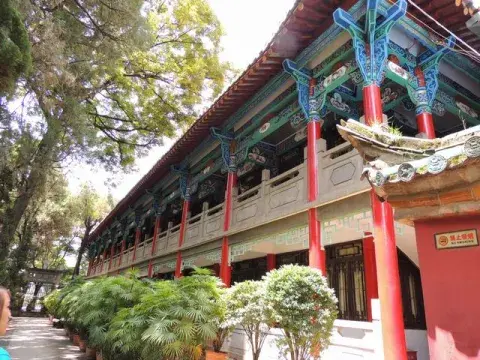
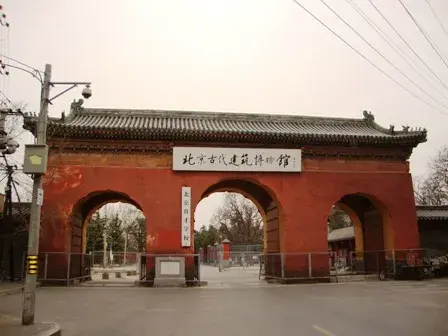
The Temple of Xiannong is located on the west side of Beijing's central axis line and opposite the Temple of Heaven. It was built in the Ming Dynasty nearly 600 years ago.

Xiannong was the god of agriculture. At the beginning of the agricultural season every spring, emperors came to the t...

The Temple of Xiannong is located on the west side of Beijing's central axis line and opposite the Temple of Heaven. It was built in the Ming Dynasty nearly 600 years ago.

Xiannong was the god of agriculture. At the beginning of the agricultural season every spring, emperors came to the temple and performed rituals to ensure a bountiful harvest.

The Temple of Xiannong is a typical temple complex of China's ritual architecture. Besides the God of Agriculture, there were some other gods such as the God of Mountains, Jupiter and Wind that were worshipped here. These deities are mostly gods of nature who might help with good harvests."

At the end of China's dynastic period, the Temple of Xiannong stopped serving as a place of worship and was used for several other functions. For almost 100 years, it served as a park, a market, a school and a factory, but its achitecture was well maintained.

Renovation of the temple started in the late 1980s, and it was opened to the public as the Beijing Ancient Architecture Museum in 1991. The major renovations were completed by 2003 and the main buildings were restored to their original appearances

Only a few visitors a day come to the Temple of Xiannong, quite a contrast to the hordes that crowd into the other four temples. But Xiannong's relative quietness lets them carefully appreciate the buildings and ancient culture.

As the altar of sacrificing the God of Agriculture, the temple complex has less adornments than other palaces in Beijing. Although it is not as magnificent as the Forbidden City, it is really decent and definitely worth a visit."

The museum hosts year-round architectural exhibitions with artifacts, photos of historical buildings and elaborate models on display. Professional architects and people interested in architecture come here often to learn about and admire China's ancient architecture.

The Temple of Xiannong is not just a place for appreciating the marvelous creativity of ancient people, but also a venue for educational and ex-curricular activities. It provides exhibitions and activities for youngsters to learn about China's history and architecture.

As a theme museum, the temple is not as well-known as the Temple of Heaven or the Forbidden City. But if you are fed up with the crowds and noise at the more popular temples and other sites, the Temple of Xiannong is undoubtedly a good place to visit. You can enjoy the peaceful atmosphere or just sit quietly in the courtyard and imagine what it was like here hundreds of years ago.

Hongluosi

Hongluo Temple scenic spot covers an area of 8 square kilometers integrating the natural landscape with manmade features. It consists of two part: two scenic spots and three Buddhist areas.
    Two scenic spots refer to Hongluo Hill at the back of Hongluo Temple and Qinglong...

Hongluo Temple scenic spot covers an area of 8 square kilometers integrating the natural landscape with manmade features. It consists of two part: two scenic spots and three Buddhist areas.
    Two scenic spots refer to Hongluo Hill at the back of Hongluo Temple and Qinglong Hill to the east. Hongluo Hill, the natural barrier of the temple, has two peaks with an altitude of 813 meters. In spring you can enjoy bright-colored pediments and in autumn you can enjoy the red leaves all over the hill. In Qinglong Hill scenic spot there are maily ancient pines which boast an area of more than 1700 mu. Among which there are more than 10,000 ancient trees over 100 years old. It is one of the most important ancient trees group in Beijing. There are stone carvings of twelve annual animal signs and over 100 sets of stone tables and stone stools for tourists to have a rest in the ancient pinewoods. There the air is clear and fresh and the environment is quiet and tasteful. The air has a very high anion content. The gas emitted from the pines is good for people’s health. A saying goes around among the local people: If you stroll in the Arhat Valley once, all your disease will be removed. It is a good destination for tourists to keep healthy and relax themselves.
    Three Buddhist areas refers to Hongluo Temple , Boddhisattva Guanyin Temple and 500- Arhat Statues Garden. Hongluo Temple has a history of more than 1600 years. The temple was built at the foot of the mountain, facing to the south. Most buildings were built during the Ming and Qing Dynasties. There is a main hall built in 3 tiers (The Hall of Heavenly Guardians, Grand Bodhisattva Hall, There Sages Hall) and four side halls in the east and west.(Faith Hall, Thousand-armed Goddess of Mercy Hall, Yaoshi Hall, Damo Hall) Buddhisattva Guanyin Hall is located on the halfway up the mountain. It takes half an hour to get there along the path for the climbers. There are the Gate Hall, Boddhisattva Guanyin Hall, Five-hundred-arhat garden, covering an area of 20 mu, is located in the ancient pinewoods of Archat Valley east of the temple. The stone statue of Maitreya is the center of the five-hundred-arhat garden. The archats are carved out of life-size bluestones. Each archat has different lifelike expressions.
    Hongluo Temple has relatively good tourist facilities. The Bamboo Fragrant Restaurant and the restautrant in Hongluo Hill Resort can accommodate a banquet over 500 guests. Hongluo Hill Resort located in the pinewoods, with the architecture of siheyuan(compond with houses around courtyard) and Japanese style log cabin. There are over 200 beds of different grade, a gymnasium , a Karaoke lounge and conference rooms. In the morning, you can stroll in the pinewoods breathing in fresh air and fully enjoying the relaxation, comfort and romance far from the city.
 

Huangshan Tunxi Nigh Bars

Huangshan covers an area of 250 kilometers, of which 154 square kilometers are scenic attractions. Its landscape features "four wonders" of imposing peaks...
Huangshan covers an area of 250 kilometers, of which 154 square kilometers are scenic attractions. Its landscape features "four wonders" of imposing peaks, spectacular rocks, odd-shaped pines, and seas of clouds. It is regarded as the “loveliest mountain” in China, as a Chinese saying "No other mountain is worth a glance if you've been to Huangshan" Huangshan also got its world-wide recognition. It has been listed on World Natural Heritage and World Cultural Heritage by UNESCO. The box office blockbuster Avantar got part of inspiration from Huangshan, the director James Cameron.
 Huangshan's features have been distilled in four aspects: imposing peaks, spectacular rocks, odd-shaped pines, and seas of clouds.
 Ancient villages (like Hongcun, Xidi) attract millions of travelers both home and abroad. Hongcun has been listed as World Cultural Heritage site.
 If weather permits, you have the chance to watch the spectacular sun-rising on Huangshan.
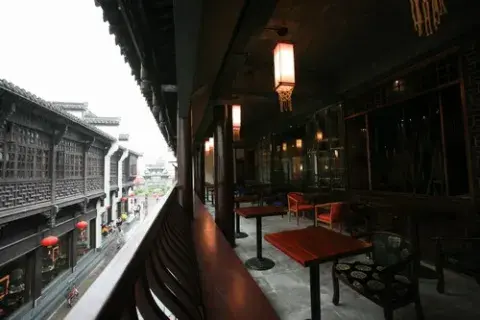
 Huangshan have a national-known specialty, that is Four Treasures of Study. Stroll along Tunxi Old Street and find treasures.
 Huangshan has less rain in winter, which offers greater chance to see the spectacular sunrise. It snows a lot from November to February. If you want to check its snowy scenery, this is the best time.

it's just inside the tunxi old street; almost everyone in this city knows this street.

bus or taxi directly to tunxi old street