Shanxi Province Attractions
Shanxi Province Articles
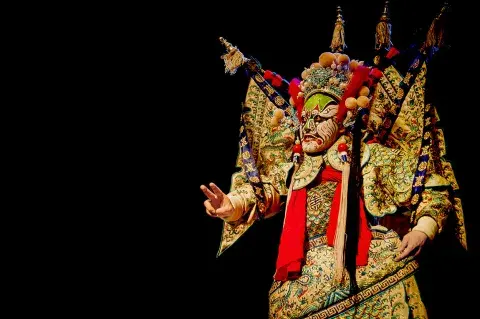
Shanxi Drama (Jin Drama)
The Shanxi drama has a long history and is considered one of the original Chinese dramas, with its own unique cultural charateristics, for which it is accorded a certain honor....
The Shanxi drama has a long history and is considered one of the original Chinese dramas, with its own unique cultural charateristics, for which it is accorded a certain honor. The earliest Shanxi drama dates back to the Han Dynasty (206BC-220) and was referred to as “baixi” (hundred dramas) for its dances and acrobatics. By the Song Dynasty (AD420-479), it had reached quite a high level.
Shanxi has more than 390 drama types, 54 of them its own particular type, and these days, thanks to the gradually developing culture and innovation, has the new vigor, with many famous artists In May of this year, 44 Shanxi performers won the Plum Blossom Prize, China’s top dramatic performance award, putting the province in the No.1 slot nationwide.
Shanxi has a form of Bangzi operas, a kind of local opera accompanied by wooden clappers, including Puzhou, Zhonglu, Beilu, and Shangdang , which are outstanding representatives of Bangzi opera and of the historical and cultural values of the Chinese dramatic arts mixed with folk customs.
Zhonglu Bangzi, also known as Jin opera or Shanxi Bangzi, is popular in the middle part of the province, especially in the cities of Taiyuan and Jinzhong, and is known for its rhythm and clear spoken parts.
Beilu, which developed in the mid-16th century, is popular in northern Shanxi and the Inner Mongolia autonomous region, where it is known for its loud, strong rhythm, power, and excitement.
Shangdang, also called Great Opera or Shangdang classical, dates back to the end of the Ming Dynasty (1368-1644) and, in May 2006, was ranked among the top group of national cultural heritage. Shangdang Bangzi has a high, clear sound and a powerful, rich rhythm, with 400 traditional dramas, mainly relating to heroes, loyal officials, resisting foreign invaders, and punishing treacherous people, portraying a positive, patriotic theme for audiences.
Puzhou, also called Pu opera, is oldest of the four bangzi and came into being during the Jiajing reign period of the Ming. In 2006, it was ranked among the top group of national cultural heritage. It developed different genres over a long time period, with the Nanlu being quite elegant, while the Xilu is quite strong. Pu opera is good at expressing solemn heroic themes and characters’ feelings. Shanxi also has many local operas as well, such as Daoqing, Yangko, and Wanwan, all of which help to fill out Shanxi drama.
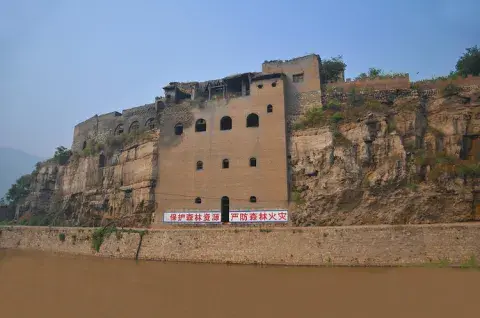
Xiamen village -- Ancient Villages in Shanxi
The Chinese legend, “Emperor Yu tames the flood” says that in order to channel flood waters from the Fenhe River to the Yellow River, Emperor Yu, leader of the Xia tribe, built a mountain pass between the Taiyue and Luliang Mountains. This pass is now the location of Xiamen village.
...The Chinese legend, “Emperor Yu tames the flood” says that in order to channel flood waters from the Fenhe River to the Yellow River, Emperor Yu, leader of the Xia tribe, built a mountain pass between the Taiyue and Luliang Mountains. This pass is now the location of Xiamen village.
Xiamen village is in the city of Jinzhong, Shanxi province, nine kilometers away from the southwest of Lingshi county.
Encircled on three sides by the Fenhe river , the village was built on a giant rock, with steep cliffs in front and high mountains behind. A line of castle-like residences was erected near the Fenhe River. Known as Xiamen Castle, it was constructed between the Wanli Reign of the Ming Dynasty (1368-1644) to the Guangxu reign of the Qing Dynasty (1644-1911).
Although it has gone through over 400 years, most structures in the village are well preserved and maintain their original patterns. Now there are over 60 ancient buildings and historical sites in the village, including tombs, courtyards, temples, ancestral halls, stores, and memorial archways, all forming an ancient architectural complex with a castle style.
Baichi Tower is one of the ancient structures in Xiamen village. Baichi means hundreds of chi, a Chinese unit of length equal to 33.33 centimeters. Baichi Tower is hailed as the most famous tower in Shanxi, built in the Reign of Emperor Qianlong during the Qing Dynasty (1644-1911) by Liang Shu, one of the descendants of Xiamen village’s Liang Family. The Liang Family was one of the four most notable families in Lingshi county in ancient times.
Most of the streets and lanes in Xiamen village are paved with dressed stones. These streets connect the village’s courtyards. Some streets and lanes are connected by secret passages, not only for convenience, but also for, hiding and drainage.
Tips:
Route:
Tourists can take a train to Lingshi Railway Station, then take No 2 Bus to its terminal-Xiamen town (Xiamenzhen). Self-driving tourists can go along No 108 National Highway towards Lingshi county, and the village is ten km away from its southern downtown, on the west bank of the Fenhe River.
Accommodation:
Tourists can stay in the hotels in the downtown of Lingshi County and try local specialties, such as steamed sponge cake and porridge made of corn powder.
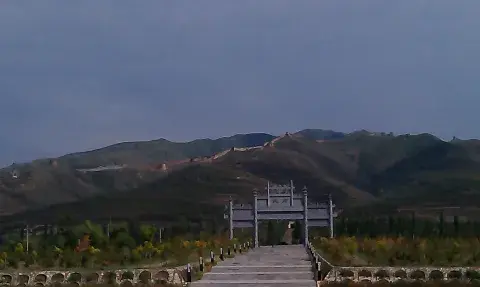
Yannen Pass Great Wall
Yanmenguan , also known as Xixingguan is the name of a Great Wall pass. Located in Dai County, Xinzhou of Shanxi province in China. The current Yanmenguan reconstruction was built during Ming dynasty and currently known as one of the announced monuments of China.
...Yanmenguan , also known as Xixingguan is the name of a Great Wall pass. Located in Dai County, Xinzhou of Shanxi province in China. The current Yanmenguan reconstruction was built during Ming dynasty and currently known as one of the announced monuments of China.
Yanmenguan is situated on Yanmen Mountain. The east side and the west side of the mountain face each other, and hence the whole mountain looks like a huge door. Yanmen Mountain was named for its door-alike shape, in which "Yanmen" means wild goose door in Chinese.
The first pass was built by the King Wuling of Zhao during the Warring States period, for defense against the Inner Asian nomads. During Yuan Dynasty it eventually fell into disrepair. The pass was then reconstructed in 1374.
Top Shanxi Province Tours
$53 Per Day
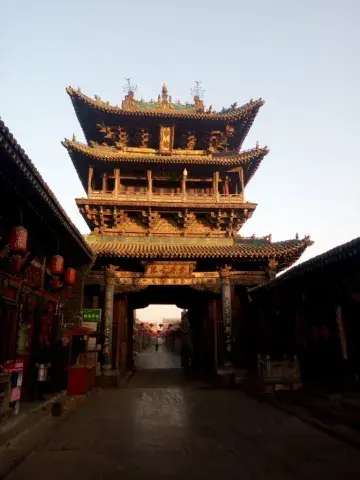
Pingyao Highlights Walking Tour
Pingyao Highlights Walking Day Tour
With our guide to know the Ancient Pingyao better!
Our guide will meet you at your hotel lobby at 08:00 or 08:30, then show you the ticket office to get the ticket for the museums we will visit later.
...Read morePingyao Highlights Walking Day Tour
With our guide to know the Ancient Pingyao better!
Our guide will meet you at your hotel lobby at 08:00 or 08:30, then show you the ticket office to get the ticket for the museums we will visit later.
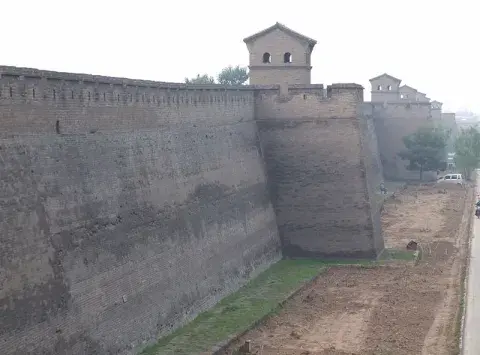
First we will visit the 700 years old City wall, We will climb up from south gate and have a walk on the wall. We are not sure how many km we can walk, because of the renovating of the wall. Normally we will walk from south gate to the Yunlu Exit.
Then visit the Confucius temple, there is a old building named Dacheng Hall which is over 840 years old. From outside, we can see the big wood joints to lift the big roof around the building which is named Dougong. Due to this design, there are less columns inside the hall for giving the big space for the statues and the prayer. We have chance to see the Confucius statue and learn the philosophy of Confucius. If you like, you can pray for you and your children to get better study.
There is the Paper Cutting master named Wentao nearby the exit of Confucius temple. She is very smart and create the new style paper cutting with much more details and good wishes on it. Her products are made by hanks. It is worth to visit and buy as a souvenir from Pingyao. From the table standing and wall hangings. Please remember, take the red one because of red is the traditional and happy color. But the white one is the best. It is really difficult to choose, because of all of them are really nice.
Then you can have coffee break or tea break if you need at Chummy coffee, after this, visit the City god temple (ChenghuangMiao) which is most beautiful temple inside the wall. Because of the roof is covered by the colorful glazed tiles. There is not only city god and also the three money gods, Now you know why pingyao was the financial center.
Next we will visit the Ancient government building, to see the pingyao politics center in the ancient time. It is the complete building with officials bed room, kitchen and private garden. Follow the guide to look the official’s life from the 250km far away from the hometown.
Have a stroll in the alley to the Rishengchang exchange bank, which is the first bank all of china.You can not miss it.
After lunch, walk to the Ming and Qing street, this is the shopping street full of the stores on the both side of street. You can find alot things here , from post card to lacquered boxes, and wall panels. One more place to see, it is the Armed escort agency also named security and transport service for the business man before the bank founded.
Inlcusions
1.private english speaking tour guide servcie
2.bottle water for the tour
$588 Per Day
3 Days Pingyao Elite Tour
Day 1
Arrive Pingyao
Arrive in Pingyao, you will be met at the train/bus station and then transferred to your hotel. Free at leisure for the rest of the day.
Meals: No meal
Accommodation: In Pingyao
Day 1
Arrive Pingyao
Arrive in Pingyao, you will be met at the train/bus station and then transferred to your hotel. Free at leisure for the rest of the day.
Meals: No meal
Accommodation: In Pingyao
The ancient town of Pingyao had been emerged gradually along with the city wall during the Zhou Dynasty 11th century -256 BC. It is the only ancient city in China completely reserved as it was hundreds of years ago without any modern architecture, but only the narrow street flanking with Chinese shops in old style and the road plated with the original stone. Pingyao is not only famous for its antiquity, but also for being the merchant center with the nation's earliest bank established in the 19th century, and furthermore it was once served as the financial center of the Qing government.
Day 2
Pingyao
Enjoy your one day relaxing visit around this ancient town covering Wang's Courtyard, Shuanglin Temple. After the tour, be transferred back to your hotel.
Meals: Breakfast, Lunch
Accommodation: In Pingyao
The Wang's Courtyard is 35 km from the Ancient City of Pingyao. Acclaimed as the "First Folk Residence in Cathay", it is the largest-existing folk residence cluster in China and a model of the merchant family's residence in North China's Shanxi Province, demonstrating the quintessence of Chinese architectural art and cultural values. This luxurious residence covers about 45,000 square meters with 123 compounds and 1,118 rooms and took about half a century (1762-1811) to build.
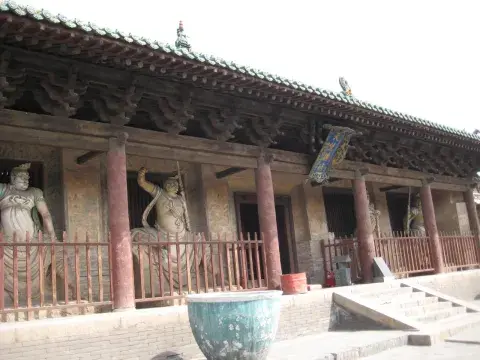
The Shuanglin Temple is a large Buddhist temple, part of the World Heritage Site of Pingyao, stands in the countryside about 7 kilometers southwest of the ancient city. It was originally founded in the 6th century during the Northern Wei period, although the present buildings date to the Ming and Qing dynasties. It is notable for its collection of over two thousand decorated clay statues dating from the 12th-19th centuries.
Day 3
Departure Pingyao
Say goodbye to Pingyao and continue your tour to next city.
Meals: Breakfast
Service Ends
$999 Per Day
7 Days Shanxi Highlights tour
Day 01 Arrival in Datong (no meal)
Arrival in Datong by train or bus in the evening, be picked up and transferred to the hotel.
Day 02 Datong (B, L)
Visit the UNESCO World Cultural Heritage site – Yungang Grottoes. Then proceed to ancient Huayan Temple of Liao and Jin Dynasty and Nine Dragon Screen.
Day 03 Datong – Mount Wutai (B, L)
Drive to visit Hanging Temple, Wooden Pagoda at Ying County, which is the oldest existent fully wooden pagoda still standing in China, first built in 1056. Overnight at Wutaishan city....Read more
Day 01 Arrival in Datong (no meal)
Arrival in Datong by train or bus in the evening, be picked up and transferred to the hotel.
Day 02 Datong (B, L)
Visit the UNESCO World Cultural Heritage site – Yungang Grottoes. Then proceed to ancient Huayan Temple of Liao and Jin Dynasty and Nine Dragon Screen.
Day 03 Datong – Mount Wutai (B, L)
Drive to visit Hanging Temple, Wooden Pagoda at Ying County, which is the oldest existent fully wooden pagoda still standing in China, first built in 1056. Overnight at Wutaishan city.
Day 04 Mount Wutai – Taiyuan (B, L)
Half day tour to Mount Wutai, one of the four holy mountains for Buddhists in China, you will tour the Xiantong Temple, Pusading Temple and Tayuan Temple. After lunch, drive 4 hours to Taiyuan, the capital city of Shanxi Province.
Day 05 Taiyuan - Pingyao (B, L)
After breakfast, transfer to visit Jinci Temple, which was founded about 1,400 years ago, boasting a diverse collection of more than 100 sculptures, buildings, terraces, and bridges. Then proceed to Pingyao, you will visit Qiao Family Compound and Double Forest Temple before checking into the hotel.
Day 06 Pingyao (B, L)
Explore the old town of Pingyao escorted by your guide, including the visits to the city wall, Rishengchang Draft Bank and Ming and Qing Street. Free time at the rest of the day.
Day 07 Pingyao – Taiyuan departure (B)
Drive to Taiyuan, and board the flight or train to your next destination.
End of service.