Shanghai Attractions


China Europe International Business School - Shanghai
Logo:


Website: &...
Logo:
Website: www.ceibs.edu
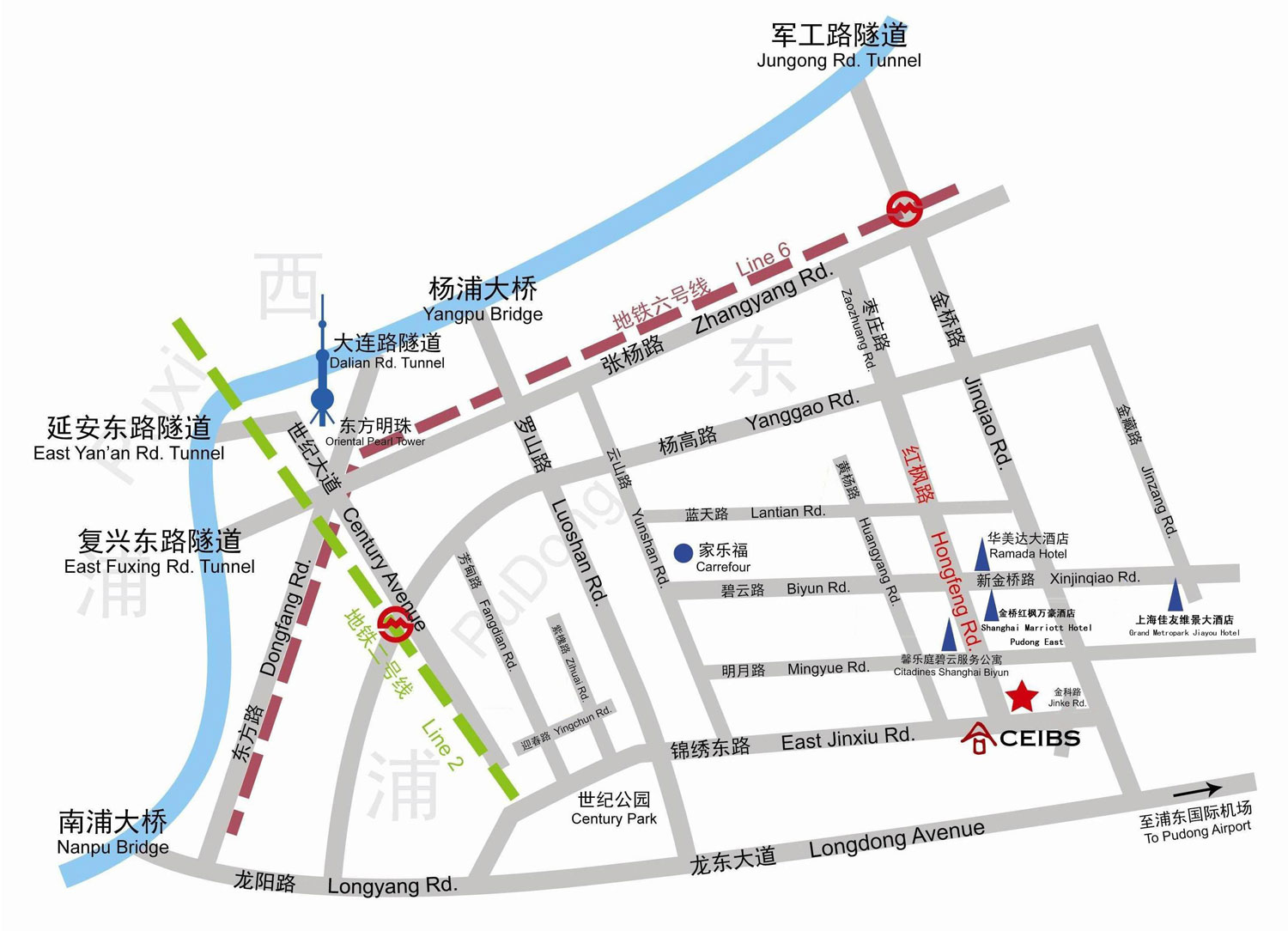
How to Get There: www.ceibs.edu/images/map_sh.jpg
Brief Introduction:
CEIBS is the leading China-based international business school. Its main objective is to contribute to the economic development of this country and its business communities. It does this by offering MBA students, managers, and senior executives of companies operating in, or planning to enter China, the latest knowledge and a thorough understanding of current practices in international management, helping participants to adapt them successfully to their own business environment.
CEIBS was established on November 8, 1994 in Shanghai. Based on its own campus in Pudong District, the school is a not-for-profit joint venture established under an agreement between MOFTEC and the European Commission. CEIBS also has offices in Beijing and Shenzhen.
Governments and Partners:
CEIBS receives financial support from the Municipal Government of Shanghai and the European Union. Its joint venture partners are Shanghai Jiaotong University, and efmd, the European Foundation for Management Development, which provide the institutional guarantees that make the school a centre of excellence in business management education and research within Asia.
Over a hundred years old, Shanghai Jiaotong University is one of the leading universities in China. It has extensive and long-standing contacts with businesses in this country, and is thus able to facilitate CEIBS’ relations with the Chinese corporate world.
Efmd, based in Brussels, is Europe’s unique forum for first-rate information, high quality networking and worldwide cooperation in management development. Founded in 1971, efmd is today Europe’s leading professional association of stakeholders in management education and development. Its network spans more than 40 countries and has over 400 members worldwide, including major European business schools and management centres, as well as a large number of leading companies and consulting firms.

Shanghai Articles
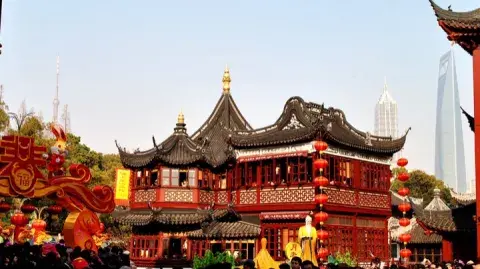
The Yuyuan Garden area
The Yuyuan Garden area is located a few blocks south of the Bund.Before the concessions were established in Shanghai in the mid-19th century,this area had been the downtown for several hundred years.
...The Yuyuan Garden area is located a few blocks south of the Bund.Before the concessions were established in Shanghai in the mid-19th century,this area had been the downtown for several hundred years.
In the 1990s,a part of this former walled city was restored.The restored area is a bit of a Disneyland version of historical Shanghai.It is a world of cobbled paths,small shops and old gabled houses.The Yuyuan Garden area includes the City God Temple,the Yuyuan Garden,the Huxingting Teahouse and the Bridge of Nine Turnings and hundreds of shops and restaurants.
The major portion of this area is taken by more than 100 specialty shops and restaurants .The Shanghai Old Street ,a great stop for souvenir shopping ,stretches about 825 meters from west to east.It displays the architectural and cultural evolution of Shanghai from the Ming Dynasty through the Qing Dynasty into Chinese Republican era.
Standing on the Shanghai Old Street is the City Gold Temple, a Taoist house of worship of several hundred years.Two gods are housed in the temple with Huoguang in the front hall and Qin Yubo in the back hall.
North of the temple lies the Yuyuan Garden ,the largest and best known one in Shanghai.The private garden was built between 1559 and 1587.The owner,Pan Yunduan,planned it as a retreat for his father.Covering some four hectares of land at that time,it was rated one of the best gardens south of the Yangtze River.In 1760,the garden was offered for sale by the heir.The transport merchant bought the garden and donated it to the City Temple.The former garden was open to the public and a number of guilds were settled in the garden.In that period,the garden was massively renovated with new pavilions and halls added.Since the 1950s,the garden has been renovated a couple of times and it is enlisted in the National Heritage.Occupying an area of 2 hectares,the restored garden is a pastoral world.It is a remarkable maze of pavilions,rockeries,bridges and ponds encircled by a white-washed wall.The traditional lyout of the estate has produced over a dozen gardens with gardens.
South of the entrace of the Yuyuan Garden is a lotus pond spanned by a zigzag bridge.The building in the pond is one of the most famous teahouses in China,called Huxingting ,or Mid-Lake Pavilion.
The Yuyuan Garden tops the list of traditional attractions in Shanghai.A trip to Shanghai is never complete without a visit to the Yuyuan Garden area.
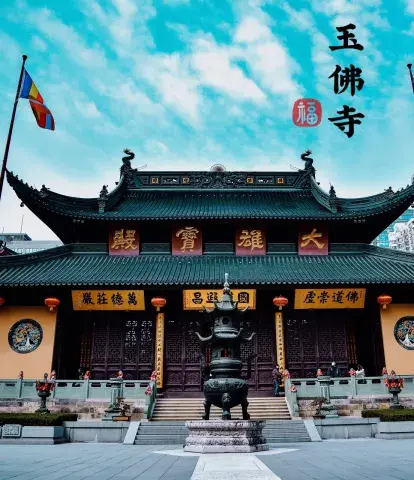
Jade Buddha Temple
Jade Buddha Temple is located in the northwest of the city proper.It has been famous for its outstanding jade Buddhas since there were enshrined over 100 years ago,hence the temple’s name.
...Jade Buddha Temple is located in the northwest of the city proper.It has been famous for its outstanding jade Buddhas since there were enshrined over 100 years ago,hence the temple’s name.
China is a multi-religious country and the people enjoy the freedom of religious life.All people,religious or not,have equal political rights and social status.
Buddhism was founded by Siddhartha Gautama in ancient India in the 6th century BC and was introduced into China in 68 AD when the White Horse Temple was built in Henan Province.Buddhism developed quickly in China and many new sects were formed.Today the popular Buddhist sects in China are Chan and Jing Tu.It is estimated that there are about 13.000 temples and monasteries with 200,000 monks and nuns in China.Lay Buddhists are more numerous ,especially among the Han people,the largest ethnic groups in China.
Jade Buddha Temple belongs to Chan sect.Among the 85 Buddha temples in Shanghai,it is one of the most illustrious ,distinguished by its two jade Buddha statues.History has it that in the late Qing Dynasty,a Chinese monk Huigen from a monastery in Mount. Putuo,Zhejiang Province went on a pilgrimage.His journey extended to Myanmar,where he had 5 jade Buddha statues carved with the donations from oversea Chinese.On his return voyage through Shanghai,he left two statues,one in the sitting position and the other reclining.A temple was completed in 1900 to enshrine the two jade Buddhas.Later,the temple was destroyed in a civil war.A new temple was built on the present site in 1918.
Jade Buddha Temple covers an area of 1.3 hectares with over 200 rooms for different purposes.It follows the typical monastic architecture with golden yellow walls,black tiles and red lacquered doors.The main buildings along the north-south axis are the Heavenly King Hall,the Grand Hall and the abbot’s room with the jade Buddha chamber above it.In both wings are accessory buildings including the Reclining Buddha Hall and Shanghai Buddhist institute offering 3-year undergraduate and 2-year post-graduate programs.
Just as Christians go to churches on Sundays,Buddhist believers go to temples on the 1st and 15th of every Chinese lunar month.Jade Buddha Temple receives more than one million visitors annually including a large number of pilgrims.
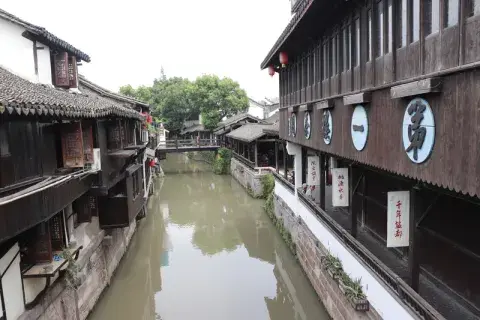
Xichang historical
In the Shanghai area, Xinchang is a comparatively complete historical town. It is the last ancient Watertown around Shanghai, still with the original lifestyle and architecture....
In the Shanghai area, Xinchang is a comparatively complete historical town. It is the last ancient Watertown around Shanghai, still with the original lifestyle and architecture. More than 55% of the architecture from the Ming (1368-1644) and Qing (1644-1911) dynasties and the era of the Republic of China (1912-1949) have been preserved.
The Xinchang ancient town is in Naihui district of Shanghai, between the heart of the city and the airport. It is 36 kilometres from the People’s Square and only 25 kilometres from the Pudong International Airport. With this location, Xichang is a perfect place to visit when you have a longer stopover at Pudong International airport of Shanghai.
Originally Xichang was the place of the Xiasha salt farm, where salt was captured from seawater. As the beach grew out, the salt farm became a place for salt people to live and exchange goods. When Xinchang became a town, Xiasha salt farm was in its heyday, with more salt production and cooking stoves than the salt farms in western Zhejiang. Today, the ancient town is known as "A small new town in Suzhou". It has accumulated a profound history and culture and is favoured by more people for its tranquillity, beauty and appearance. Xichang ancient town is very similar to towns like Zhouzhuang and Zhujiajiao in that it has narrow river channels through the town, exquisitely carved stone arch Bridges, houses built alongside the water, high stone revetments, the horse-shaped water Bridges along the river and monumental "stalagmite lane" archway built back in 1986. Xinchang town is noted for being "small, but as beautiful as Suzhou city."
If you wander in Xinchang Watertown for a day, you will have a lot to see: the small temples with big Buddha statues, the ancient musical instrument museum, the oil-painting studio and the ordinary residents’ house. In December 2008, the town was named "Famous Historic Culture Town of China" by the State Construction Administration and State Cultural Relic Bureau.
Recommended places to visit in Xichang: Ceremonial Arch, Ancient Gingko, 10 Bamboo Root Scenic Spots, First Tea House.
From all the Watertowns in the Shanghai area, Xichang is by far the quietest one. It is not a place where you will see a lot of other tourists.
How to get there:
From Shanghai Longyuang station you can travel by Metro and bus in 45 minutes. From Pudong airport, you can travel by Maglev super fast train and metro or travel by taxi.
Top Shanghai Tours
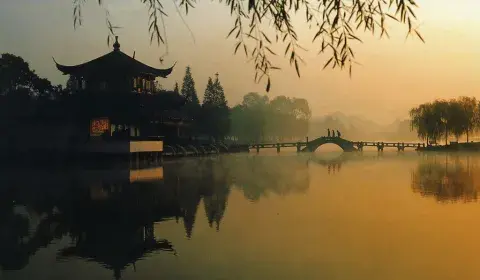
$238 Per Day
Private Hangzhou Day Trip from Shanghai by Bullet Train
Take in the highlights of beautiful Hangzhou on a private full-day tour from Shanghai. After hotel pickup and transfer by high-speed train to Hangzhou, your private guide takes you to see some city attractions, such as Faxi temple. Moreover, enjoy a tasty lunch at a local restaurant before heading to Longjing village. There, learn about the process of farming and producing dragonwell tea, the region’s most famous product. Finally, enjoy a scenic boat cruise on UNESCO World Heritage-listed West Lake before returning to Shanghai.
...Read more
Take in the highlights of beautiful Hangzhou on a private full-day tour from Shanghai. After hotel pickup and transfer by high-speed train to Hangzhou, your private guide takes you to see some city attractions, such as Faxi temple. Moreover, enjoy a tasty lunch at a local restaurant before heading to Longjing village. There, learn about the process of farming and producing dragonwell tea, the region’s most famous product. Finally, enjoy a scenic boat cruise on UNESCO World Heritage-listed West Lake before returning to Shanghai.
This is a private, full-day trip from Shanghai to Hangzhou. After you are picked up in your hotel lobby in the early morning, you will take a bullet train to Hangzhou. This is the fastest way to Hangzhou and you can experience train speeds of up to 300 kilometers per hour. Your tour begins at one of Hangzhou's signature sites, the West Lake. Enjoy a lake cruise to see the top ten West Lake scenic views. You will then be taken to experience the wonderful cuisine of Hangzhou at a local restaurant. After lunch, you will visit Faxi temple, a well-known Temple dating back to the Jin Dynasty. See its famous wooden Buddha. Here, you will see fewer tourists and more locals. Finally, enjoy a cup of green tea when you visit the famous Longjing village to see wild fields of Longjing tea bushes where the locals produce the world famous green tea- Longjing Tea. In the village, all locals are tea farmers and you will see the entire procedure of making the famous tea and will get the chance to taste the best quality emperor tea. Afterwards, you will take the bullet train back to Shanghai and you will be returned to your hotel.
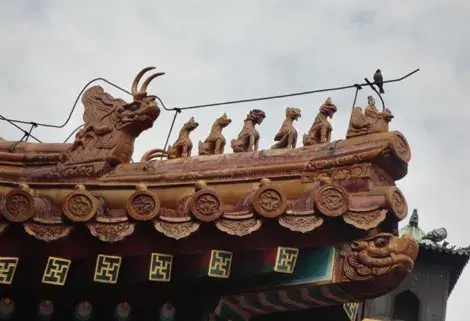
$2202 Per Day
Beijing - Xi'an - Shanghai 10days study tour
Day 01 Arrival at Beijing
On arrival in Beijing, you will be met by our tour guide and transferred to your hotel in Beijing. Free for the rest of the day.
Day 02Beijing (B L)-- Tiananmen Square, Forbidden City, Beijing Zoo
After breakfast at your hotel, start your tour with the visit to Tiananmen Square(40minutes), the largest public square in the world. Then move on to the Forbidden City(2hours), the Chinese imperial palace from the mid-Ming Dynasty to the end of the Qing Dynasty.
Lunch at a special restaurant.
...Read moreDay 01 Arrival at Beijing
On arrival in Beijing, you will be met by our tour guide and transferred to your hotel in Beijing. Free for the rest of the day.
Day 02Beijing (B L)-- Tiananmen Square, Forbidden City, Beijing Zoo
After breakfast at your hotel, start your tour with the visit to Tiananmen Square(40minutes), the largest public square in the world. Then move on to the Forbidden City(2hours), the Chinese imperial palace from the mid-Ming Dynasty to the end of the Qing Dynasty.
Lunch at a special restaurant.
Then move on to Beijing zoo(1.5hours), which is one of the oldest zoos in China and has one of the largest animal collections in the country. The zoo and its aquarium has over 450 species of land animals and over 500 species of marine animals. In all, it is home to 14,500 animals. More than six million visitors come to the zoo each year. The zoo was founded in 1906 during the late Qing Dynasty. Like many of Beijing's parks, the zoo's grounds resemble classical Chinese gardens, with flower beds amidst natural scenery, including dense groves of trees, stretches of meadows, small streams and rivers, lotus pools and hills dotted with pavilions and historical buildings.
Day 03 Beijing ( B L )--Mutianyu Great Wall, Olympic Green, outside look the Bird's Nest and Water Cube, Shaolin kungfu school
Morning excursion to the most beautiful section of the Great Wall - the Mutianyu Great Wall. The hike takes about 2-3 hours. After lunch at Chinese Restaurant, Then head to the Olympic Green to have an outside look at the Bird's Nest and Water Cube(1hour). Shaolin Kung Fu is a huge scientific system, not the general sense of the "branches" or "boxing kinds". Chinese martial arts enjoy a huge structure complex with many branches, among which shaolin kung fu has the dominant place by its long history, the complex system and excellent technology boundary. Back to your hotel.
Day 04 Beijing-Xi'an( B L )
Hands-on D.I.Y Chinese dumplings(2hours) at the local family in Gaobeidian, enjoy these with other Chinese dishes and this will be your Lunch. Afternoon learn the Art of paper cutting, visit the gaobeidian school. After the tour, we go to the train station to Xian. Overnight on the train.
Day 05 Xian ( B L )--Big Wild Goose Pagoda square, Muslim Bazaar, Xi'an City Wall
Arrive in Xian, pick up. Breakfast at hotel. The Muslim Bazaar, the Muslim quarters lies 100 meters west of the Bell tower in downtown Xi'an.The 500 meters long avenue paved by bluestones are dotted with many unique stall,souvenir shop,coffee and bars which are mostly run by Muslim people. We visit massive Xian City Wall. Have a nice walk in the North Square to view the fully illuminated Big Wild Goose Pagoda. Musical Fountain Performance.
Day 06 Xian ( B L )-- Qin Terracotta Army, Shaanxi Historical Museum
Morning pick up by local guide. Enjoy your full day visit to the Qin Terracotta Army, one of the world's most important archaeological finds, with troops, horses and carriages in battle formation. Afternoon, visit the Shaanxi Historical Museum. Among the 400,000 items on display are treasures from many of the Dynasties, including some magnificent bronzes and porcelain, many of which have never been on permanent display before.
Day 07 Xian--shanghai ( B L )
Visit Bell tower and Drum tower. Farmer paintings, and learning the painting. Then go to airport to catch a flight. Pick up by shanghai local guide, only transfer to hotel.
Day 8 Shanghai ( B L )-- Jade Buddha Temple, Yuyuan Garden, the Bund
Breakfast at hotel. Visit Jade Buddha Temple. Jade Buddha Temple is a key temple in Shanghai that thriving with flows of disciples every day, especially on the 1st and 15th day of every lunar month as well as all the traditional Buddhism festivals. Visit pearl factory, it's a nice place to buy a necklace or bracelet. It is very good gift from China. Visit the lovely old Yuyuan Garden look nine zig zag bridge with golden fish pond, bridges and pavilions. Explore the Bund in the evening.
Day 9 Shanghai ( B L )--Shanghai Museum, People Square, Nanjing Road, Oriental Pearl TV tower, Children's Palace
The Shanghai Museum which is the largest museum of ancient Chinese art in Shanghai. Visit the People Square and Nanjing Road for shopping. Visit the Oriental Pearl TV tower 2nd level. Visit the Children��s Palace 30-45minutes.
Day 10 Shanghai ( B )
Your China Experience is over all too soon as you transfer to the airport and board the homebound international flight, bidding a fond farewell to this ancient land.