Kashan Attractions

Fin Graden
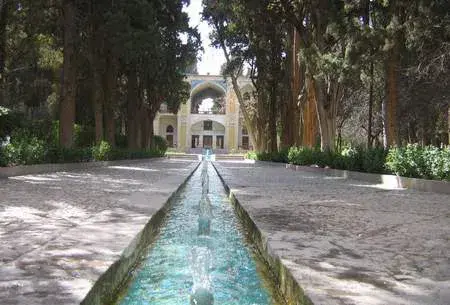
Fin Garden (Persian: باغ فین Bagh-e Fin) located in Kashan, Iran, is a historicalPersian garden. It contains Kashan's Fin Bath, where Amir Kabir, the Qajaridchancellor, was murdered by an assassin sent by King Nasereddin Shah in 1852. Completed in 1590, the Fin Garden is the oldest extant garden in Iran.
Kashan Articles
Iran's architecture (part 1; Desert )
The great land of Iran has always had a special architecture for its diverse climate. Geographic and climate features have led to architectural divisions and different types of patterns....
The great land of Iran has always had a special architecture for its diverse climate. Geographic and climate features have led to architectural divisions and different types of patterns. Due to these issues, the type of construction and methods of execution, types of materials and coatings, and even decorations and construction arrays, have been achieved in a variety of ways.
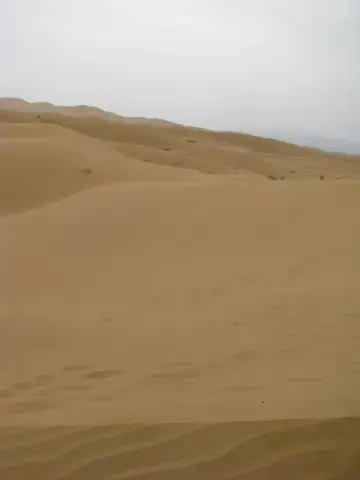
In areas with desert and warm weather conditions, have been tried to increase evaporation time by placing houses in the hills or underground, thus taking advantage of the balanced thermal conditions of the ground.
Due to lack of rainfall, the roof of the buildings was made in the form of truss, vault or dome, without the use of metal skeleton and more in the form of mud.
Fin Garden
The origins of the garden may be anterior to the Safavid period; some sources indicate that the garden has been relocated from another place, but no clear picture of it has been found.
...The origins of the garden may be anterior to the Safavid period; some sources indicate that the garden has been relocated from another place, but no clear picture of it has been found.
The settlements of the garden in its present form was built under the reign ofAbbas I of Persia (1571-1629), as a traditional bagh near the village of Fin, located a few kilometres southwest of Kashan.
The garden was developed further during the Safavid dynasty, until Abbas II of Persia (1633-1666). It was highly recognized during the reign of Fat′h Ali Shah Qajar and was considerably expanded.
The garden subsequently suffered from neglect and was damaged several times until, in 1935, it was listed as a national property of Iran. On 2007, 8 September, Bagh-e Fin was submitted to the Unesco's Tentative List.
Unesco declared the garden a World Heritage Site on July 18, 2012.
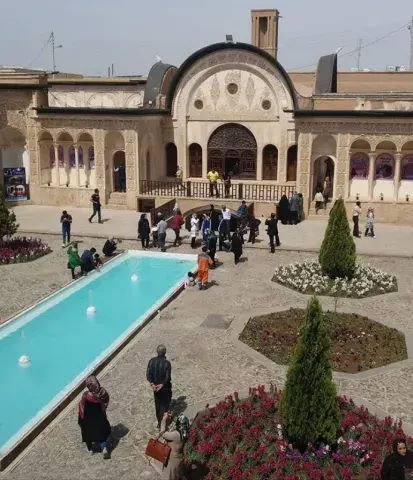
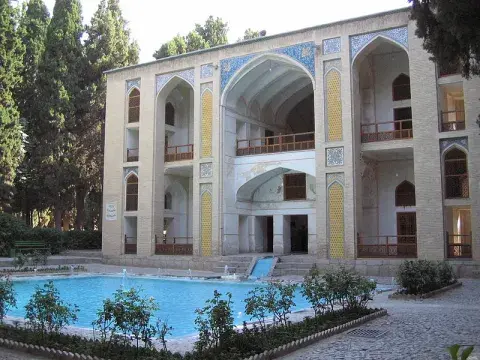
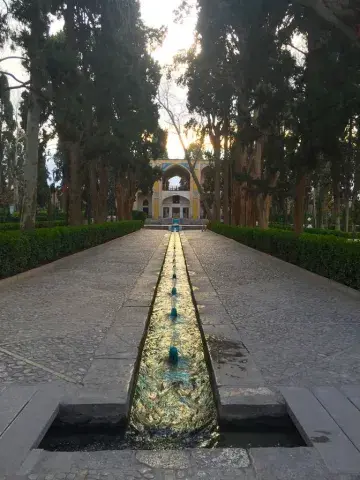
The garden covers 2.3 hectares with a main yard surrounded by ramparts with four circular towers. In keeping with many of the Persian gardens of this era, the Fin Garden employs a great many water features.
These were fed from a spring on a hillside behind the garden, and the water pressure was such that a large number of circulating pools and fountains could be constructed without the need for mechanical pumps.
The garden contains numerous cypress trees and combines architectural features of the Safavid, Zandiyeh and Qajarperiods.
Abyaneh, a unique village
As a village of great antiquity, Abyaneh is like a living architectural and anthropological museum. It presents an impressive model of the man adaptating to the environment.
It is located on the northwestern slope of Mount Karkas, 40 kilometers from Natanz, in Isfahan province....
As a village of great antiquity, Abyaneh is like a living architectural and anthropological museum. It presents an impressive model of the man adaptating to the environment.
It is located on the northwestern slope of Mount Karkas, 40 kilometers from Natanz, in Isfahan province. It is 2,500 meters above sea-level. A road links Abyaneh to the main Kashan-Natanz highway in a region called Hanjan, which is 55 kilometers and 25 kilometers away from Kashan and Abyaneh respectively.
According to irantravel.biz, Abyaneh is mainly watered by Barzrud River. Set on the slope of the lofty mountain of Karkas, this village has a cold climate with numerous springs creating a favorable condition for agriculture.
Given the evidence found in Abyaneh, the village dates back to antiquity, but its golden age was during the Safavid era. The word ‘Abyaneh’ has been derived from the word ‘viona’ meaning ‘Willow Grove’ (in the local dialect ‘vey’ means willow).
The village extends along the river. Although the village itself is situated on high grounds, in the past three castles were built to protect the people from enemy attacks. Furthermore, the configuration of Abyaneh protects it from strong wind and flood.
Abyaneh has a compact texture with narrow and steep alleys. Located on the slopes of the mountain, the houses are arranged in a stair-step shape, so that the roofs of some houses are the yards of others. Timbers, straw and clay have been used for building the roofs. The walls, built from red mud bricks are impressive. The mud bricks harden when they are exposed to rain. The houses have been built facing the east to get the maximum sunshine.
An impressive aspect of Abyaneh’s architecture is that the houses are uniform in appearance. The doors, most of which have two knockers, are wooden and built in traditional styles. There are beautiful patterns, poems and the names of the owners and mason carved on some doors. The poems demonstrate a good picture of the old Iranian culture. Many facades date back to the Safavid era. Beside the doors of many houses, there are small platforms providing places for passers-by or local residents to rest for a while.
The simplicity of Abyaneh houses presents a picture of the life in rural Iran. Each room is used for various purposes. For example, a single room may be used as a dining-room, a sitting-room, a bedroom and a guest-room. To make efficient use of fuel, the rooms used in winter are architecturally different from those used in summer. To provide equal lighting for all parts of the rooms, there are several small opening in the roofs. The size of the rooms, windows and doors all indicate the simplicity of life in this old village.
Abyaneh is called an entrance to Iranian history. In some of the houses there is earthenware belonging to a few hundred years ago. The local traditional clothes are examples of styles of great antiquity. It is said a women of Abyaneh has inherited her wedding dress from her grandmother. The language spoken by the people is similar to the Parthian language (an Iranian language of the Parthian people who were inhabitants of an ancient country to the southeast of the Caspian Sea, now a part of northeastern Iran).
In addition to natural beauties, there are several historical monuments in Abyaneh, of which the following are of greater significance.
Jame’ mosque
This mosque is magnificently impressive. Many tourists believe Abyaneh is worth visiting even if it only had this monument. The sanctuary of the mosque has a wooden mihrab — a semicircular niche in the wall of a mosque that indicates the qibla; that is, the direction of the Kaaba in Mecca and hence the direction that Muslims should face when praying — around which there are eye-catching patterns and a chapter of the Qur’an carved on the wood. According to date inscribed on the mihrab, it goes back to the 14th century. There is also a pulpit with beautiful carved decorations dating back to the Seljuq era (1038-1194).
Porzaleh mosque
Situated in one of the most ancient neighborhoods of Abyaneh, this mosque has an impressive sanctuary. The date carved on the front door indicates that the mosque dates back to the 14thcentury. This is the oldest door found in Abyaneh, and its carved decorations are very similar to those of the mausoleum of Bayazid-e Bastami in Shahroud.
Hajatgah mosque
Located beside Mount Sakhreh Kuh, this mosque dates back to the Safavid era. Its sanctuary has pillars of wood, on which some verses of the Qur’an have been inscribed.
Ziaratgah
Ziaratgah (meaning shrine) is a magnificently impressive monument, attracting a large number of visitors each year. There are flower beds, brooks, a pool and a large veranda opening onto the vivid green valley of Abyaneh, making Ziaratgah a place worth seeing.
The other points of interest in Abyaneh are: The castles of Haman; two houses of dervishes (dating back to the Safavid era and remains of two fire-temples (dating back to the Sassanian era) built in an architectural style called Chahar Taqi (four-arch style).
Top Kashan Tours
$158 Per Day
2 Days of Kashan
This tour is specialized for watching the process of making herbal water and enjoying the smell of blossoms. Moreover, we've chosen the highlights of the amazing city of Kashan.
A cosy old guesthouse is provided as the accommodation and local dishes as the meals, in this tour.
Arrival and departure are Tehran and the vehicle, depends on the number of travelers, can be sedan, minibus or bus.
$0 Per Day
Isfahan Kashan Tehran Cultural Tour: Five Days Round Trip, Tehran to Tehran!
-Day one: Heading for the Iran's Central Desert rim city of "Kashan". Visits to Kashan's 5000 Years of civilization remains in "Siyalk Hills", the "Historical Houses" (Old mansions of famous merchants), "Fin Garden", "Kashan's Bazaar", magnificent "Agha Bozorg Mosque"... O/N stay in one of the old historical houses of Kashan which has been changed into a hotel.
...Read more-Day one: Heading for the Iran's Central Desert rim city of "Kashan". Visits to Kashan's 5000 Years of civilization remains in "Siyalk Hills", the "Historical Houses" (Old mansions of famous merchants), "Fin Garden", "Kashan's Bazaar", magnificent "Agha Bozorg Mosque"... O/N stay in one of the old historical houses of Kashan which has been changed into a hotel.
-Day two: Leaving Kashan for Isfahan. Afternoon visits to "Naghsh e Jahan Square" that includes: "Historical Mosques", "Aali Ghapoo Palace" and "Isfahan's Grand Bazaar". Finally visits to the historic bridges of "Sio Seh Pol" & "Khajoo" in early evening. O/N stay in one of Isfahan's Hotels.
-Day three: Half a day visit to other tourist attractions like "Chehel Sotun Palace" , "Menar Jonban"(shaking towers), "Atashgah"(Fire Temple) and "Vank Church". "Flower Garden" and "Birds Garden" can be considered as part of the tour according to the saved time & your desire. In the afternoon and on our way back to Tehran; visiting the Red Houses Village of "Abiyaneh". O/N stay in Tehran.
-Day Four: We may start the visits by the "National Museum" and continuing to "Bagh-e Melli" Gate, "Golestan Palace","Glassware & Ceramic" Museum, "Tehran Grand Bazaar" & the fascinating Carpet Market inside, "The King Mosque", "National Jewels Museum", "Antique Shops" nearby. Visits to "Ex" USA Embassy's outer walls and the Handicrafts shops nearby in the afternoon.
-Day Five: We will visit to "Sa'd abad" Palace Museum and "Niavaran" Palace Museum and northern parts of Tehran including "Tajrish" Local Market and "Darband" village in early evening. Sight seeing the renown "Azadi Tower/Monument" and the "Contemporary Art Museum" and "Carpet Museum" can be considered as part of the tour according to the saved time & your desire.
$170 Per Day
Kashan
"Good Photo Opportunities"
"Fin garden" "باغ فین"
This famous and very beautiful garden, with its pools and orchards is a highlight of Kashan. Designed for Shah Abbas 1st, this classical Persian vision of paradise has always been prized for its natural springs and Still curtains the remains of his two storey place. The garden has other Safavid royal buildings, though tape have been substantially rebuilt, and others were added in the Ghajar period. The palace is also infamous as the sight of the murder in 1852 of the revered Mirza Taghi Khan, commonly known as amir kabir.
"Broujerdiha House" "خانه بروجردی ها"
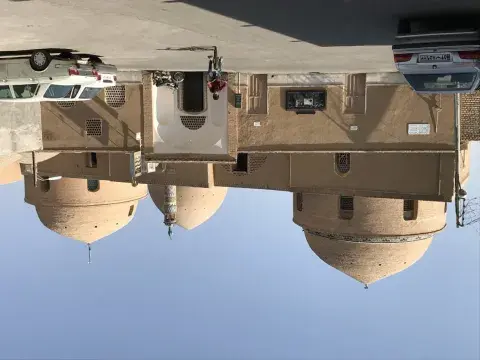
It is a historic house in Kashan, Isfahan, Iran. The house was built in 1857 by architect Ustad Ali Maryam, for the bride of Haji Mehdi Borujerdi, a wealthy merchant. It consists of a rectangular beautiful courtyard, delightful wall paintings by the royal painter Kamal-ol-molk, and three 40 meter tall wind towers which help cool the house to unusually cool temperatures. It has 3 entrances, and all the classic signatures of traditional Persian residential architecture, such as biruni and daruni (andarun). The house took eighteen years to build using 150 craftsmen.