Jiangsu Province Attractions
Golden Eagle Shopping Centre

Located in the Xinjiek...
Located in the Xinjiekou downtown area, the Gold Eagle Shopping Centre symbolizes the top level of consumerism in Nanjing. Although the categories of goods are similar to other stores, Golden Eagle boasts a selection of world-renowned brands which are rarely seen elsewhere in Nanjing. Brands include CARA, ELANIE, JESSICA and udb for womens clothing and Dior, Lancome, Estee Lauder, Elizabeth Arden and Vichy for cosmetics. The prices are even quite high when compared with the same products in Europe. Also, Gold Eagle does not offer large discounts or promotions like some other stores. However, with a VIP card you may be entitled to a 5% discount.
In the picture to the left, Golden Eagle Shopping Center lies beyond the building being torn down.
Xijinjiekou (新街口): take bus 4, 5, 9, 18, near the west entrance of Xinjiekou station
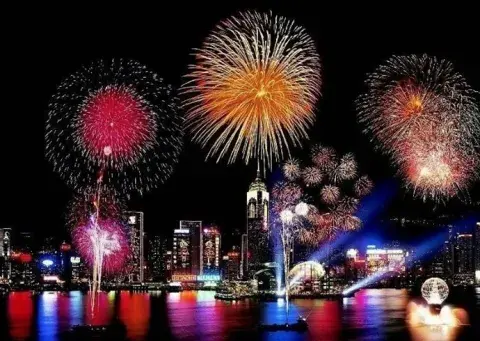
Zhongyang Road - Video Games
There are at least 5 small console video game stores on Zhongyang Road (also called Zhongyang Lu or Central Road on some signs). They have games, consoles, and accessories for Xbox, Xbox 360, PS2, PSP and the Nintendo Gamecube, Gameboy, and DS. The shops also have a few Nintend...
There are at least 5 small console video game stores on Zhongyang Road (also called Zhongyang Lu or Central Road on some signs). They have games, consoles, and accessories for Xbox, Xbox 360, PS2, PSP and the Nintendo Gamecube, Gameboy, and DS. The shops also have a few Nintendo systems that can’t be found in other places including the original IQue (A controller that downloads N64 games) and the IQue DS (The Chinese version of the Nintendo DS).
The consoles are actually more expensive than they are in North America. The games, which are “not fake”, but rather “copied”, are of course much cheaper. There are some original games, but these games are a bit harder to come by. For systems that cannot yet play copied games it should be easy to find at least some original games.
The video game shops are spread out over a space of 3 blocks. The largest shop, which actually contains 3 separate vendors within, is on the east side of Zhongyang Road and is the closest to the subway station. Take the subway to Gulou station and then walk north along Zhongyang Road to reach the largest shop. The other stores are 1 to 2 blocks further north on the west side of Zhongyang Road. You may need to search around a bit if you are looking for something specific. Prices between the stores are fairly similar, but for more expensive items you should be able to cut down the price by bartering and weighing your options. Staff members in all locations are very knowledgeable about their products, but they do not speak English.
Note: If you are using a console that you have brought to China from another country make sure it has a proper voltage converter.
Link: Also located on Zhongyang Road is The Castle Bar.
The Palace
The Palace is large, pulsing, and fun. Head upstairs where the music is generally more suited to Western tastes, or ’danceable’, as the crowd usually stays until the wee hours of the morning. Admission is free, but there’s not such luck with drink specials.
To find the P...
The Palace is large, pulsing, and fun. Head upstairs where the music is generally more suited to Western tastes, or ’danceable’, as the crowd usually stays until the wee hours of the morning. Admission is free, but there’s not such luck with drink specials.
To find the Palace (huang gong), head north from the large white Wenchang Pavilion and take a right through the towering red traditional gates. Then head for the undeniably gaudy building.
Wenchang Department Stores
The big ritzy places to shop in Yangzhou are clustered around the white pavilion in the center of town, Wenchang Pavilion (文昌阁).
At the northeast corner of the intersection is the Wan Jia Fu (万家福) department store with 5 floors of just about every product under the sun. Many products...
The big ritzy places to shop in Yangzhou are clustered around the white pavilion in the center of town, Wenchang Pavilion (文昌阁).
At the northeast corner of the intersection is the Wan Jia Fu (万家福) department store with 5 floors of just about every product under the sun. Many products include very entertaining translations as well.
At the southwest corner is the Golden Eagle (金鹰) department store which is pretty similar to Wan Jia Fu. Just west of Golden Eagle is Times Square (时代广场), a more typical mall. These places are a total zoo on the weekends, always making for a fun spectacle at the very least. For a more shopping experience, head over on a weekday.

Jiangsu Province Articles
Festivals and National Holidays
Christmas and New Year’s Day
Chinese Name: 圣诞节, 新年 (Shengdan Jie, Xin Nian)
Date: Dec 25, Jan 1
Christmas and New Year’s Day
Chinese Name: 圣诞节, 新年 (Shengdan Jie, Xin Nian)
Date: Dec 25, Jan 1
Christmas and New Year’s Eve are increasing in significance but are still not widely celebrated by Chinese people except for the exchange of cards and a little extra spending around Christmas time. There are Christmas and New Years celebrations held where there are many foreigners.
Chinese New Year (Spring Festival)
Chinese Name: 春节 (Chun Jie)
Date: First day of the Chinese new year
- 2006 - Jan. 29
- 2007 - Feb. 18
- 2008 - Feb. 7
- 2009 - Jan. 26
- 2010 - Feb. 14
Also known as Spring Festival, this is the most important festival for Chinese people. It begins on the first day of the lunar calendar so the date varies from late January to February. It is a time to visit family, set off firecrackers, give red bags of money to younger family members and eat cake. It is also a month long winter break for students and teachers.
Valentine’s Day
Chinese Name: 情人节
Date: Feb 14
Lantern Festival – Mid February
Chinese Name: 元宵节 (Yuanxiao Jie)
Date: 15th day of the Chinese year.
- 2006 - Feb. 12
- 2007 - Mar. 4
- 2008 - Feb. 21
- 2009 - Feb. 9
- 2010 - Feb. 28
On the 15th day of the Chinese New Year the Lantern Festival is held. Lanterns light up the streets and people eat sticky rice. It marks the end of the Chinese New Year festival.
Qingming Festival (Tomb-sweeping Day)
Chinese Name: 清明节 (Qingming Jie)
Date: April 4, 5 or 6.
It is a time to pay respect to deceased ancestors. It is not a public holiday. The date of Qingming festival is determined by the solar cycle.
International Women’s Day
Chinese Name: 三八妇女节 (Sanba Funv Jie)
Date: March 8
Employers give women half a day off work or give them some money.
International Labour Day
Chinese Name: 劳动节 (Laodong Jie)
Date: May 1
This is a very busy time for travel in China. Employees get a 7 day straight holiday.
International Youth Day
Chinese Name: 五四青年节 (Wusi Qingnian Jie)
Date: May 4
Fits within the Labour Day break.
International Children’s Day
Chinese Name: 儿童节 (Ertong Jie)
Date: June 1
Kids get a day off of school or have a "fun day" at school.
Birthday of the Chinese Communist Party
Chinese Name: 党的生日 (Dang de Shengri)
Date: July 1
Anniversary of the Founding of the People’s Liberation Army
Chinese Name: 建军节 (Jianjun Jie)
Date: August 1
Dragon Boat Festival
Chinese Name: 端午节 (Duanwu Jie)
Date: 5th day of the 5th moon
- 2006 - May. 31
- 2007 - June. 19
- 2008 - June. 8
- 2009 - May. 28
- 2010 - June. 16
Dragon boat races are held and people eat sticky rice. This festival is on the fifth day of the fifth moon. It is to celebrate the hero Qu Yuan who protested a corrupt emperor by drowning himself. Fishermen raced their long boats out on to the water and then beat drums and threw rice in order to drive the fish away from Qu Yuan’s body.
Chinese Valentine’s Day
Chinese Name: 七夕 (Qixi)
Date: 7th day of the 7th moon
- 2006 - July. 31
- 2007 - Aug. 19
- 2008 - Aug. 7
- 2009 - Aug. 26
- 2010 - Aug. 16
Teacher’s Day
Chinese Name: 教师节 (Jiaoshi Jie)
Date: September 10
Teachers get presents.
National Day
Chinese Name: 国庆节 (Guoqing Jie)
Date: October 1
This is the birthday of the People’s Republic of China. This is one of the busiest times for travel during the year since many Chinese people get a seven day break from work or school. It is a time to spend time with family and friends as well as the beginning of a major shopping week. Shopping areas become packed with shoppers searching for National Day deals.
Moon Festival (Mid-Autumn Festival)
Chinese Name: 中秋节 (Zhongqiu Jie)
Date: 15th day of the eighth moon
- 2006 - Oct. 6
- 2007 - Sep. 25
- 2008 - Sep. 14
- 2009 - Oct. 3
- 2010 - Sep. 22
It’s time to eat moon cakes. On the15th day of the eighth moon this festival celebrates the harvest.
Chinese Food by Area
There is no such simple concept as so called “Chinese food." In fact within China there is a variety of distinctive cuisines....
There is no such simple concept as so called “Chinese food." In fact within China there is a variety of distinctive cuisines. It is usually agreed that there are four principal culinary regions in China, which are Shandong (山东), Sichuan (Szechewan, 四川), Guangdong (Canton, 广东) and Yangzhou (扬州) which may also be referred to as Huaiyang (淮扬), Weiyang (维扬) or Jiangsu (江苏) style. Some experts prefer to break it down into eight schools of Chinese food which include the previous 4 along with Zhejiang (浙江), Hunan (湖南), Anhui (安徽) and Fujian (福建).
The Four Culinary Regions
Shandong cuisine, which is representative of northern China’s cooking, is generally salty, and commonly prepared with strong spices including onion and garlic. In northern China rice is far less commonly grown, so wheat and corn are the major grains consumed. One of northern China's most famous dishes is certainly Peking (Beijing) roast duck.
Sichuan cuisine features a wide range of materials, various seasonings and different cooking techniques. With a rich variety of strong flavors, Sichuan food is famous for peppery and chili flavors and best known for being spicy-hot. A famous representative is “Ma Po Dou Fu”, which is a dish of tofu that is both "la" (spicy) and "ma" (tingly). Kung Pao (Gong Bao) Chicken is another notable Sichuan dish. It is naturally loaded with spicy peppers and always features peanuts as one of its main ingredients.
Cantonese cuisine is the hardest to categorize. The cuisine emphasizes light cooking with a seemingly limitless range of ingredients. There is a saying in China that people in Beijing (in the north) will say anything, people in Shanghai (east) will wear anything and people in Guangzhou (south) will eat anything. Rats, bugs, dogs, you name it, they eat it. Cantonese soup may also include various kinds of herbal medicines added for health reasons. To many foreigners dim sum is representative of Cantonese Cooking.
Yangzhou cuisine is based largely on the three local cooking styles of Yangzhou, Nanjing and Suzhou, 3 cities in Jiangsu province. The cuisine pleasantly emphasizes visual value. The dishes' artistic shape and bright colours add more ornamental value. Compared to other Chinese food, Yangzhou cuisine seems a little bit sweet. Yangzhou fried rice and Yangzhou steamed meat dumpling are known throughout China.
The characteristic flavors of China’s four major cuisines can be summed up in the following expression: “light Southern (Canton) cuisine, salty Northern (Shandong) cuisine, sweet Eastern (Yangzhou) cuisine and spicy Western (Sichuan) cuisine.”
East vs. West
Besides the four major culinary regions, there are also noticeable differences between Eastern and Western food. In the Easten part of China, especially in the cities along the east coast, fresh seafood is very popular. Shrimp, fish, crab, crayfish, lobster, oysters and many other varieties of seafood can be found in abundance. In the Western parts of China such as Xinjiang (新疆) and Tibet (西藏), barbecued mutton and beefsteak are popular. Migrants from Xinjiang province have brought their Islamic influenced cuisine to many Chinese cities.
Click here to browse hundreds of Chinese restaurants in China
Factors to Judge a Chinese Dish
The three essential factors, by which Chinese cooking is judged, are known as “color, aroma, and taste” (色, 香, 味, se, xiang, wei). The &ldquo...
The three essential factors, by which Chinese cooking is judged, are known as “color, aroma, and taste” (色, 香, 味, se, xiang, wei). The “color” of Chinese food refers to the layout and design of dishes, commonly best exemplified by the large elaborately-prepared cold dish served at the beginning of the dinner. “Aroma” implies not only what one’s nose can detect directly, but also the freshness of the raw materials and the blending of seasonings. While “Taste” is determined by many factors such as the texture of food, the art of proper seasoning, and fine slicing techniques. In order to cook a quality Chinese dish, all these elements must be achieved. This challenge demands a careful coordination of a series of delicate activities: selecting ingredients, mixing flavors, timing the cooking, controlling the heat and finally, laying out the food on the plate for the table.
Top Jiangsu Province Tours
$40 Per Day
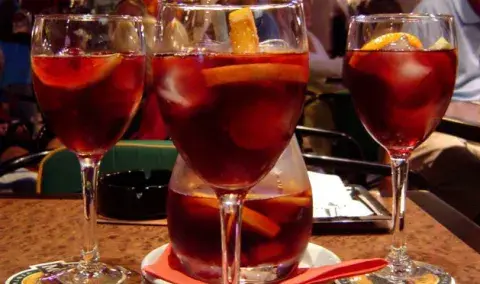
Nanjing nightlife tours - Bar crawling
In recent years Nanjing’s nightlife scene has undoubtedly changed for the better. The 1912 bar district is a common place to start a tour of Nanjing’s nightlife as it features Nanjing’s largest concentration of bars and clubs. Besides 1912, bars, pubs, clubs, karaokes, restaurants and not-so-mentionable locales are dispersed across the city, especially near Xinjiekou and close to the student population.
...Read moreIn recent years Nanjing’s nightlife scene has undoubtedly changed for the better. The 1912 bar district is a common place to start a tour of Nanjing’s nightlife as it features Nanjing’s largest concentration of bars and clubs. Besides 1912, bars, pubs, clubs, karaokes, restaurants and not-so-mentionable locales are dispersed across the city, especially near Xinjiekou and close to the student population.
Nail Jazz Bar is a light bar with good Jazz muisc, live sometimes, they have over 50 kinds of imported beer from all over the World, the Draft beer Hoegaarden is with special roam and taste, for lady, here have over 100 cocktail to choose, lovely and enjoyable. The price here is quite as other bars, short cocktail for 28 Yuan, long drink cocktail for 38 Yuan. Hoegaarden draft beer, 38 for 0.3L and 68 for 0.5L.
Behind the Wall - A cozy atmosphere, decent food, live music and cheap margaritas make Behind the Wall a popular hang-out, especially with the foreign student population. Inside, Behind the Wall’s three rooms are linked by over-sized arched doorways, and provide seating for groups of two to ten. Mexican, Latin and Greek cuisine is served. The drink menu is varied and not too expensive by Nanjing standards - margaritas are served for only 15 Yuan from Sunday to Thursday.
Castle Bar - Castle Bar is lively on weekends and can become packed during special events. However, during weekdays staff members often outnumber customers. A good place if you like dancing.
Secco Restaurant and Bar - Great German restaurant and bar in Nanjing, they have a good rang and selection of cocktail made by a German, he is also the manager there, really strict to every cocktail he made, always bring you the best taste.
Finnegans Wake - A traditional Irish bar in Nanjing,offering Kilkenny, Guinness and strongbow cider on draught.
Please contact me for daily tour fees, i charge by per tour, not per person.

$50 Per Day
Nanjing Hiking tour with local tour guide Sam
It`s springtime, it`s hiking time!
This tailor-made tour is for people who like nature, history, and hiking!
Ming Tomb (Admission: FreeCNY) - Nanjing became the capital of China when Zhu Yuanzhang founded the Ming Dynasty in 1368. During his reign, Zhu Yuanzhang built the great city walls of Nanjing, the imperial palace, and his future tomb - the Ming Tomb in Nanjing. The Ming Tomb is a certified UNESCO World Heritage Site and is a must-see for travellers to Nanjing.
...Read moreIt`s springtime, it`s hiking time!
This tailor-made tour is for people who like nature, history, and hiking!
Ming Tomb (Admission: FreeCNY) - Nanjing became the capital of China when Zhu Yuanzhang founded the Ming Dynasty in 1368. During his reign, Zhu Yuanzhang built the great city walls of Nanjing, the imperial palace, and his future tomb - the Ming Tomb in Nanjing. The Ming Tomb is a certified UNESCO World Heritage Site and is a must-see for travellers to Nanjing.
Xuanwu Lake (Admission: Free) - Close to the city center and featuring 368 hectares of water and 104 hectares of land, Xuanwu Lake Park is a favorite getaway for locals. Well before the sunrise and even after sunset, the park is bustling with visitors. Some come to walk, jog, or fly kites, others to practice Tai Chi, and many more just want to enjoy the scenery.
Nanjing Food Court - my favorite local Nanjing restaurant, Nanjing people like to go there with family. It`s a resultant with a lot of Nanjing local food and ancient style of decoration, at night they will have Kunqu playing, coolest restaurant ever.
City Wall (Admission: 45CNY) - Nanjing City Wall, constructed during the Yuan and Ming Dynasties between 1365 and 1386, originally stretched over 30km which made it the longest city wall in the world. Now, with about two thirds of the wall still intact it still remains the longest city wall in China. We could walk on the city wall and feel the history of Nanjing.
*Please contact me for daily tour fees, i charge by per tour, not per person.
$80 Per Day
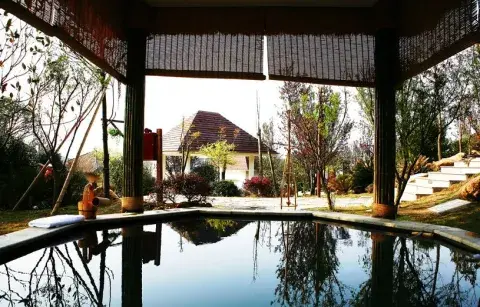
Relaxing Hot Spring Tour at Tangshan Area
Nanjing Tangshan is famous for the hot spring, hot spring is good for your skin and health, and relaxing your body and get rid of the press.
Maybe you don't like all the tourist attractions in the downtown, here would be one of another option.
This tour will be only visit 2 attractions and the rest will be spend the whole time in the hot spring. Or, if you prefer, you can only go for the spring.
Tour plan would be:
Hotel pick up -----> Yangshan Stele -----> Tangshan Ancient Ape Man Caves -----> Hot Spring -----> Send back to hotel.
...Read moreNanjing Tangshan is famous for the hot spring, hot spring is good for your skin and health, and relaxing your body and get rid of the press.
Maybe you don't like all the tourist attractions in the downtown, here would be one of another option.
This tour will be only visit 2 attractions and the rest will be spend the whole time in the hot spring. Or, if you prefer, you can only go for the spring.
Tour plan would be:
Hotel pick up -----> Yangshan Stele -----> Tangshan Ancient Ape Man Caves -----> Hot Spring -----> Send back to hotel.
Since Tangshan is a little town outside of Nanjing city and it`s quite far away, i would suggest to use a private car to drive there directly.