

Hoi an Articles
Hoi An, Hue - An ancient city
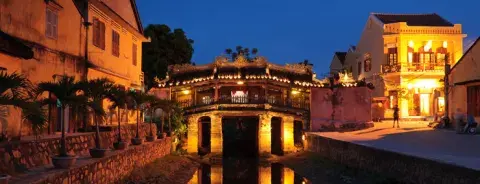
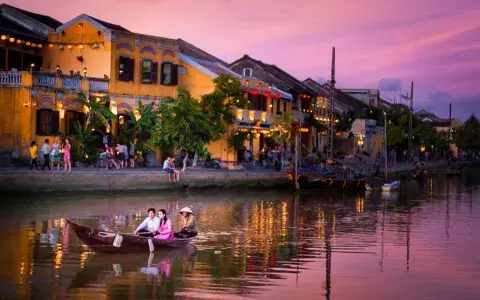
Hoi An - a place of antiquity and peace, is one of the most popular destinations in Vietnam in which travelers can savor all tastes and contemplate the beauty of the World Heritage Site, recognized by UNESCO in 1999 and meet Hoi An people who are warm-hearted, traditional but never out of touch...
Hoi An - a place of antiquity and peace, is one of the most popular destinations in Vietnam in which travelers can savor all tastes and contemplate the beauty of the World Heritage Site, recognized by UNESCO in 1999 and meet Hoi An people who are warm-hearted, traditional but never out of touch with the outside world.
Hoi An these days has still well preserved its most scared treasure and the centuries-old architecture. Hoi An is a perfect picture of Vietnamese, Chinese and Japanese cultures. Coming to Hoi An, you can see the unique sites that are unlike any other in the world. May temples, pagodas and the ancient architectures make up the reputation and carry with them the history of Hoi An.
Don’t forget to drop in a souvenir shop or a tailor shop on the street in which most designs are traditional Vietnamese in nature and service personal bespoke orders. Buy you family and friends multi-coloured lanterns or a bronze statue to remind yourself of Vietnam.
Especially, Hoi An’s FOOD and CUISINES are things you can not miss. Cao lau-Hoi An’s signature dish, Quang noodle, Hoi An Chicken rice and bacon may become cuisines that you cannot forget when visiting Hoi An. Visitors can feel secure about prices and services which are rightfully on par with many venues in Hanoi and Ho Chi Minh City.
Ignore your hustling busy path of life, have break and slowly enjoy these foods, no noise and no work.
Immerse in the beauty of the tourism-enriching little town in Hoi An and let us carry your worries.
HUE TO HOIAN BY PRIVATE CAR NEW EXPERIENCE
After running Hoi An Private Car for couple years, our team has received many requests for travel from Hoi An to Hue and versa on new route....
After running Hoi An Private Car for couple years, our team has received many requests for travel from Hoi An to Hue and versa on new route. This need bases on some travelers who stay in Hoi An longer and would love traveling to Hue Imperial city for a glimpse then back to Hoi An after a day. So they don’t want to travel on the same road while they pay the same money but no new experience. Catch up this idea and travelers’ needs, Hoi An Private Car offers new Hoi An private tour to Hue on new itinerary.
Morning, our driver is ready at your hotel lobby, starting to Hue city on coastline road. First stop at Phu Dien town-let for a quick look and photo of Phu Dien Tower – A historical Cham Tower was built from 8th Century. It’s covered under the sand for a long time.
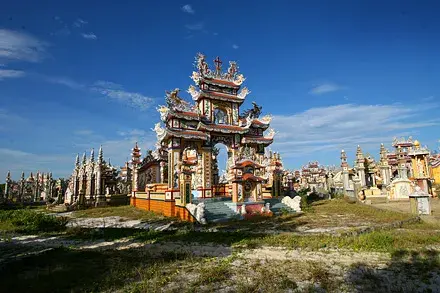
Continue driving on coastline road on No 49 road we will stop at An Bang Cemetery – The Death City – A special village in Hue city, Vietnam for spending thousands of thousands dollars just to build their grand parent’s tomb. Some looks very luxury and can compare with Royal Tombs of the Nguyen Emperors.
We stop at Loc Binh beach for swimming. It’s a new beach in Hue city and it’s nearly untouched places because no tourist at all there. You can ask our driver contact with some local family here to prepare fresh seafood lunch if you are interested in it.
Continue driving through Laguna Resort, Chan May seaport via countryside road, we connect to the highway 1 – the main transportation route of Vietnam. Stop at Lang Co Beach, Hai Van Tunnels, Fishing Village at Cau Hai lagoon, Marble Mountains. End trip at your hotel in Hoi An.
Top Hoi an Tours
$40 Per Day
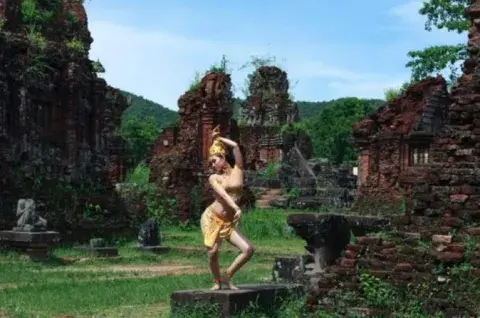
My Son Holly Land - Cooking Class, A Day Trip
The Central land is the place which keeps many cultural values of nature and human-made. Stretch from Quang Binh to Quang Nam, the trip “The Road of Heritage Sites in Central Vietnam” is the combination of heritage and the intangible which was recognized by UNESCO: Phong Nha Ke Bang National Park (Quang Binh), Hue Imperial City & Royal Music, Quang Nam with two heritage sites of Hoi An and My Son.
...Read moreThe Central land is the place which keeps many cultural values of nature and human-made. Stretch from Quang Binh to Quang Nam, the trip “The Road of Heritage Sites in Central Vietnam” is the combination of heritage and the intangible which was recognized by UNESCO: Phong Nha Ke Bang National Park (Quang Binh), Hue Imperial City & Royal Music, Quang Nam with two heritage sites of Hoi An and My Son.
On your route, you will have chance to discover many other attractions such as Ba Na Hill, Cham island, Tam Giang Lagoon as well as beautiful beaches of Cua Dai, China, Lang Co, Thuan An and Nhat Le.
My Son was designated a UNESCO World Heritage Site in 1999. My Son was built by the Champas who ruled Central Vietnam from c200AD to c1700AD until finally annexed by the Vietnamese in the 19th Century. There are travel guides that compare My Son with Angkor Wat, Bagan and Borobudur.
ITINERARY
07:30
Our tour guide pick you up at your hotel and transfer to My Son
09:30
Visit My Son Holy land, The ancient Cham Pa people were raised to be “the masters of art in building brick”. So far the technique in building the ancient temple - towers of Cham Pa people remains controversial. The brick were smoothed and laid closely and securely without mortar. My Son’s value is also reflected in the art of lively and fine sculpture and carving on brick, stone from the images of deties, priests, dances, plants, animals and sacrifices....
11:00
Leave My Son by bus back Hoi An.
12:00
Have lunch in Sun restaurant.
14:00
You make walking tour to visit Hoi An ancient town – a famous harbor in 15thcentury. Visit Phuc Kien pagoda, handicraft villages in Hoi An, enjoy traditional music show, Tan Ky old house, Japanese Bridge…
16:00
See you off at old town.
End of tour.
Overnight in Hoi An Ancient Town
PRICE INCLUDES
Pick up and drop off at your hotel
A private car with an experienced driver
Professional and enthusiastic English speaking tour guide
Mineral Water: 02 bottles per person
Local lunch
All entrance fees
$59 Per Day
Traveling from Hoi An to Hue by car
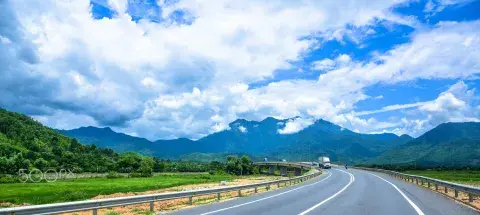
A coastal drive from Hue to Hoi An is considered to be the most beautiful drive in Central of Vietnam, taking you through the unique combination of rural, mountain and coastal settings.
Our driver pick you at Hue city center and depart for Hoi An. on the way from Hue to Hoi An, we stop to visit:
...Read moreA coastal drive from Hue to Hoi An is considered to be the most beautiful drive in Central of Vietnam, taking you through the unique combination of rural, mountain and coastal settings.
Our driver pick you at Hue city center and depart for Hoi An. on the way from Hue to Hoi An, we stop to visit:
- The Elephant Springs, some 53 kilometers from Hue, is an excellent natural spring that is well worth a visit.
- Particularly on a hot day, the natural pool below a small waterfall makes for a very refreshing dip. You can sluice yourself down the smooth rocks at the base of the falls, and there are plenty more spots upstream to explore.
- Lap An lagoon is a brackish water area with surface of over 800ha in the west of Lang Co Bay, stretching from the foot of Phu Gia Pass to Hai Van Estuary. Surrounding the lagoon is a winding small road and in the distance, there is the majestic mountain of Bach Ma. A long white-sand beach with blue seawater of Lang Co may capture every visitor’s heart at first sight. Visiting Lang Co Bay at the sunset, you may feel nostalgic when seeing a peaceful fishing village with boat sailing in Lap An Lagoon (near Lang Co bay), together with flocks of storks flying back to their nest.
- Lang Co is an attractive island-like stretch of palm-shaded white sand, with a turquoise lagoon on one side and 10km of beachfront on the other. As a beach resort it's more geared to Vietnamese day trippers than Western travellers, but if the weather's nice the ocean is certainly inviting
- The Hai Van Pass, is an approximately 21 km long mountain pass on National Route 1A in Vietnam. It traverses a spur of the larger Annamite Range that juts into the South China Sea, on the border of Da Nang
- Marble Mountains is a cluster of five marble and limestone hills located in Ngu Hanh Son, south of Da Nang city in Vietnam. The five mountains are named after the five elements: Kim (metal), Thuy (water), Moc (wood), Hoa (fire) and Tho (earth).
- All of the mountains have cave entrances and numerous tunnels, and it is possible to climb to the summit of Mt. Thuy. Several Buddhist sanctuaries can also be found within the mountains, making this a famous tourist destination. The area is famous for stone sculpture making and stone-cutting crafts.
- My Khe beach with a coastline of 35km long from Hai Van Pass to Non Nuoc, Da nang is one of the most beautiful coastal cities in Vietnam. Closed to the city center (5km), the most popular beach My Khe is the common name of the coastline lasted 10km from the base of the Son Tra Peninsula to the Marble Mountains
Arrive Hoi An city. End of tour transfer Hue to Hoi An by cars
Hoi An is a city on Vietnam’s central coast known for its well-preserved Ancient Town, cut through with canals. The former port city’s melting-pot history is reflected in its architecture, a mix of eras and styles from wooden Chinese shop houses and temples to colorful French colonial buildings, ornate Vietnamese tube houses and the iconic Japanese Covered Bridge with its pagoda.

$30 Per Day
Hoi An To Hue Day Tour
Hoi an to Hue by private car: In the morning, TransferToHoian driver pick you up at hotel lobby in Hoi An. Depart to visit the first tourist attraction – Marble Mountains. It’s a cluster of 5 limestone mountains with many beautiful caves and sacred pagodas. Let’s do an exercise to conquer the Water Mountains – The highest mountain here. Besides, you can visit the Stone Carving Village in the foot of the mountains to explore how to make a sculpture from marble stone.
...Read moreHoi an to Hue by private car: In the morning, TransferToHoian driver pick you up at hotel lobby in Hoi An. Depart to visit the first tourist attraction – Marble Mountains. It’s a cluster of 5 limestone mountains with many beautiful caves and sacred pagodas. Let’s do an exercise to conquer the Water Mountains – The highest mountain here. Besides, you can visit the Stone Carving Village in the foot of the mountains to explore how to make a sculpture from marble stone.
Leaving Marble Mountains, we will visit My Khe Beach. You can make a photo stop here – where was chosen to hold many beach games contests such as: Iron Man, Asia Beach Game, …
Cham Museum
The next tourist attraction is Cham Museum. Located at 2/9 street, Cham Museum has the largest sculpture collection of Cham People. Taking part in a walking around the museum to admire many wonderful sculptures are crafted by hand and really sophisticated.
Hai Van Pass
Continue to the North of Da Nang City, you will conquer Hai Van Pass – Sea Cloudy Pass with 20km of length. Let’s make a stop in the top of the pass to drink a delicious cup of Vietnamese coffee. Don’t forget to take a panorama photo of Da Nang City from 500m above sea level.
Upon arrival Lang Co, taking a short rest to free walking along one of the most beautiful beaches in Vietnam. You can have lunch with fresh seafood at restaurant with the ocean view. Especially, you can have lunch in floating restaurant on Lap An Lagoon – where famous for delicious oyster.
After lunch, transfer to hotel in Hue. Settle the payment to our driver. End of service.