Gansu Province Attractions
The Great Wall Ruins of Ming Dynasty
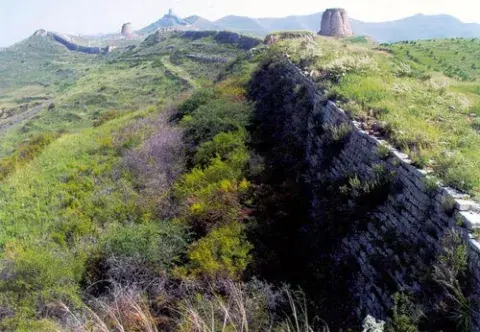
Ming Dynasty was founded in 1368, by Emperor Zhu Yuanzhang, he was capital Nanjing and start building city walls and part of Great walls. And the most famous city wall is ...
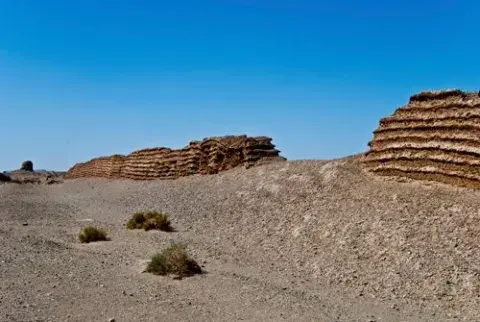
Ming Dynasty was founded in 1368, by Emperor Zhu Yuanzhang, he was capital Nanjing and start building city walls and part of Great walls. And the most famous city wall is Nanjing City Wall.


Gansu Province Articles
Xiahe in China
Xiahe (夏河) is a county in Gannan Tibetan Autonomous Prefecture, Gansu province, the People’s Republic of China. It is home to the famed Labrang Tibetan Buddhist monastery, one of the largest Tibetan Buddhist monasteries outside the Tibet Autonomous Region....
Xiahe (夏河) is a county in Gannan Tibetan Autonomous Prefecture, Gansu province, the People’s Republic of China. It is home to the famed Labrang Tibetan Buddhist monastery, one of the largest Tibetan Buddhist monasteries outside the Tibet Autonomous Region. The monastery complex dominates the northern part of the village[clarification needed]. The white walls and gilded roofs feature a blend of Tibetan and Indian Vihara architectural styles. The monastery contains 18 halls, six institutes of learning, a gilded stupa, a sutra debate area, and houses nearly 60,000 sutras. The town of Xiahe is populated largely by ethnic Tibetans, as well as some Hui and Han Chinese. The area is highly rural and pastoral (including yak and other animal rearing). The geography is mountainous. In recent years it has become a tourist attraction. The town was named Xiahe in 1928.
If you need our guide/assistant/sourcing/interpreter, welcome to contact us.:)
We can custom your trip and guide you.
Please click my photo and add my contact. Let's talk details.
Thanks for reading.
Jessica In China (86-13570345653)
Gansu Zhangye National Geopark in China
The Gansu Zhangye National Geopark (甘肃张掖国家地质公园, herein, the ″Zhangye National Geopark″), is located in Sunan and Linze counties within the prefecture-level city of Zhangye. It covers an area of 322 square kilometres (124 sq mi)....
The Gansu Zhangye National Geopark (甘肃张掖国家地质公园, herein, the ″Zhangye National Geopark″), is located in Sunan and Linze counties within the prefecture-level city of Zhangye. It covers an area of 322 square kilometres (124 sq mi). Known for its colorful rock formations, it has been voted by Chinese media outlets as one of the most beautiful landforms in China. Zhangye Danxia is known for the unusual colours of the rocks, which are smooth, sharp and several hundred meters tall. They are the result of deposits of sandstone and other minerals that occurred over 24 million years. The result, similar to a layer cake, is connected to the action of the same tectonic plates responsible for creating parts of the Himalayan mountains. Wind, rain, and time then sculpted extraordinary shapes, including towers, pillars, and ravines, with varying colours, patterns, and sizes. China Danxia, or Danxia landform of China, is the general name of the unique type of landscapes and in August 2010, China Danxia was inscribed onto the World Heritage List.
If you need our guide/assistant/sourcing/interpreter, welcome to contact us.:)
We can custom your trip and guide you.
Please click my photo and add my contact. Let's talk details.
Thanks for reading.
Jessica In China (86-13570345653)
Mogao Caves and Thousand Buddha Grottoes in China
The Mogao Caves ( 莫高窟), also known as the Thousand Buddha Grottoes (千佛洞), form a system of 492 temples 25 km (16 mi) southeast of the center of Dunhuang, an oasis strategically located at a religious and cultural crossroads on the Silk Road, in Gansu province, China....
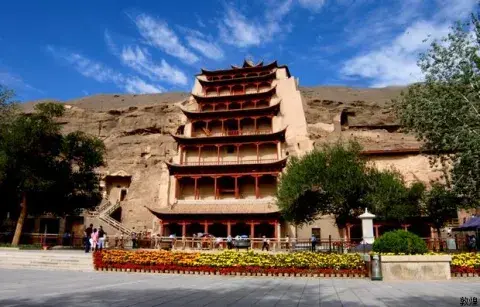
The Mogao Caves ( 莫高窟), also known as the Thousand Buddha Grottoes (千佛洞), form a system of 492 temples 25 km (16 mi) southeast of the center of Dunhuang, an oasis strategically located at a religious and cultural crossroads on the Silk Road, in Gansu province, China. The caves may also be known as the Dunhuang Caves, however, this term is also used as a collective term to include other Buddhist cave sites in the Dunhuang area, such as the Western Thousand Buddha Caves, and the Yulin Caves farther away. The caves contain some of the finest examples of Buddhist art spanning a period of 1,000 years. The first caves were dug out in 366 AD as places of Buddhist meditation and worship. The Mogao Caves are the best known of the Chinese Buddhist grottoes and, along with Longmen Grottoes and Yungang Grottoes, are one of the three famous ancient Buddhist sculptural sites of China. An important cache of documents was discovered in 1900 in the so-called “Library Cave,” which had been walled-up in the 11th century. The content of the library was dispersed around the world, and the largest collections are now found in Beijing, London, Paris and Berlin, and the International Dunhuang Project exists to coordinate and collect scholarly work on the Dunhuang manuscripts and other material. The caves themselves are now a popular tourist destination, with a number open for visiting. The Mogao Caves became one of the UNESCO World Heritage Sites in 1987.
If you need our guide/assistant/sourcing/interpreter, welcome to contact us.:)
We can custom your trip and guide you.
Please click my photo and add my contact. Let's talk details.
Thanks for reading.
Jessica In China (86-13570345653)
Top Gansu Province Tours
$499 Per Day
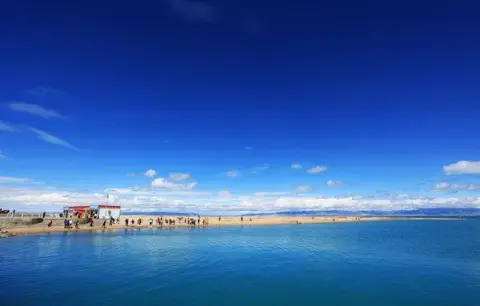
Lanzhou - Qinghai Lake 3-Days Tour
Price (In USD)
Double Occupancy / two beds $499/person
Single Occupancy / one bed $599/person
Child 2-12yrs / share bed $399/person
Price (In USD)
Double Occupancy / two beds $499/person
Single Occupancy / one bed $599/person
Child 2-12yrs / share bed $399/person
Pricing Policy
Double price is for two people staying in one room with two twin beds. Single price is for one person staying in one room with a King bed. Child rates apply to ages 2-12 and will stay in the same room with adults.
Itinerary
DAY1 Lanzhou (L / D)
Visit Zhongshan Bridge (The First Bridge over Yellow River), White Pagoda Hill, The Sculpture of Yellow River Mother, Water wheel Park, and Provincial Museum.
Hotel: 4*
DAY2 Lanzhou - Xining - Qinghai Lake (B / L / D)
After breakfast, we will go to Xining by car and then visit Taer Lamasery, Yak-butter Sculpture, Wall Paintings and Buddha Portrait Embroidery which are the three unique of the Lamasery. Continue to visit Qinghai Lake, the most beautiful plateau lake of China, in which you will sightsee Riyue Mountain, Daotanghe River all the way.
Hotel: 3* Qinghaihu Hotel
DAY3 Qinghai Lake - Xining (L)
After Breakfast, visit Qinghai Lake. Then return to Xining.
Inclusions
2-night hotel accommodations.
Complimentary round trip airport transfer for each order.
Entrance admission for the scenic spots as listed in the itinerary.
Meals as specified in the itinerary (B: Breakfast; L: Lunch; D: Dinner).
Traffic expenses between hotels and scenic spots.
Private English-speaking guide service.
Service charge & government taxes.
Exclusions
Air tickets
Laundry, valet, telephone calls, wine and liquor other than that specified.
All other private expenses, gratitude to tour guide.
$699 Per Day
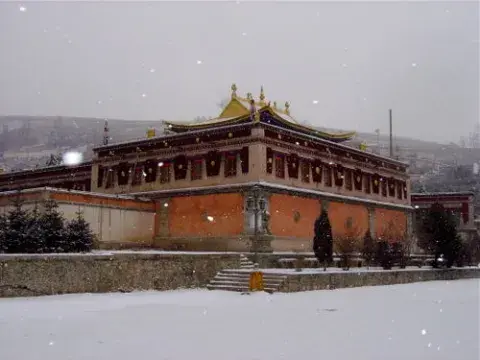
Lanzhou - Binglingsi - Linxia - Xiahe - Lanzhou 4-Days Tour
Price (In USD)
Double Occupancy / two beds $699/person
Single Occupancy / one bed $799/person
Child (2-12 yrs) $499/person
DAY1 Lanzhou ( L / D)
Visit Zhongshan Bridge (The First Bridge over Yellow River), White Pagoda Hill, the Sculpture of Yellow River Mother, Water wheel Park, and Provincial Museum.
Hotel: 4* Hotel
Price (In USD)
Double Occupancy / two beds $699/person
Single Occupancy / one bed $799/person
Child (2-12 yrs) $499/person
DAY1 Lanzhou ( L / D)
Visit Zhongshan Bridge (The First Bridge over Yellow River), White Pagoda Hill, the Sculpture of Yellow River Mother, Water wheel Park, and Provincial Museum.
Hotel: 4* Hotel
DAY2 Lanzhou - Linxia - Xiahe ( B / L / D)
Drive to Xiahe. Visiting Binglingsi Thousand Buddha Caves, cuising Liujiaxia Dam when we pass through Linxia, which is called "little Mekka". Overnight in Xiahe.
Hotel: 3* Labrang Hotel
DAY3 Xiahe ( B / L / D)
After breakfast to visit Labrang Monastery, (one of China's Six Great Monasteries of The Gelugpa Sect, Tibetan Buddism). Sightseeing Sangke Grassland in the afternoon. After that you can participat Bonfire Party(optional)
Hotel: 3* Labrang Hotel
DAY4 Xiahe - Lanzhou ( B / L)
Going back to Lanzhou. Visiting Gongbei Mosque and enjoying the equisite brick-carving art of Chinese Muslim when we pass through Linxia. Tour will be end when arriveing in Lanzhou.
Inclusions
3-night hotel accommodations.
Complimentary round trip airport transfer for each order.
Entrance admission for the scenic spots as listed in the itinerary.
Meals as specified in the itinerary (B: Breakfast; L: Lunch; D: Dinner).
Traffic expenses between hotels and scenic spots.
Private English-speaking guide service.
Service charge & government taxes.
Exclusions
Air tickets
Laundry, valet, telephone calls, wine and liquor other than that specified.
All other private expenses, gratitude to tour guide.
$2000 Per Day
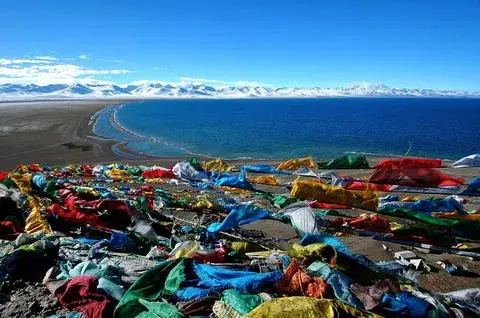
A Taste of Tibet - Qinghai and Gansu
A taste of Tibet tour is a great opportunity for foreigners to explore Tibetan culture and tradition. To travel in Qinghai and Gansu Provinces is less trouble and more easy to get to. The tour route will cover Qinghai Lake, Nianbao Yuze Snow Mountain, Yushu, Gannan, Labuleng Monastery, Langmu Monastery and other small places. It is a great adventure trip.
Time and route will be customized with clients.