Dunhuang Attractions

Dunhuang Articles
Mogao Caves and Thousand Buddha Grottoes in China
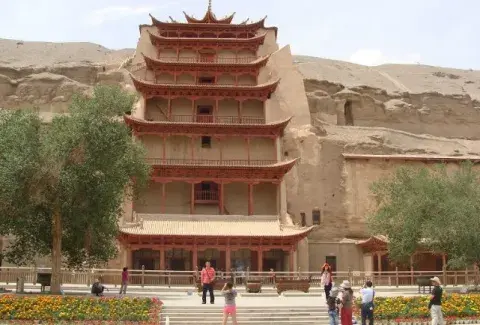
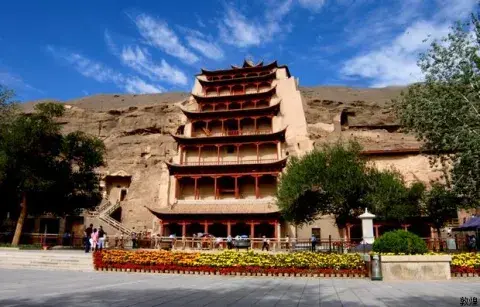
The Mogao Caves ( 莫高窟), also known as the Thousand Buddha Grottoes (千佛洞), form a system of 492 temples 25 km (16 mi) southeast of the center of Dunhuang, an oasis strategically located at a religious and cultural crossroads on the Silk Road, in Gansu province, China....
The Mogao Caves ( 莫高窟), also known as the Thousand Buddha Grottoes (千佛洞), form a system of 492 temples 25 km (16 mi) southeast of the center of Dunhuang, an oasis strategically located at a religious and cultural crossroads on the Silk Road, in Gansu province, China. The caves may also be known as the Dunhuang Caves, however, this term is also used as a collective term to include other Buddhist cave sites in the Dunhuang area, such as the Western Thousand Buddha Caves, and the Yulin Caves farther away. The caves contain some of the finest examples of Buddhist art spanning a period of 1,000 years. The first caves were dug out in 366 AD as places of Buddhist meditation and worship. The Mogao Caves are the best known of the Chinese Buddhist grottoes and, along with Longmen Grottoes and Yungang Grottoes, are one of the three famous ancient Buddhist sculptural sites of China. An important cache of documents was discovered in 1900 in the so-called “Library Cave,” which had been walled-up in the 11th century. The content of the library was dispersed around the world, and the largest collections are now found in Beijing, London, Paris and Berlin, and the International Dunhuang Project exists to coordinate and collect scholarly work on the Dunhuang manuscripts and other material. The caves themselves are now a popular tourist destination, with a number open for visiting. The Mogao Caves became one of the UNESCO World Heritage Sites in 1987.
If you need our guide/assistant/sourcing/interpreter, welcome to contact us.:)
We can custom your trip and guide you.
Please click my photo and add my contact. Let's talk details.
Thanks for reading.
Jessica In China (86-13570345653)
Dunhuang in China
Dunhuang (敦煌市) is a county-level city in northwestern Gansu Province, Western China. The 2000 Chinese census reported a population of 187,578 in this city. Dunhuang was a major stop on the ancient Silk Road and is best known for the nearby Mogao Caves....
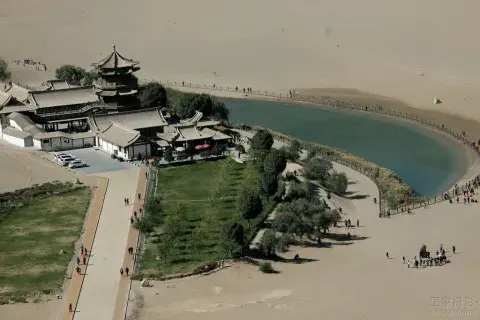
Dunhuang (敦煌市) is a county-level city in northwestern Gansu Province, Western China. The 2000 Chinese census reported a population of 187,578 in this city. Dunhuang was a major stop on the ancient Silk Road and is best known for the nearby Mogao Caves. It has also been known at times as Shazhou and, in Uyghur, Dukhan. Dunhuang is situated in a rich oasis containing Crescent Lake and Mingsha Shan (鸣沙山, meaning “Singing-Sand Mountain”), named after the sound of the wind whipping off the dunes, the singing sand phenomenon. Dunhuang commands a strategic position at the crossroads of the ancient Southern Silk Route and the main road leading from India via Lhasa to Mongolia and Southern Siberia, as well as controlling the entrance to the narrow Hexi Corridor, which led straight to the heart of the north Chinese plains and the ancient capitals of Chang’an (today known as Xi’an) and Luoyang.
If you need our guide/assistant/sourcing/interpreter, welcome to contact us.:)
We can custom your trip and guide you.
Please click my photo and add my contact. Let's talk details.
Thanks for reading.
Jessica In China (86-13570345653)
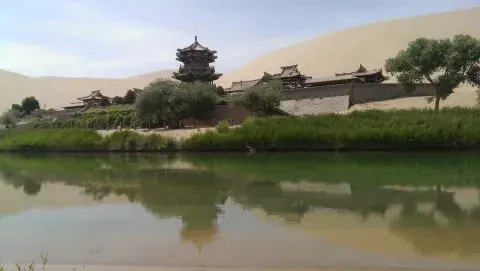
Yueya Spring
YuaYa Spring can be regarded as the oasis in the Mingsha Mountain desert.
Top Dunhuang Tours
$300 Per Day
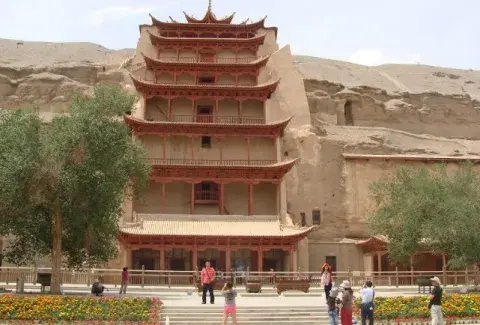
Two days trip in Dunhuang Mogao Grottoes and singing sand moutain
Dunhuang Mogao Grottoes is one of the most famous place of interest in Gansu province and most important site for the silk road. There are thousands of caves there. It's kind of depository of historical and cultural exchanges of china and other nations.
If you want to enjoy the unique Loess Plateau in Gansu, this is one of the most appealing place. It's about 1100km from the capital city, Lanzhou.
$150 Per Day
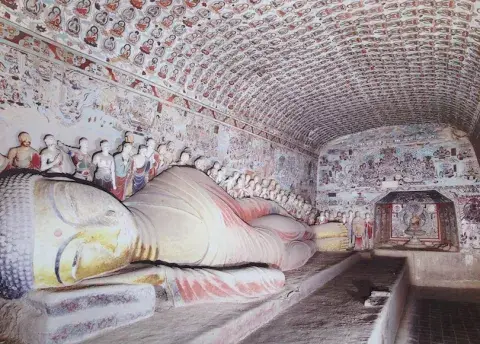
China-Mogao Caves
Travelers along the ancient Silk Road will definitely want to stop at Dunhuang for a visit to the Mogao Caves, which are representative of early Buddhist cave art. Unlike the Yungang Caves, which featured Buddhas carved into hillsides, the Mogao Grottoes mostly feature murals painted on cave walls. Some of the paintings date back to the fourth century. At one time, there were more than 1,000 cave temples.
If you need our guide/assistant/sourcing/interpreter, welcome to contact us.:)
We can custom your trip and guide you.
...Read moreTravelers along the ancient Silk Road will definitely want to stop at Dunhuang for a visit to the Mogao Caves, which are representative of early Buddhist cave art. Unlike the Yungang Caves, which featured Buddhas carved into hillsides, the Mogao Grottoes mostly feature murals painted on cave walls. Some of the paintings date back to the fourth century. At one time, there were more than 1,000 cave temples.
If you need our guide/assistant/sourcing/interpreter, welcome to contact us.:)
We can custom your trip and guide you.
Please click my photo and add my contact. Let's talk details.
Thanks for reading.
Jessica In China
图文来源于自网络,如有侵权,请联系删除
$380 Per Day
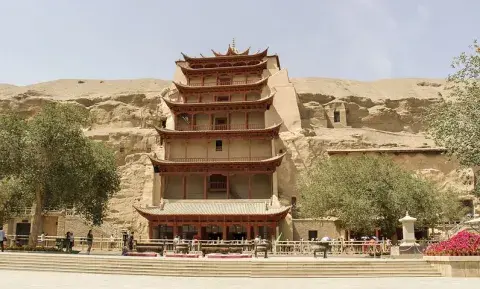
Private dunhuang tour on the silk road
Summary for the tour: It is a special trip to explore the culture of Buddhism and the history of ancient silk road in dunuang. Dunhuang played an important role in the history. It is compared as the brilliant pearl on the ancient silk road. It is the city where the four kinds of ancient civilizations in the world (ancient Greece, India, Islam and China) converged. In this tour the particular scenery combined spring with desert will be seen . You will also visit some important historical sites, which will help you find some particular feelings from ancient time.
...Read moreSummary for the tour: It is a special trip to explore the culture of Buddhism and the history of ancient silk road in dunuang. Dunhuang played an important role in the history. It is compared as the brilliant pearl on the ancient silk road. It is the city where the four kinds of ancient civilizations in the world (ancient Greece, India, Islam and China) converged. In this tour the particular scenery combined spring with desert will be seen . You will also visit some important historical sites, which will help you find some particular feelings from ancient time.
You will have a chance to experience camel ride in the desert like ancient caravans on the silk road. A local barbecue and a bonfire party and camp at the foot of desert are also a part of this tour.
The scenic area of Mogao grottos is another highlight of this tour. It is listed as the World Heritage in 1987. You will visit more original grottos which were cut from 4 century to 14 century.
The detailed itinerary for reference:
Day 1- Meet you at the Dunhuang airport. Visit Dunhuang museum, which depends on your arrival time. Stay over night at Dunhuang;
Day 2- Visit Mogao grottos, echoing sanddune and crescent lake, West Jin ancient tomb. Night market of Dunhuang . Stay over night at Dunhuang;
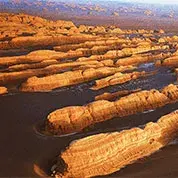
Day 3- Visit west-thousand Buddha caves, the Jade gate pass, the ruins of great wall in Han dynasty 2000 yeas ago, the Ya Dan national geological park. After this drive to the desert to do camel ride experience, have special barbecue dinner with free beer, a bonfire party with other tourists and camp at the foot of Kumutag desert.( If you want the customized tour of the camping activites only for your own group,just let me know before booking the tour) . Stay over night in the desert;
Day 4 Visit Yulin grottos and Suoyang castle ruins in Guazhou. stay overnight at dunhuang.
Day 5- Drive to Dunhuang airport.
If you have more special requests or want some changes for the itinerary, just let me know, I can make the customized tours for you according to your own will either a small group or a large group.