China Attractions


Simatai Section of the Great Wall
Built during the Ming Dynasty, Simatai hasn’t been renovated in recent history. It is known for being a harder climb than some of the other sections. Steep inclines and high winds test visitors on the hike from one watchtower to the next.
On the east side, t...
Built during the Ming Dynasty, Simatai hasn’t been renovated in recent history. It is known for being a harder climb than some of the other sections. Steep inclines and high winds test visitors on the hike from one watchtower to the next.
On the east side, there are 12 towers which are open to visitors. Walking to the end of this stretch of the wall and back should take about two hours. A cable car, which operates between 8:00am and 4:30pm as long as it’s not too windy or cold, takes visitors up to the 8th tower.
To the west, it’s possible to walk all the way to the Jinshanling (金山岭) and Gubeikou (古北口) sections of The Great Wall. At a brisk pace, this takes about 4 to 5 hours.
As is the case for many major tourist attractions, the hawkers at Simatai can be incredibly persistent. While walking up the path that leads to the wall, they attach themselves to visitors like burrs on cloth. Don’t forget that they are there to do business and they will use whatever means they have to earn money.
Staying Overnight:
For those that want to see the wall at sunset or sunrise, there are several places to stay nearby. If you’re looking for a cheap place to stay try Simatai Great Wall International Youth Hostel. It’s just a walk across the parking lot from the ticket booth.
How to Get There:
It’s about a 3 hour drive from Beijing to Simatai.
Tourist Buses leave from Xuanwumen (玄武门) at 8:00am on holidays and weekends and arrive back at about 6:00pm. 95 yuan includes the ride there and back and the entrance tickets. If you’re lucky, the tour guide will speak a little English. Check the "tourist buses" article for more information.
A cab ride reportedly costs about 400 to 500 yuan one way.
Many hotels and hostels offer a tour that will drop you off at Jin Shan Ling and pick you up at Simatai. These sections of the wall are excellent, as there are not too many tourists, the wall is original, but in good condition, and the views are amazing. Take note that the hike from Jin Shan Ling to Simatai is quite exhausting, especially in the heat of the summer. It takes about 4-5 hours, and is almost entirely uphill. Thankfully, if you’re feeling a bit ill, there is a shortcut that will cut about two hours off the hike. The tours cost around 150 yuan per person, not including the entrance tickets, which are another 90. Try to find one of the "no shopping" tours that are designed for foreigners, as the many Chinese tours will make useless stops at tea factories, shopping malls, etc.


Photos by Ethan Olson, June 2007
Yuan Ming Yuan (Old Summer Palace)
Yuan Ming Yuan (otherwise known as the Old Summer Palace) is situated between Qinghua University and the Yi He Yuan (New Summer Palace). It was constructed between 1709 and 1859, although there had been imperial gardens and summer palaces in the area since at least the Liao dynasty (~1125AD). I...
Yuan Ming Yuan (otherwise known as the Old Summer Palace) is situated between Qinghua University and the Yi He Yuan (New Summer Palace). It was constructed between 1709 and 1859, although there had been imperial gardens and summer palaces in the area since at least the Liao dynasty (~1125AD). In 1709 the Qing dynasty Emperor Kangxi started the development of the Yuan Ming Yuan, and also gave it its name, which means Garden of Perfect Brightness.
In its heyday Yuan Ming Yuan was a treasure house of Chinese art and literature. The interiors were packed with antiques, jade articles, paintings, books, jewelry, famous porcelain and handcrafts of all kinds. The library held a copy of Four Complete Volumes of Chinese Classics which had 79,003 volumes and 853,453 pages, making it the largest book in world history. The largest lake, the “Sea of Fortune”, had an area of 28 hectares and was surrounded by more than 60 scenic places. Unfortunately it was looted and burned by Anglo French forces in 1860 on the orders of the eighth Lord Elgin (son of Elgin of the marbles).
There have been several plans to rebuild Yuanmingyuan, but the task would be impossibly expensive. What remains now is a vast, sprawling and almost empty park, with none of the scenic spots and brightly painted buildings which attract crowds of tourists to the New Summer Palace. It has, however, for those who can feel it, an eerie sense of history and is a convenient and easily accessible open space for residents of the university district to go for a quiet stroll. Some kind of further development will probably occur on the site, and in recent years more than 200 looted artifacts have been returned by the local population in response to a government appeal. In 2003 a group of animal heads from the fountain was sold at auction in New York for over 3 million US dollars to a company in Beijing who were eager to repatriate the pieces.
Admission is 10 Yuan, but between the 1st and the 5th of every month you can buy a monthly season ticket for only 15 Yuan (you need a passport photo for the first one)
The official website of the Old Summer Palace (Chinese only)
Transportation: Take Bus No.331, 333, 810, 814 or Special Bus No.6 and get off at Yuan Ming Yuan
Yunnan University Hotel (2-star)
Yunnan University Hotel is strategically located in one of the better areas of Kunming for travelers. Located in the Yunnan University Foreign Language Center right next to Yunnan University, the hotel is right down the road from many of the better restaurants, cafes, and bars in Kunming as...
Yunnan University Hotel is strategically located in one of the better areas of Kunming for travelers. Located in the Yunnan University Foreign Language Center right next to Yunnan University, the hotel is right down the road from many of the better restaurants, cafes, and bars in Kunming as well as a 5 minute walk to Green Lake Park. The hotel is not the nicest place to stay in Kunming but the rooms it offers are perhaps the best deal you can find. A room with 2 beds, private bathroom with bathtub, and tv goes for 100 RMB per night. You will not be able to find a better deal for a room like that in an area of town that you would actually want to stay in. Next door is another Yunnan University Hotel that has recently been renovated and offers nicer, more expensive rooms.

China Articles
The best season to visit Beijing
Beijing has a continental climate with four distinctive seasons, long, hot summers and long dry, cold winters. Spring and autumn have beautiful weather, warm and dry, but both are extremely short....
Beijing has a continental climate with four distinctive seasons, long, hot summers and long dry, cold winters. Spring and autumn have beautiful weather, warm and dry, but both are extremely short. Many tourists avoid spring because of the famed sandstorms, but there are less and less of these and they do not last long. The summer rain falls during July and August, and can make everything fresh. Autumn is definitely the golden season, cool and comfortable. Winter is cold and dry with little snow.
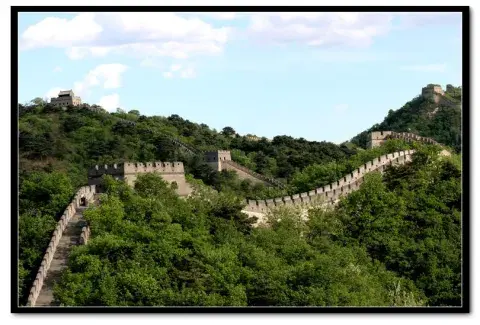
The best season to visit Beijing is probably autumn. Summer (June to August) is considered peak season, when hotels typically raise their rates and the Great Wall nearly collapses under the weight of marching tourists. Autumn months (September to November) have the best weather and fewer tourists. Spring is less pleasant - not many tourists but lots of wind and dust (northwesterly winds blow in masses of fine loess from Mongolia). In winter, you'll have Beijing to yourself and many hotels offer substantial discounts - just remember it's an ice box outside. Everything is chock-a-block during the Chinese New Year (in January or February). Have a look at our Beijing tours and choose your time of travel.

The History of Guangzhou
For many foreign tourists, Guangzhou is a modern city, so modern that many of them think it is a culture dessert. However, Guangzhou is a city with a history of over 2,000 years. Back in 214 BC, the first emperor took over Guangzhou and set it as a state called Pan Yu....
For many foreign tourists, Guangzhou is a modern city, so modern that many of them think it is a culture dessert. However, Guangzhou is a city with a history of over 2,000 years. Back in 214 BC, the first emperor took over Guangzhou and set it as a state called Pan Yu. The name Pan Yu came from the two little hills which were located in downtown near Beijing Road but have been removed. One was called Pan and another was called Yu. About 10 years later, the state government claimed independence and formed a country called Nan Yue. The nation covered Canton, Hunan, Fujian, Guangxi, and part of the Vietnam. After 93 years and 5 generations of governance, the kingdom was turned down. And for all the following dynasty, Canton has never be independent.
Guangzhou is the most dynamic, diverse, and compatible city in China. During the 2000 years, GZ has been the world trading center. The Silk Road started from GZ, and 2000 years ago. This is proved by the fact that many Archeological Finds in GZ has obvious Persian trails. Even till now, GZ is still a world leading market places with hundreds and thousands kinds of good being sold to 200 countries in the world.
Early 1840s, British invaded GZ and since then a book about how GZ people protected their homeland was uncovered. Wars, protests,and all kind of movements become an enormous driving force for the city development. The tradition remains and GZ has been rated the city with most speech freedom among all cities in China.
Born and raised in this city, i gave it endless love from the bottom of my heart.
Zhangjiajie tickets
From 1982 to 2013,it is already over 30 years of tourism developing for Zhangjiajie city.From the first national forest park of China (Zhangjiajei national forest park ) to all kinds of scenic areas of , one week is not enough for in-depth touring time.Wow!...
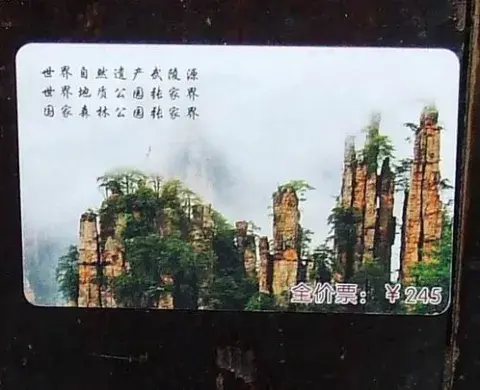
From 1982 to 2013,it is already over 30 years of tourism developing for Zhangjiajie city.From the first national forest park of China (Zhangjiajei national forest park ) to all kinds of scenic areas of , one week is not enough for in-depth touring time.Wow! So many scenic means so many tickets you need to buy.Before you come to here,let's get informations about Zhangjiajie tickets:
1.Zhangjiajie national forest park:248+3 yuan 3 days available (3yuan is life insurance)
298+3 yuan one week available (3 yuan is life insurance)
Note:The tickets including:entrance fee and buses inside.
Huangshi village cable car:118 yuan round way
65 yuan one way
Note:Huangshi village is an individual mountain,you may need to take round way.
Tianzi mountain cable car: 67 yuan one way
Note:Tianzi mountain is connected to Yuanjiajie,Yangjiajie scienc area,no need to buy round way ticket.If you need to ,it is same price as one way.
Bailong elevator: 72 yuan one way
Note:Bailong elevator is a lift take you descent or ascent Yuanjiajie .No need to buy round way.you can choose Bailing elevator up,Tianzi cable car down,or ,contrary,Take Tianzi cable car up and Bailong elevator down.
Ten li gallery's mini train:52 yuan round way
38yuan one way
Note:Ten li gallery is a scenic area under the foot of Tianzi mountain.If you choose hike up or down Tianzi mountain ,you should through the scenic first.That means ,you just need one way.or round way.
2.Tianmen mountain:258+3 yuan from 3.1 to 11.30 (peak season time from 1st of March to 30th of Nov ,3 is life insurance)
225+3 yuan from 12.1 to 2.29 (off seasom time from 1st of Dec to 29th of January )
Note:including entrance fee,cable car,buses inside.
Glass walking shoes cover: 5 yuan
Note:Every people pay 10 first,5 is deposit.After ,you return them shoes cover,return to you 5 yuan.
Tianmen mountain' cable chair: 39 yuan round way
23 yuan one way
Note:The cable chair is from Tianmen Temple to upper cable car station.I suggest you can tour western line until Tian mountain temple ,then take the one way cable chair back to upper cable car station.
3.Yellow dragon cave: 100 yuan
Maze:15 yuan
Note:including entrance fee and boating.Maze is an additional scenic area inside of the cave.Similiar scenic.
4.Baofeng lake:96 yuan All included
5.Maoyan river rifting:125 yuan
6.Jiutian cave:81 yuan All included
7.Great canyon of Zhangjiajie: 121 yuan
Slide way:20 yuan
Note: Slide way is part of descent path.But it is full of fun.You can also choose walking instead of slide down.
8.Tujia folk custom park(Tusi castle):120 yuan
Note:Tusi meas local leader of Tujia people' land in ancient time.
9.Dragon king cave: 81 yuan
10.Liu jiang rifting: 188 yuan
11.Jiangya hot spring:118 yuan
12.Wanfu hot spring: 118 yuan
13Junsheng sandstone painting institude: free
14.China giant salamander Biological and Technology Museum:98 yuan
15.Charming Western Hunan Show:228 yuan normal seat
398 yuan VIP seat
16.Fox fairy of Tianmen mountain: 238 yuan normal seat
888 yuan VIP seat
Above are all the scenic highlights of Zhangjiajie, there are still a lot of small scenic spots not refer to,because not worth a seeing i think.
The prices i wrote are all for adult.Of course there are discount for students,old,disabled etc. If you have any more questions about Zhangjiajie scenic area's tickets or need my help to buy group tickets(group tickets are cheaper than individual tickets),just feel free to contact me!
Top China Tours
$238 Per Day
Private Hangzhou Day Trip from Shanghai by Bullet Train
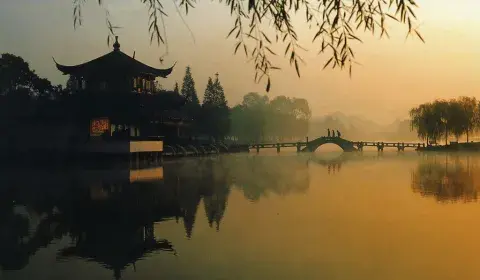
Take in the highlights of beautiful Hangzhou on a private full-day tour from Shanghai. After hotel pickup and transfer by high-speed train to Hangzhou, your private guide takes you to see some city attractions, such as Faxi temple. Moreover, enjoy a tasty lunch at a local restaurant before heading to Longjing village. There, learn about the process of farming and producing dragonwell tea, the region’s most famous product. Finally, enjoy a scenic boat cruise on UNESCO World Heritage-listed West Lake before returning to Shanghai.
...Read more
Take in the highlights of beautiful Hangzhou on a private full-day tour from Shanghai. After hotel pickup and transfer by high-speed train to Hangzhou, your private guide takes you to see some city attractions, such as Faxi temple. Moreover, enjoy a tasty lunch at a local restaurant before heading to Longjing village. There, learn about the process of farming and producing dragonwell tea, the region’s most famous product. Finally, enjoy a scenic boat cruise on UNESCO World Heritage-listed West Lake before returning to Shanghai.
This is a private, full-day trip from Shanghai to Hangzhou. After you are picked up in your hotel lobby in the early morning, you will take a bullet train to Hangzhou. This is the fastest way to Hangzhou and you can experience train speeds of up to 300 kilometers per hour. Your tour begins at one of Hangzhou's signature sites, the West Lake. Enjoy a lake cruise to see the top ten West Lake scenic views. You will then be taken to experience the wonderful cuisine of Hangzhou at a local restaurant. After lunch, you will visit Faxi temple, a well-known Temple dating back to the Jin Dynasty. See its famous wooden Buddha. Here, you will see fewer tourists and more locals. Finally, enjoy a cup of green tea when you visit the famous Longjing village to see wild fields of Longjing tea bushes where the locals produce the world famous green tea- Longjing Tea. In the village, all locals are tea farmers and you will see the entire procedure of making the famous tea and will get the chance to taste the best quality emperor tea. Afterwards, you will take the bullet train back to Shanghai and you will be returned to your hotel.
$150 Per Day
Guangzhou
Day 1 Arrive in Guangzhou
Arrive in Guangzhou in the morning, you will be met and transferred to hotel, then visit Sun Yat-sen Memorial Hall. The Memorial Hall is a very famous historical scenic spot. It is in memory of Sun Yat-sen, the great revolutionary forerunner. After that proceed to visit the Ancestral Temple of the Chen Family. It is a unique site for offering up sacrifices to worship ancestors of 72 Chen families in Guangdong. This ancestral temple is also the largest, best preserved and best decorated ancient architecture existing in Guangdong province.
...Read moreDay 1 Arrive in Guangzhou
Arrive in Guangzhou in the morning, you will be met and transferred to hotel, then visit Sun Yat-sen Memorial Hall. The Memorial Hall is a very famous historical scenic spot. It is in memory of Sun Yat-sen, the great revolutionary forerunner. After that proceed to visit the Ancestral Temple of the Chen Family. It is a unique site for offering up sacrifices to worship ancestors of 72 Chen families in Guangdong. This ancestral temple is also the largest, best preserved and best decorated ancient architecture existing in Guangdong province.
Day 2 Guanzhou Tour
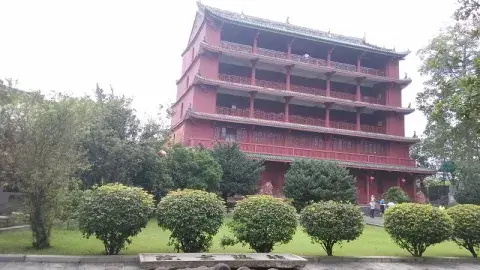
After breakfast, you will go to Yuexiu Park first, the largest and the most famous park in downtown Guangzhou. There are three artificial lakes and seven hills of Yuexiu Mountain. Then you will visit Temple of Six Banyan Trees, which is one of the four best Buddhist temples in Guangzhou and located on the Liurong Road (meaning the Six Banyan Trees Road). The Nanyue King Tomb Museum is a must-see Guangzhou attraction, which dates back to 2,000 years ago, is the earliest large scale painted stone chamber tomb ever found south of the Five Ridges. Buried with the tomb owner in a jade shroud are a gold seal and a lot of exquisite jade adornments. It has become a world famous museum. After the day tour you will be transferred to airport for your next destination.
$53 Per Day
Pingyao Highlights Walking Tour
Pingyao Highlights Walking Day Tour
With our guide to know the Ancient Pingyao better!
Our guide will meet you at your hotel lobby at 08:00 or 08:30, then show you the ticket office to get the ticket for the museums we will visit later.
...Read morePingyao Highlights Walking Day Tour
With our guide to know the Ancient Pingyao better!
Our guide will meet you at your hotel lobby at 08:00 or 08:30, then show you the ticket office to get the ticket for the museums we will visit later.
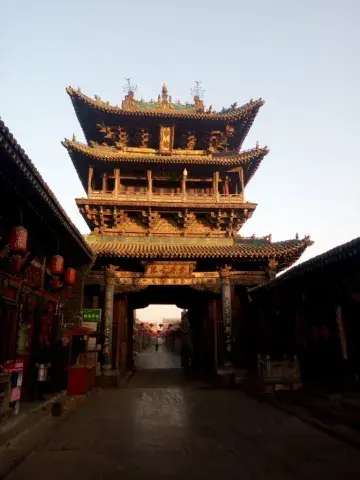
First we will visit the 700 years old City wall, We will climb up from south gate and have a walk on the wall. We are not sure how many km we can walk, because of the renovating of the wall. Normally we will walk from south gate to the Yunlu Exit.
Then visit the Confucius temple, there is a old building named Dacheng Hall which is over 840 years old. From outside, we can see the big wood joints to lift the big roof around the building which is named Dougong. Due to this design, there are less columns inside the hall for giving the big space for the statues and the prayer. We have chance to see the Confucius statue and learn the philosophy of Confucius. If you like, you can pray for you and your children to get better study.
There is the Paper Cutting master named Wentao nearby the exit of Confucius temple. She is very smart and create the new style paper cutting with much more details and good wishes on it. Her products are made by hanks. It is worth to visit and buy as a souvenir from Pingyao. From the table standing and wall hangings. Please remember, take the red one because of red is the traditional and happy color. But the white one is the best. It is really difficult to choose, because of all of them are really nice.
Then you can have coffee break or tea break if you need at Chummy coffee, after this, visit the City god temple (ChenghuangMiao) which is most beautiful temple inside the wall. Because of the roof is covered by the colorful glazed tiles. There is not only city god and also the three money gods, Now you know why pingyao was the financial center.
Next we will visit the Ancient government building, to see the pingyao politics center in the ancient time. It is the complete building with officials bed room, kitchen and private garden. Follow the guide to look the official’s life from the 250km far away from the hometown.
Have a stroll in the alley to the Rishengchang exchange bank, which is the first bank all of china.You can not miss it.
After lunch, walk to the Ming and Qing street, this is the shopping street full of the stores on the both side of street. You can find alot things here , from post card to lacquered boxes, and wall panels. One more place to see, it is the Armed escort agency also named security and transport service for the business man before the bank founded.
Inlcusions
1.private english speaking tour guide servcie
2.bottle water for the tour