China Attractions

China Articles
When is the CBD Fair (Guangzhou) 2020 ?
China International Building and Construction Trade Fair 2020
We are now publishing information about the 2020 China exhibitions....
China International Building and Construction Trade Fair 2020
We are now publishing information about the 2020 China exhibitions.
postponed due to COVID-19.:CBD Fair (Guangzhou) 2020 - The 22nd China (Guangzhou) International Building Decoration Fair will take place on July 8-11, 2020 at China Import and Export Fair Complex, Guangzhou.
ADDRESS:China Import and Export Fair Complex
No. 380, Xingang East Road, Guangzhou, China
DATE:2020/07/08 - 2020/07/11
China International Building and Construction Trade Fair 2020
We are now publishing information about the 2020 China exhibitions.
...We are now publishing information about the 2020 China exhibitions.
postponed due to COVID-19.:CBD Fair (Shanghai) 2020 - China International Building and Construction Trade Fair 2020 will take place on June 3-5, 2020 at National Exhibition and Convention Center (Shanghai) (NECC), China.
ADDRESS:333 Songze Avenue, Qingpu District, Shanghai, China
DATE:2020/06/03 - 2020/06/05
ABOUT:building and construction material
What's content marketing?
Content marketing is what? When I firstly heard this word, I have no idea about it, it was almost 5 years ago, when I was the simultaneous interpreter for SDL, in that conference, I was just translate from the Chinese into English real time but I can’t understand the...
Content marketing is what? When I firstly heard this word, I have no idea about it, it was almost 5 years ago, when I was the simultaneous interpreter for SDL, in that conference, I was just translate from the Chinese into English real time but I can’t understand the deep meaning of the content marketing. Up till now, COVID-19 affected most of the people in the word, almost every country’s economy was strongly effected, I’m not busy as before, no business to do and I could have plenty of time thinking about myself how to make my business better, how to make more fans, how to improve my business, how to make more people using my service and promote my products. Same as other people, business people always thinking about how to do all of the above better, but it’s hard, true, not easy, it takes time, energy, and of course you have to be focus.
In order to do good marketing, not only just send products or service information on social medias all the time, but also good content, good content could attract your target customer and easy to be transferred into profit. Why I said so? when a social media account could be popular, for example, this account has 200,000 fans, however, this account content is always talking about health care, and right now this account wants to promote its products selling T-shirt, most of the fans will not buy it, the reason is that those fans are only interested in healthy things, not interested in fashion things. That’s why the sales must be bad, however, if this account content is always talking about fashion and make up, and then this account sells cosmetic products, of course the sales will be very good, because very high percentage of the fans will pay for it. This is why a good content, suitable for your company, your service, your products are very important and the content must be relative to the final products you want to sell.
Making a good content is not costly, it’s cheap. For example, when we take a flight, in front of our chair, there are always some magazines, during the boring time on flight, sometimes people would like to open these magazines and read, the content inside is about traveling, nice food, good shopping places etc, when people read the content and feel the nice pics, description, of course people has the emotion to go there and enjoy their time there, this is cheap marketing way, no need that much money to spend, but only target to the exact target customer and good feedback.
Content marketing is not away from us, it’s almost everywhere, why some of the social media accounts could have thousands of fans, why some of the people could become so popular? It’s not far away from us, it’s inside our daily life all the time and it will become more popular for retail sales in the near future.
Business people always spend a lot of time thinking about sales, doing small things every day, create good content every day, in a certain time, it will be different.
How to create a good content? Using the advantage of yourself, everyone has some advantages, for example, myself, I’m good at language, I’m fluent in English and Chinese, I have a lot of experience in event planing, I travelled to a lot of places and I can easily write something interesting about the city which I have traveled to, deep using your own advantage, and away from your shortage, keep in mind, there are a lot of opportunities to handle current marketing and get good result, try to become the lucky guy in this period.
Good luck everyone.
Top China Tours
$53 Per Day
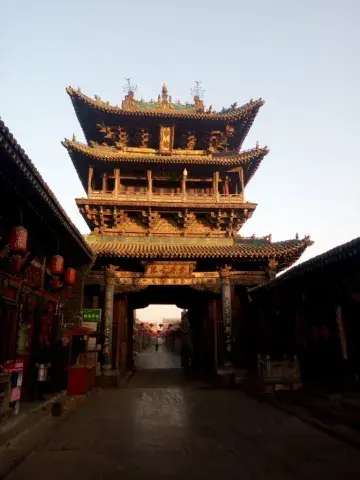
Pingyao Highlights Walking Tour
Pingyao Highlights Walking Day Tour
With our guide to know the Ancient Pingyao better!
Our guide will meet you at your hotel lobby at 08:00 or 08:30, then show you the ticket office to get the ticket for the museums we will visit later.
...Read morePingyao Highlights Walking Day Tour
With our guide to know the Ancient Pingyao better!
Our guide will meet you at your hotel lobby at 08:00 or 08:30, then show you the ticket office to get the ticket for the museums we will visit later.
First we will visit the 700 years old City wall, We will climb up from south gate and have a walk on the wall. We are not sure how many km we can walk, because of the renovating of the wall. Normally we will walk from south gate to the Yunlu Exit.
Then visit the Confucius temple, there is a old building named Dacheng Hall which is over 840 years old. From outside, we can see the big wood joints to lift the big roof around the building which is named Dougong. Due to this design, there are less columns inside the hall for giving the big space for the statues and the prayer. We have chance to see the Confucius statue and learn the philosophy of Confucius. If you like, you can pray for you and your children to get better study.
There is the Paper Cutting master named Wentao nearby the exit of Confucius temple. She is very smart and create the new style paper cutting with much more details and good wishes on it. Her products are made by hanks. It is worth to visit and buy as a souvenir from Pingyao. From the table standing and wall hangings. Please remember, take the red one because of red is the traditional and happy color. But the white one is the best. It is really difficult to choose, because of all of them are really nice.
Then you can have coffee break or tea break if you need at Chummy coffee, after this, visit the City god temple (ChenghuangMiao) which is most beautiful temple inside the wall. Because of the roof is covered by the colorful glazed tiles. There is not only city god and also the three money gods, Now you know why pingyao was the financial center.
Next we will visit the Ancient government building, to see the pingyao politics center in the ancient time. It is the complete building with officials bed room, kitchen and private garden. Follow the guide to look the official’s life from the 250km far away from the hometown.
Have a stroll in the alley to the Rishengchang exchange bank, which is the first bank all of china.You can not miss it.
After lunch, walk to the Ming and Qing street, this is the shopping street full of the stores on the both side of street. You can find alot things here , from post card to lacquered boxes, and wall panels. One more place to see, it is the Armed escort agency also named security and transport service for the business man before the bank founded.
Inlcusions
1.private english speaking tour guide servcie
2.bottle water for the tour
$310 Per Day
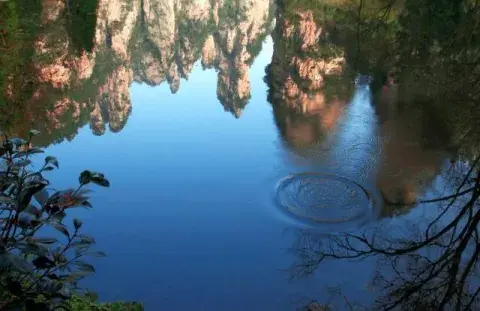
3- Day Popular Tour In Zhangjiajie
Day 1 Zhangjiajie National Forest Park
Full day trip to Zhangjiajie National Forest Park,take Bailong Elevator up Yuanjiajie,Bailong Elevator is the said to be the worlds tallest full-exposure outdoor lift,double-deck sightseeing elevator.Yuanjiajie is the inspiration for Hallelujah Mountain in AVATAR , Where you will also find the aptly named First Bridge under Heaven, Lover Peaks and so on.
...Read more
Day 1 Zhangjiajie National Forest Park
Full day trip to Zhangjiajie National Forest Park,take Bailong Elevator up Yuanjiajie,Bailong Elevator is the said to be the worlds tallest full-exposure outdoor lift,double-deck sightseeing elevator.Yuanjiajie is the inspiration for Hallelujah Mountain in AVATAR , Where you will also find the aptly named First Bridge under Heaven, Lover Peaks and so on.
Continuing to Tianzi Mountain, it takes you 40 minuts from Yuanjiajie to Tianzi Mountain by public bus, after arriving in Tianzi Mountain, you will have a bird’s-eye view of all the mountains and valleys of the Wuling Mountains. Visit Western Sea, Helong Park, Viewing Terrace etc.Take Tianzi cablecar down and check in hotel for a rest.
Accommodation: Wulingyuan Downtown
Day 2 Baofeng Lake & Glass Bridge
After breaking in the hotel, we head to Baofeng Lake where is the masterpiece of nature and human beings’wisdom. Baofeng Lake is pure just like a big crystal among Bao feng mountain Range.When you cruise, you can hear authentic song from Tujia minority people,you can fully understand the harmony and peace between human beings and nature.
Transfer to Zhangjiajie Grand Canyon, have a walking on the Glass Bridge, Glass Bridge is the highlight of Zhangjiajie Grand Canyon, located in Zhangjiajie Grand Canyon, Zhangjiajie Grand Canyon Glass Bridge is the highest and longest transparent glass bridge with a length 430 meters and a width 6 meters. It is 300 meters above the ground level and it can bear 800 persons standing on it at the same time. (need to book the tickets in advance)
Accommodation: Wulingyuan Downtown
Day 3 Tianmen Mountain
Full day to explore Tianmen Mountain,take the longest cablecar in the world up Tianmen Mountain,have a walk on the mountain plank road built along the face of cliffs. You will feel like walking in a fairy land when the mist is still heavy.The must-visit scenic spots are: Tianmen Cave, Glass Road, Tianme Temple.
See you off in the airport and looking forward to seeing you again in Zhangjiajie.
$200 Per Day
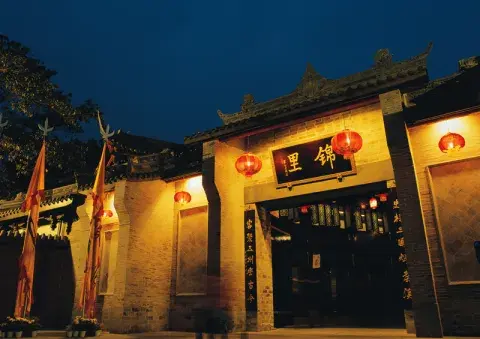
CHENGDU, A PANDA CITY, A GOURMET CITY, A TEA CITY, LOOKING FOWARD TO YOUR ARRIVAL
Chengdu, with an area of 12,400 square kilometers and a polulation of about 14,170,000 is not just the biggest provincial capital in west China, but also the only city in the history of China whose name has reminded the same for 3,000 years since its establishment. In Chinese, "Cheng" means "success or successful" and "Du" means "big city or capital". This "Successful City" boasts a long history. It is believed that everything about Chengdu has their origin from "Sanxingdui Ruins", from where you can deeply discover the history story of Chengdu.
...Read moreChengdu, with an area of 12,400 square kilometers and a polulation of about 14,170,000 is not just the biggest provincial capital in west China, but also the only city in the history of China whose name has reminded the same for 3,000 years since its establishment. In Chinese, "Cheng" means "success or successful" and "Du" means "big city or capital". This "Successful City" boasts a long history. It is believed that everything about Chengdu has their origin from "Sanxingdui Ruins", from where you can deeply discover the history story of Chengdu.
Giant pandas definitely are the best calling card and trademark of Chengdu. Every year, million of people are attracted by giant pandas to spend their holidays here, go sightseeing here, make investment here and even settle here permanently. The reason is that for people around the world, the charm of giant pandas cannot be replaced by anything else.
Various kinds of wonderful food shall be another reason attracting you to visit Chengdu. Of the four most famous schools of culinery art in China (Beijing cuisine, Sichuan cuisine, Jiangsu cuisine, Guangdong cuisine), Sichuan cuisine boasts tongue-numbing, hot, delicate and fresh taste and a variety of flavors, as "each dish has its unique taste and no two dishes have the same flavor." Such spcial flavors as fish-flavored, gongbao (with peanuts), and water-boiled are incomparable at home and abroad.
"The teahouses in Sichuan top the world, and those in Chengdu Top Sichuan." This widespread saying not only points out the status of Chengdu's teahouses but also the inseverable ties between Chengdu culture and tea. Like bars in Paris and cafes in Vienna, teahouse add a touch of refinement and leisureliness to Chengdu, an ancient yet modern metropolis. The practice of driking tea prevailed in Sichuan as earlt as prior to the Qin and Han Dynasties.
Wish you can have a nice trip in Chengdu. You will love it.