China Attractions

September 18th History Museum

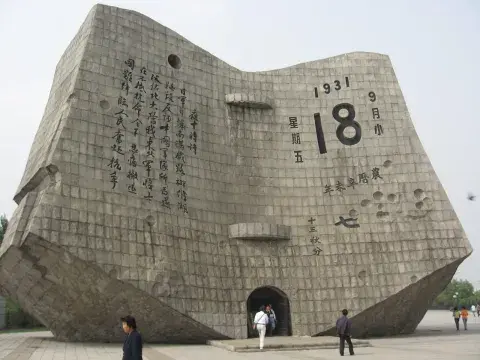
September 18th 1931 is a day that will never be forgotten by the Chinese people, as it was the beginning of the darkest period in China’s modern history....
September 18th 1931 is a day that will never be forgotten by the Chinese people, as it was the beginning of the darkest period in China’s modern history. On this day the Japanese army, which had been occupying part of Manchuria (northeastern China) since the Sino-Japanese War (1894-1895), allegedly bombed a bridge at a Japanese owned and operated railroad crossing. The Japanese then blamed the attack on Chinese rebels. This action, which is now referred to as “the September 18th Incident (九一八事变)” or “the Manchurian Incident” or “the Mukden Incident” (Mukden is the Manchu name for Shenyang), was used as a pretext for the Japanese army to begin its invasion of China. 
  
After the railroad crossing was destroyed, the Japanese launched a full-scale, surprise attack on Shenyang, easily conquering the city. Within a week, the Japanese conquered most of Manchuria, pillaging its cities, and taking the food, and resources for use in Japan. For the next 14 years the Chinese people lived in constant fear and suffered unfathomable atrocities at the hands of the Japanese army. 
    
Shenyang’s 9-18 Museum sits on the exact site of the “9-18 Incident.”  The museum is a large, very impressive building, designed to look like an open book. Some exhibits feature hundreds of photographs and documents from the years before the invasion leading all the way up to the war-crimes tribunals of the 1950s. Other exhibits include Chinese and Japanese firearms and artillery, human skeletons found in Shenyang, wax figurines, Japanese torture devices, and concrete sections of the original railroad bridge. 
  
The museum is very well presented, and the dark, somber atmosphere is very suitable to the content of the exhibits. There are some signs in English, but unfortunately most of the information is in Chinese. However, even if you can’t understand the Chinese, the pictures and displays are impressive and moving nonetheless. 
  
Those with an interest in modern history or those studying Chinese should definitely not skip the 9-18 Museum. It’s probably the world’s best collection of memorabilia from this important period of history, which is often overlooked in Western history books. The museum also provides excellent insight into the formation of the current ideas and attitudes of Chinese people, as well as the political relationships between the two East Asian countries. Furthermore, as of 2007, entrance to the museum is free.       
  
For anyone staying in Shenyang, it is certainly worth the time to come here. If you can’t read Chinese, you may want to consider bringing a Chinese friend. 
  
Note:  Entry to the museum is free, but it closes at 4:00pm and is closed on Mondays. Plan your time so you can have at least two hours to wander around the museum. 
   
Location: The Museum is to the northeast of the North Train Station, on Wang Hua Nan Jie (望花南街). From Middle Street (中街), it’s about 5km directly north on Xi Shun Cheng Jie (西顺城街).  Ask a taxi driver for “jiǔ yī bā bówù guǎn”or take the following buses:
 
212 from Wu Ai Market
253 from Heping Square
328 from Ma Lu Wan
 
 
Pillar from the Bridge Bombed in the "9-18 Incident"     


Photos by Jerry Wang, 2007
 
 
 Another disaster to China, Nanjing Massacre, in 1937-1938.  The Memorial Hall of the Victims of the Nanjing Massacre
 

Horticulture Exposition/Botanical Gardens

  
The widely publicized (around Shenyang) “2006 International Horticultural Exposition” (世界园艺博览会 shì jiè yu...
  
The widely publicized (around Shenyang) “2006 International Horticultural Exposition” (世界园艺博览会 shì jiè yuán yì bó lǎn huì) was one of the most significant events ever to be held in Shenyang. Though the official “Expo” was during the summer of 2006, the park itself and most of the attractions are still open, and this year the park will play host to another event: the “2007 UNESCO World Heritage Exposition” (June 9-October, 2007).  
    
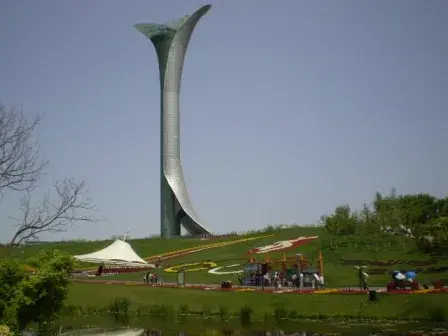
The park, commonly known in English as the Expo, and in Chinese as shìbóyuán (世博园), includes the old Shenyang Botanical Gardens (植物园) as well many new exhibits including a large indoor rose garden, a rare flower market, the “Lily Tower”--a large glass tower that provides a great view of the surrounding area, the “Phoenix Tail”--a large metal structure that forms the entrance to the grounds, many “International Gardens” which are supposed to represent horticulture from around the world, a Mongolian horse show, food vendors, beer gardens, some live entertainment including traditional performances from some of China’s ethnic minorities, a motorcycle show, and more. 
 
The park is huge, and it’s probably impossible to see everything in one day. However, walking through the “International Gardens” can be a bit monotonous as they all look a bit similar. Many people will enjoy the old Botanical Gardens more than the new attractions, as it is quieter and the flora is older and more natural. Find a map of the park--the old section is south of the train tracks. 
    
Aside from flowers and trees, the Botanical Garden features a carnival with rides and games, and a canal with dozens of different types of bridges challenging you to cross (be wary of friends who may be eager to push you in the water).
  
  
Location: One hour west of the city center by bus, a few km past Dongling Park, and just east of Qipan Shan Scenic Area. A taxi there will cost you at least 50 yuan, but most westbound trains from Shenyang’s stations stop there. Also you can take the 168 (formerly 330) bus from Ma Lu Wan or Da Shuai Fu for 5 yuan (1 hour). During the Expo, there are dozens of special charter buses leaving from all over the city, so if you ask around you may be able to find one close to you. If you can’t find one, simply go to Ma Lu Wan, or North Train Station. 


Be careful crossing these bridges!!
 

Offical Website (Only in Chinese)

Liaoning Radio and Television Tower

The Liaoning Radio and TV Tower, at 305 meters, is easily the tallest structure in Shenyang. It’s commonly known in English as “the TV tower,” and in Chinese as 彩电塔 (cǎi diàn tǎ). The sign outside proclaims that the tower is one of the “top 50 tourist lo...
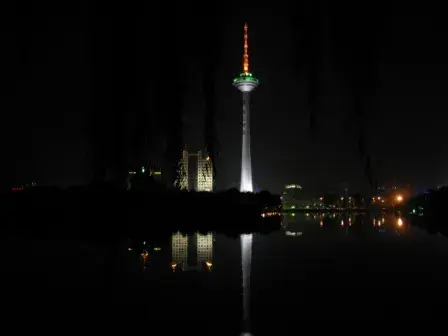
The Liaoning Radio and TV Tower, at 305 meters, is easily the tallest structure in Shenyang. It’s commonly known in English as “the TV tower,” and in Chinese as 彩电塔 (cǎi diàn tǎ). The sign outside proclaims that the tower is one of the “top 50 tourist locations in Liaoning Province,” and one of the “top 15 in Shenyang.”
 
For 50 yuan visitors can take an ultra-fast elevator 200 meters up into the tower (70 yuan with dinner included). Inside the tower there is a rotating restaurant, a small bar with wine and beer, a few arcade games, and some pictures of “famous towers of the world.” The tower’s top attraction is likely the open-air viewing platform just upstairs from the restaurant and bar area. On a clear day Shenyang can be viewed in it’ entirety, and it can be very pleasant on a clear autumn evening.
 
Recommended: To make the most of your experience, go up the tower in the afternoon so you can see the city in daylight. Then enjoy a bottle of wine in the bar area, and head back up to the viewing platform for sunset. 
Note: You must have a reservation if you want to dine in the restaurant!


Location:  There are entrances on qīng nián dà jiē (青年大街) and xī bīn hé lù (西滨河路), just west of Qingnian Park (青年公园, qīng nián gōng yuán). 
Useful Bus Routes:
238 from Wu Ai Market


Local bus routes: 207、214、223、244、246、603.

Beiling Park and Zhaoling Tomb

 
Beiling (literally “north tomb”) is one of Shenyang’s largest parks, and certainly it’s most famous. The park itsel...
 
Beiling (literally “north tomb”) is one of Shenyang’s largest parks, and certainly it’s most famous. The park itself is huge and quite nice, and you could easily spend half a day wandering around the ponds and trees. In the summer the park is filled with people flying kites, dancing, cycling, and practicing Tai ji (太极). In the winter you can ride horses, skate, and go sledding on the frozen ponds. 
      
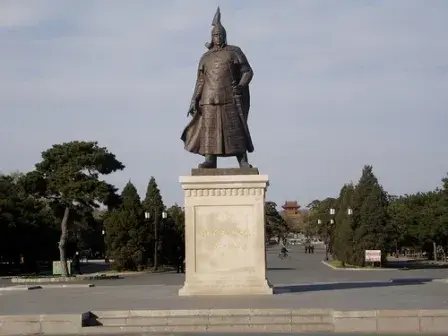
The Zhaoling tomb is located in the center of the park. Entrance to the tomb area requires a separate ticket (30 yuan). Built in 1643 by famous Qing Dynasty Emperor Kangxi, the shrine is walled in by a large stone wall. Within the walls are several Qing Dynasty style buildings, and the tomb itself is a large earthen mound with a single elm tree growing from the top. 
   
The Qing Dynasty was ruled by the Manchus, whose home was in northeastern China. Shenyang (then called ‘Shenjing’) served briefly as the Manchu capital before they moved to Beijing and established their dynasty. For the next 200 years, the Qing emperors periodically made tours through the northeast to visit their homeland and pay homage to their ancestors, including Huang Taiji (皇太极) and his empress who are buried here at Zhaoling.         
The Zhaoling tomb, along with the Imperial Palace, are Shenyang’s most significant historical sites, and well worth a visit. All the buildings are beautiful and very well preserved; and the signs are interesting and informative with fairly good English translations.  The shrine is particularly beautiful and serene in the winter with freshly fallen snow.  Plan on spending half a day in Beiling Park, and 45-60 minutes in the Zhaoling shrine. 


Location:  On the far north side of the city. The entrance is located at the intersection of Beiling da jie (北陵大街) and Taishan lu (泰山路).  All taxi drivers will know "běi líng gōng yuán".


Wal-Mart Supercenter

Daguang Branch (大观分店):
1-3/F, E1 & E2 Blocks, Daguan Commercial Town, North Wing, Wuhua District
五华区大观商业城北面E1-E2座1-3层
+86 (0)871 5386208, 800-889-8002 (Toll Free)


Find it on the map

Jida Branch(
集大分店):
No. 188 Huancheng Road East, Panlong District
盘龙区环城东路188号
+86 (0)871 3397405, 800-889-8383 (Toll Free)

International Trade Center Branch (国贸中心分店):
No. 289 Chuncheng Road, Guandu District
官渡区春城路289号
+86 (0)871 3573470, 800-357-3470 (Toll Free)

Lin Yu Branch (霖雨路分店):
2-3/F, Zhonghui Commercial Center, intersection of Beijing Road Extention and Linyu Lu.
北京路延长线与霖雨路南侧交叉口中汇商业中心地上第二层及地上第三层
+86 (0)871 5817762, 5817764

Xing Yuan Branch (兴苑路分店):
No. 525 Zhangjia Cun, Xingyuan Lu, Xishan Dist.
西山区兴苑路张家村525号
+86 (0)871 8228182, 8228500

While the author is left with a bad taste in his mouth for even suggesting to go to Wal-Mart, Kunming’s lack of  comprehensive supermarkets leaves few options (besides Carrefour) for anyone in need of a ’supercenter’s’ convenience.  Some western goods that are not easily found in the average Chinese shop are stocked at Wal-Mart (i.e. cheese, sugar-less breads, condiments, etc.), but most products are geared towards the Chinese customers as there are much more of them. 

A few good things about Wal-Mart: 
1) Standard prices (no worrying about a "laowai price" here)
2) Wal-Mart accepts western credit cards (Visa, Mastercard, Amex should all work)
3) Convenience. 

Some bad things about Wal-Mart: 
1) Way too crowded. You thought the streets were bad... well if you did not have a headache before entering Wal-Mart, you certainly will leave with one
2) Wal-Mart is evil.


Find it on the map

How to get to the Daguang branchThe Daguang branch of Wal-mart is located just south of Dong Feng Xi Lu near it’s intersection with Renmin Xi Lu.  There are a lot of mobile phone shops on Dong Feng Xi Lu in this area, and Green Lake Park is close by.

China Articles

Top China Tours

$53 Per Day

Pingyao Highlights Walking Tour

Pingyao Highlights Walking Day Tour

With our guide to know the Ancient Pingyao better!

Our guide will meet you at your hotel lobby at 08:00 or 08:30, then show you the ticket office to get the ticket for the museums we will visit later.

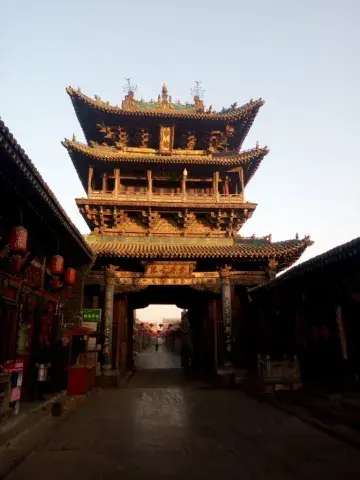
First we will visit the 700 years old City wall, We will climb up from south gate and have a walk on the wall. We are not sure how many km we can walk, because of the renovating of the wall. Normally we will walk from south gate to the Yunlu Exit.

Then visit the Confucius temple, there is a old building named Dacheng Hall which is over 840 years old. From outside, we can see the big wood joints to lift the big roof around the building which is named Dougong. Due to this design, there are less columns inside the hall for giving the big space for the statues and the prayer. We have chance to see the Confucius statue and learn the philosophy of Confucius. If you like, you can pray for you and your children to get better study.

There is the Paper Cutting master named Wentao nearby the exit of Confucius temple. She is very smart and create the new style paper cutting with much more details and good wishes on it. Her products are made by hanks. It is worth to visit and buy as a souvenir from Pingyao. From the table standing and wall hangings. Please remember, take the red one because of red is the traditional and happy color. But the white one is the best. It is really difficult to choose, because of all of them are really nice.

Then you can have coffee break or tea break if you need at Chummy coffee, after this, visit the City god temple (ChenghuangMiao) which is most beautiful temple inside the wall. Because of the roof is covered by the colorful glazed tiles. There is not only city god and also the three money gods, Now you know why pingyao was the financial center.

Next we will visit the Ancient government building, to see the pingyao politics center in the ancient time. It is the complete building with officials bed room, kitchen and private garden. Follow the guide to look the official’s life from the 250km far away from the hometown.

Have a stroll in the alley to the Rishengchang exchange bank, which is the first bank all of china.You can not miss it.

After lunch, walk to the Ming and Qing street, this is the shopping street full of the stores on the both side of street. You can find alot things here , from post card to lacquered boxes, and wall panels. One more place to see, it is the Armed escort agency also named security and transport service for the business man before the bank founded.

Inlcusions

1.private english speaking tour guide servcie

2.bottle water for the tour


$310 Per Day

3- Day Popular Tour In Zhangjiajie

Day 1    Zhangjiajie National Forest Park

Full day trip to Zhangjiajie National Forest Park,take Bailong Elevator up Yuanjiajie,Bailong Elevator is the said to be the worlds tallest full-exposure outdoor lift,double-deck sightseeing elevator.Yuanjiajie is the inspiration for Hallelujah Mountain in AVATAR , Where you will also find the aptly named First Bridge under Heaven, Lover Peaks and so on.

Continuing to Tianzi Mountain, it takes you 40 minuts from Yuanjiajie to Tianzi Mountain by public bus, after arriving in Tianzi Mountain, you will have a bird’s-eye view of all the mountains and valleys of the Wuling Mountains. Visit Western Sea, Helong Park, Viewing Terrace etc.Take Tianzi cablecar down and check in hotel for a rest.
Accommodation: Wulingyuan Downtown

Day 2    Baofeng Lake & Glass Bridge

After breaking in the hotel, we head to Baofeng Lake where is the masterpiece of nature and human beings’wisdom. Baofeng Lake is pure just like a big crystal among Bao feng mountain Range.When you cruise, you can hear authentic song from Tujia minority people,you can fully understand the harmony and peace between human beings and nature.

Transfer to Zhangjiajie Grand Canyon, have a walking on the Glass Bridge, Glass Bridge is the highlight of Zhangjiajie Grand Canyon, located in Zhangjiajie Grand Canyon, Zhangjiajie Grand Canyon Glass Bridge is the highest and longest transparent glass bridge with a length 430 meters and a width 6 meters. It is 300 meters above the ground level and it can bear 800 persons standing on it at the same time. (need to book the tickets in advance)
Accommodation: Wulingyuan Downtown

Day 3    Tianmen Mountain

Full day to explore Tianmen Mountain,take the longest cablecar in the world up Tianmen Mountain,have a walk on the mountain plank road built along the face of cliffs. You will feel like walking in a fairy land when the mist is still heavy.The must-visit scenic spots are: Tianmen Cave, Glass Road, Tianme Temple.

See you off in the airport and looking forward to seeing you again in Zhangjiajie.

$200 Per Day

CHENGDU, A PANDA CITY, A GOURMET CITY, A TEA CITY, LOOKING FOWARD TO YOUR ARRIVAL

Chengdu, with an area of 12,400 square kilometers and a polulation of about 14,170,000 is not just the biggest provincial capital in west China, but also the only city in the history of China whose name has reminded the same for 3,000 years since its establishment. In Chinese, "Cheng" means "success or successful" and "Du" means "big city or capital". This "Successful City" boasts a long history. It is believed that everything about Chengdu has their origin from "Sanxingdui Ruins", from where you can deeply discover the history story of Chengdu.

Giant pandas definitely are the best calling card and trademark of Chengdu. Every year, million of people are attracted by giant pandas to spend their holidays here, go sightseeing here, make investment here and even settle here permanently. The reason is that for people around the world, the charm of giant pandas cannot be replaced by anything else. 

Various kinds of wonderful food shall be another reason attracting you to visit Chengdu. Of the four most famous schools of culinery art in China (Beijing cuisine, Sichuan cuisine, Jiangsu cuisine, Guangdong cuisine), Sichuan cuisine boasts tongue-numbing, hot, delicate and fresh taste and a variety of flavors, as "each dish has its unique taste and no two dishes have the same flavor." Such spcial flavors as fish-flavored, gongbao (with peanuts), and water-boiled are incomparable at home and abroad.

"The teahouses in Sichuan top the world, and those in Chengdu Top Sichuan." This widespread saying not only points out the status of Chengdu's teahouses but also the inseverable ties between Chengdu culture and tea. Like bars in Paris and cafes in Vienna, teahouse add a touch of refinement and leisureliness to Chengdu, an ancient yet modern metropolis. The practice of driking tea prevailed in Sichuan as earlt as prior to the Qin and Han Dynasties.

Wish you can have a nice trip in Chengdu. You will love it.