Beijing Attractions


Beijing Articles
Huge Stone Carving
In ancient China, everything in Forbidden City mostly represented the highest level at that time,Of course, including the stone carving. Behind the Hall of Preserving Harmony, between the stair-ways, is a huge one piece marble carving of dragons playing with pearls....
In ancient China, everything in Forbidden City mostly represented the highest level at that time,Of course, including the stone carving. Behind the Hall of Preserving Harmony, between the stair-ways, is a huge one piece marble carving of dragons playing with pearls. This marble was brought here all the way from Fangshan District, about 70 Km away from Beijing city proper. It is about 17 meters long, 3 meters wide and 1.7 meters thick, weighing about 250 tons. In the Ming and Qing dynasties, anyone who was caught touching this holy stone could be executed. Without any modern means of transportation; you can imagine how difficult it was for the Chinese laborers to transport such a huge piece of stone here! For every half kilometer, wells were dug and water was pumped out onto the road to ice it up so that the stone could be slid over the ice. In summer, however, rolling logs were used. Nothing was impossible for the Chinese! Nothing was too extravagant for the emperor-the Son of Heaven! This is a traditional carving masterpiece themed with dragon, which to a most degree symbolizes the power of emperor and also the collection of royal authority. In Forbidden City, it means the power with distinctive classes.
Qinandian
Qinandian(Hall of Imperial Peace) is located in the imperial garden and on the axle wire from north to south. It was established in Ming Dynasty and in 1535 it formed after wall was built. During the reign of Emperor Qianlong, there used to be three rooms but later dismantled....
Qinandian(Hall of Imperial Peace) is located in the imperial garden and on the axle wire from north to south. It was established in Ming Dynasty and in 1535 it formed after wall was built. During the reign of Emperor Qianlong, there used to be three rooms but later dismantled. The Hall of Imperial Peace is the main building in the Imperial Garden and also the only religious building built along the central axis,which is located inside the Tian Ti Gate. It is a Taoist temple and inside the hall the statue of the King of Xuan Wu, made of gilded bronze, used to be enshrined. Xuan Wu was believed to be the God of Water who could prevent the palace buildings from catching fire. On the first day of each Chinese lunar year, the first and fifteenth day of every month in the lunar calendar, and at the beginning of spring, summer, autumn and winter every year, a table with a tablet of King of Xuan Wu was set up for the emperor to come here for offering sacrifices to the God of Water. Mostly, many buildings like Qinandian(Hall of Imperial Peace) partially acted as the role of religion.
Fengxiandian
Fengxiandian(Hall of Ancestral Worship), located in the east side of the inner zone of Forbidden City, used to be the imperial family memorial of Ming and Qing Dynasties. It was initially established in early Ming Dynasty and Qing Dynasty inherited such a function....
Fengxiandian(Hall of Ancestral Worship), located in the east side of the inner zone of Forbidden City, used to be the imperial family memorial of Ming and Qing Dynasties. It was initially established in early Ming Dynasty and Qing Dynasty inherited such a function. In 1657 it was reestablished and also gotten restored for many times. Fengxiandian(Hall of Ancestral Worship) was built on the white base and it was shown in the form of Chinese Character”工”,and all sides are surrounded by the high walls. The front section is the main hall and the rear section is the residential hall. The front hall has the total area of 1225 square meters. It is the double-eave wudianding roof covered with yellow glazed tiles. In the hall, there is a throne. On the days of the national ceremonies, spring festival and other important festivals or big days, the large-scale rites would be held.
Top Beijing Tours
$200 Per Day
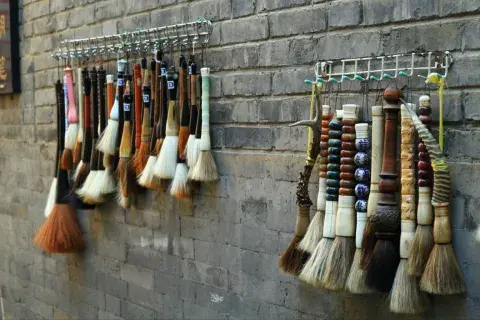
Private Beijing Antique Shopping Tour with Lunch
Start your private tour with pickup from your central Beijing hotel, and meet your private guide.
Hop inside your private, climate-controlled vehicle and travel to your first stop: Liulichang Antique Street. Situated in old Beijing, this history-steeped street is lined with stone shop-houses selling antique books, handicrafts, paintings, rubbings, glazed pottery, and other treasures.
Hear about Liulichang’s history, and get advice from your guide as to the best shopping opportunities....Read more
Start your private tour with pickup from your central Beijing hotel, and meet your private guide.
Hop inside your private, climate-controlled vehicle and travel to your first stop: Liulichang Antique Street. Situated in old Beijing, this history-steeped street is lined with stone shop-houses selling antique books, handicrafts, paintings, rubbings, glazed pottery, and other treasures.
Hear about Liulichang’s history, and get advice from your guide as to the best shopping opportunities. Sift through the traditional shops and stands, and explore the side lanes (hutongs), where the shops still bear original Ming and Qing architectural features like ornately carved doors and upswept roofs.
Next, drive to Panjiayuan Market, a so-called ‘weekend market’ that’s open daily. Weave through the throng of stands, perusing the huge array of antiques, curios, ceramics, Tibetan rugs, calligraphy, and other finds.
After shopping here, refuel with lunch at a Chinese restaurant, and continue to Baoguosi Cultural Market, set around an old temple. Scour the courtyards of vendors hawking stamps, books, coins and jade, and get tips on scouting out and clinching the best deals from your guide.
If time allows, squeeze in a visit to Hongqiao Market, a mall known for its pearl traders, and electronics, art, clothes, and accessories shops. Trawl for bargains, and haggle over pearls and other precious gems as perfect keepsakes of your time in Beijing.
After seven hours, your tour concludes with a hotel drop-off.
$50 Per Day
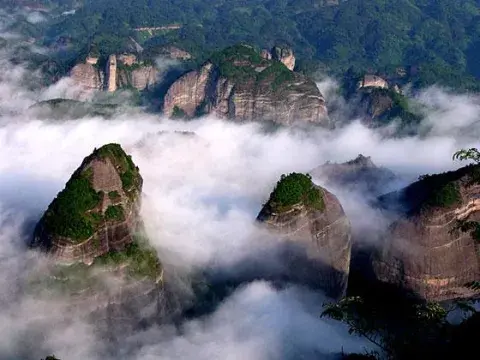
One day tirp to Bajiao Zhai, a noticeable Danxia Landform.
This is a tailor-made trip for nature-lovers and fans of photography. Danxia rock formation in the inland basin is a red rock debris, and later uplift due to the movement of the earth-crust, erosion of rocks by the water and weathering, which was dominant in the hillside to collapse back, kept down the rocks to form the red mountain block. This area was listed in the Natural Heritage of the world in 2009 by UNESCO. Bajiao Zhai Village is a combination of strategic place, steepy mountian, elegant scenery and secluded remote....Read more
This is a tailor-made trip for nature-lovers and fans of photography. Danxia rock formation in the inland basin is a red rock debris, and later uplift due to the movement of the earth-crust, erosion of rocks by the water and weathering, which was dominant in the hillside to collapse back, kept down the rocks to form the red mountain block. This area was listed in the Natural Heritage of the world in 2009 by UNESCO. Bajiao Zhai Village is a combination of strategic place, steepy mountian, elegant scenery and secluded remote. It is reputed as the "Soul of Danxia Landform". Here you can enjoy the sunrise or sunset and the sea-cloud. 1. I'll pick you up at 8:00 am in your hotel, and transfer to Bajiao Zhai Village by our private van. On the way, you can enjoy some terraced fields, bamboo groves and the wooden residences of the natives.(3.5 hours by ride) 2. First, we'll visit the village and have lunch in the village, and then we'll hike the mountains, the scenery including the group of snails looking up the sky, the ancient trail, Eye-stone, Joss stick of dragon's head and the Treasured sword Peak.(4 hours by hike) 3. After appreciating the sunset, after dinner in Ziyuan county, we'll take the bus back to your hotel around 10:00 pm.