Beijing Attractions


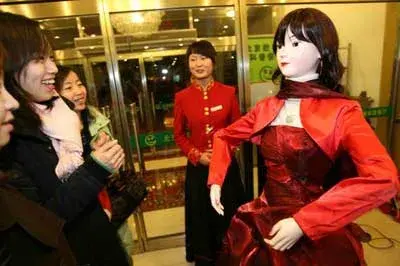
Sihe(Courtyard)Hotel Beijing
As the major architectural form of residence of Beijing inhabitants for generations, Si He Yuan (quadrangles) of Beijing has been well-known abroad the world. Si He Yuan appeared simultaneously with the Palace, Offices, Neighborhood and passages and Hu tongs in Beijing - the capit...
As the major architectural form of residence of Beijing inhabitants for generations, Si He Yuan (quadrangles) of Beijing has been well-known abroad the world. Si He Yuan appeared simultaneously with the Palace, Offices, Neighborhood and passages and Hu tongs in Beijing - the capital of China since from the Yuan Dynasty.
|
Si He Yuan is kind of the typical and traditional Chinese construction in China , unique and special. And different from the south China's construction's style, Si He Yuan have very spacious courtyard and all the rooms around the courtyard are connect with each other by the beautiful corridors, all doors and windows are facing to the courtyard so that there is the sufficient day lighting and ventilating in every room. Peace and private, the owner could have their own trees and flowers be planted, and to have birds and fish bred, rockeries and sceneries made, the dwellers can share the beauty of natures over hundreds of years. Si He Yuan is not only the kind of residence, but also the rare relic in the history of China.
|

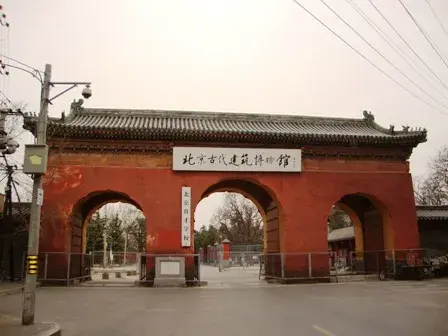
Hongluosi
Hongluo Temple scenic spot covers an area of 8 square kilometers integrating the natural landscape with manmade features. It consists of two part: two scenic spots and three Buddhist areas.
Two scenic spots refer to Hongluo Hill at the back of Hongluo Temple and Qinglong...
Hongluo Temple scenic spot covers an area of 8 square kilometers integrating the natural landscape with manmade features. It consists of two part: two scenic spots and three Buddhist areas.
Two scenic spots refer to Hongluo Hill at the back of Hongluo Temple and Qinglong Hill to the east. Hongluo Hill, the natural barrier of the temple, has two peaks with an altitude of 813 meters. In spring you can enjoy bright-colored pediments and in autumn you can enjoy the red leaves all over the hill. In Qinglong Hill scenic spot there are maily ancient pines which boast an area of more than 1700 mu. Among which there are more than 10,000 ancient trees over 100 years old. It is one of the most important ancient trees group in Beijing. There are stone carvings of twelve annual animal signs and over 100 sets of stone tables and stone stools for tourists to have a rest in the ancient pinewoods. There the air is clear and fresh and the environment is quiet and tasteful. The air has a very high anion content. The gas emitted from the pines is good for people’s health. A saying goes around among the local people: If you stroll in the Arhat Valley once, all your disease will be removed. It is a good destination for tourists to keep healthy and relax themselves.
Three Buddhist areas refers to Hongluo Temple , Boddhisattva Guanyin Temple and 500- Arhat Statues Garden. Hongluo Temple has a history of more than 1600 years. The temple was built at the foot of the mountain, facing to the south. Most buildings were built during the Ming and Qing Dynasties. There is a main hall built in 3 tiers (The Hall of Heavenly Guardians, Grand Bodhisattva Hall, There Sages Hall) and four side halls in the east and west.(Faith Hall, Thousand-armed Goddess of Mercy Hall, Yaoshi Hall, Damo Hall) Buddhisattva Guanyin Hall is located on the halfway up the mountain. It takes half an hour to get there along the path for the climbers. There are the Gate Hall, Boddhisattva Guanyin Hall, Five-hundred-arhat garden, covering an area of 20 mu, is located in the ancient pinewoods of Archat Valley east of the temple. The stone statue of Maitreya is the center of the five-hundred-arhat garden. The archats are carved out of life-size bluestones. Each archat has different lifelike expressions.
Hongluo Temple has relatively good tourist facilities. The Bamboo Fragrant Restaurant and the restautrant in Hongluo Hill Resort can accommodate a banquet over 500 guests. Hongluo Hill Resort located in the pinewoods, with the architecture of siheyuan(compond with houses around courtyard) and Japanese style log cabin. There are over 200 beds of different grade, a gymnasium , a Karaoke lounge and conference rooms. In the morning, you can stroll in the pinewoods breathing in fresh air and fully enjoying the relaxation, comfort and romance far from the city.
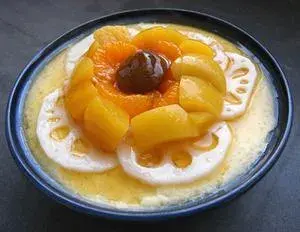

Beijing Articles
Wangfujing Paleolithic MuseumⅥ
There is no question humans were active here, but it appears the exposed plains were a temporary campsite for hunting parties, rather than a long-term abode for Peking Man....
There is no question humans were active here, but it appears the exposed plains were a temporary campsite for hunting parties, rather than a long-term abode for Peking Man. While it appears the painters often lost themselves in whimsy when recreating their vision of Peking Man's lifestyle, their portrayals of him living alongside what Li claims is the "ancient Beijing ostrich" appears to have some credence – the museum's the eggshell fragments to prove it.
The museum is good for a half-hour visit but the amateurish paintings and shabby plaster replicas of Peking Man are amusing for mostly the wrong reasons. Volunteer guides of the Beijing Museum of Natural History Gao Yuan, a student, and Chen Xiaowei, a high school teacher, seem to acknowledge this.
Wangfujing Paleolithic MuseumⅤ
Li's theory is that the land was somewhat more bountiful for PaleolithicMan back in the Stone Ages. A large mural depicts a group ambushing a fierce-looking bull near a glade, while a nearby party is getting down to some fishing in the river....
Li's theory is that the land was somewhat more bountiful for PaleolithicMan back in the Stone Ages. A large mural depicts a group ambushing a fierce-looking bull near a glade, while a nearby party is getting down to some fishing in the river. In the background, another pair is in hot pursuit of some deer. Further paintings depict the habitat as lush, verdant and teeming with rabbits, stag and oxen – ideal hunting ground, in other words."This is Wangfujing(meaning Place of the palace well) in the old days," Li theorized. "The river is the secondary branch of the ancient Yong Ding River… the half-desert half-pasture area is full of abundant animals that drew these so-called cavemen here in the good season."
Wangfujing Paleolithic MuseumⅣ
The old Beijinger?
...The old Beijinger?
The significance of all this (and the reason they bothered to make such a fuss) is that the discovery of these relics has puzzled historians and archaeologists. Until now, the oldest Peking Man's remains were housed at the Zhoukoudian site museum, and the materials found here bear a close resemblance to the ones there. Given that these people are presumed to have lived in caves, lacking the ability to construct their own shelter, the question is, what are these Yan mountain dwellers doing out here on the plains? Because it sure isn't shopping.
Top Beijing Tours
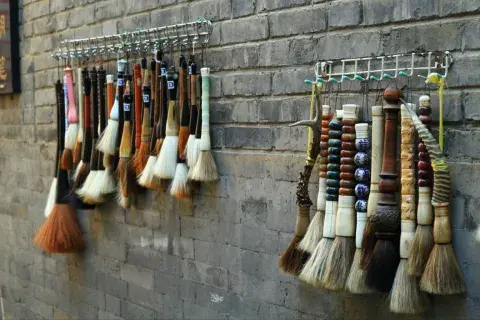
$200 Per Day
Private Beijing Antique Shopping Tour with Lunch
Start your private tour with pickup from your central Beijing hotel, and meet your private guide.
Hop inside your private, climate-controlled vehicle and travel to your first stop: Liulichang Antique Street. Situated in old Beijing, this history-steeped street is lined with stone shop-houses selling antique books, handicrafts, paintings, rubbings, glazed pottery, and other treasures.
Hear about Liulichang’s history, and get advice from your guide as to the best shopping opportunities....Read more
Start your private tour with pickup from your central Beijing hotel, and meet your private guide.
Hop inside your private, climate-controlled vehicle and travel to your first stop: Liulichang Antique Street. Situated in old Beijing, this history-steeped street is lined with stone shop-houses selling antique books, handicrafts, paintings, rubbings, glazed pottery, and other treasures.
Hear about Liulichang’s history, and get advice from your guide as to the best shopping opportunities. Sift through the traditional shops and stands, and explore the side lanes (hutongs), where the shops still bear original Ming and Qing architectural features like ornately carved doors and upswept roofs.
Next, drive to Panjiayuan Market, a so-called ‘weekend market’ that’s open daily. Weave through the throng of stands, perusing the huge array of antiques, curios, ceramics, Tibetan rugs, calligraphy, and other finds.
After shopping here, refuel with lunch at a Chinese restaurant, and continue to Baoguosi Cultural Market, set around an old temple. Scour the courtyards of vendors hawking stamps, books, coins and jade, and get tips on scouting out and clinching the best deals from your guide.
If time allows, squeeze in a visit to Hongqiao Market, a mall known for its pearl traders, and electronics, art, clothes, and accessories shops. Trawl for bargains, and haggle over pearls and other precious gems as perfect keepsakes of your time in Beijing.
After seven hours, your tour concludes with a hotel drop-off.
$50 Per Day
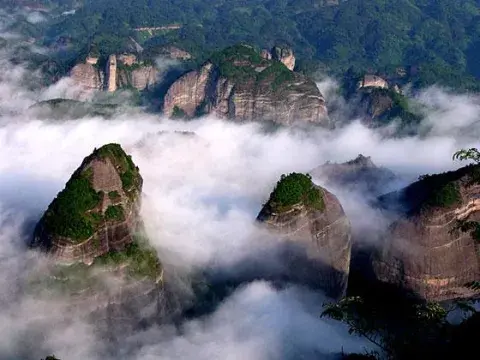
One day tirp to Bajiao Zhai, a noticeable Danxia Landform.
This is a tailor-made trip for nature-lovers and fans of photography. Danxia rock formation in the inland basin is a red rock debris, and later uplift due to the movement of the earth-crust, erosion of rocks by the water and weathering, which was dominant in the hillside to collapse back, kept down the rocks to form the red mountain block. This area was listed in the Natural Heritage of the world in 2009 by UNESCO. Bajiao Zhai Village is a combination of strategic place, steepy mountian, elegant scenery and secluded remote....Read more
This is a tailor-made trip for nature-lovers and fans of photography. Danxia rock formation in the inland basin is a red rock debris, and later uplift due to the movement of the earth-crust, erosion of rocks by the water and weathering, which was dominant in the hillside to collapse back, kept down the rocks to form the red mountain block. This area was listed in the Natural Heritage of the world in 2009 by UNESCO. Bajiao Zhai Village is a combination of strategic place, steepy mountian, elegant scenery and secluded remote. It is reputed as the "Soul of Danxia Landform". Here you can enjoy the sunrise or sunset and the sea-cloud. 1. I'll pick you up at 8:00 am in your hotel, and transfer to Bajiao Zhai Village by our private van. On the way, you can enjoy some terraced fields, bamboo groves and the wooden residences of the natives.(3.5 hours by ride) 2. First, we'll visit the village and have lunch in the village, and then we'll hike the mountains, the scenery including the group of snails looking up the sky, the ancient trail, Eye-stone, Joss stick of dragon's head and the Treasured sword Peak.(4 hours by hike) 3. After appreciating the sunset, after dinner in Ziyuan county, we'll take the bus back to your hotel around 10:00 pm.