Beijing Attractions
Beijing Articles

Imperial Hall of Heaven
Imperial Hall of Heaven...
Imperial Hall of Heaven
Another important main building in this area is the Imperial Hall of Heaven, which is located to the north of the Hall of Prayer for Good Harvests, connecting with the Altar for Grain Prayers by three glaze doors. It used to be the place where God tablets were consecrated. The gate on the west side is called the Guxi Gate (Guxi means seventy years old). The roof of the hall is covered with blue colored glaze. Under the eave, there is a board reading "the Imperial Hall of Heaven" inscribed by Emperor Jiajing. Inside the hall, there are house-shaped shrines holding god tablets. On the first and fifth day of each lunar month, officials would sweep the dust and burn the incense there. The emperor would give a ritual there on the eve of the Ceremony of Worshipping Heaven.
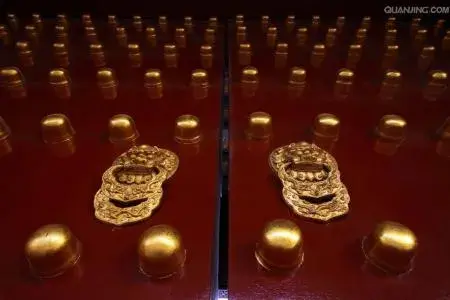
the West Annex Halls and the East Annex Halls
On the two sides of the Hall of Prayer for Good Harvests are the West Annex Halls and the East Annex Halls. The two annex halls used to be the storeroom of divine tablets....
On the two sides of the Hall of Prayer for Good Harvests are the West Annex Halls and the East Annex Halls. The two annex halls used to be the storeroom of divine tablets. Now the West Annex Halls are set as a Worshipping Heaven Ceremony Exhibition Hall, displaying sacrificial utensils and the whole procedure about worshipping heaven by the emperor. There is an excellent picture about Emperor Qianlong (1711-1799) showing the highest ritual in the Qing Dynasty. The East Annex Halls are now changed into a Worshipping Music and Dancing Hall, exhibiting Shao Music instruments, such as bells and chimes. By means of text description, pictures, light boxes, models, sound and electricity, etc., the music and dancing scene of the ceremony is vividly demonstrated to the visitors.
wood frame construction
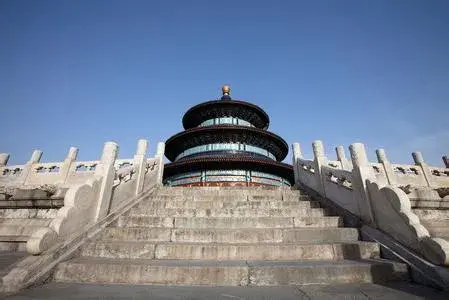
The Hall of Prayer for Good Harvests is a masterpiece of wood frame construction. Inside the hall there is no beam, but 28 Phoebe columns and 36 pieces of interconnected squared rafters....
The Hall of Prayer for Good Harvests is a masterpiece of wood frame construction. Inside the hall there is no beam, but 28 Phoebe columns and 36 pieces of interconnected squared rafters. These large columns have different symbolic meanings: The four posts along the inner circle represent the four seasons - spring, summer, autumn and winter; the 12 posts along the middle circle represent the 12 months; and the 12 along the outer circle represent 12 Shichen (an ancient Chinese timing unit equaling two hours). The ceiling and the columns are decorated with fine colorful paintings. In the central hall, there is a flat circular marble with naturally formed dragon and phoenix patterns, and the name "dragon and phoenix stone" was thus given. According to legend, originally the stone only had a phoenix pattern, while there was a dragon pattern on the ceiling. As time went by, the dragon and the phoenix fell in love with each other. The dragon always flew down to date with the phoenix. Unexpectedly, one day, Emperor Jiajing (1507-1567) of the Ming Dynasty held a worship ceremony in the hall, and knelt down on the stone. It was too late for the dragon to fly back and it was pressed into the stone forever. Today you can see the dragon and the phoenix together on the stone. Standing in the middle of the hall, the Sacred Altar is the most sacred part, on which the Heaven Great Tablet is placed. On the eastern and western sides of the Sacred Altar stand four ancestral tablets of Qing Dynasty (1644 - 1911) respectively.
Top Beijing Tours
$200 Per Day
Private Beijing Antique Shopping Tour with Lunch
Start your private tour with pickup from your central Beijing hotel, and meet your private guide.
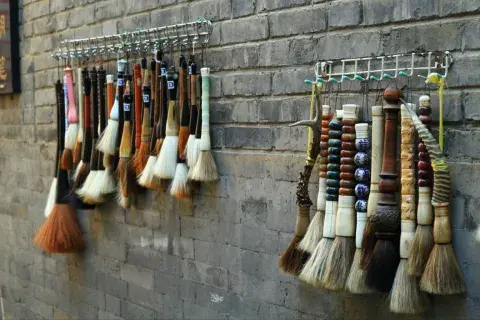
Hop inside your private, climate-controlled vehicle and travel to your first stop: Liulichang Antique Street. Situated in old Beijing, this history-steeped street is lined with stone shop-houses selling antique books, handicrafts, paintings, rubbings, glazed pottery, and other treasures.
Hear about Liulichang’s history, and get advice from your guide as to the best shopping opportunities....Read more
Start your private tour with pickup from your central Beijing hotel, and meet your private guide.
Hop inside your private, climate-controlled vehicle and travel to your first stop: Liulichang Antique Street. Situated in old Beijing, this history-steeped street is lined with stone shop-houses selling antique books, handicrafts, paintings, rubbings, glazed pottery, and other treasures.
Hear about Liulichang’s history, and get advice from your guide as to the best shopping opportunities. Sift through the traditional shops and stands, and explore the side lanes (hutongs), where the shops still bear original Ming and Qing architectural features like ornately carved doors and upswept roofs.
Next, drive to Panjiayuan Market, a so-called ‘weekend market’ that’s open daily. Weave through the throng of stands, perusing the huge array of antiques, curios, ceramics, Tibetan rugs, calligraphy, and other finds.
After shopping here, refuel with lunch at a Chinese restaurant, and continue to Baoguosi Cultural Market, set around an old temple. Scour the courtyards of vendors hawking stamps, books, coins and jade, and get tips on scouting out and clinching the best deals from your guide.
If time allows, squeeze in a visit to Hongqiao Market, a mall known for its pearl traders, and electronics, art, clothes, and accessories shops. Trawl for bargains, and haggle over pearls and other precious gems as perfect keepsakes of your time in Beijing.
After seven hours, your tour concludes with a hotel drop-off.
$50 Per Day
One day tirp to Bajiao Zhai, a noticeable Danxia Landform.
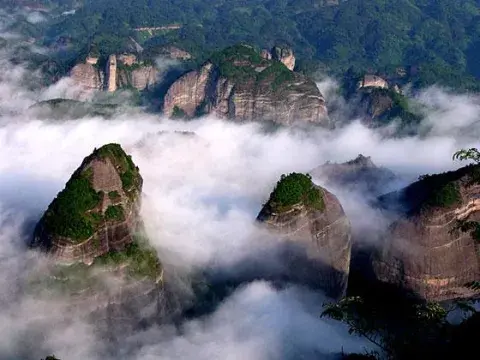
This is a tailor-made trip for nature-lovers and fans of photography. Danxia rock formation in the inland basin is a red rock debris, and later uplift due to the movement of the earth-crust, erosion of rocks by the water and weathering, which was dominant in the hillside to collapse back, kept down the rocks to form the red mountain block. This area was listed in the Natural Heritage of the world in 2009 by UNESCO. Bajiao Zhai Village is a combination of strategic place, steepy mountian, elegant scenery and secluded remote....Read more
This is a tailor-made trip for nature-lovers and fans of photography. Danxia rock formation in the inland basin is a red rock debris, and later uplift due to the movement of the earth-crust, erosion of rocks by the water and weathering, which was dominant in the hillside to collapse back, kept down the rocks to form the red mountain block. This area was listed in the Natural Heritage of the world in 2009 by UNESCO. Bajiao Zhai Village is a combination of strategic place, steepy mountian, elegant scenery and secluded remote. It is reputed as the "Soul of Danxia Landform". Here you can enjoy the sunrise or sunset and the sea-cloud. 1. I'll pick you up at 8:00 am in your hotel, and transfer to Bajiao Zhai Village by our private van. On the way, you can enjoy some terraced fields, bamboo groves and the wooden residences of the natives.(3.5 hours by ride) 2. First, we'll visit the village and have lunch in the village, and then we'll hike the mountains, the scenery including the group of snails looking up the sky, the ancient trail, Eye-stone, Joss stick of dragon's head and the Treasured sword Peak.(4 hours by hike) 3. After appreciating the sunset, after dinner in Ziyuan county, we'll take the bus back to your hotel around 10:00 pm.