Beijing Attractions
Beijing Articles

Dough Figurine
Introduction
...Introduction
Dough Figurine is a famous Beijing handicraft. Dough modeling originated from the old custom of molding and steaming dough food as sacrificial offerings or birthday presents. Nearly every family in the city molded dough pieces during the Spring Festival. They looked nice and tasted good, representing a splendid harvest and wishes for good luck. They were also toys for children. Today, dough-modeling handicraftsmen have improved their techniques and turned the products into visual artworks.
Story
Figurine is a simple folk handicraft demonstrating high artistic quality. It has a history over 1,340 years. The vivid figurine is made by skilled craftsmen from sticky rice dough mixed with pigments, honey and olefin. After cutting, slashing, pinching and twisting the dough, a lifelike child, beautiful girl or other creations will come out in the twinkling of an eye. You can witness the craftsmen making dough figurines along the exhibition streets in Beijing and you will be astonished by their excellent skills.

Jade Ornaments
Jade is a rare, colorful and hard stone, and it is usually polished and carved to make jade ware. Jade items are precious and rare treasures in China. Jade ornaments largely appeared in the post-Song period and prevalent during the Ming and Qing Dynasties.
Story
...Jade is a rare, colorful and hard stone, and it is usually polished and carved to make jade ware. Jade items are precious and rare treasures in China. Jade ornaments largely appeared in the post-Song period and prevalent during the Ming and Qing Dynasties.
Story
The jade ornaments of the Ming Dynasty were tiny and usually became, playthings in the hands of the literati. The ornaments bore patterns such as landscapes, birds and flowers, or were made to resemble humans and animals.
The main raw materials included celadon jade, blue and white jade and yellow jade. The Qing Dynasty witnessed the emergence of large jade ornaments which were more complex and finer. In the Qing Dynasty the most reputed jade chipping center was Lane Zhuanzhu in Suzhou where the processed jade ware was quite exquisite and beautiful.
The jade workshops in Yangzhou were especially skillful in chipping large pieces of jade ware that usually weighed several thousand Jin, but could weigh over ten thousand Jin. Jade chipping in the Qing Dynasty excelled in combining the merits of traditional painting, carving, and handicraft arts as well as absorbing the artistic styles of foreign arts.
cheongsam (Qipao)
The name "cheongsam," stands for "long dress," comes from the dialect of China's Guangdong Province (Cantonese). In other parts of the country including Beijing, however, it is known as "Qipao".
...The name "cheongsam," stands for "long dress," comes from the dialect of China's Guangdong Province (Cantonese). In other parts of the country including Beijing, however, it is known as "Qipao".
Easy and comfortable to wear, cheongsam fit the Chinese female figure well. Its high neck, closed collar, and its sleeves may be short, medium or full length, depending mainly on the season and wearer's taste. The dress is buttoned on the right or left side, with a loose chest, a fitted waist, and slits up either side, all of which combine to set off the beauty of the female form.
Story
Cheongsam (Qipao) is a female dress with distinctive Chinese features and enjoys a growing popularity in the international world of fashion. This body-hugging dress for women in China originating from the Manchu in the early 17th century was modernized and improved upon in Shanghai around 1900.
Top Beijing Tours
$200 Per Day
Private Beijing Antique Shopping Tour with Lunch
Start your private tour with pickup from your central Beijing hotel, and meet your private guide.
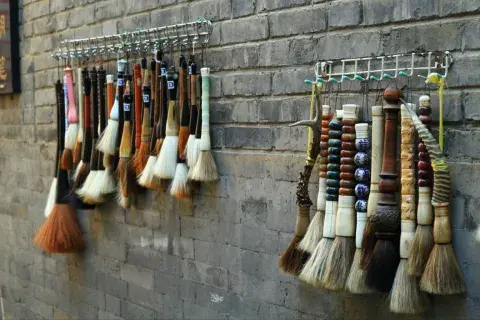
Hop inside your private, climate-controlled vehicle and travel to your first stop: Liulichang Antique Street. Situated in old Beijing, this history-steeped street is lined with stone shop-houses selling antique books, handicrafts, paintings, rubbings, glazed pottery, and other treasures.
Hear about Liulichang’s history, and get advice from your guide as to the best shopping opportunities....Read more
Start your private tour with pickup from your central Beijing hotel, and meet your private guide.
Hop inside your private, climate-controlled vehicle and travel to your first stop: Liulichang Antique Street. Situated in old Beijing, this history-steeped street is lined with stone shop-houses selling antique books, handicrafts, paintings, rubbings, glazed pottery, and other treasures.
Hear about Liulichang’s history, and get advice from your guide as to the best shopping opportunities. Sift through the traditional shops and stands, and explore the side lanes (hutongs), where the shops still bear original Ming and Qing architectural features like ornately carved doors and upswept roofs.
Next, drive to Panjiayuan Market, a so-called ‘weekend market’ that’s open daily. Weave through the throng of stands, perusing the huge array of antiques, curios, ceramics, Tibetan rugs, calligraphy, and other finds.
After shopping here, refuel with lunch at a Chinese restaurant, and continue to Baoguosi Cultural Market, set around an old temple. Scour the courtyards of vendors hawking stamps, books, coins and jade, and get tips on scouting out and clinching the best deals from your guide.
If time allows, squeeze in a visit to Hongqiao Market, a mall known for its pearl traders, and electronics, art, clothes, and accessories shops. Trawl for bargains, and haggle over pearls and other precious gems as perfect keepsakes of your time in Beijing.
After seven hours, your tour concludes with a hotel drop-off.
$50 Per Day
One day tirp to Bajiao Zhai, a noticeable Danxia Landform.
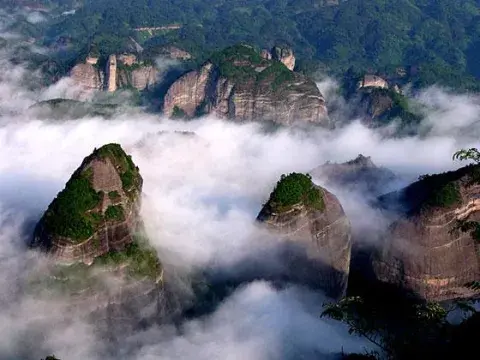
This is a tailor-made trip for nature-lovers and fans of photography. Danxia rock formation in the inland basin is a red rock debris, and later uplift due to the movement of the earth-crust, erosion of rocks by the water and weathering, which was dominant in the hillside to collapse back, kept down the rocks to form the red mountain block. This area was listed in the Natural Heritage of the world in 2009 by UNESCO. Bajiao Zhai Village is a combination of strategic place, steepy mountian, elegant scenery and secluded remote....Read more
This is a tailor-made trip for nature-lovers and fans of photography. Danxia rock formation in the inland basin is a red rock debris, and later uplift due to the movement of the earth-crust, erosion of rocks by the water and weathering, which was dominant in the hillside to collapse back, kept down the rocks to form the red mountain block. This area was listed in the Natural Heritage of the world in 2009 by UNESCO. Bajiao Zhai Village is a combination of strategic place, steepy mountian, elegant scenery and secluded remote. It is reputed as the "Soul of Danxia Landform". Here you can enjoy the sunrise or sunset and the sea-cloud. 1. I'll pick you up at 8:00 am in your hotel, and transfer to Bajiao Zhai Village by our private van. On the way, you can enjoy some terraced fields, bamboo groves and the wooden residences of the natives.(3.5 hours by ride) 2. First, we'll visit the village and have lunch in the village, and then we'll hike the mountains, the scenery including the group of snails looking up the sky, the ancient trail, Eye-stone, Joss stick of dragon's head and the Treasured sword Peak.(4 hours by hike) 3. After appreciating the sunset, after dinner in Ziyuan county, we'll take the bus back to your hotel around 10:00 pm.