Beijing Attractions
Beijing Articles
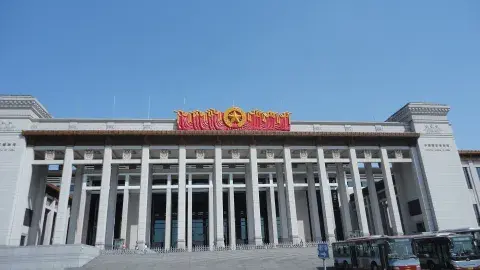
China National MuseumⅠ
The museum has been reopened to the public for free since 27th March, 2011, but an entrance ticket is still required....
The museum has been reopened to the public for free since 27th March, 2011, but an entrance ticket is still required. Individual visitors can get the ticket from the ticket office near the west gate of the museum while group visitors need to reserve the ticket through telephone 2 days in advance and get the ticket at the ticket office near the north gate of the museum. The reservation number is 010 - 65116400 (09:00 - 16:00). Coordinating with the Great Hall of the People, China National Museum is situated on the east side of the Tiananmen Square. It is a comprehensive museum, displaying collections, exhibitions, research, archaeology, public education and cultural communication.
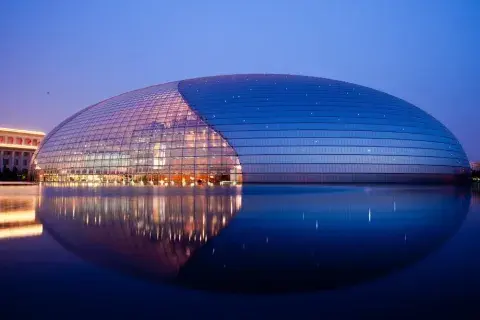
National Centre for the Performing ArtsⅡ
The exterior of the theater is a titanium accented glass dome that is completely surrounded by a man-made lake. It is said to look like an egg floating on water. It was designed as an iconic feature, something that would be immediately recognizable, like the Sydney Opera House....
The exterior of the theater is a titanium accented glass dome that is completely surrounded by a man-made lake. It is said to look like an egg floating on water. It was designed as an iconic feature, something that would be immediately recognizable, like the Sydney Opera House. The dome measures 212 meters (695.5 feet) in east-west direction, 144 meters (472.4 feet) in north-south direction, and is 46 meters (150.9 feet) high. The main entrance is at the north side. Guests arrive in the building after walking through a hallway that goes underneath the lake. The titanium shell is broken by a glass curtain in north-south direction that gradually widens from top to bottom. Internally, there are three major performance halls: the Opera Hall is used for operas, ballet, and dances and seats 2,416; the Music Hall seats 2,017 seats; the Theater Hall is used for plays and the Beijing opera, and it has 1,040 seats; the initial planned cost of the theatre was 2.688 billion RMB. The completion of China's National Centre for the Performing Arts is a historic accomplishment, demonstrating the country's strengths and marking a new chapter in the country's development. As the foremost national performing arts institution, the Centre is made possible by the solid support and guidance from both Central and Beijing municipal governments. Following the mandate of 'For the People, For the Arts, For the World', the Centre is devoted to becoming the national center for the performing arts, a grand platform for international cultural exchanges and a vanguard of arts education as well as an important foundation for the creative cultural scene in China.

National Centre for the Performing Arts Ⅰ
The National Centre for the Performing Arts (NCPA for short), colloquially described as 'The Egg', is an opera house in Beijing, People's Republic of China....
The National Centre for the Performing Arts (NCPA for short), colloquially described as 'The Egg', is an opera house in Beijing, People's Republic of China. The Centre, an ellipsoid dome of titanium and glass surrounded by an artificial lake, seats 6,500 people in three halls and is almost 12,000 square meters (2.96 acres) in size. It was designed by French architect Paul Andreu. The construction started in December 2001 and the inaugural concert was held in December 2007.
The location, immediately to the west of Tiananmen Square and the Great Hall of the People, and near the Forbidden City, combined with the theatre's futuristic design, created considerable controversy. Paul Andreu countered that although there is indeed value in ancient traditional Chinese architecture, Beijing must also include modern architecture, as the capital of the country and an international city of great importance. His design, with large open space, water, trees, was specially designed to complement the red walls of ancient buildings and the Great Hall of the People, in order to melt into the surroundings as opposed to standing out against them.
Top Beijing Tours
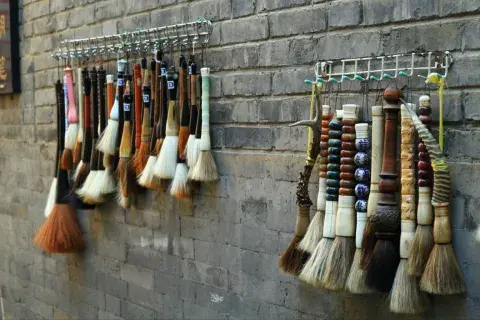
$200 Per Day
Private Beijing Antique Shopping Tour with Lunch
Start your private tour with pickup from your central Beijing hotel, and meet your private guide.
Hop inside your private, climate-controlled vehicle and travel to your first stop: Liulichang Antique Street. Situated in old Beijing, this history-steeped street is lined with stone shop-houses selling antique books, handicrafts, paintings, rubbings, glazed pottery, and other treasures.
Hear about Liulichang’s history, and get advice from your guide as to the best shopping opportunities....Read more
Start your private tour with pickup from your central Beijing hotel, and meet your private guide.
Hop inside your private, climate-controlled vehicle and travel to your first stop: Liulichang Antique Street. Situated in old Beijing, this history-steeped street is lined with stone shop-houses selling antique books, handicrafts, paintings, rubbings, glazed pottery, and other treasures.
Hear about Liulichang’s history, and get advice from your guide as to the best shopping opportunities. Sift through the traditional shops and stands, and explore the side lanes (hutongs), where the shops still bear original Ming and Qing architectural features like ornately carved doors and upswept roofs.
Next, drive to Panjiayuan Market, a so-called ‘weekend market’ that’s open daily. Weave through the throng of stands, perusing the huge array of antiques, curios, ceramics, Tibetan rugs, calligraphy, and other finds.
After shopping here, refuel with lunch at a Chinese restaurant, and continue to Baoguosi Cultural Market, set around an old temple. Scour the courtyards of vendors hawking stamps, books, coins and jade, and get tips on scouting out and clinching the best deals from your guide.
If time allows, squeeze in a visit to Hongqiao Market, a mall known for its pearl traders, and electronics, art, clothes, and accessories shops. Trawl for bargains, and haggle over pearls and other precious gems as perfect keepsakes of your time in Beijing.
After seven hours, your tour concludes with a hotel drop-off.
$50 Per Day
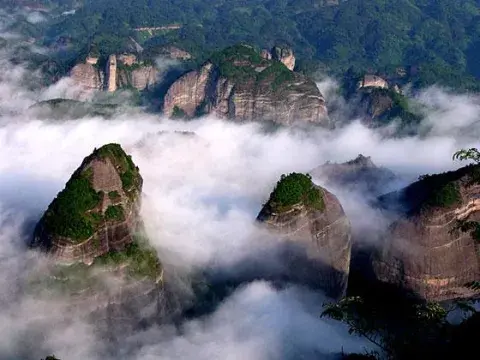
One day tirp to Bajiao Zhai, a noticeable Danxia Landform.
This is a tailor-made trip for nature-lovers and fans of photography. Danxia rock formation in the inland basin is a red rock debris, and later uplift due to the movement of the earth-crust, erosion of rocks by the water and weathering, which was dominant in the hillside to collapse back, kept down the rocks to form the red mountain block. This area was listed in the Natural Heritage of the world in 2009 by UNESCO. Bajiao Zhai Village is a combination of strategic place, steepy mountian, elegant scenery and secluded remote....Read more
This is a tailor-made trip for nature-lovers and fans of photography. Danxia rock formation in the inland basin is a red rock debris, and later uplift due to the movement of the earth-crust, erosion of rocks by the water and weathering, which was dominant in the hillside to collapse back, kept down the rocks to form the red mountain block. This area was listed in the Natural Heritage of the world in 2009 by UNESCO. Bajiao Zhai Village is a combination of strategic place, steepy mountian, elegant scenery and secluded remote. It is reputed as the "Soul of Danxia Landform". Here you can enjoy the sunrise or sunset and the sea-cloud. 1. I'll pick you up at 8:00 am in your hotel, and transfer to Bajiao Zhai Village by our private van. On the way, you can enjoy some terraced fields, bamboo groves and the wooden residences of the natives.(3.5 hours by ride) 2. First, we'll visit the village and have lunch in the village, and then we'll hike the mountains, the scenery including the group of snails looking up the sky, the ancient trail, Eye-stone, Joss stick of dragon's head and the Treasured sword Peak.(4 hours by hike) 3. After appreciating the sunset, after dinner in Ziyuan county, we'll take the bus back to your hotel around 10:00 pm.