Beijing Attractions
Beijing Articles
Peking Man Site Ⅰ
The Peking Man Site is just on the west side of Zhoukoudian Village, which is a small village, situated 50 kilometers (31 miles) southwest of Beijing. It is a large natural cave....
The Peking Man Site is just on the west side of Zhoukoudian Village, which is a small village, situated 50 kilometers (31 miles) southwest of Beijing. It is a large natural cave. Some 700,000 years ago, a species of Homo sapiens lived here for about 300,000 years, leaving several layers of ash as evidence of the use of fire. In addition, a number of stone tools were excavated here.
The site was discovered in 1921 by the Swede John Gunnar Andersson. Intensive excavation began in 1927. The site yielded nearly 200 pieces of Peking Man fossil (representing around 40 individuals), over 10,000 stone artifacts, several layers of ash as evidence of fire use, and more than 100 specimen of fossil animal. The site was listed by UNESCO as a World Heritage Site in 1987.
Lama Temple Ⅲ
Ten-Thousand-Happiness Pavilion (Wanfuge) is the largest pavilion in the temple. In the center of the pavilion is a huge standing statue of Maitreya Buddha of the Future carved out of a single trunk of white sandalwood tree presented by the Seventh Dalai Lama....
Ten-Thousand-Happiness Pavilion (Wanfuge) is the largest pavilion in the temple. In the center of the pavilion is a huge standing statue of Maitreya Buddha of the Future carved out of a single trunk of white sandalwood tree presented by the Seventh Dalai Lama. It is 26 meters (85 feet) high 18 meters (59 feet) above the ground and 8 meters (26 feet) under the ground and 8 meters (26 feet) in diameter. According to the Guinness Book of World Records the Maitreya is the tallest and biggest in the world today. Behind the Great Buddha there are ten thousand small Buddhist statues on three storey hence the name Ten-Thousand-Happiness Pavilion.
Entrance Feet: CNY 25
Opening Hours: 09:00 - 16:00
Transportation:
A. Bus Routes:
Take Bus No. 13, 44, 116,117, 684 or 807 and get off at Yonghegong (Lama Temple)
B. Subway:
Take Subway Line 2 or 5 and get off at Yonghegong Station.
Lama Temple Ⅱ
Covering an area of 66,000 square meters (16.3 square miles), it is a combination of mainstream Han and ethnic Tibetan Buddhist architectural styles....
Covering an area of 66,000 square meters (16.3 square miles), it is a combination of mainstream Han and ethnic Tibetan Buddhist architectural styles. The temple has a total of 1,000 rooms, featuring five large halls and five courtyards with beautifully decorative archways, unturned eaves and carved details. It houses a treasury of Buddhist art, including sculptured images of gods, demons and Buddhas, as well as Tibetan style murals.
The temple is arranged along a north-south central axis, which has a length of 480 meters (525 yards). The main gate is at the southern end of this axis. Along the axis, there are five main halls which are separated by courtyards: the Hall of the Heavenly Kings (Tian Wang Dian or Devaraja Hall), the Hall of Harmony and Peace (Yonghegong), the Hall of Everlasting Protection (Yongyoudian), the Hall of the Wheel of the Law (Falundian), and the Pavilion of Ten Thousand Happinesses (Wanfuge). The Hall of the Heavenly Kings is the southernmost of the main halls, it served originally as the main entrance to the monastery. In the center of the hall stands a statue of the Maitreya Buddha, along the walls statues of the four Heavenly Kings are arranged.
Top Beijing Tours
$200 Per Day
Private Beijing Antique Shopping Tour with Lunch
Start your private tour with pickup from your central Beijing hotel, and meet your private guide.
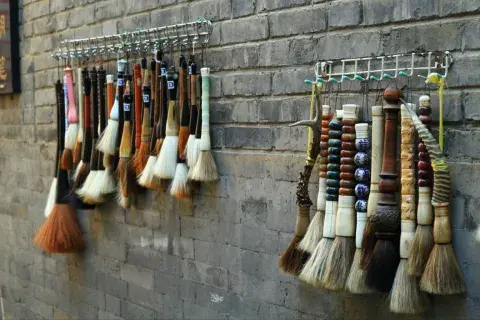
Hop inside your private, climate-controlled vehicle and travel to your first stop: Liulichang Antique Street. Situated in old Beijing, this history-steeped street is lined with stone shop-houses selling antique books, handicrafts, paintings, rubbings, glazed pottery, and other treasures.
Hear about Liulichang’s history, and get advice from your guide as to the best shopping opportunities....Read more
Start your private tour with pickup from your central Beijing hotel, and meet your private guide.
Hop inside your private, climate-controlled vehicle and travel to your first stop: Liulichang Antique Street. Situated in old Beijing, this history-steeped street is lined with stone shop-houses selling antique books, handicrafts, paintings, rubbings, glazed pottery, and other treasures.
Hear about Liulichang’s history, and get advice from your guide as to the best shopping opportunities. Sift through the traditional shops and stands, and explore the side lanes (hutongs), where the shops still bear original Ming and Qing architectural features like ornately carved doors and upswept roofs.
Next, drive to Panjiayuan Market, a so-called ‘weekend market’ that’s open daily. Weave through the throng of stands, perusing the huge array of antiques, curios, ceramics, Tibetan rugs, calligraphy, and other finds.
After shopping here, refuel with lunch at a Chinese restaurant, and continue to Baoguosi Cultural Market, set around an old temple. Scour the courtyards of vendors hawking stamps, books, coins and jade, and get tips on scouting out and clinching the best deals from your guide.
If time allows, squeeze in a visit to Hongqiao Market, a mall known for its pearl traders, and electronics, art, clothes, and accessories shops. Trawl for bargains, and haggle over pearls and other precious gems as perfect keepsakes of your time in Beijing.
After seven hours, your tour concludes with a hotel drop-off.
$50 Per Day
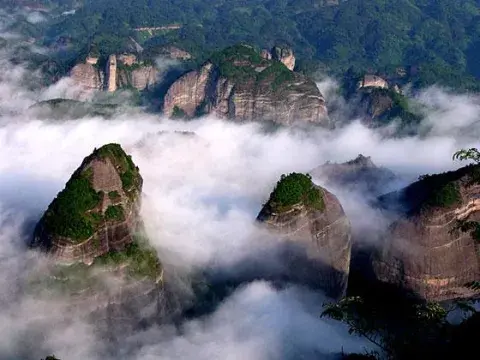
One day tirp to Bajiao Zhai, a noticeable Danxia Landform.
This is a tailor-made trip for nature-lovers and fans of photography. Danxia rock formation in the inland basin is a red rock debris, and later uplift due to the movement of the earth-crust, erosion of rocks by the water and weathering, which was dominant in the hillside to collapse back, kept down the rocks to form the red mountain block. This area was listed in the Natural Heritage of the world in 2009 by UNESCO. Bajiao Zhai Village is a combination of strategic place, steepy mountian, elegant scenery and secluded remote....Read more
This is a tailor-made trip for nature-lovers and fans of photography. Danxia rock formation in the inland basin is a red rock debris, and later uplift due to the movement of the earth-crust, erosion of rocks by the water and weathering, which was dominant in the hillside to collapse back, kept down the rocks to form the red mountain block. This area was listed in the Natural Heritage of the world in 2009 by UNESCO. Bajiao Zhai Village is a combination of strategic place, steepy mountian, elegant scenery and secluded remote. It is reputed as the "Soul of Danxia Landform". Here you can enjoy the sunrise or sunset and the sea-cloud. 1. I'll pick you up at 8:00 am in your hotel, and transfer to Bajiao Zhai Village by our private van. On the way, you can enjoy some terraced fields, bamboo groves and the wooden residences of the natives.(3.5 hours by ride) 2. First, we'll visit the village and have lunch in the village, and then we'll hike the mountains, the scenery including the group of snails looking up the sky, the ancient trail, Eye-stone, Joss stick of dragon's head and the Treasured sword Peak.(4 hours by hike) 3. After appreciating the sunset, after dinner in Ziyuan county, we'll take the bus back to your hotel around 10:00 pm.