Beijing Attractions

Beijing Sport University
Website: www.bsu.edu.cn
Brief Introduction:
Beijing Sport University is located near the famous ancient
Website: www.bsu.edu.cn
Brief Introduction:
Beijing Sport University is located near the famous ancient Summer Palace (Yi He Yuan), northwest of Beijing. It is one of the major education establishments in China. Its aim is to train highly qualified education teachers, coaches, sport science researchers and other physical education personnel. Students and other physical education personnel enjoy the services given by their respective departments. They include the department of Human Kinesiology and Science, Sports Administration, Wushu, Sports Training, Physical Education, Science Research, Correspondence, Section and the Graduate Studies.

The Summer Palace
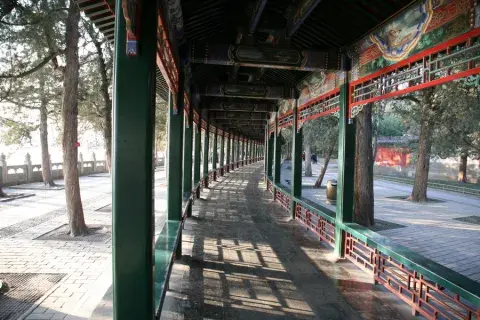
The Summer Palace is a vast ensemble of lakes, gardens and palaces in Beijing. It was an imperial garden in the Qing Dynasty. Mainly dominated by Longevity Hill and Kunming Lake, it covers an expanse of 2.9 square kilometres (1.1 sq mi), three-quarters of which is wa...
The Summer Palace is a vast ensemble of lakes, gardens and palaces in Beijing. It was an imperial garden in the Qing Dynasty. Mainly dominated by Longevity Hill and Kunming Lake, it covers an expanse of 2.9 square kilometres (1.1 sq mi), three-quarters of which is water.

Chongwenmen Asbury Church
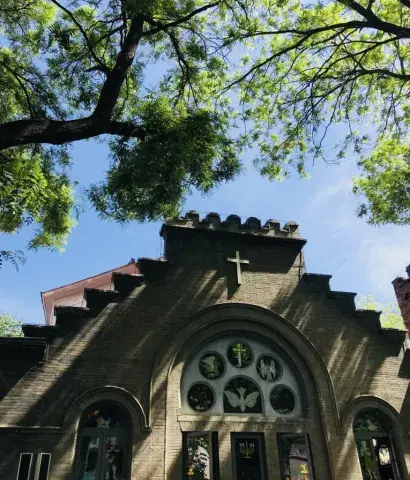
The Chongwenmen Church is one of the largest Christian Protestant churches in Beijing, and it enjoys high prestige both at home and abroad. Its architectural style shows grace, ingenuity, and a blend of many cultures. The church consists of two levels. The main level, at 8,245 square meters, is d...
The Chongwenmen Church is one of the largest Christian Protestant churches in Beijing, and it enjoys high prestige both at home and abroad. Its architectural style shows grace, ingenuity, and a blend of many cultures. The church consists of two levels. The main level, at 8,245 square meters, is divided into two sections: the main hall that seats 400 people, and the side chapel that seats 300. These two sections are separated by a movable partition so that they can be used separately or as one large room. The second level is the basement, which boasts a seating capacity of 800-1000. Services are filmed and viewed in the basement via closed-circuit television. In 1990, Beijing People's Municipal Government approved the church as a historical relic in the municipal district.

Golden mask dynasty show
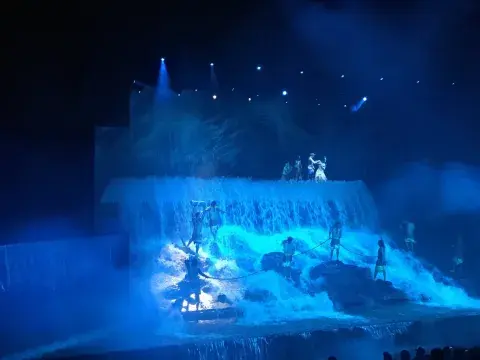
Set in the Golden Mask Dynasty, a legendary age in China, the story tells how a queen, who wears a golden mask, and creates a splendid dynasty. The play has eight chapters and included more than 200 actors from China and abroad. Produced by Chinese playwrights, directors and designers, the play f...
Set in the Golden Mask Dynasty, a legendary age in China, the story tells how a queen, who wears a golden mask, and creates a splendid dynasty. The play has eight chapters and included more than 200 actors from China and abroad. Produced by Chinese playwrights, directors and designers, the play features Chinese dances, acrobatics, costumes, and lighting and acoustics.

Huanghuacheng waterside Great Wall
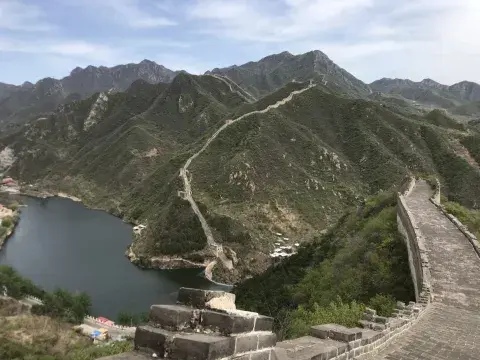
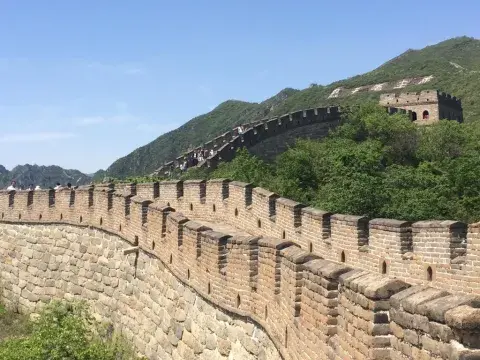
Huanghuacheng is the only lakeside Great Wall in Beijing. It is one of the top destinations for a Great Wall hiking tour. Visitors can also take a boat to appreciate the Great Wall at Huanghuacheng from a different angle. Located 45 miles (70 kilometers) away from Beijing city proper, it takes ab...
Huanghuacheng is the only lakeside Great Wall in Beijing. It is one of the top destinations for a Great Wall hiking tour. Visitors can also take a boat to appreciate the Great Wall at Huanghuacheng from a different angle. Located 45 miles (70 kilometers) away from Beijing city proper, it takes about 1.5 hours to get there by private car.
When summer arrives in full bloom, the entire village below is awashed in a sea of yellow wild flowers ('yellow flower' is 'huanghua' in Chinese). Hence the village name Huanghuacheng (Huanghua City in English), and by turn the Great Wall section acquires its name.
The construction commenced in 1404, two years before the Ming Dynasty (1368 – 1644) moved its capital to Beijing, and continued for 188 years.
Mountainous terrain nearby makes it strategically placed as the northern gateway to Beijing.

Beijing Gubei water town and simatai great wall
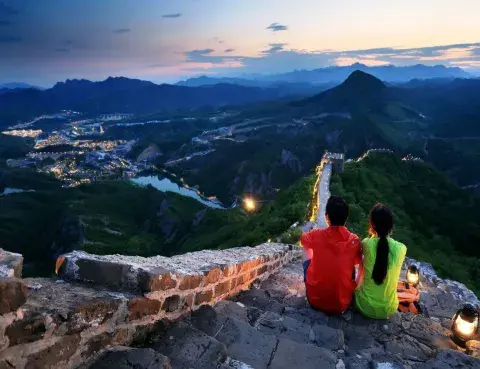
Famous for its "steepness" , Simatai great wall is the only section of the Great Wall which is illuminated at night.
Situated in Miyun County in Beijing, Gubei Water Town surrounds the beautiful Mandarin Duck Lake Reservoir and leans against the Simatai Great Wall, the most dangerous a...
Famous for its "steepness" , Simatai great wall is the only section of the Great Wall which is illuminated at night.
Situated in Miyun County in Beijing, Gubei Water Town surrounds the beautiful Mandarin Duck Lake Reservoir and leans against the Simatai Great Wall, the most dangerous and majestic section of the entire Great Wall. Regarded as 'Wuzhen in Beijing', Gubei Water Town boasts a combination of mountains, water and ancient villages. The town is characterized by the northern architectural style, and the history and culture of the late Qing Dynasty (1644-1911) and the Republic of China (1912-1949) historic period. Most buildings are reconstructed in the traditional courtyard style.

Hatsune Japanese Restaurant
The setting is very classy and romantic if you are there with your better half... but it is also a nice place to go with friends or business dinner/lunch.
Most the waiting staff spoke good English and the food was beautifully presented and tasted fantastic. The atmosphere was relaxing. The ...
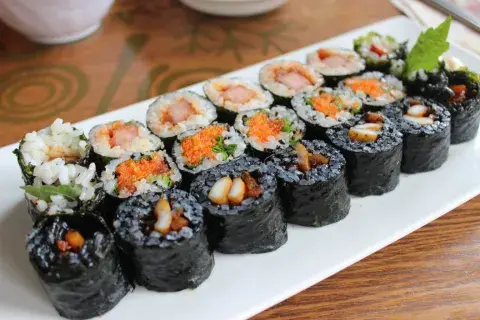
The setting is very classy and romantic if you are there with your better half... but it is also a nice place to go with friends or business dinner/lunch.
Most the waiting staff spoke good English and the food was beautifully presented and tasted fantastic. The atmosphere was relaxing. The menu boasted an extensive array of sushi, in varying different forms.Although their selection is very creamy, mayo-y, and cheesy, it is the best sushi you'll find in Beijing, hands down.
If you go to Sanlitun un Beijing, you do have to try this restaurant !

SijiMinfu Peking Roast Duck Restaurant
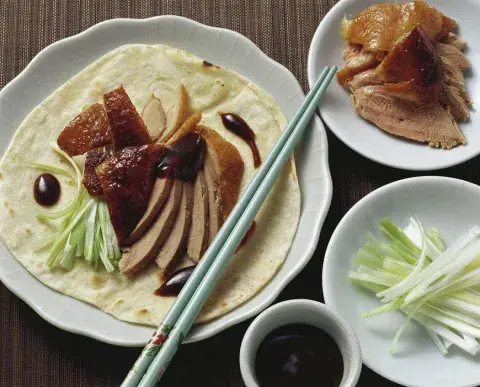
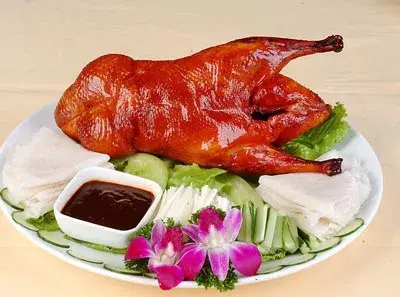
Siji Minfu, which literally means people (min) are in happiness (fu) all year round (siji, four seasons of the year), provides the best Beijing Duck with reasonable costs (CNY198 for the whole duck). The duck, was superb. The skin was crispy and the meat was tender. With the various s...
Siji Minfu, which literally means people (min) are in happiness (fu) all year round (siji, four seasons of the year), provides the best Beijing Duck with reasonable costs (CNY198 for the whole duck). The duck, was superb. The skin was crispy and the meat was tender. With the various sauces and accompanying ingredients the overall effect was fun, varied, and tasty. That said, there are some other really delicious things on the menu that are worth checking out. Nice ambience with a largely Chinese crowd. Shrimp was lovely but the star was the duck, and particularly the skin.

Beijing Hanshe Chinese restaurant
Beijing Hanshe Chinese restaurant: "although Hanshe" does not mean Chinese Han culture restaurant, but it is also a good choice to hold the party at the Mid Autumn Festival. The owner of Hanshe comes from Chongqing, who love to travel. H...
Beijing Hanshe Chinese restaurant: "although Hanshe" does not mean Chinese Han culture restaurant, but it is also a good choice to hold the party at the Mid Autumn Festival. The owner of Hanshe comes from Chongqing, who love to travel. He played art 30 years ago, then engaged in the catering industry after 30 years. Each restaurant is one of her creation.
The environment is the biggest selling point of Beijing Hanshe. it decorated a simple white appearance and elegant, lighting ceiling suspension and complicated pipeline was painted white, chamomile and green stalk large Monstera desktop background on the colorful, revealing the static action graceful feeling.
The menu is a simple and elegant pink and green decoration. Mao xue wang, Kung Pao Chicken such popular traditional dishes are in the menu. There are also have nine storey tower with such exotic beef, even the creative tofu ice cream dessert, almost anyone on any occasion to meet the appetite.
Pagination
Beijing Articles
What is the way to select tea?
Selecting best tea always challenges tea drinkers....
Selecting best tea always challenges tea drinkers. Customers usually buy jasmine tea according to its quality grades,which may come in as many as ten or more grades , which grade one being regarded as the best .Jasmine buds are intentionally put into the tea to produce an agreeable scent ; but tea connoisseurs classify the tea by the shape of the leaf ,the color of the liquid and the aroma, taste and appearance of the infused leaf.
The following are some simple ways that may help tea drinkers select tea :
a) Tea leaves should always be kept dry.
b) Aroma is the most important factor. Good tea always smells good.
c) The color of the tea liquid and the shape of tea leaves vary with different types of tea.
Beijing Introduction


Beijing (Běijīng [北京]), literally the "north capital," is also sometimes referred to as "Peking". It has been the capital of China at various times in the country’s long history, and most recently since the founding of the People’s Republic of China (中华人民共和国) in 1949. This fascinating capital city, at first glance, seems to effortlessly blend tradition with modernism - first time visitors will immediately be struck by the contrasts between old and new and the inescapable sense that change is happening at an accelerated pace.
Beijing has something for everyone. For the history buffs, Beijing is a living museum, filled with countless palaces, tombs, and temples left from centuries of Imperial rule. For foreign students and scholars, Beijing boasts two world-renowned universities as well as dozens of top-tier language institutions. For culinary enthusiasts, Beijing greets you with her mouth-watering Peking duck. For the culturally inclined, Beijing offers the bright faces and unique sounds of the Beijing Opera (京剧). For those seeking retail therapy, Beijing is a shopping haven. For nature lovers, Beijing has hiking trails, many tranquil parks, and of course you can climb the greatest wall in the world!
No matter what you’re looking for, Beijing has it. And the best part is - there is always more to explore as the city is constantly evolving in the race to modernise and beautify. Contrasts and contradictions await you at every turn - exclusive apartment buildings next to dilapidated old-style buildings, luxury cars driving alongside hawkers transporting their goods on the back of their bikes, ancient temples surrounded by modern high-rises. Whatever comfort zone you happen to be in, be prepared to be shaken out of it by this relentless but exciting city.
You could spend a year in Beijing and still find that you’ve only scratched the surface. So what are you waiting for? Beijing beckons!
Fast Facts About Beijing
|
Location:
Population:
People:
Language:
Dialing code: Local cuisine:
Expat pop.:
Getting There: Getting Around: Claim to faim: |
Northeastern corner of China Estimates start at 11 million Predominantly Han Chinese Mandarin (Pǔtōnghuà [普通话]) "+86 (0)10" from abroad. "010" from within China. Peking Duck About 50 000 and growing. Hub of China. Plentiful air, rail, bus transport. Capital of China, Great Wall of China, Home of 2008 Olympics, Tiananmen Square, Forbidden City |
Beijing Restaurants
With approximately 50,000 restaurants to choose from, eating out is very much part of living in Beijing. You can find just about any kind of restaurant in this city, be it a wide variety of Chinese cuisine, pan-Asian, European, South American, African, fusion, the list goes on and on. There are restaurants to suit all kinds of tastes and budgets. It is just as easy to find a restaurant serving authentic Chinese cuisine as it is to find a sushi bar or a vegetarian restaurant.

Why Kong Zi to be called Confucius
Why Kong Zi to be called Confucius:
As we all know Kong Zi is great philosopher and educator in ancient China, and he has made great contribution to human civilization. And his name is popular around the world.
...Why Kong Zi to be called Confucius:
As we all know Kong Zi is great philosopher and educator in ancient China, and he has made great contribution to human civilization. And his name is popular around the world.
How did he get English Name: the story dates back to 16th century in the Ming Dynasty, when the Italian Jesuit priest called Matteo Ricci (利玛窦)came to China and began his missionary work.
Ricci found that the Chinese People of the educated and official upper class at that time , all believed the instructions teaching a great Philosopher who is kong zi, his thought is leading and dominant, for all is ideology, kong zi has kong qiu, kong lao er, kong fuzi ,Ricci choose the most populous one Kong Fu Zi. So he translated Each character to the latin, Kong is Con Fu is Fu ZI ci In Latin, the noun can be masculine, feminine, or neuter, kong zi is a Man, named Confucius.so it keeps both the sound and meaning. (by the way, the Mengzi is Mencius, LAOZI AND SUNZI,, because in the 19th century Laozi Sunzi and Mozi were introduced to the west, at that time, Wade-Giles system is widely used to translate Chinese Names.
You can see the transliteration is common way used to translated proper names, most translated words were accepted as English words.
Known for Chinese is Kong Zi(Master Kong),Kong Fu Zi(Grand Master Kong),Confucius was born in 551 BC until 479 BC. He grew up the time when China get more and more divided, the time is Warring State, the people felt less confidence in the central government, a lots of philosopher arrived, people were struggling with this questions: what is the role of the state, what is mean to be a good person, how does humanity fit in with cast of order? In the Han dynasty Confucianism becomes centralist the religion, most life is teaching and preaching, and his legacy around his preaching in his home LU(鲁)in eastern China, some of quote is very famous like: A young man should serve his parents at home and be respectful to elders outside his home, he should be earnest and truthful, loving all, but become intimate with his innate good-heartedness。After doing this, if he has energy to spare, he can study literature and the arts. Good citizen or Child to be good son.
Real knowledge is to know the extent of one’s ignorance.
(真正的知识是知道自己有多无知)
Leaning without thought is labor lost, thought without leaning is perilous(学而不思则罔,思思而不学则殆)
When you see someone of unworthy, examine you own character.
One is famous golden role is: Do not impose on others what you yourself do not desire.
When Confucius became a character in the intellectual debates of 18th century Europe, he became identified as China’s first philosopher, many Europeans viewed Confucius as a moral philosopher whose approach was in line with rationalism and humanism.
Today, many descriptions combine these several ways of positioning Confucius, but the modern interpretation of his view has been complicated by a tendency to look back on him as an emblem of the traditional culture of China.
孔子的名言运用到现实生活当中。
Pagination
Top Beijing Tours

Tour to the Most Beautiful Ancient Villages in China
1. Tuvas Village in Kanas, Xinjiang
Kanas Tuvas Village is near mysterious Lake Kanas. The small village is located in a valley, and only has about 80 houses. These Swiss-style wooden houses are all surrounded by wooden fences, scattered among pine trees and birch trees.
Tuvas is an ancient minority group. They traditionally lived as hunter-gathers. It is said that the Tuvas people are the descendants of one group of Genghis Khan’s troops. Kumiss, yogurt, milk tea, and butter are special snacks there.
2. Jiaju Tibetan Village, Danba, Sichuan Province
...Read more1. Tuvas Village in Kanas, Xinjiang
Kanas Tuvas Village is near mysterious Lake Kanas. The small village is located in a valley, and only has about 80 houses. These Swiss-style wooden houses are all surrounded by wooden fences, scattered among pine trees and birch trees.
Tuvas is an ancient minority group. They traditionally lived as hunter-gathers. It is said that the Tuvas people are the descendants of one group of Genghis Khan’s troops. Kumiss, yogurt, milk tea, and butter are special snacks there.
2. Jiaju Tibetan Village, Danba, Sichuan Province
Jiaju Tibetan Village is known as the "Tibetan fairyland". Jiaju Tibetan Village is on a slight hill slope, and consists of about 140 houses. These unique houses are all built with crown-shaped roofs, red eaves, and white walls, which make the houses look like little castles among the forest.
3. Baoshan Stone City, an Naxi Ancient Village Built on a Huge Rock
Baoshao Stone City was built on a huge mushroom-shaped rock, and only has about one hundred houses. The houses are laid out in and orderly way, built on the rock, and linked by stone steps. The locals often chisel the local rock into stone tables, stone benches, stone hearths, and stone water vats.
The Naxi people have cut rice terraces and planted crops (such as rice, wheat, and corn) on the hills around the mushroom rock. The Naxi people there still lead an original life; you can experience the colorful Naxi culture there.
4. Hongcun and Xidi, Two Ancient Villages Near the Yellow Mountains
These two ancient villages have been included in the list of World Cultural Heritage. Both of these villages have a history of more than 900 years. They are renowned for their peaceful rural scenery, well-kept ancient buildings: unique Anhui style dwellings, and profound culture. The mountains, the rivers, and the ancient dwellings, make two highly picturesque landscapes.
Location: Only about 40 kilometers from the Yellow Mountains, you can take a bus from Yellow Mountain Scenic Area to Xidi or Hongcun. The distance between Hongcun and Xidi is about 25 kilometers. You can hire a bike after you arrive at one of them, and then cycle to the other village.
For artists: When visiting these ancient villages, you might want to bring your sketch pad and join the art students and artists, who go out there to capture their beauty on paper.
5. Xijiang Qianhu Miao Village: the Largest Miao Village in China
If you are interested in the Miao Minority, Xijiang Qianhu Miao Village can be a great destination for deepening your understanding of Miao history and culture.
Xijiang Qianhu Miao Village consists of more than ten natural hamlets (including the famous Silversmith Hamlet), which are all built on hills. The Miao people are keen on silver ornaments, and their unique silver ornaments are all made exquisitely.
The Miao Minority has many festivals, and the most famous two are: Miao New Year and Guzang Festival (牯藏节, an ancestor-worship celebration based on Miao culture).
Transportation: Xijiang Qianhu Miao Village is about 210 kilometers from Guiyang City (the capital city of Guizhou Province), which is equivalent to a 3.5-hour drive.
6. Wuyuan in Jiangxi: the Most Beautiful Villages in China
Wuyuan is noted for having "the most beautiful villages in China". In fact, Wuyuan is a county, with many ancient Ming and Qing style architectural features, including 113 ancient ancestral halls, 28 ancient mansions, 36 ancient dwellings, and 187 ancient bridges.
Every village in Wuyuan is built with a river in front, and mountains behind. These villages with elegant buildings are all peacefully harmonious with the natural scenery. Hiking in the surrounding countryside is a popular activity there.
Transportation: Wuyuan is only about 90 kilometers from the Yellow Mountains, and buses linking these two attractions are available every day.
7. Ancient Hakka Villages with Unique Earthen Buildings
You might think these large round or square buildings are fortifications, not dwellings. In fact, they are the Hakka people’s houses: earthen buildings, which are mainly built in flying-saucer-like shapes.
These ancient earthen buildings are mainly located in Fujian Province, especially in Nanjing Prefecture (南靖县) and Yongding Prefecture (永定县). Some of them have hundreds of years of history. If you want to have a visit, two ancient villages are recommended: Hongkeng Village (洪坑村) and Chuxi Village (初溪村) in Yongding Prefecture.
Both of these two villages have a history of hundreds of years, and are built among hills and by rivers. There, you can learn about the construction of earthen buildings, the history of the Hakka, and enjoy the peace brought by the natural scenery.
Transport: Yongding is about 307 kilometers (a 4-hour drive) from Xiamen (check out the transport between Xiamen and Yongding).

Beijing One - Day Tour
Great Wall - A La Carte Lunch - Summer Palace - Chinese Kung Fu Show or the Acrobatic Show as you like
...Read moreGreat Wall - A La Carte Lunch - Summer Palace - Chinese Kung Fu Show or the Acrobatic Show as you like
Pick tourists up at your hotel (between 8:30 am. to 9:00 am.)
Morning
We advise you to have a hearty breakfast at the hotel as you will need it for today's high-energy output. Our first stop is Mutianyu Great Wall, which is about 90 kilometres away from downtown area. Connecting Juyongguan Pass in the west and Gubeikou Great Wall in the east, Mutianyu with numerous watch towers and dangerous passes has been acclaimed as the quintessential section of the entire Great Wall. You will be amazed by the delightful view whatever the season.
This is a one of the most famous and ideal sections of the Great Wall. You will have your choice of taking the cable car or chair lift up the breathtaking wall and spend a leisurely 1 to 2 hours hiking up and down the various sections exploring the Watch Towers and marveling at the construction and beauty of the renown and legendary Wall. You then have the option of an exhilarating toboggan ride back down or simply return the way you came.
Lunch
To avoid the mass-produced food at the cheap tourist eateries arranged by most agencies, we will serve you an a la carte lunch at a noted local restaurant, where you could taste the authentic Chinese food.
Afternoon
In the afternoon, We will go to visit the Summer Palace, a fantastic imperial resort. With its perfect layout, magnificent buildings and enchanting landscape, the Summer Palace is also reputed as the most splendid classical garden in China. The most attractive sites are the enchanting Kunming Lake and the well-known Long Gallery. The Long Gallery, 728 meters (796.2 yards) in length, is the longest gallery of China's gardens. Beginning from the Yaoyue (Inviting-Moon) Gate and ending at Shizhang Pavilion, the Long Gallery ingeniously links Longevity Hill with Kunming Lake.
Night
To round off a memorable start to your trip, we will arrange a Cost price 280 yuan per person wonderful and exciting Chinese Kung Fu Show for you at the Red Theater tonight or a Cost price 280 yuan per person wonderful and exciting Chinese Acrobatic Show for you at the Chaoyang Theater tonight as you like.
Prices ( Prices are in Chinese Yuan and based on per person)
Include
1. English tour guide service fee
2. Air-conditioned vehicle with Driver' wage
3. Petrol, Toll fee, All the Parking fee
4. Delicious Lunch in a local Chinese restaurant
5. All entrance tickets to the sights listed above
6. Round trip Cable car or Round trip Chair lift or Chair lift up and toboggan down the wall
Excluded
1. Accommodation
2. Dinner
3. Entrance ticket to the Bird Nest and Water Cube
4. Gratuity to the guide and driver
5. Personal Costs

10 Days Cuisine Feast Tour with All the Major China Cuisines
Day 1 Arrival Beijing (D)
Transfer via: Flight on your own arrangement
Upon your arrival you will be greeted by our local guide and then transferred to your hotel by a private air-conditioned car. For the rest of the day you will enjoy some leisure time.
Dinner: Tonight the spectacular Peking duck banquet at Qianmen Quanjude Beijing Duck Restaurant- the most famous Beijing duck restaurant in the world. With a history of 137 years, it will give you an enthusiastic welcome.
Day 2 Beijing (B, L, D)
Day 1 Arrival Beijing (D)
Transfer via: Flight on your own arrangement
Upon your arrival you will be greeted by our local guide and then transferred to your hotel by a private air-conditioned car. For the rest of the day you will enjoy some leisure time.
Dinner: Tonight the spectacular Peking duck banquet at Qianmen Quanjude Beijing Duck Restaurant- the most famous Beijing duck restaurant in the world. With a history of 137 years, it will give you an enthusiastic welcome.
Day 2 Beijing (B, L, D)
Sightseeing: Temple of Heaven, Tiananmen Square, Forbidden City
This morning our tour will begin with a visit of the Temple of Heaven, which was completed in 1420, and expanded over the years by two Qing Dynasty Emperors. It was the place where the Emperor came every winter solstice to worship heaven and to solemnly pray for a good harvest. With the three blue-tiled cone-shaped roofs, a unique wooden and blue-tiled structure built without a nail, it has become a worldwide symbol of Beijing.
After lunch, we will go on our city tour to visit Tiananmen Square, the symbolical heart of China and gathering place for the masses. It is the biggest public square in the world, which can hold one million people.
From here we will walk across the Golden River Bridge to visit the Forbidden City and experience the ancient Emperor's daily life. For 5 centuries Chinese emperors carried out their administration here. With almost 10,000 rooms, it was the centre of the Ming and Qing dynasties, a massive complex of palaces, pavilions, courtyards and gardens where 24 emperors used to live. Forbidden City was the largest palace in the world, and in the past it was indeed a forbidden place for commoners. Your tour here will include private access to the Emperor's palace.
Dinner: Fujian cuisine
Fujian cuisine is noted for its light touch, sweet and sour flavor. The cooking puts great attention in choosing the choicest ingredients, and is thus particularly apt in preparing seafood dishes. The dishes mostly marinated in wine, are souring sweet, specialize in all kinds of seafood, stir-fired, quick-fried and shallow oil-fried; simmered, with stress on flavor soup.
Restaurant: BaMinShiFu
Tel: 86-010- 64428833-5855
Address: No. 11, 3section AnZhenXiLi Chaoyang District, Beijing
Day 3 Beijing (B, L, D)
Sightseeing: Badaling Great Wall, Ming Tombs, Sacred Way
After experiencing the royal lifestyle, today we will be transferred to the surrounding countryside of Beijing and visit the Badaling Great Wall, the pride of China and one of the Seven Wonders of the World. Whereas Genghis Khan contemplated it as a military obstacle, Richard Nixon described it as one of humankind's greatest achievements. You will be able to climb and walk one of the best preserved sections of the 2,000 years old ancient wall, admiring the splendid mountain views. Bring a jacket and layer- although it is breezy, the climbing is tough. So be in a good shape!
In the afternoon we will visit the legendary Ming Tombs, which are situated at the foot of Heavenly Longevity Mountain, Changping, northwest of Beijing. Since there are 13 Ming emperors buried there, this place was called the 13 Ming Tombs. You will walk along the Sacred Way, a road guarded by stone statues on both sides, as the ancient emperors did to hold a memorial ceremony for their ancestors. In addition, you will encounter the marble tombs of the Ming Dynasty emperors.
On the way back to hotel, you will be driven to visit the main 2008 Beijing Olympic venues, take an exterior visit of both the, Beijing National Stadium (Bird's Nest/Olympic Stadium), National Swimming Centre('The Water Cube'),feel free to take some photos of the stadiums.
Dinner: Anhui cuisine
Anhui cuisine follows strict rules in the use of heat and salt; stewed in brown sauce with stress on heavy oil and sauce.
Restaurant: Huangshan Hui Restaurant
Tel: 86- 010-63031467
Address: TianQiaoLiuXue Road ChongWen District, Beijing
Day 4 Beijing / Shanghai (B, L, D)
Transfer via: Flight on our arrangement
Sightseeing: Hutongs, Summer Palace
We will experience a unique Hutong tour by taking a rickshaw this morning. Hutongs are a kind of ancient city alley or lane and are very typical for Beijing. Most of them can be found close to the Forbidden City, and many were built during the three dynasties of Yuan, Ming and Qing. Today, the Hutong is a living museum of Beijing history showing the traditional lifestyle of Beijing people.
We will continue by visiting the Summer Palace. Equally famous as the Forbidden City, the Summer Palace is called 'Yiheyuan' (Garden of Nurtured Harmony) in Chinese. Until nowadays, it is the best preserved and the largest imperial garden in China. You will regret it if you leave Beijing without having visited this grand imperial garden.
Then you will take the flight to Shanghai. Arriving in Shanghai, you will be met and transferred to your hotel by our local guide. Together, you will take a walk to the famous Nanjing Road and the Bund. They are among the most recognizable architectural symbols of Shanghai and therefore a must-see when visiting Shanghai.
Dinner: Zhejiang cuisine
Zhejiang food is represented by Hangzhou, Ningbo, and Shaoxing styles. Zhejiang cuisine is tender, mild and fresh.
Restaurant: FeiHuangRenWen Restaurant
Tel: 86- 021-63249533
Address: No.330 Tiantong Road Hongkou District, Shanghai
Day 5 Shanghai (B, L, D)
Sightseeing: Shanghai Museum, Jade Buddha Temple, Oriental Pearl Tower, Yuyuan Garden
Today we will start the day with a visit of Shanghai Museum which is the biggest museum of China. It incorporates a collection of over 120,000 pieces of Chinese art & cultural relics and is especially famous for its treasures of bronzes, ceramics, paintings and calligraphy.
Then we head to the Jade Buddha Temple. The old-time and classical architectural style makes the temple unique and inimitable in this modern city. Both, the Sitting Buddha and the Recumbent Buddha are carved with whole white jade. If you're lucky, you can watch the monks serving a ceremony in a side room.
After lunch, we will visit the Oriental Pearl Tower, the highest TV Tower in Asia, which creates a picture of 'twin dragons playing with pearls'. The entire scene is a photographic jewel that excites the imagination and attracts thousands of visitors all year-round.
Then we will take a relaxing walk to the lovely Yuyuan Garden, a beautiful garden in the south of the Yangtze River. Wandering through it, you will find pavilions, corridors, streams, courtyards as well as many other natural features.
Dinner: Shandong cuisine
Shandong food consists of Jinan and Fushan food. Jinan food makes good use of soup seasoning, frying in deep oil and steaming. Shandong roast chicken is especially good with wine and the chicken is and tender. Tasting it is guaranteed to make the diner believe. Shandong cuisine is known for its light seasoning, qualities of freshness, clear colors and delicate fragrance and pure tastes.
Restaurant: Luwei Restaurant
Tel: 86-021-63738270
Address: No.18 Yunnan Nan Road Huangpu District, Shanghai
Day 6 Shanghai / Suzhou (B, L, D)
Transfer via: soft seat train arranged by us
Sightseeing: Humble Administrator's Garden, Zhouzhuang.
In the morning we'll depart from your hotel and take the express train to Suzhou. Suzhou is praised as the "Oriental Venice" and called 'paradise on earth' along with Hangzhou.
Upon your arrival in Suzhou, our guide will meet you and escort you to a local restaurant for lunch. Then you will visit the Humble Administrator's Garden, the largest classical garden in Suzhou and one of the four most famous ones in China. Originally built in 1513 AD, the garden consists of three parts with different types buildings around streams and ponds.
We will spend the afternoon in Zhouzhuang, one of the most famous water townships in China. Situated in Kunshan City, which is only 30 kilometers (18 miles) southeast of Suzhou, it is noted for its profound cultural background, the well preserved ancient residential houses, the elegant watery views and the strong local colored traditions and customs. Let us explore this town with a history of more than 2500 years and get to know about the architecture, lifestyle and inhabitants there.
Afterwards you will be transferred back to Suzhou to spend the rest of your day on your own.
Dinner: Jiangsu cuisine
The origin of Jiangsu cuisine can be traced to pre-Christian times. Jiangsu cuisine specialties are lightly flavored, whether they combine sweet-and-salty tastes. Soya sauce and spices are mild and used sparingly, although the use of rich-flavored broth is extensive.
Restaurant: BaoFangYuan Restaurant
Tel: 86- 0512-67206597
Address: No. 207 Pishi Street Pinjiang District Suzhou.
Day 7 Suzhou / Hangzhou (B, L, D)
Transfer via: soft seat train arranged by us
Sightseeing: West Lake, Meijiawu Tea Plantation
Our guide and driver will escort you from Hotel to train station (Suzhou). Upon your arrival in Hangzhou, our local guide will meet you and escort you to beautiful West Lake. We will take a cruise boat across the lake to see the 3 pagodas in the lake. The West Lake is the most famous tourist spot of Hangzhou. Graceful mountains surround it on three sides. It has a charming scenery and many cultural relics and historic sites. Then you will visit the Meijiawu Tea Plantation. Tea village is seated at the hinterland of West Lake Park and it is famous for its tea production. Everybody will feel relax in such a natural environment; enjoy the special tea culture and the beauty there.
Dinner:Hunan cuisine
Hunan cuisine takes curing, simmering, steaming and stewing as the main cooking methods. It is fragrant and fresh, sour and peppery, yet soft and tender.
Restaurant: DingXianFang Restaurant
Tel: 0571-87823878
Address: No.456 Qingtai Road Shangcheng district, Hangzhou.
Day 8 Hangzhou (B, L, D)
Sightseeing: Six Harmonies Pagoda, Lingyin Temple and Feilai Feng (also named Ling JiuFeng)
Today you will also visit Lingyin Temple including the Feilai Feng. The Feilai Feng is situated in the east of Ling Yin Temple. Isolated from others, its stone quality is totally different from that of surrounding mountain groups. It is 167 meters high, on the peak there are many grotesque stones in the shapes of charming dragon, prostrate tiger, walking elephant and scared ape. The main hall of Lingyin Temple is about 34 meters (111 feet) tall - incredibly high for a one-storey building. In the center of the hall you'll find the statue of Sakyamuni Buddha, which was carved from 24 pieces of camphor wood. The temple was named Lingyin Temple for its extremely beautiful environment which is serene and suitable for "Soul's Retreat".
After that, we will drive to the Six Harmonies Pagoda, highly erected next to Qiantang River and in the south of the West Lake. It is a perfect example of brick-and-wood structure built in ancient China and was built in 970 AD in the Northern Song dynasty (960-1127) to press down the evil of the river tidal bore in Qiantang River.
After lunch, our guide and driver will escort you to the bus station (Hangzhou), upon your arrival in Huangshan; our local guide will meet you and escort you to hotel by a private air-conditioned car. Then you will spend the rest of day on your leisure.
Dinner: Sichuan cuisine
Distinct features of Sichuan style: they prefer steaming, simmering, and smoking. The cooking is elaborate and meticulous and the flavoring highly varied and mixed. The taste of each dish is very distinct. A common Chinese saying about Sichuan cuisine is that each meal has its own unique taste, and no two dishes have the same flavor. Sichuan cuisine is world-famous for its diverse hot and spicy flavor.
Restaurant: ChuanLiuBuXi Restaurant
Tel: 86-0571-86069777 87172577
Address: No.246 Jiefang Road Shangcheng District, Hangzhou
Day 9 Hangzhou-Guangzhou (B, L, D)
Transfer via: Flight on our arrangement
Sightseeing: Sun Yat-sen Memorial Hall, Ancestral Temple of the Chen Family
Upon your arrival at the airport you will be met by your local guide. Then you will start your sightseeing tour by visiting Sun Yat-sen Memorial Hall. It is a magnificent building in the shape of octagon and an important place for large scale meeting and performance. Sun Yat-sen Memorial Hall was built in order to commemorate the contributions of Sun Zhongshan, the great predecessor of Chinese revolution for democracy. It is a memorial construction donated by the people in Guangzhou and the overseas Chinese and is listed as one of the first class cultural relics in Guangdong Province.
Afterwards you will visit the Ancestral Temple of the Chen Family which is also called Chen Clan Academy. It is a place both for offering up sacrifices to ancestors and for study. Now the Chen Clan Ancestral Temple in Guangzhou City, the Ancestors' Temple in Foshan City, the former Residence of Sun Yat-sen in Zhongshan City and the Opium War Memorial Hall in Dongguan City are regarded as the four major cultural tourist sites in Guangdong Province.
Dinner: Guangdong cuisine
In preparing the Guangdong cuisine, dozens of varieties of ingredients are often involved and more than 30 different kinds of cooking methods such as frying, grilling, stewing, simmering, deep-frying, roasting, and braising, etc. Freshness is everything to the Guangdong cuisine.
Restaurant: ALiuShiJia Restaurant
Tel: 86- 020-83516761
Address: No.302 Huanshizhong Road Yuexiu District, Guangzhou.
Day 10 Guangzhou (B, L)
Sightseeing: Yuexiu Park, Temple of Six Banyan Trees, Western Han Nanyue King Tomb Museum
In the morning we will start off to Yuexiu Park, the biggest comprehensive sight-seeing park. Yuexiu Park consists of seven hummocks and three artificial lakes. Yuexiu Park is well-known for beautiful hills and waters and plenty of antiques which you can enjoy at ease in the park. There are verdant grasses and trees, birds' singing, and fragrant flowers all through the year. Travelers will lose themselves in the elaborately engraved and Lingnan-styled pavilions, platforms, towers, and corridors; and the rippling water of the lakes.
Then you will head to the Temple of Six Banyan Trees. It has a long history in Guangzhou and is an ancient monastery famous at home and abroad. There are majestic towers, dense trees, plenty of antiques and valuable heritage from those famous people in the history. It is one of the four Buddhism temple complexes in Guangzhou is an important unit for the preservation of antiques.
Finally you will visit Western Han Nanyue King Tomb Museum, which is the oldest and largest Han tomb with the most funerary objects in Lingnan (South of the Nanling Mountain) Area. As one of the 80 famous museums in the world, the museum covers 14,000 square meters (150, 699.6 square feet) with 10 exhibition halls.
In the evening you will be transferred to the airport to take your flight to the next destination.