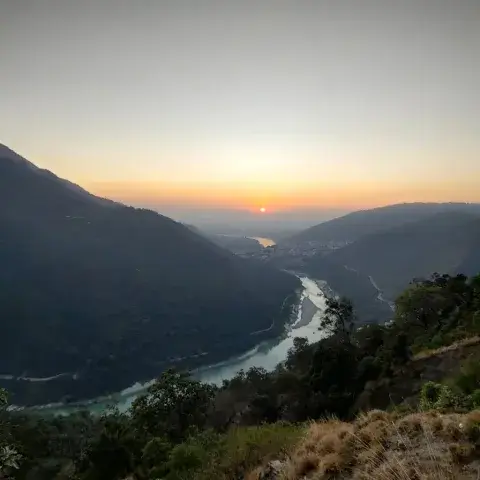
Uttarakhand Attractions

Taj Mahal

The Taj Mahal is the epitome of Mughal art and one of the most famous buildings in the world. Yet there have been few serious studies of it and no full analysis of its architecture and meaning. Ebba Koch, an important scholar,  has been permitted to take measuremen...

The Taj Mahal is the epitome of Mughal art and one of the most famous buildings in the world. Yet there have been few serious studies of it and no full analysis of its architecture and meaning. Ebba Koch, an important scholar,  has been permitted to take measurements of the complex and has been working on the palaces and gardens of Shah Jahan for thirty years and on the Taj Mahal itself—the tomb of the emperor's wife, Mumtaz Mahal—for a decade.

The tomb is the representation of the house of the queen in Paradise, and  its setting was based on the palace gardens of the great nobles that lined both sides of the river at Agra India.  You will explore the entire complex of the Taj Mahal with an explanation of each building and an account of the mausoleum's urban setting, its design and construction, its symbolic meaning, and its history up to the present day.

Taj Mahal was built in 22 years (1631-1653) with the orders of Shah Jahan and it was dedicated to Mumtaz Mahal (Arjumand Bano Begum), the wife of Shah. 20.000 workers labored and 32 crore rupees were spent during the construction of the monument and it was built according to Islamic architecture. It is one of the Unesco world heritage site

Please feel free to contact us

Private Tour: Day Trip to Agra from Delhi including Taj Mahal and Agra Fort

"A white marble tomb built in 1631 - 48 in Agra, seat of the Mughal Empire, by Shah Jehan for his wife, Arjuman Banu Begum, the monument sums up many of the formal themes that have played through Islamic architecture. Its refined elegance is a conspicuous contrast both t...

"A white marble tomb built in 1631 - 48 in Agra, seat of the Mughal Empire, by Shah Jehan for his wife, Arjuman Banu Begum, the monument sums up many of the formal themes that have played through Islamic architecture. Its refined elegance is a conspicuous contrast both to the Hindu architecture of pre-Islamic India, with its thick walls, corbelled arches and heavy lintels, and to the Indo-Islamic styles, in which Hindu elements are combined with an eclecticassortment of motifs from Persian and Turkish sources."______ Marvin Trachtenberg and Isabelle Hyman.


The Taj Mahal is considered the finest example of Mughal architecture, a style that combines elements from Persian, Indian, and Islamic architectural styles. In 1983, the Taj Mahal became a UNESCO World Heritage Site and was cited as "the jewel of Muslim art in India and one of the universally admired masterpieces of the world's heritage."

The Taj! An awe-inspiring poetry in marble stands high and serene by the banks of the River Yamuna is an inspiring result of the application of architectural and scientific research.

The tomb laid out in rectangular shape can be approached through an immense gateway with huge arch and alcoves strewn on either side that stands tall and erect, as though guarding something precious. Three other smaller gateways follow the red sandstone towers topped with domes in white marble together make a pretty picture.

The Taj is an experience of its own kind, while on the one hand its magnanimity is so sublime, so on the other the exquisite inlay work and detailed craftsmanship together with the calligraphy is simply amazing. The combination simply leaves one absolutely mesmerized. The sheer splendour of the mausoleum is consummate, and the vastness is simply monumental.

The tomb is at the northern end with an expanse of greenery and fountains between it and the gateways. The ceiling is adorned with floral patterns and the décor of floors with geometric designs. The inner of the main structure is in lakhauri [a kind of earthen brick], which have been carefully covered with marble, whereas the adjoining structures are covered with red sandstone.

Majestic and sensuous, glistening brightly in the afternoon sun, the bulbous dome and minarets with a slight inward tilt, have all been inscribed meticulously with the Holy Verses bringingforth the arabesque ornamentation. The white marble from Makrana in Rajasthan has added its own natural beauty to this mausoleum that attracts tourists from all over the world.

As one goes around, the most breathtaking part remains the exquisite inlay work that looks up from every nook and corner of the façade. The blooms are worked out in immense detail and every dot and alphabet of the Holy Quran is neatly etched, cut and inlaid to perfection. The flowers, chiefly lilies mirror the Mughal love for gardens. One particular flower on the tomb of Mumtaz Mahal is said to have been inlaid with 35 different precious stones. Thecentral hall is surrounded by eight rooms that have a corridor running through them. The aura of serenity is all pervading, while translucent glass separates them to let-in the dim sunlight, making the interiors look solemn and intriguing. Indeed a masterpiece that none would ever be able to replicate including the orginal craftsmen, artisans and designers themselves.

While a visitor is still managing to grasp the symmetry of the structures set across the length and breadth of the complex, the Taj Mahal appears deep in the distance, indeed a spectacular sight to behold, forever!

However, it is the dome that leaves one gasping in awe. While the outer dome rises to 44.4 metres in height, the inner is 24.35 metres an architectural and technical feat. Ismail Afandi from Turkey, who also worked for the Ottomans is said to have been its designer. Marking an amalgam of Hindu and Islamic architecture are the typically Hindu Chhatris [An umbrella like structure] at the dome base from the corners. Shah Jahan has similarly left his individual imprint in several other aspects of the architecture as well.


The cenotaph over Shah Jahan’s tomb has an inkwell, while that of Mumtaz Mahal a slate over it, as it is said a man writes his desires on the woman’s heart. The epitaphs in addition to regular pronouncements about the individual have verses from the Holy Quran. The exquisite craftsmanship marks the marble lattice screens, which are elaborately worked out in oriental design enclose the cenotaphs. The tombs lie below the cenotaphs in a basement, undisturbed and in absolute quiet environs. What we do not see now are the bowls full of jewels on Mumtaz Mahal’s tomb, the Persian carpets on the floor and the silver doorways and overhanging chandeliers that once made up the inner décor.

Coming out of prevailing solemnity in the environ, one gets speechless with awe at the grandeur of the by gone era, enticing particularly the panels with lilies and tulips together with iris flowers that symbolise death. The Makrana marble will perhaps never again be handled; with so much grace and care and such elegance of balancing the ornamentation on it. The beauty and splendour of elegant craftsmanship that makes up the inlay work and calligraphy in fact, further accentuates the deathly calm of the mausoleum and in the quietude, it is the softly filtering rays of the sun through the lattice work on marble panels that strikes one as unusually ethereal in nature.

Outside one would have to crane one’s neck to look up at the apex of the dome, high and mighty agains the skyline. Secluded and singular in majesty, the structure stands clearly apart from everything around it. The balance of all the elements, the garden, the fountain and water channel and in the end the gateway, all look exquisitely managed to provide maximum harmony in terms of visual appeal. The sheer beauty of the outside of a monument marks the serenity within.

The Taj Mahal, for which not only the course of river Yamuna is said to have been diverted but as per interpretation of the Archaeological Survey of India, the Yamuna was incorporated into the garden design for the belief that its one of the rivers of Paradise.

The moods of the Taj vary from dawn to dusk. It looks milky white in the soft light that characterizes early morning, while the afternoon sun makes it glisten bright and dazzling in the overhead sunlight, almost looking like a jewel against the opaque blue of the skyline and then comes a moonlit Taj breaking into the night sky, majestic and simply beautiful in a sense that cannot be put into words. The sensuous appeal can never be more heightened as on a full moon night when it shines like a pearl making the visitor stand agape at the spectacle. The romanticism and sheer majesty of the structure is unbelievably true! No wonder if millions of people chose it amongst the World’s top wonders.

The romanticism and sheer majesty of the structure is unbelievably true! No wonder if millions of people chose it amongst the World’s top wonders.

By Car (Please contact me for the same)

Top Uttarakhand Tours

$550 Per Day

YOGA RETREAT TOUR IN HIMALAYAS

OVERVIEW:
Wake up in the lap of nature, connect with your inner self & meditate in the fresh mountain air of Uttarkashi with the sound of eternal Ganges flowing past you. Daily two hours session of yoga and trek to nearby Garhwal villages will truly connect you to the nature and give you a pure local experience. Combining this tour with a famous hilltown of Mussoorrie will be a great way to rejuvenate and enjoy a long weekend with family or friends.

ITINERARY:

DAY 1: ARRIVE RISHIKESH

Arrive Dehradun at 1210 hrs and then and drive to Rishikesh ( Approx. 22 Kms/ 30 mins drive)

One of the holiest cities in India, Rishikesh is not just known for its religious connection but also for its beautiful landscape. Surrounded by hills (the Lesser Himalayas) on three sides and holy Ganga River flowing through it, Rishikesh is an ethereal experience. It is higher than other holy cities of Haridwar and Varanasi, the water in Ganga here is cooler and cleaner. The flow of the river is stronger here and the city is less populated than others. It is calmer and peaceful here. It is such a beauty, the water gushing from the Himalayas, the banks dotted with ashrams and temples (both ancient and recent) and a hilly landscape in the background of all this, Rishikesh is truly amazing.

Afternoon sightseeing to Rishikesh Laxman Jhula, Parmarth Ashram and attend the Aarti ceremony at Parmarth Niketan Ashram

Overnight in Rishikesh

DAY 2: RISHIKESH - UTTARKASHI

Morning drive to Uttarkashi (Approx. 170 kms/ 6 hrs drive) enroute lunch at Chamba.

Upon arrival check in at Shikhar Nature Resort.

Shikhar Nature Resort conveniently located 5kms from Uttarkashi on the way to Gangotri on a four-acre estate at an altitude of 1150 Mts. Situated right on the river banks of Ganga( Bhagirathi Ganga River) and is surrounded by high mountain cliffs. Shikhar Nature Resort is a perfect place for a cool retreat to the nature.

Overnight in Uttarkashi.

DAY 3: UTTARKASHI

Morning yoga session at the resort.

Start your day with a cup of tea ( ginger tea or mint tea ).

Sessions on transformation on yoga and meditation by which one can attain harmony. Yoga helps to gain a healthy body and calm mind. Yoga is a tool that will help you banish fear.

The average human being has to come up with many problems in day to day life. Yoga can be of enormous helps to not let this misery get you down. This is what will be the focus of all the session will be taken place on this day.

After breakfast drive to Nachiketa Tal ( Approx. 32 Kms/ 1 hrs drive) and then 3 kms trek through lush green forest takes one to Nachiketal Tal, a tranquil spot.

There is greenery all around and a small temple at the lake gives a serene look to the beautiful surrounding. Nachiketa, the devoutson of Sage Uddalak, is said to have created this lake, hence the name.

Enjoy packed lunch at this beautiful place. Later trek to road head and drive back to Uttarkashi

Overnight in Uttarkashi

DAY 4: UTTARKASHI

Morning yoga session at the resort. Start your day with a cup of tea ( ginger tea or mint tea ).

Sessions on transformation on yoga and meditation by which one can attain harmony. Yoga helps to gain a healthy body and calm mind. Yoga is a tool that will help you banish fear.

The average human being has to come up with many problems in day to day life. Yoga can be of enormous helps to not let this misery get you down. This is what will be the focus of all the session will be taken place on this day.

After breakfast trek to village and meet local people and see the local village life.

Then come back to resort for lunch.

Post lunch visit museum inside the Nehru Institute of Mountaineering, Vishwanath temple and local market.

Overnight in Uttarkashi.

DAY 5: UTTARKASHI - MUSSOORIE

After breakfast drive to Mussoorie (Approx. 140 kms/ 5 hrs drive) with packed lunch.

Upon arrival check in at hotel.

Rest of the day at leisure and visit mall road.

Overnight in Mussoorie.

DAY 6: MUSSOORIE - DEHRADUN

After breakfast drive to Dehradun airport ( Approx. 55 Kms/ 1 ½ hrs drive) to board flight back to Delhi.