Uttar Pradesh Attractions
Taj Mahal
The Taj Mahal is the epitome of Mughal art and one of the most famous buildings in the world. Yet there have been few serious studies of it and no full analysis of its architecture and meaning. Ebba Koch, an important scholar, has been permitted to take measuremen...
The Taj Mahal is the epitome of Mughal art and one of the most famous buildings in the world. Yet there have been few serious studies of it and no full analysis of its architecture and meaning. Ebba Koch, an important scholar, has been permitted to take measurements of the complex and has been working on the palaces and gardens of Shah Jahan for thirty years and on the Taj Mahal itself—the tomb of the emperor's wife, Mumtaz Mahal—for a decade.
The tomb is the representation of the house of the queen in Paradise, and its setting was based on the palace gardens of the great nobles that lined both sides of the river at Agra India. You will explore the entire complex of the Taj Mahal with an explanation of each building and an account of the mausoleum's urban setting, its design and construction, its symbolic meaning, and its history up to the present day.
Taj Mahal was built in 22 years (1631-1653) with the orders of Shah Jahan and it was dedicated to Mumtaz Mahal (Arjumand Bano Begum), the wife of Shah. 20.000 workers labored and 32 crore rupees were spent during the construction of the monument and it was built according to Islamic architecture. It is one of the Unesco world heritage site
Please feel free to contact us
red fort
The Red Fort is a historical fort in the city of Delhi in India. It was the main residence of the emperors of the Mughal dynasty for nearly 200 years, until 1857.Constructed in 1639 by the fifth Mughal Emperor Shah Jahan as the palace of his fortified capital Shahjahanabad
The fort was plundered of its artwork and jewels during Nadir Shah's invasion of the Mughal Empire in 1747. Most of the fort's precious marble structures were subsequently destroyed by British colonialists following the Sepoy Mutiny of 1857. The forts's defensive walls were largely spared, and the fortress was subsequently used as a garrison.The Red Fort was also the site where British colonialists put the last Mughal Emperor on trial before exiling him to Rangoon in 1858.
nice place to take rest and have fun
by metro to chandni chownk get out of station and move to the fort
Private Tour: Day Trip to Agra from Delhi including Taj Mahal and Agra Fort
"A white marble tomb built in 1631 - 48 in Agra, seat of the Mughal Empire, by Shah Jehan for his wife, Arjuman Banu Begum, the monument sums up many of the formal themes that have played through Islamic architecture. Its refined elegance is a conspicuous contrast both t...
"A white marble tomb built in 1631 - 48 in Agra, seat of the Mughal Empire, by Shah Jehan for his wife, Arjuman Banu Begum, the monument sums up many of the formal themes that have played through Islamic architecture. Its refined elegance is a conspicuous contrast both to the Hindu architecture of pre-Islamic India, with its thick walls, corbelled arches and heavy lintels, and to the Indo-Islamic styles, in which Hindu elements are combined with an eclecticassortment of motifs from Persian and Turkish sources."______ Marvin Trachtenberg and Isabelle Hyman.
The Taj Mahal is considered the finest example of Mughal architecture, a style that combines elements from Persian, Indian, and Islamic architectural styles. In 1983, the Taj Mahal became a UNESCO World Heritage Site and was cited as "the jewel of Muslim art in India and one of the universally admired masterpieces of the world's heritage."
The Taj! An awe-inspiring poetry in marble stands high and serene by the banks of the River Yamuna is an inspiring result of the application of architectural and scientific research.
The tomb laid out in rectangular shape can be approached through an immense gateway with huge arch and alcoves strewn on either side that stands tall and erect, as though guarding something precious. Three other smaller gateways follow the red sandstone towers topped with domes in white marble together make a pretty picture.
The Taj is an experience of its own kind, while on the one hand its magnanimity is so sublime, so on the other the exquisite inlay work and detailed craftsmanship together with the calligraphy is simply amazing. The combination simply leaves one absolutely mesmerized. The sheer splendour of the mausoleum is consummate, and the vastness is simply monumental.
The tomb is at the northern end with an expanse of greenery and fountains between it and the gateways. The ceiling is adorned with floral patterns and the décor of floors with geometric designs. The inner of the main structure is in lakhauri [a kind of earthen brick], which have been carefully covered with marble, whereas the adjoining structures are covered with red sandstone.
Majestic and sensuous, glistening brightly in the afternoon sun, the bulbous dome and minarets with a slight inward tilt, have all been inscribed meticulously with the Holy Verses bringingforth the arabesque ornamentation. The white marble from Makrana in Rajasthan has added its own natural beauty to this mausoleum that attracts tourists from all over the world.
As one goes around, the most breathtaking part remains the exquisite inlay work that looks up from every nook and corner of the façade. The blooms are worked out in immense detail and every dot and alphabet of the Holy Quran is neatly etched, cut and inlaid to perfection. The flowers, chiefly lilies mirror the Mughal love for gardens. One particular flower on the tomb of Mumtaz Mahal is said to have been inlaid with 35 different precious stones. Thecentral hall is surrounded by eight rooms that have a corridor running through them. The aura of serenity is all pervading, while translucent glass separates them to let-in the dim sunlight, making the interiors look solemn and intriguing. Indeed a masterpiece that none would ever be able to replicate including the orginal craftsmen, artisans and designers themselves.
While a visitor is still managing to grasp the symmetry of the structures set across the length and breadth of the complex, the Taj Mahal appears deep in the distance, indeed a spectacular sight to behold, forever!
However, it is the dome that leaves one gasping in awe. While the outer dome rises to 44.4 metres in height, the inner is 24.35 metres an architectural and technical feat. Ismail Afandi from Turkey, who also worked for the Ottomans is said to have been its designer. Marking an amalgam of Hindu and Islamic architecture are the typically Hindu Chhatris [An umbrella like structure] at the dome base from the corners. Shah Jahan has similarly left his individual imprint in several other aspects of the architecture as well.
The cenotaph over Shah Jahan’s tomb has an inkwell, while that of Mumtaz Mahal a slate over it, as it is said a man writes his desires on the woman’s heart. The epitaphs in addition to regular pronouncements about the individual have verses from the Holy Quran. The exquisite craftsmanship marks the marble lattice screens, which are elaborately worked out in oriental design enclose the cenotaphs. The tombs lie below the cenotaphs in a basement, undisturbed and in absolute quiet environs. What we do not see now are the bowls full of jewels on Mumtaz Mahal’s tomb, the Persian carpets on the floor and the silver doorways and overhanging chandeliers that once made up the inner décor.
Coming out of prevailing solemnity in the environ, one gets speechless with awe at the grandeur of the by gone era, enticing particularly the panels with lilies and tulips together with iris flowers that symbolise death. The Makrana marble will perhaps never again be handled; with so much grace and care and such elegance of balancing the ornamentation on it. The beauty and splendour of elegant craftsmanship that makes up the inlay work and calligraphy in fact, further accentuates the deathly calm of the mausoleum and in the quietude, it is the softly filtering rays of the sun through the lattice work on marble panels that strikes one as unusually ethereal in nature.
Outside one would have to crane one’s neck to look up at the apex of the dome, high and mighty agains the skyline. Secluded and singular in majesty, the structure stands clearly apart from everything around it. The balance of all the elements, the garden, the fountain and water channel and in the end the gateway, all look exquisitely managed to provide maximum harmony in terms of visual appeal. The sheer beauty of the outside of a monument marks the serenity within.
The Taj Mahal, for which not only the course of river Yamuna is said to have been diverted but as per interpretation of the Archaeological Survey of India, the Yamuna was incorporated into the garden design for the belief that its one of the rivers of Paradise.
The moods of the Taj vary from dawn to dusk. It looks milky white in the soft light that characterizes early morning, while the afternoon sun makes it glisten bright and dazzling in the overhead sunlight, almost looking like a jewel against the opaque blue of the skyline and then comes a moonlit Taj breaking into the night sky, majestic and simply beautiful in a sense that cannot be put into words. The sensuous appeal can never be more heightened as on a full moon night when it shines like a pearl making the visitor stand agape at the spectacle. The romanticism and sheer majesty of the structure is unbelievably true! No wonder if millions of people chose it amongst the World’s top wonders.
The romanticism and sheer majesty of the structure is unbelievably true! No wonder if millions of people chose it amongst the World’s top wonders.
By Car (Please contact me for the same)
Uttar Pradesh Articles
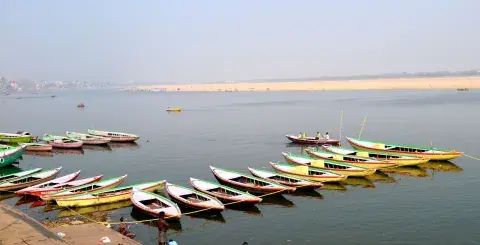
Varanasi; The Ghats, The Prayers And A Little More
One of the oldest living civilization, nestled on the banks of the Holy river the Ganges, where the confluence of the river Varana and Asi takes place....
One of the oldest living civilization, nestled on the banks of the Holy river the Ganges, where the confluence of the river Varana and Asi takes place. This is how the sacred place, well renowned for the salvation of the Hindus, attained its name, the name that it’s known by today; Varanasi. Apart from that, the place is well renowned with names such as Kashi, Benares, Avimukta, Anandavana, Rudravasa, and Mahashmahana.
“Benaras is older than history, older than tradition, older even than legend and looks twice as old as all of them put together” – Mark Twain.
So how old is Varanasi? Archaeologists believe that the first settlements in Varanasi happened in the 11th or 12th century BC. The recent excavations and findings even suggest that it maybe as old as 1800 BC. The mention of this place can be found in the Vedas, Puranas, the epic Mahabharata and Ramayana, along with much Buddhist as well ass Jain religious texts. There is a constant effort to find more about the history of the place, find some artefacts or remains to support their belief. An abode of the Hindu Lord Shiva, no foreign invasion could dismantle the strong Hindu faith in this region.
Travelling to Varanasi today takes you back in time. I do not know how the livelihood was back in those days but, when you walk past those narrow alleys embellished with age-old buildings, shops around every corner, the ringing of the bicycle bells and, the slow paced enormous bulls and cows walking along your side, it makes you realize, how well the city has retained its charm. The moment I stepped onto the old part of the town, I had a vivid imagination about what it would have looked like when there were lesser people, commercialization hadn’t crawled in, the holy river was much more vigorous and pristine. However, I’m not complaining. I love every bit of the chaos this city has to offer. Sometimes I think to myself, if I were to be born in some other nation, I wonder how I would have made it through as I strongly believe, I was born to embrace the chaos that India and its various cities have to offer. With utmost delight I would get lost in its narrow lanes, making it more constrict with my presence in the bustling crowd, where some are rushing towards the temple and ghats and at the same time, others are just as lost as I am.
When I first visited Varanasi, it was during the wedding season. Oh! What a sight to see. It isn’t every day you order your food in a cafe and while you wait for it to come, you see a bride and groom pass through the narrow alleys every 5-10 minutes, to get married in the ghat of the holy river Ganges.
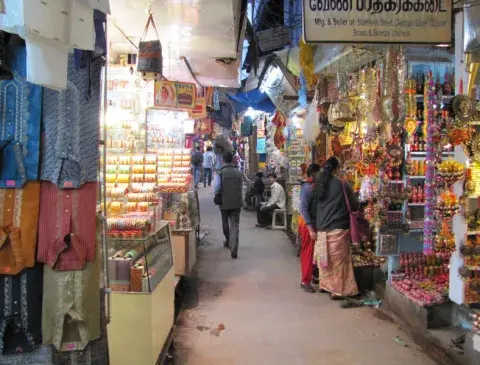
The Ghats. The ghats are basically the stairs that lead us to the river. Any pathways here leads you to the Ghats. You might get lost, only to find yourself on the banks of the river Ganges. And when you reach the Ghats, the sight that you may comprehend is like no other. Where is it that you often get to see from temples to the flower shops, fruit stalls to residential houses, from massage stalls to open air barber shops; everything in such great proximity to each other. One moment you hear the chanting of the Mantras and two steps further all you hear is the assorted voices of people trying to sell something or the other. Just walking past one ghat to another, meeting new people, seeing someone take a dip in the holy water with such devotion is extremely enthralling.
One of the highly recommended activity in Varanasi is the boat ride. Be it the morning or the evening boat ride, you get to appreciate the beauty of the city from a distance. The city is said to have 87 Ghats in a total of which Harishchandra Ghat and Manikarnika ghat are one among the very few important ones. As you pass through these ghats from a distance, its lot easier to picture the day to day life of a person living in Varanasi. You also get a glimpse of the cremation grounds. Once your boat ride is over, be a part of one of the biggest thanksgiving ceremony for the Hindus in the world. The ceremony is conducted every day, throughout the year.
Another important thing to do in Varanasi is a visit to the Ramnagar Fort. If you go there expecting one of the finest examples of the Mughal architecture, you might as well be disappointed because this fort is a lot smaller in comparison to the other forts you may come across. Now, it is more or less a museum with a collection of fine weaponry, vintage carriage, and other machinery as well as some attires, used by the then King and Queen. The only drawback to the museum is that it lacks maintenance hence it is not so popular among the visitors.And brace yourself. The traffic on the way to the fort is outrageous but I did enjoy the temporary bridges which you come across before you make it to the fort. If time permits, you may also visit Sarnath. 10-12 km away from the main city. Sarnath is the place where Lord Buddha gave his first sermon. It is one of the very famous places for Buddhist pilgrimage. Due to lack of time, I couldn’t make it to Sarnath but there’s always the next time.
If you would have noticed, I haven’t really discussed the cremation grounds in this article. I saved it for the last because it is one of the very critical sights to see. Varanasi has one of the largest Hindu cremation ground, which burns approximately 80 bodies a day. It is said that a Hindu who is cremated here earns salvation(moksha). When I first reached the cremation ground, all I felt was uneasy on being there at that point in time. The very thought of being a spectator to someone’s grief and not being able to comfort the family members in any way, rather just add up to their miseries by considering it as just another tourism spot; I couldn’t stand there a minute longer. I was severely displeased by the ignorant attitude of the people around. It is such an emotional moment for someone who has lost a family member, someone close to them, and all I could see was the spectators flashing their fancy phones and cameras and take a picture. No, it’s not illegal, it is not written anywhere but what about being ethically correct?
Do your moral values allow you to do so? How would you react if one of the close member of your family is getting cremated and there are some ignorant people taking pictures? No doubt your Snapchat, Facebook, and Instagram feed would look tremendously attractive with pictures so raw but the question is, how far would you go?
It was in 2013 during my trip to Thailand, I took a picture holding a tiger cub. I was beyond delighted to have taken that picture. I completely ignored the fact that those cubs are kept hungry all day long so they would concentrate more on the fiddling bottle rather than excoriating our face. Till date, I feel bad about being so ignorant and selfish that I couldn’t really see beyond the fake brave woman I was pretending to be.
I know, I cannot change a thing as eventually, people will do what they have to do. But how about capturing good moments because every time you look at that picture, it takes you back in time. And not all moments are meant to be captured.
BTW, when in Varanasi, do not miss out the “Blue Lassi” where they do the most
amazing lassis.
Top Uttar Pradesh Tours
$140 Per Day
Two Days Private Spiritual Tour of Varanasi - Sarnath with 3 Hotel Accommodations
Two Days Private Spiritual Tour of Varanasi - Sarnath with 3 Hotel Accommodations
Destinations: Varanasi - Sarnath
Duration: 2 Nights/03Days
...Read moreTwo Days Private Spiritual Tour of Varanasi - Sarnath with 3 Hotel Accommodations
Destinations: Varanasi - Sarnath
Duration: 2 Nights/03Days
Touted as the cultural capital of India, Varanasi is a picturesque city located on the western banks of Yamuna river. Its beauty and significance increases manifold by the fact that, it has carried the legacy of Indian tradition and culture for centuries and passed it on the following generations. The city oozes with spiritualism and philosophy and embraces a fine blend of religions like Hinduism, Buddhism and Jainism. Besides the Hindu temples, ashrams, ghats, Buddhist Stupas and Jain Temples, the pure mysticism of river Ganga adds to the spiritual aura wrapping this city.
Highlights.
• Explore the legacy of Indian tradition and culture for centuries and passed it on the following generations.
• Varanasi oozes with spiritualism and philosophy and embraces a fine blend of religions like Hinduism, Buddhism and Jainism
• Visit the place where Gautama Buddha after attaining spiritual enlightenment.
• Watch people taking holy dips in Ganges and executing the worshiping rituals on the ghats.
• Enjoy boat ride and pray ceremony of Gnaga.
Day 1
You'll be picked up from your specified place (Airport/Railway station/Hotel) and transferred to hotel. After check-in and taking some relaxation, you will be taken on drive to visit Sarnath, the “UNESCO World Heritage site”.
Sarnath:
Hailed as one of the holiest Buddhist places, Sarnath is a sacred place considered for attainment for enlightenment. It is the place where Gautama Buddha after attaining spiritual enlightenment, delivered his first sermons and claimed the place as an important pilgrimage site for his followers.
Here first you'll visit Chaukhandi Stupa, which is an elevated structure surrounded by octagonal tower. It's the gateway to Sarnath and is adorned by lush green lawns that embrace it from all sides. Then comes, Dhamek Stupa, a remarkable structure built of stone and brick. This cylindrical pillar is engraved with delicate floral carvings of Gupta origin. After this you'll visit Mulagandha Kuti Vihar, a temple speaking of modernity. This structure encases unrivaled frescoes by a Japnese painter and is a rich repository of Buddhist literature.
In the evening you will be taken to visit Sarnath Museum. This is an expansive museum that houses the finest specimens of Buddhist art and culture. It treasures an abundance of sculptures including Buddha and Bodhisattva images.
After touring around Sarnath, chauffeur will drive you back to hotel. and retire for the night.
Day 2
Early morning first you'll be taken on boat excursion on the holy river Ganges. During this trip you will get to see the bathing ghats and cremation site.
As you watch people taking holy dips in Ganges and executing the worshiping rituals on the ghats, you will feel overwhelmed with the oozing spirituality. It will lead you gain deeper insight into your existence in this universe.
After Ganges boat trip, you will be driven back to hotel. After savoring delectable breakfast, chauffeur will take you around Varanasi to visit what you didn't on previous day.
This day you will visit famous Temples, after temple visit Banaras Hindu University, , Bharat Kala bhavan and many other marvelous holy structures.
The beauty of these temples are characterized by their uniqueness and a distinct appeal. Albeit some of them are worn out and are mere ruins, you can easily see the diversity and an acute fineness in craftsmanship. These holy structures and relics make their onlookers turn inwards and gain deeper and higher discernment.
In the evening, you will get to witness the ritualistic rites held every evening on the banks of Ganges.
Thereafter, chauffeur will drive you back to hotel. and retire for the night.
Day 3
After enjoying delicious morning treat, you will proceed for check-out of hotel. Chauffeur will transfer to your specified destination. (Railway Station/Airport)
Package Cost (per person basis)
• Single sharing basis - $ 398
• Twin Sharing Basis - $ 211
• Triple Sharing Basis - $ 186
• PKG cost for 4 Person- $ 165
• PKG cost for 5 Person - $ 162
• PKG cost for 6 Person - $ 157
• PKG cost for 7 Person - $ 150
• PKG cost for 8 Person - $ 140
Package Tour includes
• Transfer and sightseeing by Private air condition Car.
• Two Nights Hotel accommodations in 3 Star hotels on Single/Twin/Triple sharing basis.
• Services of English speaking local tour guide for 2 days.
• Entry fees of all Temples and Sarnath..
• All taxes and service charge.
Package does not include
• Air or train fare
• Camera fee at monuments
• Expense arising out of unexpected circumstances like natural calamities, flight cancellation or delay
Payment & Cancellation Policy
• 30 days prior commencement of tour, No cancellation charges.
• 29-10 days prior commencement of tour, 25% of travel cost.
• 09-3 days prior commencement of tour, 50% of travel cost.
• Less than 03 days prior commencement of tour, No Refund.
$180 Per Day
From Delhi: Sunrise Taj Mahal & Agra Tour by Private Car
Sunrise Taj Mahal Tour from Delhi by Car
Witness the wonder of the world at dawn!
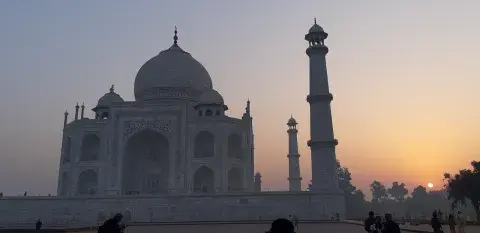
This tour package is specially made for those travelers, who are coming to India but have limited time due to business and other purposes and yet want to explore the monument of love ‘Taj Mahal’ at the time of sunrise before leaving India. Hardly 03 hrs drive from Delhi via Yamuna Expressway, one can experience the unmatched beauty of the monument. In this specialised tour, one can enjoy Agra Fort and the Mughal capital city of Agra apart from Taj within the time-limits. Enjoy your luxury trip from Delhi in a luxury AC private car and can reach back Delhi the same evening.
Full Tour Itinerary
01
Pick Up From Hotel / Aiport in Delhi NCR / Gurugram
Pick-Up Time: Flexible
Suggested Pick-Up Time: 02:00 AM - 03:00 AM
Our Chauffeur will come to your desired location to pick you up & then drive to Agra via Yamuna Expressway. Sit back comfortably & admire the beautiful countryside & enjoy your 03 hours/200kms ride to Agra in a Sedan/SUV AC private car.
02
On your arrival, meet your Tour Guide & Witness the Taj Mahal at First light.
On your arrival in Agra, you will meet the Tour Guide in hotel, where you can use the clean washroom, freshenup & then visit Taj Mahal with your Professional Tour Guide. It is believed to be the most beautiful example of expressing love by 5th Mughal Emperor Shah Jahan for his beloved wife Mumtaz Mahal.
Visiting Time: 01:30 – 03:00 Hours
Note: Taj Mahal remain closed on every friday for tourists.
03
After seeing the Taj Mahal, Proceed to the hotel, where you can have a big & delicious breakfast.
04
After having breakfast- Proceed to Agra Fort
Agra Fort is one of the most beautiful and well preserved forts of India. It was built in 16th & 17th centuries. The structure holds a brief history of not just the Emperor Shah Jahan but also his grandfather Emperor Akbar - The Great. In this fort you can witness the grandeur, pomp and opulent of the palaces in red sand stone and white marble. Shah Jahan had taken his last breath in this fort.
Visiting Time: 01:00 – 02:00 Hours
05
Visit to meet the direct descendants of workers who built the Taj Mahal.
06
Explore Etimad Ud Daulah
It is a beautiful mausoleum which was built in 17th century by Empress Nurjahan as a tribute to her father Mirza Ghyas Beg, who was the ‘Pillar of the State’ or the Chief Minister in Mughal Emperor Jahangir’s court. It is believed to be the first mausoleum of Mughals, which is entirely built out of white marble. The exquisite tomb of Mizra Ghiyas Beg should not be missed.
Visiting Time: 00:30 – 01:00 Hours
07
Visit to see the art of zardozi, heritage artwork use to done by Harem ladies at the time of Mughal emperor.
08
Drive Back to Delhi
After having a good time in Agra, witnessing the monument of love -The Taj Mahal, seeing the grandeur of the palaces of Agra Fort & tasting some delicious food of Agra, Our Chauffeur will drive you back towards Delhi by AC Sedan/SUV Car.
09
Departure at Airport / Drop to Hotel
After reaching Delhi, Chauffeur will drop you at your pre-booked Hotel or at Airport for onwards journey or flight back to your sweet home.
Exceptional Details
Duration - 12 hours.
Professional Tour Guide - Spanish, English, French, German, Italian, Russian.
Wheelchair Accessible.
Departure Location - From anywhere in Delhi / Gurugram and Noida as requested.
What's Included
Pick-Up and Drop-Off Service.
Private AC Sedan/SUV Car with Chauffeur.
Entrance Fees of Monuments.
Professional Tour Guide Service in your Language.
Mineral Water Bottles.
Wipes.
Breakfast at 5*hotel.
All Applicable taxes.
What's Excluded
Tips / Gratuities to Tour Guide & Chauffeur.
Any kind of drinks served with breakfast.
$25 Per Day
Taj mahal tour guide service
* On arrival to Agra city, Welcome by tour guide.
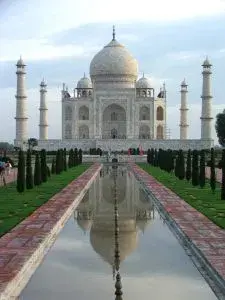
* Then visit to one of the wonder of the world 'TAJ MAHAL' also known as a simbol of love, built by fifth Mughal emperor Shahjahan in the memory of his beloved queen Mumtaj Mahal. It took 22 years to built by 20 thousand workers. Here you can explore Indo-Islamic architect.
* Visit marble inlaid demonstration.
* lunch in restaurant or hotel....Read more
* On arrival to Agra city, Welcome by tour guide.
* Then visit to one of the wonder of the world 'TAJ MAHAL' also known as a simbol of love, built by fifth Mughal emperor Shahjahan in the memory of his beloved queen Mumtaj Mahal. It took 22 years to built by 20 thousand workers. Here you can explore Indo-Islamic architect.
* Visit marble inlaid demonstration.
* lunch in restaurant or hotel.
* Then visit Agra fort built by the third Mughal emperor Akber also known as a 'Akber the Great'. The first Muslim ruler who married to Rajput princess Jhoda Bai. here you can see beautiful palaces, arches, walls, court and gardens
*after that back to hotel or onward journey.
*Tour End. *