The turtles are one of the rare species found in the world. As far as turtles concerned, they are the top on the endangered list all around the world. There are all together seven turtle species have listed up to now, such as green turtle, hawks bill turtle, Oliver twist turtle, leather back turtle, kemp's ridly, and flat back. But five of these are presenting in srilanka coastal area.
Now a days so many turtle hatcheries are mushrooming along the southern coastal belt. They are doing a great favor to increase the capacity of this giants descending from Jurassic period.
The turtles get together in certain areas of the ocean annually to mate. After mating the female turtles come to the sea shore to lay their eggs. They are supposed to lay eggs after they attain the age of about 30 years. They are said to lay their eggs on the sea shore at night. It is said that these turtles prefer to lay their eggs on the same beach they were born. They are supposed to lay about 120 eggs at a time.
Their eggs are white and they are similar to Ping-Pong balls. The eggs are kept damp by the female turtle by emitting a juice to cover the eggs. After laying eggs these turtles go back to the ocean. They keep no connection with the eggs or their new born kids. The eggs are hatched with the help of the warm sand heated by the rays of the sun.
After a hatching of nearly 60 days these tiny ones are making their own way right direct to the deep blue sea. This time they may get the dangerous attractions from birds, crabs and fish. Few of them will survive for breed their posterity. Humans are the main threaten for them. To avoid these circumstances social services have started to protect them in hatcheries.
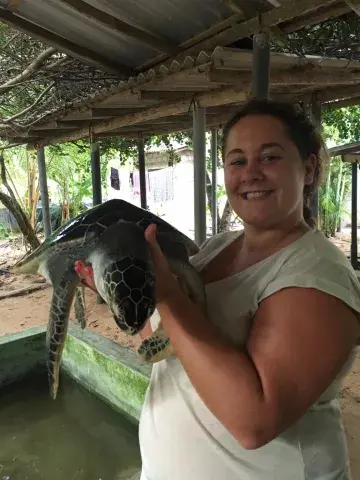
They buy eggs from villagers and they spend whole nights when the nesting season starts for turtles on the beach to find eggs. The baby turtles hatch after 48 days if they can get lots of sun shine where it is raining take up to 60 days before the turtles emerge from the eggs. They are then placed in the tanks and for first 3 days remain without food to cleanse them of material ingested form the eggshell.
Hatchery holders feed them with tiny fish two times each day. In this time they learning to dive down into the tank to take the food. After they can be safely released into the sea where they can fish for themselves on the coral reefs. Turtles are frequently injured at sea as many of them get caught in fishing nets. After three months of time they release them in to the sea.
Peraliya in Telwatta Hikkaduwa and Kosgoda area is famous for turtle hatcheries. All the five species are displaying in these places. They may charge a little amount for the maintenances of the turtles. Well, no need to think twice to look them on your necked eyes as really as in the deep blue sea.