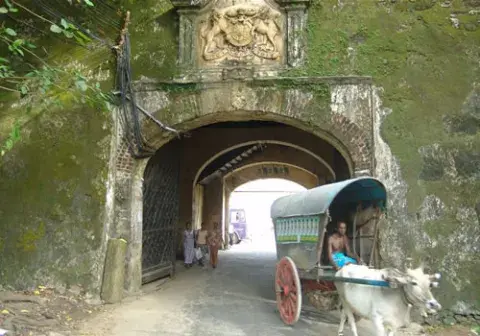
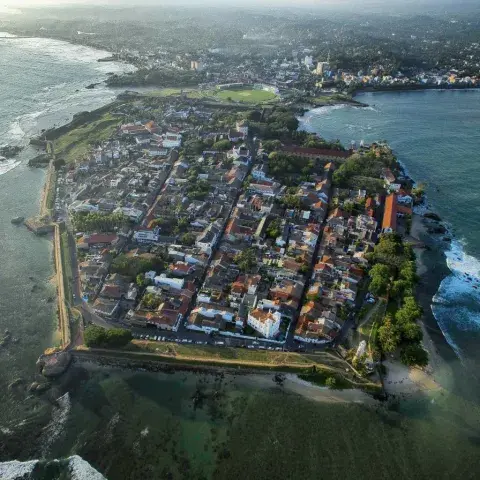
Galle / Unawatuna / Hikkaduwa
West of Galle before you hit the bustle and high jink of Hikkaduwa, are perfect, clean, un-peopled beaches between Narigama and Dodanduwa. Right in front of the Fort is Sea Bath. Jungle Beach, the most ruggedly natural, magical place, cannot be easily approached from land due to thick – you...
West of Galle before you hit the bustle and high jink of Hikkaduwa, are perfect, clean, un-peopled beaches between Narigama and Dodanduwa. Right in front of the Fort is Sea Bath. Jungle Beach, the most ruggedly natural, magical place, cannot be easily approached from land due to thick – you guessed it- jungle! But any friendly fisherman will deliver you there for a Robinson Crusoe experience. Unawatuna, the first bay after passing town is still one of the prettiest and great for diving, snorkelling, wave surfing, deep-sea fishing with a Goa-esque flavour; beach cafes and a disco along the strip with a Hindu kovil perching right on the point. Surf-friendly tuk-tuk drivers are invariably surf-bums who can take you with long-boards to surf-idyllic spots such as Midigama and offer valuable coaching to boot. Very useful in Sri Lanka where Life Guards don’t exist and big waves do.
Wijaya beach, 10 kms from Galle with a restaurant tumbling onto the sand is like going down to the pub on a Sunday because all the Brits gather here. A natural lagoon forms a safe paddling pool close to the sun-dozing Mums and there’s a natural Jacuzzi’s amongst the rocks; no locals, so relaxed atmosphere for shy single girls. Talpe is a whole kilometre of wide, undisturbed white sand with a reef, so parts are safe for swimming and others suitable for surf (in season) You can walk till the end of the rainbow and footprints on the sand are quite likely your own.

Nature & Wildlife Tour
Nature & Wildlife Tour
10 Nights 11 Days
Tour Itinerary
Day 01 – Wilpattu
Pick from meeting point & drive to Wilpattu check in to the hotel in Wilpattu.
Nature & Wildlife Tour
10 Nights 11 Days
Tour Itinerary
Day 01 – Wilpattu
Pick from meeting point & drive to Wilpattu check in to the hotel in Wilpattu.
Day 02 – Wilpattu / Anuradhapura
Do Morning safari in Wilpattu. Drive to Anuradhapura check in to the hotel.
Day 03 – Anuradhapura / Sigiriya
After breakfast visit to Anuradhapura sacred city drive to Sigiriya. On the way visit to Mihintale Check in to the Hotel in Sigiriya.
Day 04 –Sigiriya / Polonnaruwa
In the Morning visit to Sigiriya Lion rock do the hiking after drive to Polonnaruwa sacred city Check in to the Hotel.
Day 05 – Dambulla / Kandy
After breakfast visit to Kandy On the way visit to Cave Temple Dambulla/Spice garden Matale Hindu temple Check in to the Hotel in Kandy.
Day 06 – Kandy
After breakfast visit to Kandy botanical garden after visit to the Temple of Tooth Relic in Kandy Down town market and do the cultural drum show in Kandy Check in to the Hotel in Kandy.
Day 07 – Nuwara Eliya
After breakfast drive to Nuwara Eliya on the way visit to Tea plantation and Tea Factory in Nuwara Eliya in the evening visit to Gregory Lake park Check in to the Hotel.
Day 08 – Ella
After breakfast catch the train to Ella in the evening visit nine arach bridge little Adam perk Check in to the Hotel.
Day 09 – Thissamarama
After breakfast drive to Thissamarama on the way visit to Rawana water fall in the evening do the Yala safari.
Day 10 – Galle
After breakfast drive to Galle relax in beach.
Day 11 – Airport
After breakfast drive to Airport.
— TOUR ENDS —
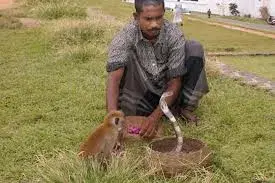
COBRA DANCE.
'Ahikuntaka' is one of little group of society in Srilanka.this group use a different way for living.their necessities are limited and walks town to town after every 7 days.what they do for living is very simple.ladies say palm readings.men have a cobra and monkey captured from the jungle.they...
'Ahikuntaka' is one of little group of society in Srilanka.this group use a different way for living.their necessities are limited and walks town to town after every 7 days.what they do for living is very simple.ladies say palm readings.men have a cobra and monkey captured from the jungle.they show these pets to people and try to make their pets dance.and they ask tips from people.