The clay forest in Yuanmou

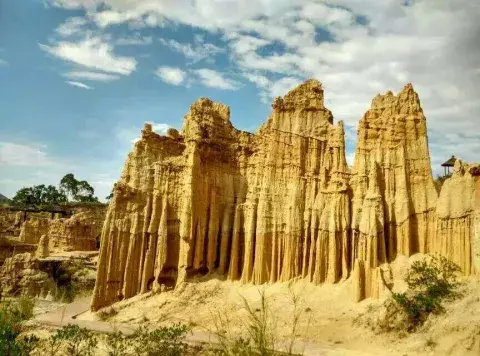
There are many earth forest in Yuanmou China but so far only 2 of them have been developed for tourism. Wumao Tulin is located in Wumao village about 45 minutes from Yuanmou bus station and cost 7 yuan for the bus ticket. 

Like those natural land formations. It is sandy and clay like...

There are many earth forest in Yuanmou China but so far only 2 of them have been developed for tourism. Wumao Tulin is located in Wumao village about 45 minutes from Yuanmou bus station and cost 7 yuan for the bus ticket. 

Like those natural land formations. It is sandy and clay like. Area is huge and need at least 2-3 hours to admire the beautiful scenery. It is not so touristy as the Stone Forest. AAAA attraction, must see! Quite an easy walk with pavements and some steps. Not suitable for wheelchair. Must bring along water, sun hat, umbrella etc. Slap on more moisturizer and sun block, it's very dry.


The other earth forest called Langbapu Tulin or Xinhua Tulin which located in Langbapu village about 90 minutes from Yuanmou bus station. Only one bus go directly to Langbapu which departure on 14.20 everyday and will return to Yuanmou the next morning at 7.30. The bus fare is 12 Yuan. If you miss the direct bus, you still can take other bus going to Xin Hua and find other transportation for Langbapu but for sure it must be more costly.

These are the amazing places that you have to go. It is so amazing, fantastic and spectacular. For the entrance fee 80 yuan for Wumao Tulin and 70 Yuan for Langbapu Tulin or you might buy a direct ticket for both earth forest at 100 Yuan which save you 50 Yuan for the entire trip.

For accomodation in Wumao, there are few hostel around the scenic area and one hotel in the scenic area. I stayed at the Tulin Youth Hostel at 30 yuan per pax in the 3 beds dormitory. The location is just in front of the earth forest, the room is quite clean with free drinking water and air condition, but the bath room and toilet is extremely poor. The Tulin hotel is quite expensive at 180 yuan per night, you might choose the other hostel which cost you 60 yuan for single bed room.

In Langbapu, the Langbapu Tulin Hostel is located inside the scenic area. The room rate is 180 Yuan for a twin beds room. I highly recommend you stay in this hostel and you can have both sunset at the first evening and sunrise at the next morning. There are few home stay at the Langbapu village but you might have to walk about few hundred meters from the entrance of Lanbapu Tulin.

Best Time to go : November to May, and dont go at June - October because rainy days.

Transportasion : ( 1 ) Take the train K146 which departure from Kunming Station at 16.50 and arrive Yuanmou Station at 21.15. ( 2 ) Take a bus from Yuanmou bus station to the scenic area at the next day.
Faux Namti Bridge

At the turn of the 19th century, French Indochina was in the midst of an explosion of railway construction sponsored by its colonial government. A railway from Indochina reaching toward Yunnan was first conceived by Jean Marie de Lanessan, Governor-General of French Indochina from 1891 to 1894. D...

At the turn of the 19th century, French Indochina was in the midst of an explosion of railway construction sponsored by its colonial government. A railway from Indochina reaching toward Yunnan was first conceived by Jean Marie de Lanessan, Governor-General of French Indochina from 1891 to 1894. De Lanessan had been convinced of the necessity of building railways to connect the different parts of Indochina, and had identified, among others, a route connecting Hanoi and Lào Cai that should be built as a matter of priority.[7] His recommendations were seized upon by Paul Doumer, Governor-General from 1897 to 1902, who expected that the establishment of a railway line leading into resource-rich Yunnan would permit France to gain a foothold there and to gain privileged access to the Chinese market.[nb 1][8] His proposal to the French government, submitted soon after his appointment in 1897, included plans for a railway connecting Hai Phong to Kunming. This railway, approved in 1898, was the only railway line proposed by Doumer to be accepted in its entirety.[9]

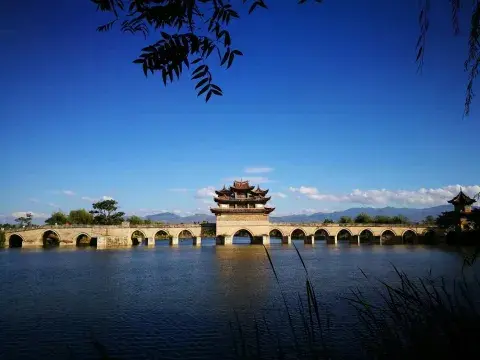
Construction of the first two legs of the railway began in Haiphong, Vietnam in 1900 and continued until 1906, when tracks finally reached Lào Cai, on the Chinese border. Construction of the Hekou–Kunming leg began in 1906 and continued until 1910. This section opened on April 1, 1910. The Faux-Namti bridge was constructed across the Sicha River, which lay in the path of the railway, from 1907 to 1908

The 3-course tea of Bai people(白族三道茶)

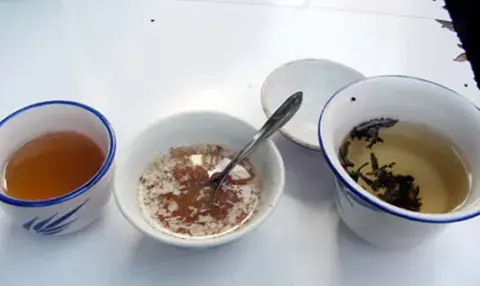
You should try the traditional 3-course tea when you travel to Xizhou old town,   The  "three- course tea" is a unique way of drinking tea while hosting guests .  It was originally from ancient NaZhao dynasty,  a tea ceremony when The emperor of Nanzhao meeting important ...

You should try the traditional 3-course tea when you travel to Xizhou old town,   The  "three- course tea" is a unique way of drinking tea while hosting guests .  It was originally from ancient NaZhao dynasty,  a tea ceremony when The emperor of Nanzhao meeting important guests . it was spread  to the people, preserved and continued till today. 

The characteristics of the three course tea is: first course- bitter , second tea-sweet, third course have nice after taste.

The first course tea refers to the bitter tea, means the life should bear hardships and stand hard  then can make a difference.  High quality green tea will be put into the sand tank and baked with fire first, waiting for the tea leaves baked into yellow color and produce nice fragrance, pouring boiling water into the pot, wait until the bubble disappeared,  when the tea color turns to amber color, the tea is ready and  pour it into the teapot.

The second course tea symbols life should be meaningful  after the first bitter then sweet ,  pouring hot water into the sand tank,  add white sugar, walnuts inside, boiled  for a while before drinking.

The third tea symbols the endless aftertaste when you are successful.  Mix the baked cheese, brown sugar, honey, sweet osmanthus and pepper  with the tea water. The tea taste sweet and slightly spicy, you will feel great after drinking!