


 Established in 1923, St. Paul’s Church is the first official Christian church in Nanjing. The church’s design is meant to imitate the style of European churches in rural areas. It is gothic architecture with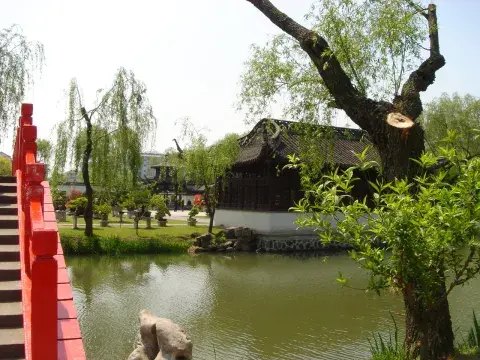
Slender West Lake
Slender West Lake is the premier attraction in Yangzhou. The park, lined with willow trees, picturesque pagodas, and loads of history has enough to keep a visitor busy for the entire day. During spring the park is an expansive wonderland of flowers and budding trees. There are few enclosed c...
Slender West Lake is the premier attraction in Yangzhou. The park, lined with willow trees, picturesque pagodas, and loads of history has enough to keep a visitor busy for the entire day. During spring the park is an expansive wonderland of flowers and budding trees. There are few enclosed city parks in China as impressive as this, making Slender West Lake a must visit.
Five Pavilion Bridge, the unofficial symbol of Yangzhou, is found here connecting the slender lake’s shores. The bridge was constructed nearly five hundred years ago. Always bustling with activity, the bridge offers excellent elevated views of the lake. It’s also a reliable place to catch a pleasant breeze to help visitors cool down a bit on a hot summer day.
Boat rides are also a fun way to explore the lake. They can be hired quite easily (around 10 yuan per person), or rented on your own for more freedom. Within the park there is a Buddhist nunnery and a large white, somewhat out of place, Tibetan Chorta. Countless side paths, bridges, pavilions, calligraphy halls, and the historic Gong He Chun Restaurant, specializing in dumplings, pot stickers, and noodles fill up the rest of the park grounds. Following the lake north leads all the way to Da Ming Temple and Guan Yin Monastery.
Just over the stone bridge from the park’s south gate is the Yangzhou Potted Plant (Bonsai) Garden, which is another beautiful place to wander. This park is on an island in Willow Lake and maintains hundreds of very old, and actually quite interesting potted plants. The ticket to Slender West Lake also includes admission to this park. The street opposite the entrance naturally has numerous souvenir stores and restaurants.


Combo Ticket: For 110 yuan you can get a combo ticket which includes the entrance fees to Slender West Lake, a small museum within the Slender West Lake scenic area, Ge Yuan and He Yuan. It also includes a twenty minute ferry ride down The Grand Canal. The ticket can be purchased at the south entrance (南门) but may not be available at other entrances.
Bus numbers 4, 5, 6, and 16 all go to Slender West Lake. Alternatively, you can take a pleasant walk northwest from the city center to reach the park. The park covers the entire NW part of Yangzhou. The south entrance is near the arched stone Hongqiao bridge.
Ming Tomb, Plum Blossom Hill and Purple Cloud Lake
Lying on the west side of the southern foot of Purple Mountain (Zijin Shan, 紫金山), the Ming Tomb Scenic Area contains the Ming Tomb as well as Purple Cloud Lake and Plum Blossom Hill.
Not...
Lying on the west side of the southern foot of Purple Mountain (Zijin Shan, 紫金山), the Ming Tomb Scenic Area contains the Ming Tomb as well as Purple Cloud Lake and Plum Blossom Hill.
Note: There are many different English translations of ’明孝陵’, including “Ming Xiaoling Mausoleum,” “Xiaoling Tomb of the Ming Dynasty,” “Ming Xiaoling,” “Xiaoling Tomb,” and “Ming Tomb.” We will call it the “Ming Tomb” to keep it simple, but keep in mind that you may come across the other translations.
Ming Tomb
Nanjing became the capital of China when Zhu Yuanzhang founded the Ming Dynasty in 1368. During his reign, Zhu Yuanzhang built the great city walls of Nanjing, the imperial palace, and his future tomb - the Ming Tomb in Nanjing. The Ming Tomb is a certified UNESCO World Heritage Site and is a must-see for travellers to Nanjing.

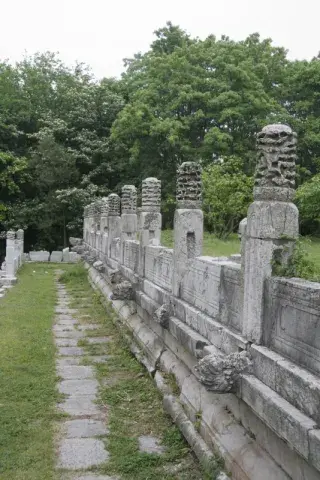
Leading up to the impressive Ming Tower is the long, winding “sacred path”. You will also pass other impressive structures including Square City (built in 1413), Imperial Tablet Hall (1699), and the Sacrificial Palace (1383). The first two legs of the path are lined with pairs of stone statues of lions, camels, elephants, unicorns, xiezhi, and kylin as well as four pairs of ministers and generals who have accompanied the buried majesty in perpetuity.
Zhu Yuanzhang and his wife are actually not buried in the tower (which is why it is called a tower and not a mausoleum). Instead they are buried behind it in the treasure mound – a forested hill that is surrounded by a 7 meter high, 1000 meter long circular wall of bricks.
Plum Blossom Hill
Plum Blossom Hill takes its name from the pink plum blossoms that blanket the hill when they are in bloom. To the south of Plum Blossom Hill across the sacred avenue are Plum Blossom Valley and a youth hostel.
Purple Cloud Lake
Purple Cloud Lake is an ideal spot to spend an afternoon relaxing outdoors. Not suprisingly, “No Swim” signs lining the edge of the lake are no deterrence to many locals that enjoy the waters. That being said, it should be known that many people have drowned in the lake’s deep waters.

How To Get There
The Ming Tomb area is quite easy to locate. It is a good starting place from which to move on towards the hiking trails further up the mountain and to other tourist attractions located along the south face of Purple Mountain.
Bus #20, 游1 (travel 1, you 1), 游2 and 游3 all stop at several locations bordering the Ming Tomb scenic area. The Square City bus stop is the best place to start a scenic walk up the sacred path towards the Ming Tower. The bus stations on the east of the scenic area are convenient for leaving the area or for reaching other sections of Purple Mountain.
Unknown to most, there is actually a way to get to Ming Tomb area from a path above. This path splits off from the hiking trail that connects the observatory with the mountain top. See the Purple Mountain article for more info.
On the final leg of the path up to the Ming Tower there is a shop that sells excellent detailed maps of the entire Ming Tomb area.
Purple Mountain

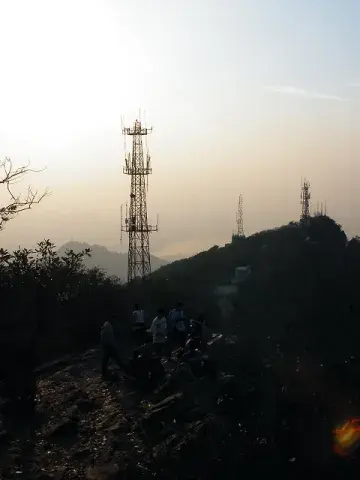
Purple Mountain is known as the “lung of Nanjing” and for good reason. This massive, forested park area situated within Nanjing boasts fresh and cool air compared to the muggy, polluted ...
Purple Mountain is known as the “lung of Nanjing” and for good reason. This massive, forested park area situated within Nanjing boasts fresh and cool air compared to the muggy, polluted city center.
There are loads of tourist attractions within Purple Mountain. Each of these destinations may be considered a go-to destination on its own. It is not possible to visit every last site on Purple Mountain in one day or even in a couple of days.
Most of the main tourist attractions are on the south side of the mountain. Hiking trails crisscross the mountain in every direction.
Hiking
The mountain contains a huge network of paths. There are several entrances and from each entrance, paths converge and criss-cross all the way to the top of the mountain. Neither English nor Chinese maps encompass the entire network of paths on Purple Mountain. Signs along the paths on Purple Mountain are difficult to decipher even for people fluent in Chinese.
Taiping Road Entrance and the Tramline
The most popular spot to begin a hike is close to the entrance of the tramline. This route starts at the westernmost point of the mountain area and is a relatively easy hike.
There are many buses that stop at White Horse Park (白马公园) on Taiping Road (太平路) and Longpan Road (龙蟠路). Buses that stop at White Horse Park include numbers 125, 44, 79, 48, 308 and 315.
From the White Horse Park bus stop a 15 minute walk up the road takes you to the tramline station and marks the official beginning of the trail. Buses 20 and Y3 (游3) travel right past White Horse Park on Taiping Lu (太平路) and up to the tramline entrance.
The Tramline
The tramline runs from 9:00am-4:30pm Monday to Friday and 8:30am-5:30pm Saturday and Sunday. The ride takes about 30 minutes to reach the mountain top and about 15 minutes to reach the observatory. Tram tickets cost 25 yuan per adult and 15 yuan for children under 1.3 meters tall.

The tramline in the late afternoon.
Hiking from the Tramline Entrance Area to The Observatory and Mountain Top
 Walking up the slowly ascending road to the observatory takes 45 minutes if you maintain a brisk pace and do not take any breaks. If you are not sure whether or not you want to hike all the way up the mountain, remember that you will have another opportunity to hop on the tramline from the observatory. If you want to continue hiking, follow the small, unkept path just to the left of the entrance to the observatory. This path leads to a 3-path intersection. Turn right and walk about 50 meters to get to the tramline. Keep going straight to head for the main peak of the mountain. From this point on, just keep heading upwards on the main path or on one of the several smaller trails. Hiking up the main path should take another 45 minutes without breaks. Another spot on the main path leads down towards the Ming Xiaoling Tomb.
Yingtuo Village Entrance

On the northwest side of Purple Mountain, the Yingtuo Village entrance leads to a steeper and more direct route to the peak. Thin stairways lead all the way to the top of the mountain. However, these stairs can become fairly busy when the weather is pleasant.
To find the Yingtuo Village entrance, follow Bancang Street (板仓街) to Yingtuo Cun, (Yingtuo Village, 樱驼村). The entrance is rather insignificant (see picture). If you don’t watch for the road you might think it’s just another alley.
There’s not much fanfare about
the Cherry Village Entrance.
the Cherry Village Entrance.

The trails are busy when the weather is nice.
Linggu Pagoda to The Mountain Peak
 A gently sloping cement and stone road leads all the way from the mountain peak to the Linggu Pagoda. It takes 1.5 hours to walk this route if you do not take breaks. Likely because there are no notable viewpoints along this route, it is very lightly travelled.
Mountaintop Park (山顶公园)
The park at the top contains a large Buddha statue and a small clearing. Tickets to this park cost 4 yuan. Tickets are free for children under 1 meter, adults over 70, and people with physical handicaps. Those seeking only the premiere, most worthwhile attractions can certainly skip this one.
Tips
For 120 yuan you can purchase a year card that allows you to access all of the attractions listed below except for Underwater World. This card is well worth the money even if you are only planning to visit these attractions once. The card can be purchased at the entrances to any of these areas, however you must bring a passport sized photo. If you do not have a photo you can pick up 8 photos for 20 yuan at a store near the ticket booth for Sun Yat-sen’s Mausoleum. You can also pick up photos at a booth which is in front of Underwater World and near one of the entrance gates to the Ming Xiaoling Scenic Area.
Water and other refreshments cost about twice as much on the mountain as they do nearer to the ground. For example, a bottle of water costs 2 yuan near the bottom but costs 3.5 yuan at the top.
Nanjing is almost always foggy and/or smoggy, but if you plan on staying in Nanjing for an extended period of time, try to wait for a clear day to hike up the mountain.
Tourist Attractions
Most tourist attractions are on the south side of the mountain. Most can be reached by bus and some require a short hike as well.
Ming Xiaoling (明孝陵)
Plum Blossom Hill (梅花山)
Purple Cloud Lake (紫霞湖)
Sun Yat-sen Museum (孙中山纪念馆)
Music Stage (音乐台)
Linggu Temple and Linggu Pagoda (灵谷寺和灵谷塔)
Beamless Hall (无梁殿)
Tomb of Tan, Yankai (谭延闿墓)
Meiling Villa (美龄宫)
Purple Mountain Observatory (紫金山天文台)
Underwater World (海底世界)