Hongshan Forest Zoo

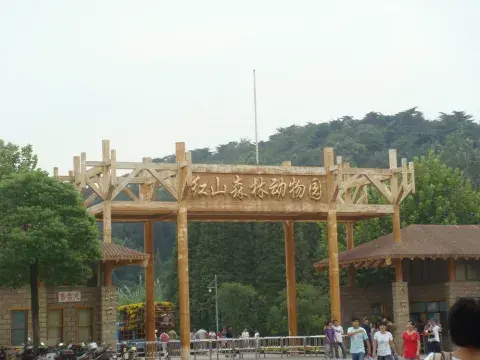
As expected, the Hongshan Forest Zoo’s are so poor that most Western visitors will likely choose to avoid this place.  While every last cage isn’t inhumanely small, some cages are so small that animals frantically pace back and forth.  The zoo is located on a large pl...
As expected, the Hongshan Forest Zoo’s are so poor that most Western visitors will likely choose to avoid this place.  While every last cage isn’t inhumanely small, some cages are so small that animals frantically pace back and forth.  The zoo is located on a large plot of land, so in theory it should be possible for the zoo administration to expand the living spaces of the animals.
 
Besides the subar animal living conditions, the signs are rarely in English.  Strangely, the only signs that are written in fluent English are written only in English and say “Do not feed or tease animals”. Perhaps these signs are an attempt to make English-speaking visitors think the zoo actually puts effort into restricting uneducated patrons from throwing fruit and bottles at or to the animals. The signs are actually the 2nd most entertaining part of this zoo. “Please cherish life” next to the tiger cage takes the cake.
 
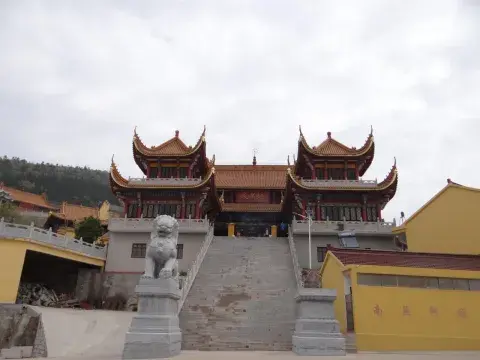
Hongshan Zoo Pagoda
 
 
Hongshan Zoo Pagoda
 
 
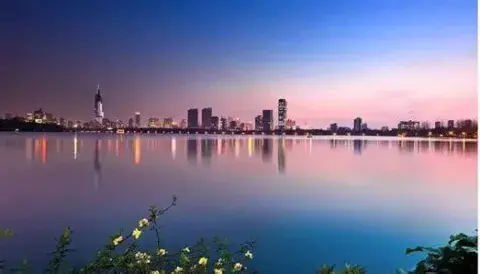
Views from Hongshan Pagoda                               
 
 
How to get there:
East Entrance – Located on Hongshan Road (红山路).  Buses No. 22, 24, 40, 66 and 74.
North Entrance – Located on Heyan Road (和燕路).  Subway or Buses No. 8, 30, 35, 54, 64, 72, 77 & 308.  The most popular way to get to the zoo is to take the Subway to the Hongshan Zoo Station.  After exiting the Subway station walk about one block southwest down Heyan Road.

Nanjing Museum


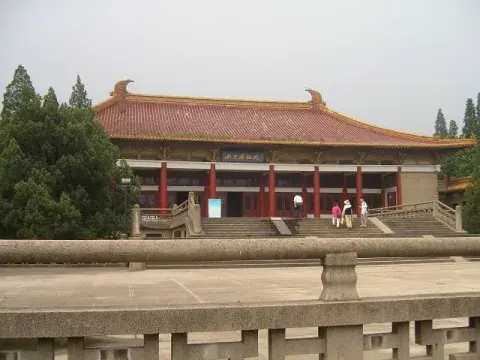
Located at the southern foot of Purple Mountain (Zijin Shan, 紫金山), Nanjing Museum is a highly-regarded, comprehensive collection of history and art. The museum was established in 1933 as the National Central Museu...


Located at the southern foot of Purple Mountain (Zijin Shan, 紫金山), Nanjing Museum is a highly-regarded, comprehensive collection of history and art. The museum was established in 1933 as the National Central Museum, on the suggestion of Mr. Cai, Yuanpei. Mr. Cai, Yuanpei was a famous scholar at that time, and was once the president of Peking University

The museum covers an area of 13 hectares and consists of two main buildings, one of which is for history, and the other for art.  The museum features exhibits displaying bronze ware, porcelain ware, jade, embroidery, pottery, lacquer ware, folklore, modern art, and calligraphy & painting.


The Nanjing Museum boasts a collection of more than 420,000 pieces, including 2,000 rare and valuable ones. The valuable calligraphy and painting works date back to the Song and Yuan dynasties.  The bronze wares represent both the Western Zhou dynasty period (11th century-711 BC) and Spring and Autumn Period (770-476 BC).  All of these are treasures are well worth study and appreciation.

Estimated Duration of a Trip: 5 hours for a thorough visit


Take bus 5, 9, or 27.
Be sure not to confuse Nanjing Museum with Nanjing City Museum which is in Chaotian Palace.