Foshan Shunde Qinghuiyuan Museum

Foshan Shunde Qinghuiyuan Museum, a national cultural relics protection unit, a national AAAA-level tourist attraction, and one of China's top ten famous gardens.
Ming Dynasty Wanli Dingwei (1607) champion Huang Shijun (1570-1661) in the first year of the reign of the Ming D...

Foshan Shunde Qinghuiyuan Museum, a national cultural relics protection unit, a national AAAA-level tourist attraction, and one of China's top ten famous gardens.
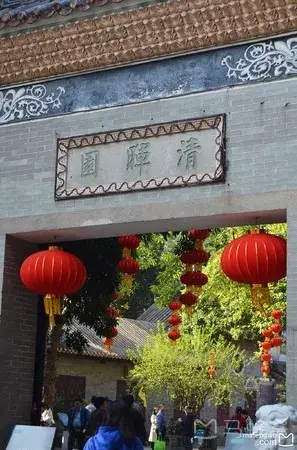
Ming Dynasty Wanli Dingwei (1607) champion Huang Shijun (1570-1661) in the first year of the reign of the Ming Dynasty (1621) to build the Huangjiatun, Tianzhangge and Lingya Pavilion. During the Qing Emperor Qianlong period (1711—1799), Daliang Jinshilong purchased the old site from time to time (1716-1800), repaired and expanded, planted flowers and grass, and gradually became a scale. In 1805, Long Tingyu (1749 - 1827) built Xiaofangyuan. In 1806, his son Longyuan was expanded, called "Qinghui Garden", please join the list of scholars, Jiangsu calligraphy master Li Zhaolu inscribed the garden name. Zilong Yuanzhang (1809-1884) built Longtaichang Garden and Chuyu Garden. After several twists and turns, Longtaichang Garden was renamed as “the vast garden”. Long’s descendants were refined over the years, and this ancient garden gradually became rich in Lingnan. Characteristics. After 1959, Tao Zhu, the then secretary of the Guangdong Provincial Party Committee, inspected Shunde, paid close attention to the repair of Qinghui Garden, instructed key protection, and allocated funds for repair, and merged Chufu Garden, Garden, Jiemei Hall and Jingqin Hall. It is collectively referred to as “Qinghui Garden” and later became the first guest house of Shunde County Committee. After the reform and opening up, it added restaurants, hotels and parking lots to provide comprehensive services for tourism, catering and accommodation. In the 1990s, the Shunde government allocated funds for repair and expansion. Qinghui Garden. At the end of the 20th century, the government expanded again and added many scenic spots. In the spring of 1984, Comrade Deng Xiaoping came to Qinghui Garden. In the spring of 1994, Comrade Deng Xiaoping paused in front of Qinghui Garden. It left a precious history for this ancient garden. .now Covers an area of ​​22,500 square meters and Qinghui Park Foshan Liang Yuan, Yu Yin Shan Fang, Panyu, Dongguan, Guangdong can park and said the four famous gardens of the Qing Dynasty.

Foshan Lecong Chenjia Temple Museum

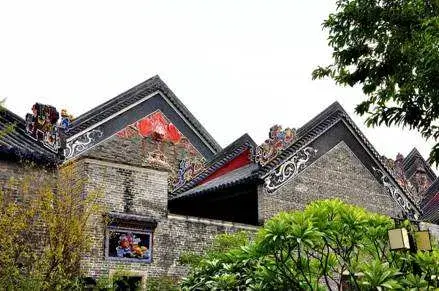
Lecong Chenjia Temple Museum was built in the 21st year of Qing Guangxu (1895) [2] and completed in twenty-six years (1900). It is rumored that the plaque was built by local Chen’s descendants, and the layout and form of the building resembled the Chen’s College in Guangzhou. It ...

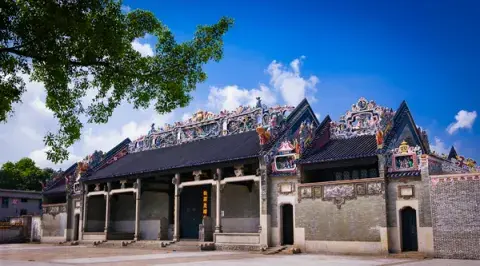
Lecong Chenjia Temple Museum was built in the 21st year of Qing Guangxu (1895) [2] and completed in twenty-six years (1900). It is rumored that the plaque was built by local Chen’s descendants, and the layout and form of the building resembled the Chen’s College in Guangzhou. It is a courtyard of the Sanjin Courtyard. It covers an area of ​​more than 4,000 square meters. The main building is a hard mountain top. The width and depth of each are three, and the beam and the bucket are mixed. In front of the middle seat is a large stone platform, surrounded by stone pillars and white boards, fine craftsmanship. The porch on both sides is separated by a wooden carved flying hood, each divided into three, flower and bird worms, hollow carvings, and long corridor screen doors. On the top, the heart is colored with colored glass, and the next is engraved with a skirt, and the Zhulan paintings are magnificent. The back wall of the middle seat is full of five-meter-high Pontianak wood carved large screen, exquisite carving, ancient and magnificent, the existing giant wood carving table, the head of the beast, the ancient dignified. The existing ridges of the middle and back seats are gray plastic, more than one meter high, and the group paintings are exquisite, the lines are rough and powerful, and the ancients are vivid. The wood carvings, stone carvings, pottery sculptures, brick carvings, gray plastics and other decorative techniques in the urn are incomplete, but they are also indispensable. [1]
It is said that all the wood branches of Chenjiatun, Pontianak, teak, rosewood, and Tokyo were donated by overseas Chinese Chen Tai who lived in Nanyang. In order to purchase good materials, he traveled to Thailand and other places, went deep into the forest, and personally selected. Finally, it was shipped to Hong Kong via Singapore and transported back to Satay.

Foshan Shunde Muboli Ancient Buildings

In Shaojiao South Village, Lecong Town, Shunde, in addition to the largest surviving ancient Chen Chen's ancestral temple in Shunde, there is also an ancient dwelling. This is called the Shepherd.
    The Muboli Ancient Buildings is a relatively complete residential ...

In Shaojiao South Village, Lecong Town, Shunde, in addition to the largest surviving ancient Chen Chen's ancestral temple in Shunde, there is also an ancient dwelling. This is called the Shepherd.
    The Muboli Ancient Buildings is a relatively complete residential complex with an area of ​​more than 20,000 square meters and is evenly separated by 17 flat and identical alleys. Divided into the front and back streets, the houses have different architectural styles, ranging from the older Chinese-style houses to the Western-style buildings in the early Republic of China. These houses are all blue brick exterior walls. Some houses are made of red sandstone. The doors and window sills are decorated with fine gray plastic or brick carvings. Some houses are covered with gables, dragon ridges, and some are Chinese-Western buildings. The houses are mostly two-storey with wood carvings, brick carvings, stained glass screens and ancient Roman columns. Most of the houses have three doors at the door, and some houses have a complete set of furniture. Most of the buildings are old buildings, and there are about 30 representative buildings, which basically have a history of more than 100 years. In front of Mubury, there is a stone monument convention, which prohibits the opening of a smoking hall, a gambling hall, the prohibition of imposing a house on a pawnshop or selling it to a foreign surname.

Foshan Shijilian Sports Center

Foshan Shijilian Sports Center is a sports stadium in Foshan City, Guangdong Province, China. It was built as an auxiliary facility for the 12th Guangdong Provincial Games and was also the landmark building of Foshan New Town. Its main role is to replace and supplement the stadium that was l...

Foshan Shijilian Sports Center is a sports stadium in Foshan City, Guangdong Province, China. It was built as an auxiliary facility for the 12th Guangdong Provincial Games and was also the landmark building of Foshan New Town. Its main role is to replace and supplement the stadium that was later demolished, Foshan New Square. The opening ceremony of the 12th Guangdong Games was also held here.

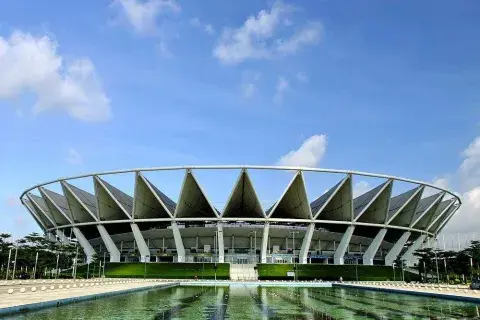
Foshan Shijilian Sports Centeris located in Foshan New Town, Foshan City, with a total area of ​​42 hectares, designed by the German GMP company. The northeast side is the Dongping Bridge, and the west side of the plot has become a real estate development jointly developed by China Merchants Real Estate and Wheelock. The total investment of the project is 939 million yuan, and the main facilities are stadiums and swimming and diving halls. The stadium is the main building of the sports center. The name of “Century Lotus” comes from this stadium resembling a lotus flower. The stadium has a construction area of ​​78,193 square meters and a height of 50 meters. The diameter of the roof is 310 meters.
Its roof is a membrane structure roof, the roof is ring-shaped, with an outer diameter of 310 meters and an inner diameter of 125 meters. The inner ring consists of 10 tension rings consisting of 8 cm diameter steel cables. The outer ring is a pressure ring, which is divided into upper and lower layers. The upper layer is 310 meters in diameter and consists of concrete-filled steel tube with a diameter of 1 meter. The lower layer is 275 meters in diameter and consists of concrete-filled steel tube with a diameter of 1.4 meters. The two layers of steel ring are separated by 20m. The concrete slanted columns are joined to form a rounded table shape.
There are 36,686 seats in the stadium. The venue includes a natural turf standard football field, a 400-meter runway, an athlete training ground and other field venues.

After the Guangdong Provincial Games, the stadium is mainly used for football matches. On October 21, 2007, Foshan Century Lotus Stadium held the first international football A-level event. The Chinese national team swept the Myanmar team 7-0 here and won the 2010 World Cup qualifier. In 2007 and 2008, Foshan Century Lotus Stadium was the home of Guangdong Sunzhiquan in the Chinese Football League. In addition, in 2010, due to the renovation of Guangzhou Yuexiushan Stadium, Guangzhou Evergrande team Guangzhou Evergrande also borrowed this venue. On July 21st, Foshan Century Lotus Stadium witnessed Guangzhou Evergrande's 10-0 victory over Nanjing's largest professional score in the Chinese professional league.
In addition, Foshan Century Lotus Stadium is also used for cultural events such as concerts. There was originally a football training ground next to the stadium, which was now converted into a golf training ground. The swimming and diving hall has a construction area of ​​31,052 square meters, a length of 220 meters, a width of 88.8 meters and a height of 22 meters. There are 2,800 seats in the audience. The building structure is a steel structure with a glass curtain wall and a cable membrane roof. There are 4 international standard swimming pools equipped with ozone water treatment technology to purify water. [1]
From August 2013 to December 2013, he was the home of Guangdong Rizhiquan Football Club. [1-2]

Foshan Shijilian Sports Centeris located in Foshan New City (in Foshan New Town, Foshan City). The planned transportation is developed, and many bus lines pass through. The south extension of Foshan Metro Line 1 under construction (the south extension of Foshan section of Guangfo Metro) Foshan Metro Line 3 and the planned Foshan Metro Line 6 are at the intersection of Dongping Station, and there are several subways in the construction and planning of the Pearl River Delta Intercity Rail Transit in the construction of the Century Century Station or Dongping Station. Convergence. The road traffic around Century Lotus is developed, and the main roads in the urban area (Zengui) are closely connected through the Dongping Bridge.
Foshan Library

The new library project of Foshan City was started in January 2010. The civil engineering was capped in January 2012 and the trial was opened on December 6, 2014. The new building is located in Foshan New City. The new building is designed by the British ARUP Engineering Consulti...

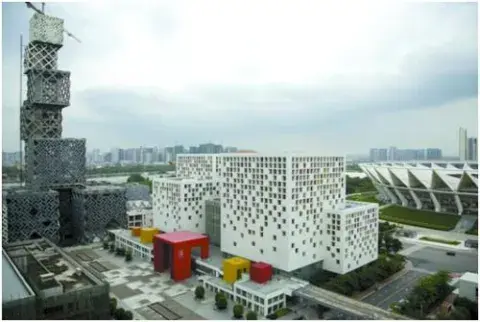
The new library project of Foshan City was started in January 2010. The civil engineering was capped in January 2012 and the trial was opened on December 6, 2014. The new building is located in Foshan New City. The new building is designed by the British ARUP Engineering Consulting Co., Ltd. Shenzhen Branch and the Danish HLA Consortium. The chief designer is Mr. Gao Hu, the chief designer of the Danish HLA architectural design company in Asia. His work focuses on refining the Foshan tradition. Cultural elements, focusing on the combination of international cultural trends and local culture. The building of the new library of Foshan Library overlooks a huge “goods”, representing the goals of the library: taste, character and quality; the exterior design of the new building uses Foshan paper-cut elements; the textual connotation is taken from the Song Dynasty poet Wengsen "Spring, Summer, Autumn, Winter" of "Four Time Reading Music", the poet regards all seasons as a good time to read, to promote the elegance and fun of reading, to encourage people to study hard, which has the service concept of the library. The same thing.

Foshan Wetland Park

The Foshan New Town Central Park project covers an area of ​​2.4 million square meters, including Foshan City Park and Waterfront Park. It is a large public urban park system invested by the Chinese government.
Foshan Park combines urban planning and landscape design, includ...

The Foshan New Town Central Park project covers an area of ​​2.4 million square meters, including Foshan City Park and Waterfront Park. It is a large public urban park system invested by the Chinese government.
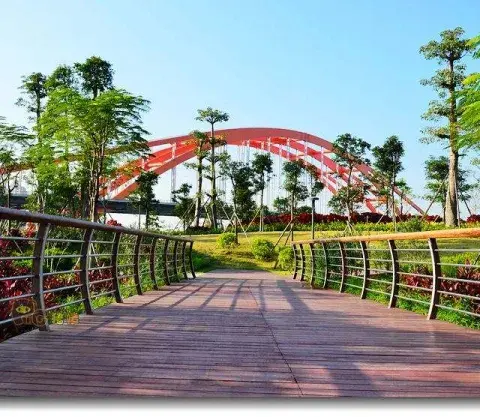
Foshan Park combines urban planning and landscape design, including a hood that can accommodate 20,000 people, leisure facilities along with a sports and swimming center, a walk through the garden, a botanical garden and a large exhibition building.
The first phase included a range of approximately 1.5 million square meters, which shrunk everything outside the Australian Homebush Olympic Center. After its completion, it will be put into use at the Guangdong Games held in Foshan in October 2006.
The design uses land as a “green machine” that collects, processes and reuses a large amount of park water and collects water from surrounding streets and commercial buildings. A series of energy-creating systems will run through the park's waters, using solar lighting and the winds of the Dongping River to study electric cars and bicycles for use inside the park.
The project is presided over by the Foshan Municipal Government. The important steps are to extend the park and extend the south side of the city to the Dongping River. The extension of the green infrastructure will guide the extension of the city.

Foshan CCTV Nanhai Movie And TV Town

The CCTV Nanhai Movie and TV Town has two functions to shoot film and television and develop cultural tourism. Since 1997, 300-odd film and television works such as “the Taiping Heavenly Kingdom”, “the Stories in Hongkong”, “the Stories in Macao”, “Juvenile Bao the ...

The CCTV Nanhai Movie and TV Town has two functions to shoot film and television and develop cultural tourism. Since 1997, 300-odd film and television works such as “the Taiping Heavenly Kingdom”, “the Stories in Hongkong”, “the Stories in Macao”, “Juvenile Bao the Clear Sky” have been taken herein. Many large activities like “Among Cities” taken by the sports channel of CCTV, “Lions Celebrate Prosperity with Joyous Songs” at 99’ Lantern Festival Party held by CCTV, “Identical Songs—Going into Nanhai” taken by the literary art and theatrical channel of CCTV and “Song Zuying and Stars Singing Party” have been held here. Since starting business on Dec.26th 1998, it has received a great number of tourists both at home and abroad. The construction of the scenery area has extruded the features of tourism with films and televisions, everyday there are many wonderful programs such as “Three Heroes Battle Lu Bu”, “A Battle on Jinggang Water”, “Synthetical Arts Program” devoted to the tourists; and large amounts of tourists are involved in joining the projects and facilities. The shootings of large quantities of films and television plays and the presences of film and television stars ofChinaand foreign countries offer good fortune of seeing for the tourists who experience a unique charming of the film and television tour.

The Nanhai Movie and TV Town situated in the tour vacationing area of “Nanguo Peach Park” Nanhai Foshan Guangdong, 12KM away to Guangzhou and Foshan, very convenient in traffics.

The CCTV Nanhai Movie and TV Town welcomes you!

Foshan Liangyuan Museum

Liangyuan is the general name of Foshan Liangshi Homestead and one of the four famous gardens in Guangdong. It is mainly composed of several groups in different locations such as “12 Shishizhai”, “Qingxing Caotang”, “Yujiang Caolu” and “Chanxiang Pavilion”. The main body is locat...

Liangyuan is the general name of Foshan Liangshi Homestead and one of the four famous gardens in Guangdong. It is mainly composed of several groups in different locations such as “12 Shishizhai”, “Qingxing Caotang”, “Yujiang Caolu” and “Chanxiang Pavilion”. The main body is located in the pioneer road of Songfeng Road. Liang Yuan was built by local poetry masters Liang Shuru, Liang Jiuzhang and Liang Jiutu, and was built in the Qing Dynasty and the Daoguang Period (1796-1850). It lasted for more than 40 years.
Liangyuan is one of the typical representatives of the Lingnan literati gardens in the Qing Dynasty. The residences, ancestral halls and gardens are integrated, and the Lingnan-style “gardens” space changes. The landscape of the gardens is unconventional, and the pursuit of elegance is natural and the trees are shaded. Rich in the characteristics of Lingnan Water Village. From the time of the early Republic of China, Liang Yuan was stunned. In 1982, the Foshan Municipal Party Committee and the Municipal Government carried out rescue and protection of the existing group of villas and grasslands. In 1990, they were designated as provincial key cultural relics protection units.

Liangyuan and Shunde Qinghui Garden, Panyu Yuyin Mountain House and Dongguan Keyuan are also known as the four famous gardens of the Qing Dynasty. They are also the masterpieces of Lingnan Garden. The pavilions and pavilions in the park, the stone mountain trails, the small bridges, the exotic flowers and plants are ingeniously laid out, showing the Lingnan architectural features. Liang Yuansu is known as the Lingnan Lake, and the buildings in the park are exquisite and elegant. The trees are shaded and decorated with stone ornaments of different shapes. In addition, Liang Yuan also cherishes the literary stickers of the dynasties. Xiushui, Kistler, and famous stickers are called "three treasures" of Liangyuan.