Foshan Shunde Baolin Temple inherits the legal system, which belongs to Linjizong, the birth of Baolin Temple, which laid the position of Baolin Temple in the history of Lingnan Buddhism.
The original Shunde Baolin Temple is located in the south of Fengshan Mountain in the south gate of Daliang Town, Shunde. The mountain is like a phoenix. The trees are lush and green, and it is surrounded by mountains and waters. The scenery is quiet. Baolin Temple is famous for its collection of Buddhist temples and cultural relics. It is a cultural treasure with rich historical and cultural connotations.
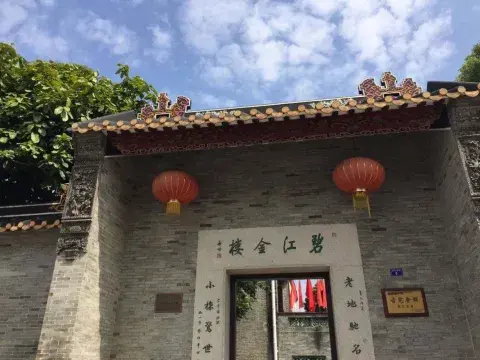
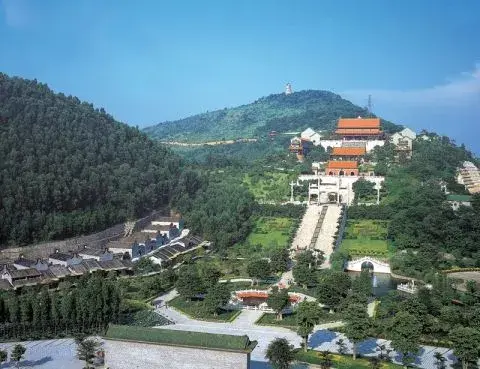
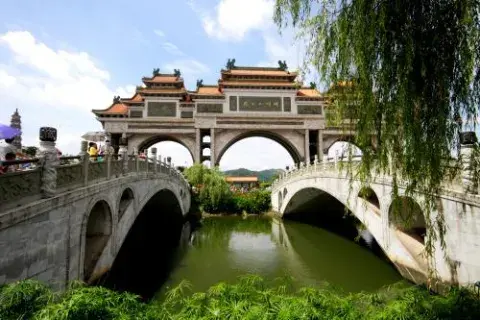
Baolin Temple
Religion is a social phenomenon and an inevitable outcome of the development of human society. After being introduced to China from the Han Dynasty, Buddhism merged with China's national culture to make it more colorful. After the two Jin, the Southern and Northern Dynasties, and the Sui and Tang Dynasties, the Zen Buddhism was carried forward and influenced the development of Buddhist culture in the later generations.
The Pearl River Delta, a long history, a vast expanse of the sea, from the south of the Central Plains culture, Buddhist culture also followed by the south, as a religious belief, Buddhist culture is also believed by the masses. In the Sui and Tang Dynasties, Buddhism entered its heyday, and the Lingnan area was also widely spread. Under the support of the feudal dynasty, the monks established temples in the beautiful mountains.
The five ancestors of the Southern ancestors of Hui Neng, namely, Yang Yang, Yun Men, and Fa Yan, were lost after the Song Dynasty. Only Linji and Caodong coexisted. Linji Zong advocated “seeing Zen”, that is, the Zen of the Word; Cao Dongzong advocated "silent meditation", that is, the meditation of silence.
As the saying goes: "There is no Shunde, there is Baolin first". More than a thousand years ago, the ancient Taitai village, the land control is very smoke, the danger is even steep, the Taihao Gorge passes through the mountain, the Liubo port sails, the port side Huiqiao, leaving a slim shadow to the blurred water. In the Five Dynasties of the Southern Han Dynasty Emperor Guangtian (AD 942), Buddhism has spread widely in the Pearl River Delta region. In the past, there were monks who built simple houses here. The first name was: "Liu Bozhen", which was built first. Guanyin Temple, the Guanyin statue in the temple is said to be the precious plastic products of the Tang Dynasty. At the time of the Southern Song Dynasty, the buildings in the temple were defeated and declined. During the reign of Ningzong, the temple was rebuilt. At the end of the Song Dynasty, the Zen dynasty swept the world, the monk of the Ming Dynasty, the deputy monk of Jiangxi, and the cloud tour. See Liubo’s back mountain and water, the ancient wood and the sparse, and the springs and clears, that is, led the disciples, stayed here, and Purchased land production, cultivation and submersible, and gradually expanded. The Taihao Gorge where Liu Bozhen is located, the mountains around the water, facing the south, forming a treasure of Feng Shui, Deqin presided over, creating a river of law, going to the altar, and gradually increasing the number of people who came to listen to the scriptures. He widely spread the essence of Zen and guide believers. Realize Buddhism and carry forward Buddhism. One day, Deqin got up early to burn incense, bathing and changing clothes. On the eve of the evening, his disciple, Tan Jia Meng Deqin, asked for the raft, and invaded the morning, it was already silent. The disciple and Tan Jia put his widow's varnish on his body and put it into the shackles, enshrined in the Guanyin Temple, and the book language: "There is no way to go from the Northern Song Dynasty, the law is not old and so on." At the beginning of the founding of New China, it was a pity that the body was destroyed when the Baolin Temple was demolished.
After a long period of adjustment, the Zen Buddhism of the two generations of the Song and Yuan Dynasties laid a more solid humanistic foundation for the revival of the Ming and Qing dynasties. At the end of the Ming Dynasty, due to the stagnation of the times and the heavy taxation, Liu Bozhen was really difficult to maintain. Therefore, he was forced to pawn and sell the original industry, gradually spreading the gangsters and ruining them once.
During the Wanli Period of the Ming Dynasty, the Shunde Longshan Township was separated by Ke, and the No. 1 was in the dorm, and was introduced to the Nanhua Temple in Shaoguan (named Baolin Temple in the early Jin Dynasty). Dharma. Ming Chongzhen has made great contributions to the creation of Qingyun Temple in Zhaoqing for eight years.
In the early years of Emperor Kangxi of Qing Dynasty, Zhaoqing Qingyun Temple was stunned by Yuan Liang, the word Hao Ze, the road was beautiful, the Fengshan Mountain was like a phoenix, and the mouth of Liu Bozhen was like a phoenix, and the mouth spit lotus, could not help but heart; see this Fengshan Shengjing, he It is believed that this is a Buddhist resort, and it is predicted that the Zen Buddhism will be carried forward here in the future. In order to promote the revival of Shunde Buddhism, it is necessary to carry forward the long-term residence for the promotion of the Zen Buddhism. Yuan Liang won the respect of the county people. He raised funds to donate, redeem the farmland, expand the ancestral hall, and restore the temple industry. At that time, seven towering ancient trees were planted in the urn, and the garden was like the mountain of Xitian Baolin. Yuan Liang took the meaning of “the pure land of seven treasure trees” (the seven treasures mentioned by Amitabha are: gold, silver, glaze, coral, amber, canal, Agate), so Liu Bozhen will be renamed as "Baolin Temple". After that, he planted trees here, making the appearance of Baolin Temple gradually change. Yuan Liang spared no effort in promoting the Zen Buddhism, which made the Baolin Temple more prominent.
In the 16th year of Emperor Kangxi, the county magistrate Yingtai (Liaoning Jinzhou, 15 years) donated money to redeem two hundred acres of Harada, and charged the rent to support the monks.
Baolin Temple
Baolin Temple (15 photos)
There is a color in the beginning. At this time, Baolin Temple has been expanded and renovated, and its architecture has been quite large. It has a total of four courts and five entrances, including the head of the mountain gate, the Tianwang Hall, the Daxiong Hall, the Zen Hall, the Abbot Hall, the Galan Hall, the Zutang Hall, the Guest Hall, and the Flesh Church. There are more than ten mortuaries, warehouses and shacks. The Heavenly King Hall is for Maitreya, Wei Wei, the Four Heavenly Kings, Guandi, etc. The Daxiong Hall is dedicated to the Three Sides of the Buddha, the Eighteen Arhats, the Sixth Anniversary Hui Neng and the Tibetan Bodhisattva. The guest hall is mainly dedicated to the thousand-handed Guanyin Bodhisattva. At that time, there were 30 gangsters, and 1916 Tibetan gammas, divided into 8416 volumes and 414 volumes. In addition, Baolin monks attach importance to tree planting and greening, protect the environment, plant a few linden trees, and shade as a cover, becoming the feng shui tree in the jungle.
Baolin Temple became the first place in the locality. People regard it as a resort. Every time the national ceremony or the imperial court order is opened, the local governor still gathers the temple to raise the ceremony. Later, the county magistrate added a Wanshou Palace in the temple for the civil and military officials to pay tribute to the emperor, to the birthday and to listen to the "Holy".
As a Buddhist place, Baolin Temple has been in the Qing Dynasty, and the incense is flourishing. The scale of the temple is gradually expanding and the temple is majestic. The linden trees planted in the temple are leafy and leafy; there are also eucalyptus trees that are vigorous and dragon-like, hidden in the shade of greenery, thus attracting many tourists. Every Buddha's birthday, Guanyin's birthday and the first and the fifteenth of each month, nearby believers, pilgrims and merchants Jialai Temple worshippers are in constant stream. People say that the body of Baolin Temple Deqin is the most effective. "Going for the flesh" has become a popular language at that time. This is the most prosperous period of Baolin Temple. "The bitter sea is boundless, the back is the shore; the Zen is the road, the first step is the first" is the couplet of the mountain gate in the late Qing Dynasty and the early Republic of China.
During the Republic of China, due to successive years of war, many temples were destroyed by fire, and folk Buddhist beliefs were in a state of self-destruction. However, because Buddhist teachings were deeply rooted in the hearts of the people, mass beliefs and ethnic customs and habits combined to form secularized religions. Non-Buddhists are also happy to support Buddhist activities. During the Anti-Japanese War, the Baolin Temple was presided over by the Zen Master of the Dinghu Lake in Zhaoqing (commonly known as the Master of Iron Tie). It was a kind-hearted person, and he was well-known for his good health. He also used the evil power of the place. After the fall of Shunde, Baolin Temple was stationed in the Japanese devil and became the camp of the sundial. At the same time, the underground workers of our party also entered the Baolin Temple, the Communist Party member Peide monk, went deep into the tiger's den and collected the information of the devils. Baolin Temple became the contact point of the second detachment of Guangyou, and the shovel did not avoid the difficulties and injured. The guerrillas entered the Baolin Temple and concealed it, making a certain contribution to the war against Japan.
In the late 1940s, the Secretary of the National Government and the provincial government member Yan Xuelu returned to the Buddhism and practiced Buddhism. There is another monk in Baolin Temple. He practiced medicine and served the eye disease. The people in the four towns sought it very much. His medical ethics and medicine were deeply loved by the world.
In the early days of the founding of the People's Republic (1950 - 1952), Baolin Temple was taken over by the local government. Some of the buildings were designated as the resident of the People's Liberation Army in Shunde. The company's company commander Zhu Jixiang had a good relationship with the shovel. The people's soldiers and the monks in the temple lived in harmony. , played a certain role for local stability. At this time, there are still more than a dozen people in the Baolin Temple, serving Buddha cigarettes. The Buddha statues in the temple are still worshipped by Buddhist believers. On the 15th day of the lunar calendar in 1951, the shovel got up early and died, and was unfortunately killed and killed.
In 1952, the troops withdrew from the station, and the government arranged the right-hand building of the temple to be the first small school site of Daliang Town. After 1955, after the "superstition" movement was broken, the Buddha statues and instruments in the temple disappeared. The temple was changed to "Shunde County Cultural Center" and later expanded into a cultural park. By the 1990s, the land around the original Baolin Temple was so devastating that the original site was difficult to repair. After receiving the opinions of overseas good faith from the Religious Section of the United Front Work Department of the Municipal Party Committee, it was reported to the Guangdong Provincial Bureau of Religious Affairs and approved. The city's relevant personnel formed a fundraising committee to raise funds for reconstruction, and the reconstruction site was located in Taipingshan, the southern suburb of Dalian. The ancient temple of the millennium has experienced new disasters.