
Shanghai Deep Water Port
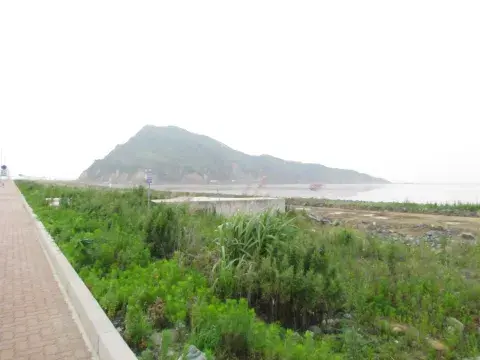
Shanghai Deep Water Port is located in China East Sea, there is a group of island called Chengsi islands. There is a bridge of 32.5 kilomteres from South of Shanghai to the Deep Water port. Driving along the bridge is breathtaking, 99.9% of the vehicles are trucks carr...
Shanghai Deep Water Port is located in China East Sea, there is a group of island called Chengsi islands. There is a bridge of 32.5 kilomteres from South of Shanghai to the Deep Water port. Driving along the bridge is breathtaking, 99.9% of the vehicles are trucks carrying containers.
Driving from People Square to Deep Water port is about one and half hour driving, 60 kilomters.

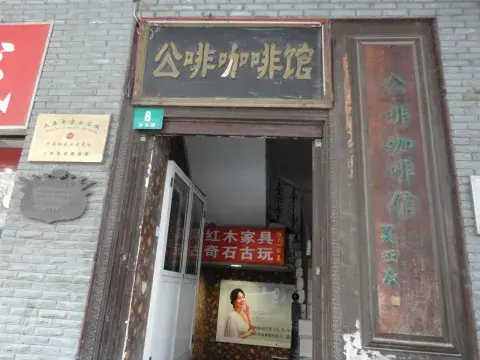
Gongfei Café
The house used to be a gathering place for left-wing Writers and the preliminary sessions of the Left-wing Writers' Society were held there. That is why Lu Xun referred t o it as ''the revolutionaries' café'' in his essays. The café was reopened in 2000, with all its old books resto...
The house used to be a gathering place for left-wing Writers and the preliminary sessions of the Left-wing Writers' Society were held there. That is why Lu Xun referred t o it as ''the revolutionaries' café'' in his essays. The café was reopened in 2000, with all its old books restored .Revolutionary or not, the place is well worth a visit!

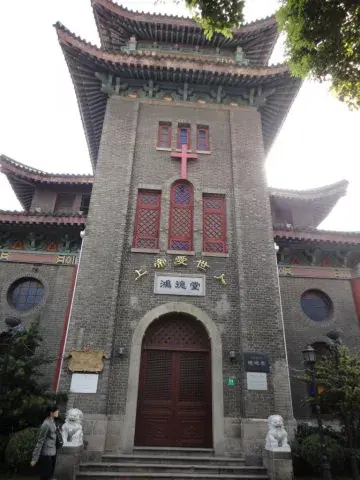
Hongdetang Church
Hongdetang Church was established in honor of an American missionary George F. Fitch in 1928. The Chinese Presbyterian Church and the North America Presbyterian Church shared the construction costs. This Protestant church actually looks like a traditional Chinese temple because of its tilting eav...
Hongdetang Church was established in honor of an American missionary George F. Fitch in 1928. The Chinese Presbyterian Church and the North America Presbyterian Church shared the construction costs. This Protestant church actually looks like a traditional Chinese temple because of its tilting eaves and wind corridors.
Take Metro Line 3 to Hongkou Football Statium Station.

Shanghai Oriental Art Center
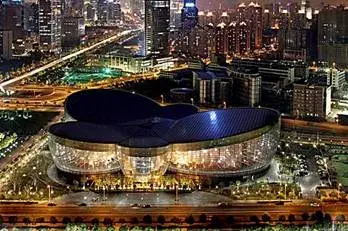
Designed by famous French architect Paul Andreu, this 40,000-square-meter lotus-shaped building is one of the most well-known art and performance centers in Shanghai. It hosts opera, concerts, performances as well as art education lectures.
Science and Technology Museum Station of Metro Li...
Designed by famous French architect Paul Andreu, this 40,000-square-meter lotus-shaped building is one of the most well-known art and performance centers in Shanghai. It hosts opera, concerts, performances as well as art education lectures.
Science and Technology Museum Station of Metro Line 2

Shanghai International Convention Center
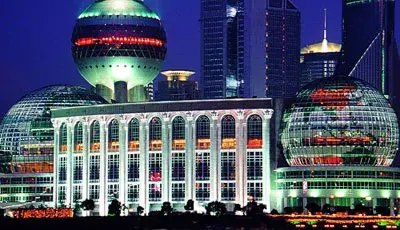
Shanghai International Convention Center is located at the foot of the Oriental Pearl TV Tower when being viewed from the Bund. Both architectures constitute a nice picture that best illustrates a line of a famous Chinese poem, e.g. "Pearls, big and small, fall onto the jade plate".
...
Shanghai International Convention Center is located at the foot of the Oriental Pearl TV Tower when being viewed from the Bund. Both architectures constitute a nice picture that best illustrates a line of a famous Chinese poem, e.g. "Pearls, big and small, fall onto the jade plate".
It is one of the most important venues for international meetings and conventions. It was completed in 1999 as part of the effort Shanghai made to be a convention center in the world.
As the most eye-catching components of the building, the two spheres on the top of both ends are covered with colored glass. On the smaller one on the west you could find a pattern of China's territory with a red star for Beijing and a striking dot for Shanghai. The larger one shows two hemispheres of the globe. The rectangular structure between the two spheres is like a bridge, which implies that this center is a link between China and the outside world.
Lujiazui Station of Metro Line 1

The Basilica Minor of St. Mary at Sheshan
It is located at the peak of the picturesque Sheshan, Songjiang District. The church is one of the most famous catholic pilgrimage sites in China. Built in 1935, the basilica now is listed as one of the Cultural Relic Units under the Municipal Protection and Excellent Historical Buildings in...
It is located at the peak of the picturesque Sheshan, Songjiang District. The church is one of the most famous catholic pilgrimage sites in China. Built in 1935, the basilica now is listed as one of the Cultural Relic Units under the Municipal Protection and Excellent Historical Buildings in Shanghai.
Line B of Travel Bus No.1
Ohel Rachel Synangogue
Jewish communities have existed in China for over 13 centuries, but today architectural traces are hard to find. Ohel Rachel Synagogue was built in 1917 by the affluent Iraqi Jewish population of Shanghai. Though it still stands, Ohel Rachel has not escaped recent deca...
Jewish communities have existed in China for over 13 centuries, but today architectural traces are hard to find. Ohel Rachel Synagogue was built in 1917 by the affluent Iraqi Jewish population of Shanghai. Though it still stands, Ohel Rachel has not escaped recent decades without damage. Of the many associated structures that used to surround the synagogue, including a library and mikvah, only the school building has survived.
Shanghai’s Jewish community worshipped in Ohel Rachel Synagogue until 1952 when Chinese authorities seized the property and stripped the interior of furnishings and decoration. The windows and chandeliers were shattered during the Cultural Revolution. In 1993, Shanghai declared Ohel Rachel a historic landmark but the building functioned as offices and storage for the Communist Party Youth League for another five years. The synagogue was finally cleaned and painted in preparation for a visit from then First Lady Hillary Rodham Clinton, but no structural repairs were made.
In the 1930s and 1940s, Ohel Rachel Synagogue was a refuge for Jews who flocked to China in order to escape persecution in Europe. Shanghai welcomed an astonishing 17,000 Jewish immigrants during that time because of its open-door immigration policy.
Museum of Lu Xun
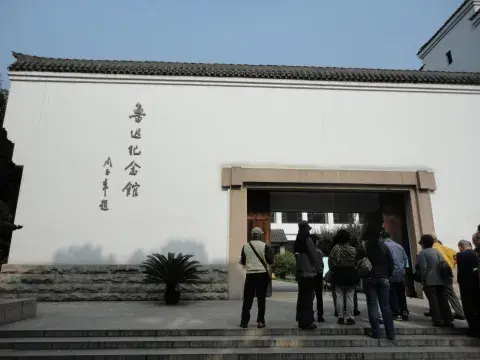
The Museum of Lu Xun ,founded after the tomb of Lu Xun was relocated to the park in 1956, boasts a huge collection of cultural relics, including Lu's manuscripts and photos, his personal items, as well as related historical documents and pictures. The museum takes you on an informative journey th...
The Museum of Lu Xun ,founded after the tomb of Lu Xun was relocated to the park in 1956, boasts a huge collection of cultural relics, including Lu's manuscripts and photos, his personal items, as well as related historical documents and pictures. The museum takes you on an informative journey through the life and works of Lu Xun, whose real name is Zhou Shuren. Several videos are on display in Chinese ,showing film adaptations of the writer's most famous novels. There is also a life-size wax model in a diorama depicting Lu Xun with his students after a historical photo.
Merto Line No.3 ,8 to Hongkou Football Stadium Station.

