Mountain Resort in China
Chengde (承德), previously known as Jehol or Rehe, is a prefecture-level city in Hebei province, situated northeast of Beijing. It is best known as the site of the Mountain Resort, a vast imperial garden and palace formerly used by the Qing emperors as summer residence....
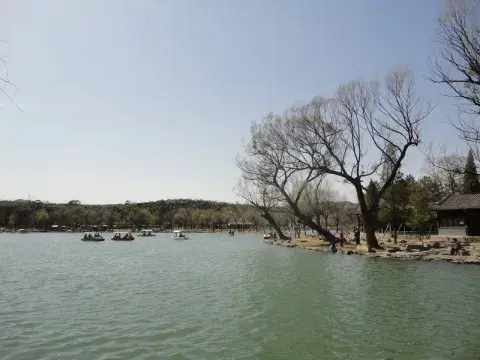
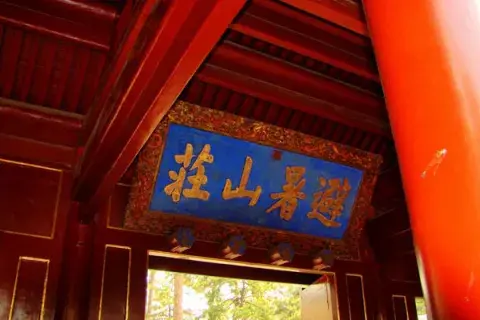
Chengde (承德), previously known as Jehol or Rehe, is a prefecture-level city in Hebei province, situated northeast of Beijing. It is best known as the site of the Mountain Resort, a vast imperial garden and palace formerly used by the Qing emperors as summer residence. In 1703, Chengde was chosen by the Kangxi Emperor as the location for his summer residence. Constructed throughout the eighteenth century, the Mountain Resort (避暑山庄; literally “avoiding the heat mountain villa”) was used by both the Yongzheng and Qianlong emperors. The site is currently an UNESCO World Heritage Site. Since the seat of government followed the emperor, Chengde was a political center of the Chinese empire during these times.
If you need our guide/assistant/sourcing/interpreter, welcome to contact us.:)
We can custom your trip and guide you.
Please click my photo and add my contact. Let's talk details.
Thanks for reading.
Jessica In China (86-13570345653)

Chengde Attractions
Chengde Summer Resort...
Chengde Summer Resort
Located at northeastern part of Chengde City, the palace covers 120,000 square meters. It was the palace of Puyi, the emperor of Qing Dynasty, who ascended the throne for the third time to become the puppet emperor of the Japanese-created state of Manchukuo. In 1934, the puppet regime was renamed the "Manchu empire" with the reign title of "Kangde." On March 1 of the same year, Pu Yi came to power and made his residence the imperial palace, which was divided into the outer and inner palaces, with the former as the living quarters for Puyi and his family, while the latter was where he conducted his political activities.
Temple of Universal Peace (Puning Temple)
Covering an area of 23,000 square meters, the Temple of Universal Peace (Puning Temple), is the furthest north of the eight remaining outer temples of Chengde. The temple has also in its time been known as the Big Buddha Temple (Dafo Temple), a reference to the huge statue of Avalokiteshvara, "the lord who hears/looks in every direction," which is covered with thousands of hands and eyes. The temple was built in 1755 to commemorate the victory of the Chinese emperor over the Zonggar people of northwest China. It was constructed as a gesture of goodwill between the Qing Dynasty rulers and the conquered minorities of the region.
Pule Temple (Universal Happiness)
To the east of the Summer Villa, and south of the Temple for Distant Security, the Temple of Universal Happiness (Pule Temple), also known as the Round Pavilion, is the resorts most modern looking complex. It is definitely the most interesting of the temples, which was built in 1766. The structure style is a combination of Han style and Tibet style. On the west, following the Han style is consisted of the Mountain Gate, the Heaven King Palace, Bell and Drum Tower, Subordinated Palace and Formal Palace. To the east is the Tibetan style. Xuguang Pavilion is the main hall of the whole temple on which there is a vault and double eaves just like that in the Hall of Prayer for Good Harvest in Beijing Heaven Temple.
Putuo Zongcheng Temple
Built in 1771, the Putuo Zongcheng Temple is a most resplendent and sweeping one. It covers an area of 220,000 square meters, and the word Putuo Zongcheng is the Chinese Translation for Potala Palace in Tibet, the ritual ground for Bodhisattva Avalokitesvara. This temple was built in great similarity to Potala Palace in Lhasa of Tibet in architectural style. That's the reason it is called the lesser Potala. This temple was built for celebrating the emperor Qianlong's birthday. Minority heads from Xinjiang, Qinghai, etc gathered in the Mountain Resort for the grand celebration on the 60th birthday of Emperor Qianlong & the 80th birthday of the Dowager Empress.