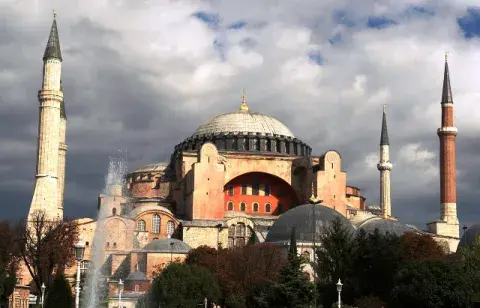
Hagia Sophia Select ratingGive it 1/5Give it 2/5Give it 3/5Give it 4/5Give it 5/5 Rate Hagia Sophia is one of the most known religious sites in Istanbul. It has a long history full of transformations due to the political and religious changes that happened over time. It is important to emphasize that it was built as early as in 360 and at that time was dedicated and used as an East... Hagia Sophia is one of the most known religious sites in Istanbul. It has a long history full of transformations due to the political and religious changes that happened over time. It is important to emphasize that it was built as early as in 360 and at that time was dedicated and used as an Eastern Orthodox cathedral. It was even used as a Roman Catholic cathedral during some fifty years in the first half of the 13th century. It was transformed into a mosque in 1453 and it was used as such until 1931. Since 1935 it is used as a museum. As you can imagine, all these transformations and influences from different countries left its trace and today one can enjoy in seeing the magnificent blend. This is more important when you take into consideration that two great empires, Byzantine and Ottoman both left their characteristic architectural elements.
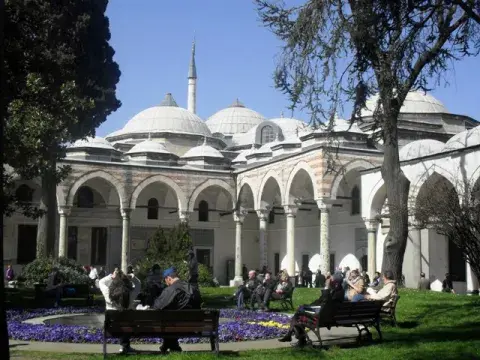
Topkapi Palace Select ratingGive it 1/5Give it 2/5Give it 3/5Give it 4/5Give it 5/5 Rate The palace is in fact an entire complex consisting of many buildings and four main courtyards. The fact that is used to be home to about 4 000 people, speaks about the area it occupies. It was the main residence for Ottoman sultans and it is located on the UNESCO World Heritage Site list since 19... The palace is in fact an entire complex consisting of many buildings and four main courtyards. The fact that is used to be home to about 4 000 people, speaks about the area it occupies. It was the main residence for Ottoman sultans and it is located on the UNESCO World Heritage Site list since 1985. Its construction started in the mid 15th century and during 400 years that was occupied by the sultans it was renovated several times and some constructions were added. As it is visible, it is built near the shoreline overlooking sea and besides the residential buildings it contained mosques, a hospital and other useful constructions. The Palace was transformed into a museum and the most important and best preserved as available for visitors in the beginning of the 20th century.
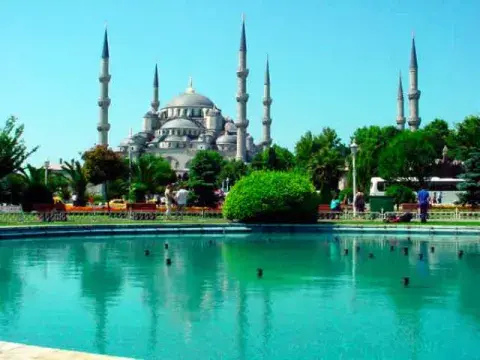
Sultan Ahmed Mosque (Blue Mosque) Select ratingGive it 1/5Give it 2/5Give it 3/5Give it 4/5Give it 5/5 Rate Majority of visitors who come to visit this architectural masterpiece know the mosque as the Blue Mosque and then they find out that its official name is the Sultan Ahmed Mosque. You may wonder if it is really blue. Well, its interior is decorated with blue tiles. It is still used as a mo... Majority of visitors who come to visit this architectural masterpiece know the mosque as the Blue Mosque and then they find out that its official name is the Sultan Ahmed Mosque. You may wonder if it is really blue. Well, its interior is decorated with blue tiles. It is still used as a mosque but with the growth of tourist number it has become the most visited attraction in Istanbul. The mosque was built in the early 17th century by Sultan Ahmed I and designed by Mehmet Aga. Its architectural design is magnificent and visitors as well as locals are fascinated with its beauty. There are six minarets while the majority of mosques have one to four minarets. Even though one can notice from just standing outside that the mosque has domes of several heights but as one enters can notice the amazing interior decoration made in over 20 000 blue tiles.
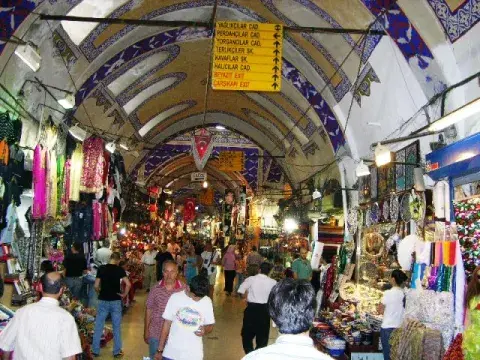
Grand Bazaar Select ratingGive it 1/5Give it 2/5Give it 3/5Give it 4/5Give it 5/5 Rate Welcome to the world´s largest covered marked covering 61 street with over 3000 shops. Maybe it seems impossible but it attracts about half of million visitors daily. Perhaps you want just to take a look and you´re not interested in buying but the splendor, the scent, the colo... Welcome to the world´s largest covered marked covering 61 street with over 3000 shops. Maybe it seems impossible but it attracts about half of million visitors daily. Perhaps you want just to take a look and you´re not interested in buying but the splendor, the scent, the colors start offering themselves tempting your eyes and your valet: jewelry, carpets, antiques, embroideries, textile and of course spices, among other things. This marked isn´t something that started to exist recently in the style of modern malls but it has a history since the mid 15th century. Naturally the things changed over time. In the beginning there were no shops as they exist today but there were stalls where merchants offered their goods and each stall occupied a determined space. When you take into consideration the innumerable sorts of merchandise offered, it is no wonder that the Grand Bazaar was the world´s most visited single monument in the world in 2011.
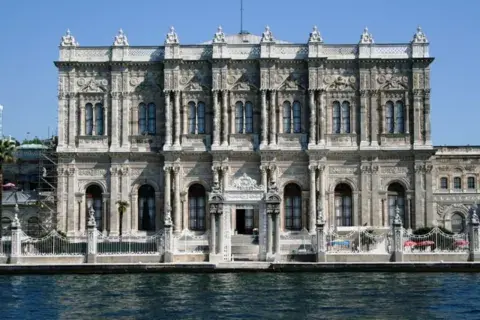
Dolmabahçe Palace Select ratingGive it 1/5Give it 2/5Give it 3/5Give it 4/5Give it 5/5 Rate This glamorous palace has a special place in the history of Turkey. Not only it was the residence of the last Ottoman Sulans but it is the place where the founder of the modern Turkey passed away. An interesting fact is that all clocks in the palace were stopped at the time when Mustafa Kemal Ata... This glamorous palace has a special place in the history of Turkey. Not only it was the residence of the last Ottoman Sulans but it is the place where the founder of the modern Turkey passed away. An interesting fact is that all clocks in the palace were stopped at the time when Mustafa Kemal Ataturk died, i.e. at 9:05, 1938. A clock in the room where he died still stands. The palace was built by Sultan Abdulmecid in the second half of the 19th century. Its construction lasted for about 20 years and it can be divided into three main parts. State Apartments, Ceremonial Hall, and the Imperial Harem. Since 1984, the palace has been opened to public as a ˝museum palace˝. It spreads on an area of 11.2 acres or 45,000 square meters containing 285 rooms, 46 halls, 68 toilets and 6 large baths where nobilities enjoyed in Turkish steam baths.
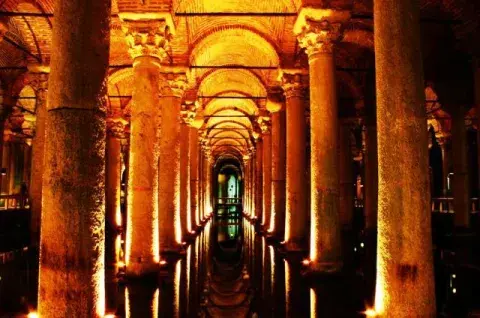
Basilica Cistern Select ratingGive it 1/5Give it 2/5Give it 3/5Give it 4/5Give it 5/5 Rate Besides the usual name this basilica has two other names by which is often called. Sunken Palace and the Sunken Cistern. As you may conclude from the title this unusual tourist attraction once had one really important mission – it was used to provide water to the residents of Istanbul. Empe... Besides the usual name this basilica has two other names by which is often called. Sunken Palace and the Sunken Cistern. As you may conclude from the title this unusual tourist attraction once had one really important mission – it was used to provide water to the residents of Istanbul. Emperor Justinian ordered its construction in the 6th century. It is also remarkable for its size with capacity of 80,000 cubic meters but also for 336 large marble pillars that hold the entire construction. Of course, this isn´t the only cistern built in the Istanbul undergrounds but it is certainly most famous and most visited. You might also ask yourself why it is called Basilica? Well, it is located right beneath the Stoa Basilica. In the past, people used to lower their buckets to grab the water and bring it to their houses. Due to the tourism development, a great lighting has been installed and numerous visitors come down to visit this underground monument.
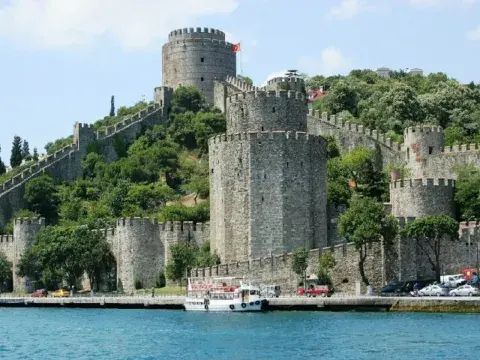
Rumelian Castle Select ratingGive it 1/5Give it 2/5Give it 3/5Give it 4/5Give it 5/5 Rate The European side of the famous straight Bosporus in the Sariyer district of Istanbul is the location of a large and beautiful fortress built back in the second half of the 15th century. Sultan Muhamed II ordered the construction of the fortress before he conquered the city. It was built on the s... The European side of the famous straight Bosporus in the Sariyer district of Istanbul is the location of a large and beautiful fortress built back in the second half of the 15th century. Sultan Muhamed II ordered the construction of the fortress before he conquered the city. It was built on the site of former Roman fortification. Rumelian Castle has three main towers named after the three Pashas who were in charge of the supervision of the construction and one small tower. There are 13 watchtowers constructed in different shapes. Even though it once served as a military construction now it has completely different purpose. It is used as a museum and an open theatre.
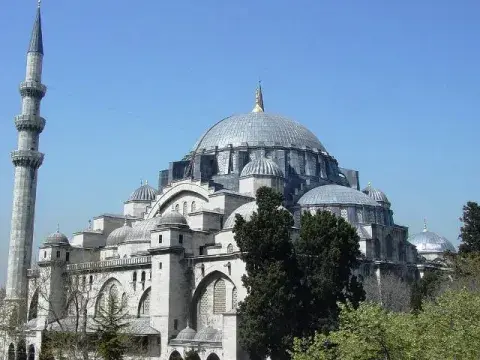
Suleymaniye Mosque Select ratingGive it 1/5Give it 2/5Give it 3/5Give it 4/5Give it 5/5 Rate Maybe you´ll be surprised but this is actually the largest mosque in the city. It was built by Sultan Suleyman (also known as Suleyman the Magnificent) in the second half of the 16th century. Some hundred years after the completion of the mosque it suffered a serious damage by a great fire.... Maybe you´ll be surprised but this is actually the largest mosque in the city. It was built by Sultan Suleyman (also known as Suleyman the Magnificent) in the second half of the 16th century. Some hundred years after the completion of the mosque it suffered a serious damage by a great fire. It was completely restored in the 19th century. Sadly, the mosque, because of another fire had to be restored again after the II World War. as it is already mentioned this is the largest mosque in the city. It is 59 m long and 58 meters wide. This is not only a mosque, it is an entire complex consisting of the prayer hall, courtyard, caravanserai, a bath house, Qur'an school, a hospital and a kitchen. Behind the mosque, in the garden, one can see two mausoleums which include the tombs of Sultan Suleyman I and his family along with several other Sultans and nobilities.