Eagle Center
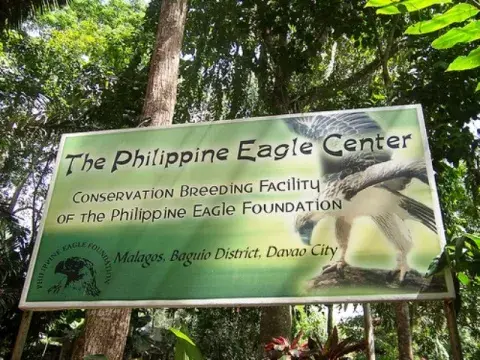
Eagle Center is an excellent place to see several eagle species. In this center alone there are 36 eagles but not only since the center is also home to 10 other bird species as well to 4 mammals and 2 reptiles. This is one of the most visited tourist attractions in the city. The animals live in t...
Eagle Center is an excellent place to see several eagle species. In this center alone there are 36 eagles but not only since the center is also home to 10 other bird species as well to 4 mammals and 2 reptiles. This is one of the most visited tourist attractions in the city. The animals live in the tropical environment i.e. their natural environment.

Puerto-Princesa Subterranean River National Park
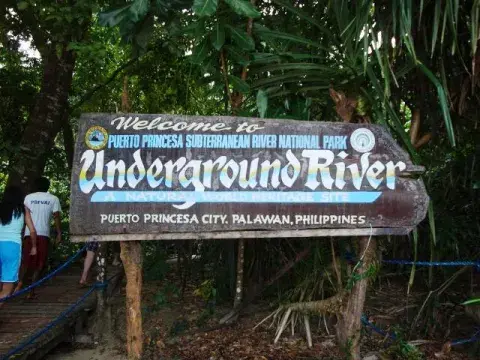
This stunning national park follows the flow an underground river that has as much as 8.2 km. The cave is 24 km long while 4 km from sea are navigable into the interior of the cave. The interior of the caves is also spectacular for its rock formations which were shaped during thousands of y...
This stunning national park follows the flow an underground river that has as much as 8.2 km. The cave is 24 km long while 4 km from sea are navigable into the interior of the cave. The interior of the caves is also spectacular for its rock formations which were shaped during thousands of years.
It has been discovered that the river has a second floor and that means that there are waterfalls in the interior of the caves. Since the river flows directly into the sea the interior of the cave is subjected to the tidal influence of the sea. Besides the rock formations, there are animals which found in the caves and in water their natural habitat.
This underground river is a UNESCO World Heritage Site, a Biosphere Reserve, a Ramsar Site, National Geological Site, and an Important Bird Area. Also, it was listed as New 7 Wonders Nature in 2011.
There are several activities that people can enjoy in the Park are, and these don´t include only cave exploring but also jungle trekking, wildlife watching, tour in mangrove forest, climbing rocks…

San Agustin Church
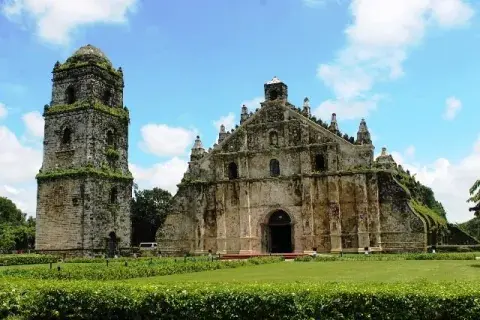
Church of San Agustin is located in Paoay, Ilcos Norte, Philippines. Because of its value and Baroque architecture this church is protected by UNESCO since 1993. Even though the style is predominantly baroque, one can also notice the influence of the Javanese style. Of course, this is another pro...
Church of San Agustin is located in Paoay, Ilcos Norte, Philippines. Because of its value and Baroque architecture this church is protected by UNESCO since 1993. Even though the style is predominantly baroque, one can also notice the influence of the Javanese style. Of course, this is another proof of the colonial influence on the territory and people. The church dates back to the beginning of the 18th century when it was completed but its construction commenced a century earlier.

Vigan
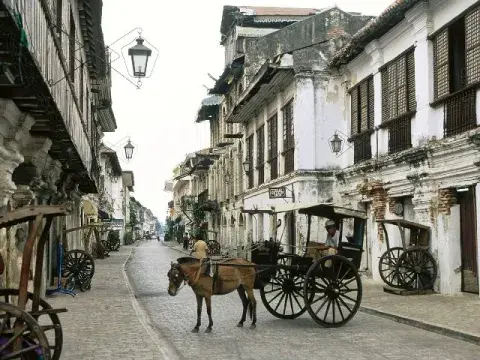
Historic town of Vigan is a colonial town in Ilcos Sur province. The town is listed on the Unesco World Heritage Site list because of its beautiful colonial architecture.
When Spaniards came to the Philippine islands they brought their culture with them. Vigan was planned and built in the...
Historic town of Vigan is a colonial town in Ilcos Sur province. The town is listed on the Unesco World Heritage Site list because of its beautiful colonial architecture.
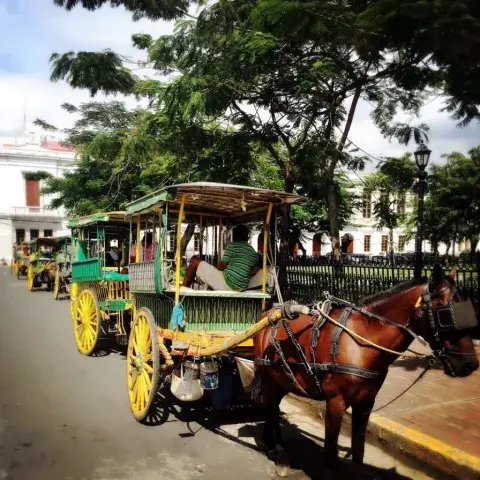
When Spaniards came to the Philippine islands they brought their culture with them. Vigan was planned and built in the 16th century. The architecture of this town can´t be seen anywhere else in Asia. The blend of Asian and European culture in Vigan is just great. Before the arrival of the colonizers, the territory of Vigan was occupied by Chinese traders. This way, colonizers adopted the name Bee Gan which later became Vigan. Most of the residents adopted Spanish names.
In fact, Vigan used to be an island because the flow of three rivers separated it from the land (Luzon Island). These three river are called Abra River, Mestizo River and the Govantes River.
The town is excellent for peacefull sightseeing. Some of the most visited districts is the Mestizo district where people get immersed in the colonial past, but not only, since the traces of Chinese past are visible as well.
Between the single monuments one can single out St. Paul´s Metropolitan Cathedral, Ayala Museum, the Crisologo Museum, the Syquia Musum etc.
There is also a beautiful Calle Crisologo with cobblestone streets, and colonial buildings.
Of course, there are city squares which tend to be most vivid parts of the city. There is Plaza Salcedo caled affter Juan de Salcedo and Plaza Burgos which is mainly used for public events.

Mayon Volcano (Mount Mayon)
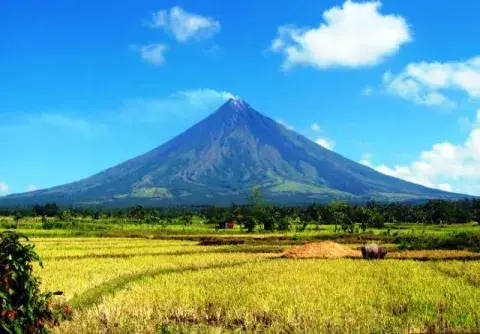
Mayon is located on Luzon Island in the Albay Province and it is most famous for its perfect cone shape. It is also included in the Mayon Volcano Natural Park. According to statistics, Mayon is the most active volcano in the Philippines. In many eruptions throughout its history, Mayon left many v...
Mayon is located on Luzon Island in the Albay Province and it is most famous for its perfect cone shape. It is also included in the Mayon Volcano Natural Park. According to statistics, Mayon is the most active volcano in the Philippines. In many eruptions throughout its history, Mayon left many victims, and buried or burned villages and monuments. Its cone shape is really marvelous and many people enjoy in its view.
There is also a legend that accompanies this great place. That is a legend of Magayon which tells the story of a beautiful princess and her possessive uncle Mayagon. His niece, the princess escaped with the young warrior which left the uncle very angry. The young couple in escape prayed gods for help and they buried the uncle alive with land. Today, it is believed that the eruptions are in fact the bursts of uncle´s anger.

Museum of the Filipino People
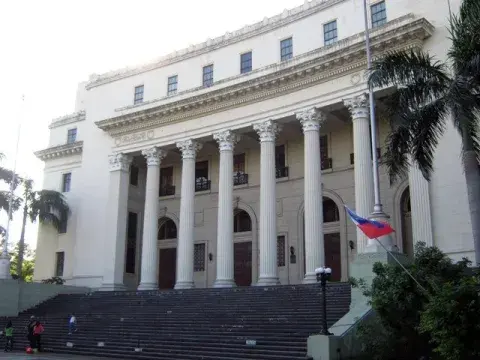
Museum of the Filipino People belongs to the National Museum of the Philippines. The building itself is very beautiful and it was designed by Ralf Harrington Doane who also designed the public library. Even though the construction began in 1918 it was completed eight years later because the const...
Museum of the Filipino People belongs to the National Museum of the Philippines. The building itself is very beautiful and it was designed by Ralf Harrington Doane who also designed the public library. Even though the construction began in 1918 it was completed eight years later because the construction was stopped several times. Its second, third and fourth floor served for government purposes while during the Second World War it was severely damaged. A year after the end of war the building was renovated and in 2003 the building was reconstructed again and now it hosts the National Museum.
The Museum of the Filipino People has several exhibits. The San Diego Exhibit is located on the ground floor; Five Centuries of Maritime Trade Before the Arrival of the West exhibit shows items belonging to the pre-colonial period. These items describe the history of the trade tradition evolved in the area; The Origin exhibition describes the periods of the pre-history on the Philippines territory; Archaeological Treasures gallery presents different vessels used for various purposes. It also describes the burial practices evolved on the territory; The Filipinos and Their Cultural Heritage is an ethnographic exhibit which is of course concentrated on the history of the nation, cultures and the development in many areas of life through history and its different periods.